
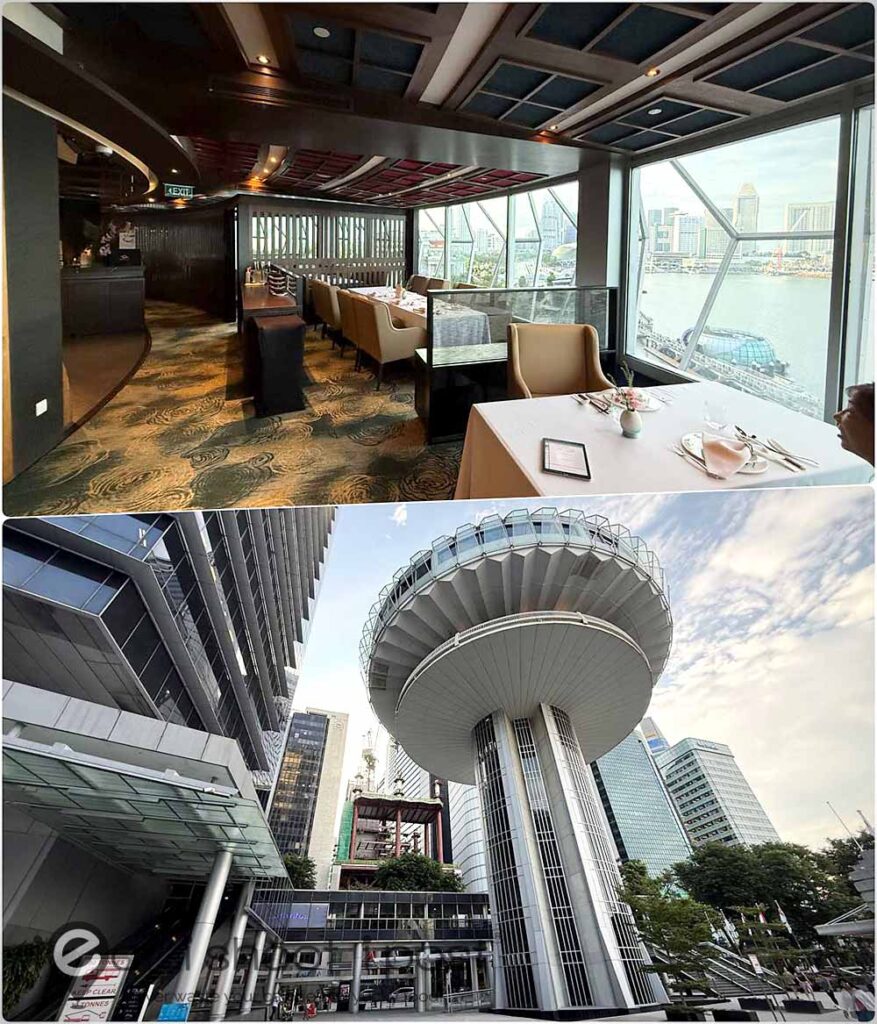
An Intimate Dining Experience with a Great View
Singapore once had three revolving restaurants. The most prominent was the one at Mandarin Orchard (now Hilton Singapore Orchard). Then there was Prima Tower, perched atop the old Prima Flour Mills along Keppel Road. Today, only OUE Tower is still rotating.
But what makes Tóng Lè special isn’t just the novelty of a rotating view. It genuinely lives up to its name. The space felt intimate in a way that caught us off guard. You get a window on one side and just one other table in front of us. No crowded dining room, no background buzz of strangers. Just us, our food, and a panoramic view of Marina Bay shifting slowly as the evening unfolded. And for those who want complete privacy, there are multiple private dining rooms within the revolving tower itself.
That Mushroom Shaped Tower At Collayer Quay
I am sure most people would recognise that unique shaped structure jutting out over Collyer Quay. Perhaps, not many actually know its history.
The OUE Tower at 60 Collyer Quay started life in the mid-1970s as the Change Alley Aerial Plaza. It was Singapore’s first midair shopping complex. There was a bridge linking Clifford Pier to Clifford Centre and shops run along the overhead walkway.
The revolving tower was already there. In 1978, it housed the Red Lantern Restaurant, then the third revolving restaurant in Singapore. The name wasn’t accidental. Clifford Pier’s Chinese name was 红灯码头, literally the Red Lantern Pier.
The shopping complex eventually faded. Change Alley closed in 1989, and the old bridge was preserved as what is now OUE Link. The tower itself was accorded heritage conservation status. It was TungLok Group that breathed new life into it when they opened Tóng Lè Private Dining in 2012, positioning it as the crown jewel of their brand.
Veteran Chef Dicky To Comes Out of Retirement
Senior Executive Chef To Kwok Kim, affectionately known as Chef Dicky, joined the restaurant in 2025. He brought 36 years of international experience with acclaimed stints at Lei Garden, the Royal Plaza Hotel, and The Peninsula Hotels group. He was named one of Food & Wine’s Best 50 Chefs in 2012 and won the Gold with Distinction Award at The Best of the Best Culinary Awards in 2006.
What makes his arrival all the more meaningful is that he had briefly announced his retirement in early 2025. Thankfully, his passion for cooking got the better of him. And we are the beneficiaries of his contemporay take on classic Cantonese cuisine.
Unbeatable View of Marina Bay
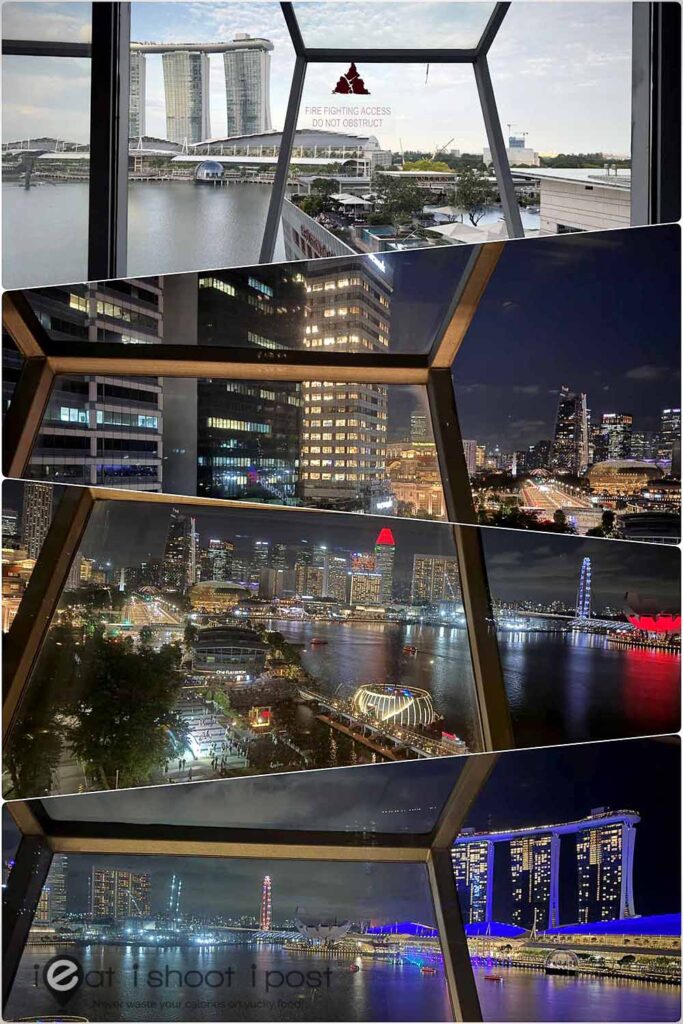
One revolution of the restaurant takes two hours, which is roughly the time it takes to finish your dinner. But we really took our time to enjoy the meal, so we passed Marina Bay Sands twice!
The dining experience is quiet and unhurried. Service is attentive, although the waitstaff did have to scurry around a little when bigger parties arrived to occupy the private rooms. It really didn’t feel like a typical Chinese restaurant but more like a European-style multi-course degustation.
Review of the Dishes
Crispy Beancurd Sheet Rolls
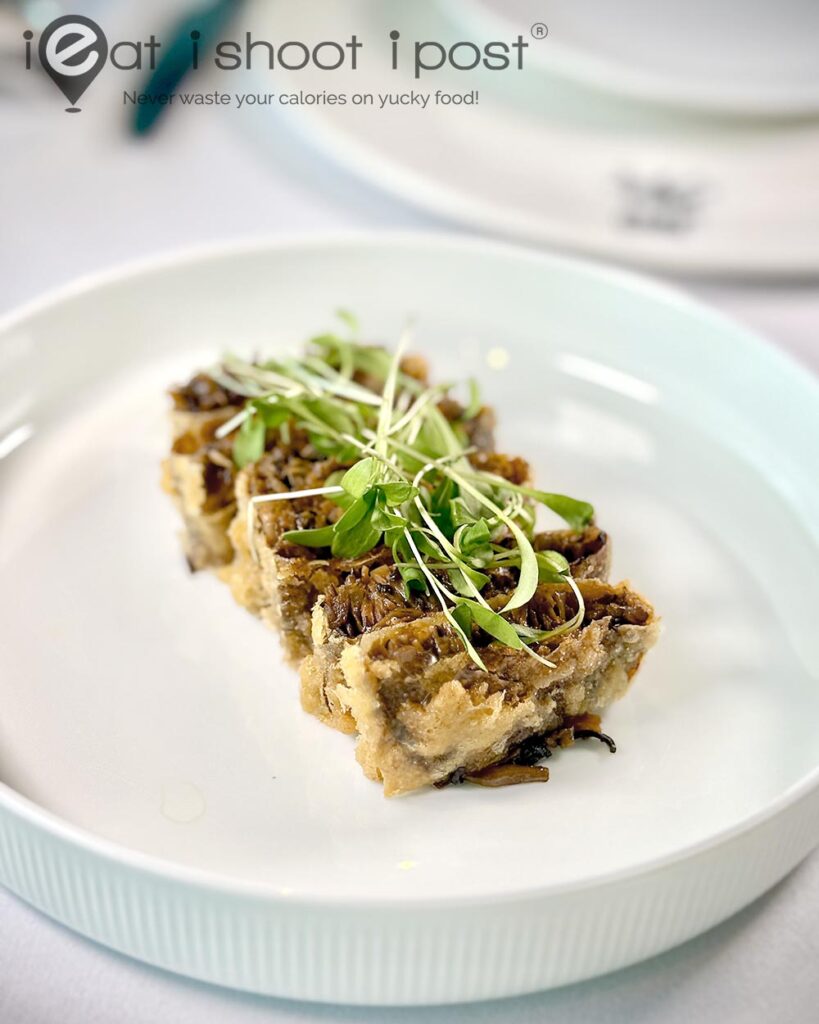
The Beancurd Sheet Rolls were an excellent way to start the meal. The porcini mushrooms were wonderfully aromatic, and the beancurd skin had that satisfying crunch you want from a good roll. It was a classic dish given a more contemporary touch, which set the tone for the evening. 4.25/5
Double-boiled Chicken Soup
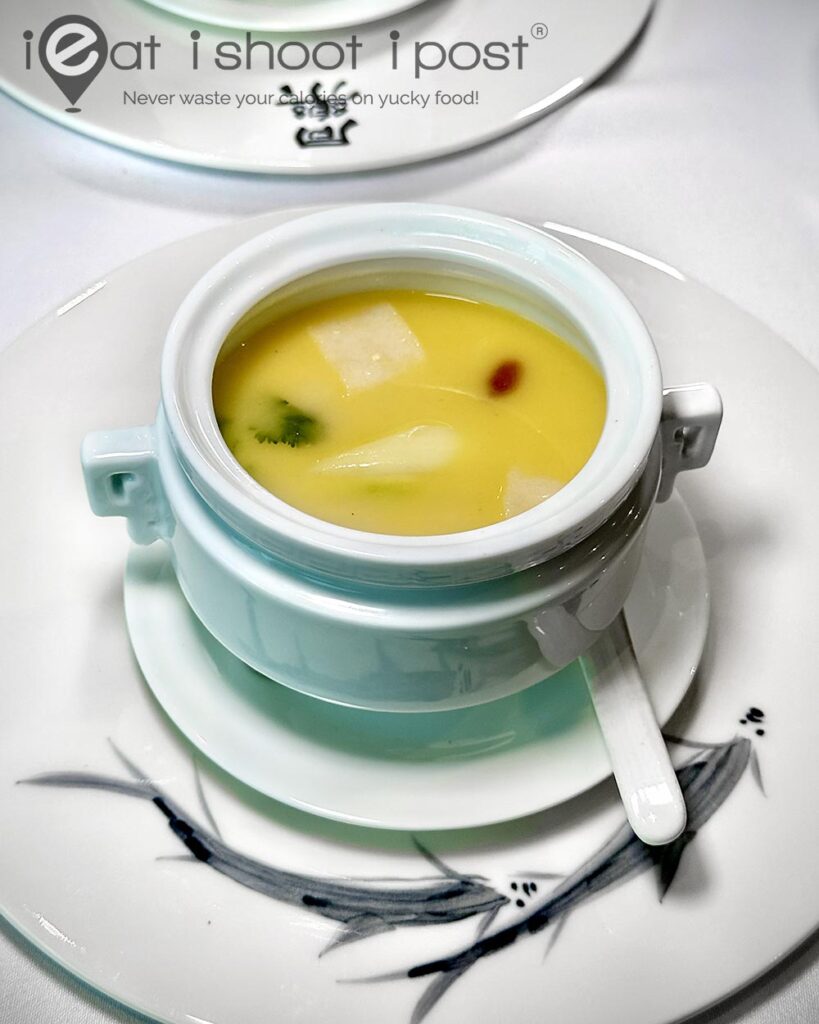
Velvety and deeply chickeny, Chef Dicky’s Double-boiled Chicken Soup is full of collagenous goodness. The broth is clean and pure. It’s the kind that could only have come from hours of patient double-boiling, coaxing every bit of essence out of the chicken.
It might be a little sacrilegious to compare this with Campbell’s Chicken Soup, but it really reminded me of that. Except it was several levels more refined. If you happen to get to try it, you will know what I mean! 4.25/5
Australian Lobster
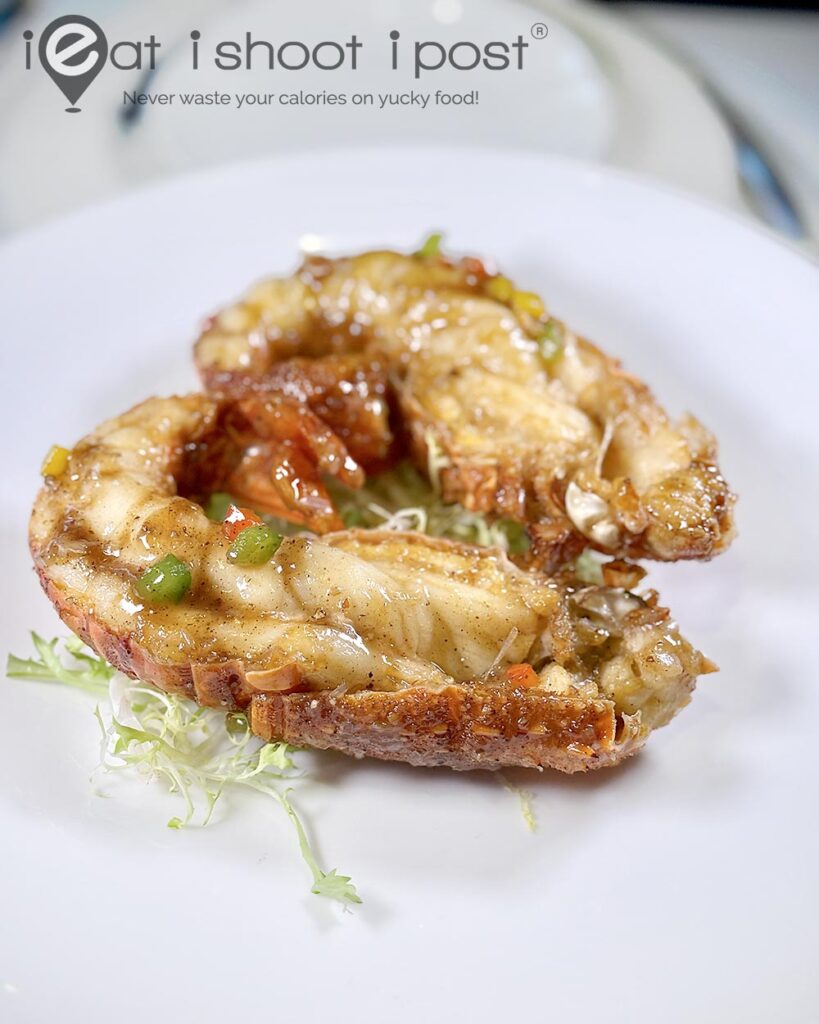
The Live Australian Lobster was perfectly cooked with the meat still loose and bouncy, which is a clear sign of quality and excellent control of the wok fire. The white pepper sauce was very good. It is a classic sauce commonly associated with crabs at seafood restaurants like JB Ah Meng. But it worked perfectly with the lobster too.
The lobster wasn’t smothered in sauce but instead lightly coated. The pepper added just enough warmth and fragrance without overpowering the natural sweetness of the flesh. 4.5/5
Japanese Saga-Gyu
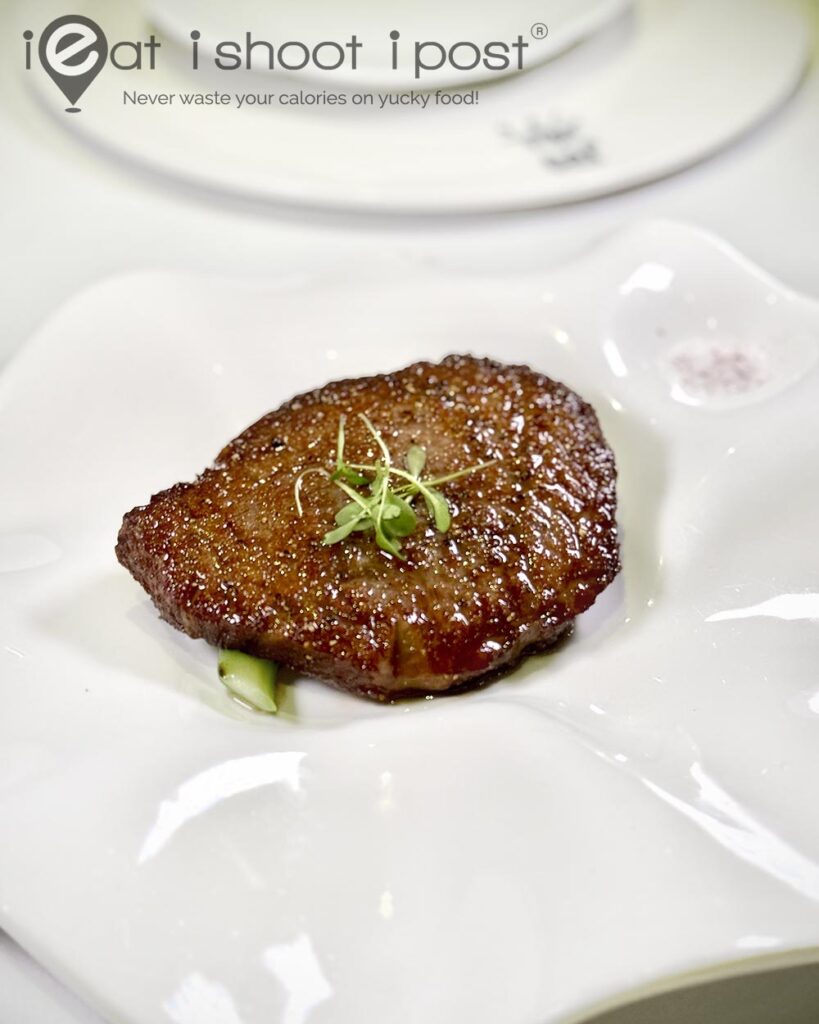
When it comes to Wagyu in Chinese fine dining, I have yet to find a restaurant that can truly bring out the best in the product while giving it a distinct Chinese culinary character. The Saga-Gyu is excellent beef, no doubt about it. But Chinese-style cooking has a tendency to overcook Wagyu. And that is exactly what happened here.
The black pepper sauce is typical Cantonese, competent and familiar, but it doesn’t quite showcase what Chef Dicky is truly capable of. To make things worse, it was the most expensive item of the meal. Reminder to myself: Skip the Wagyu and use the budget on a few other dishes instead. 4/5
48-Hour Pork Belly Hua Diao
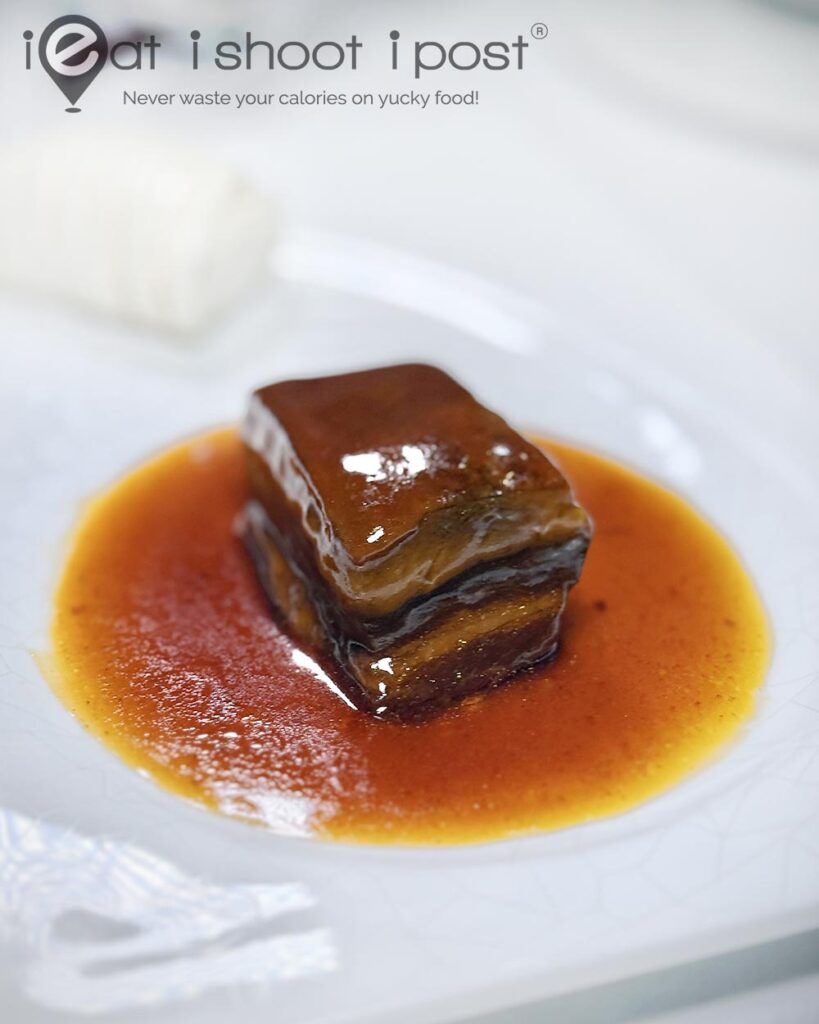
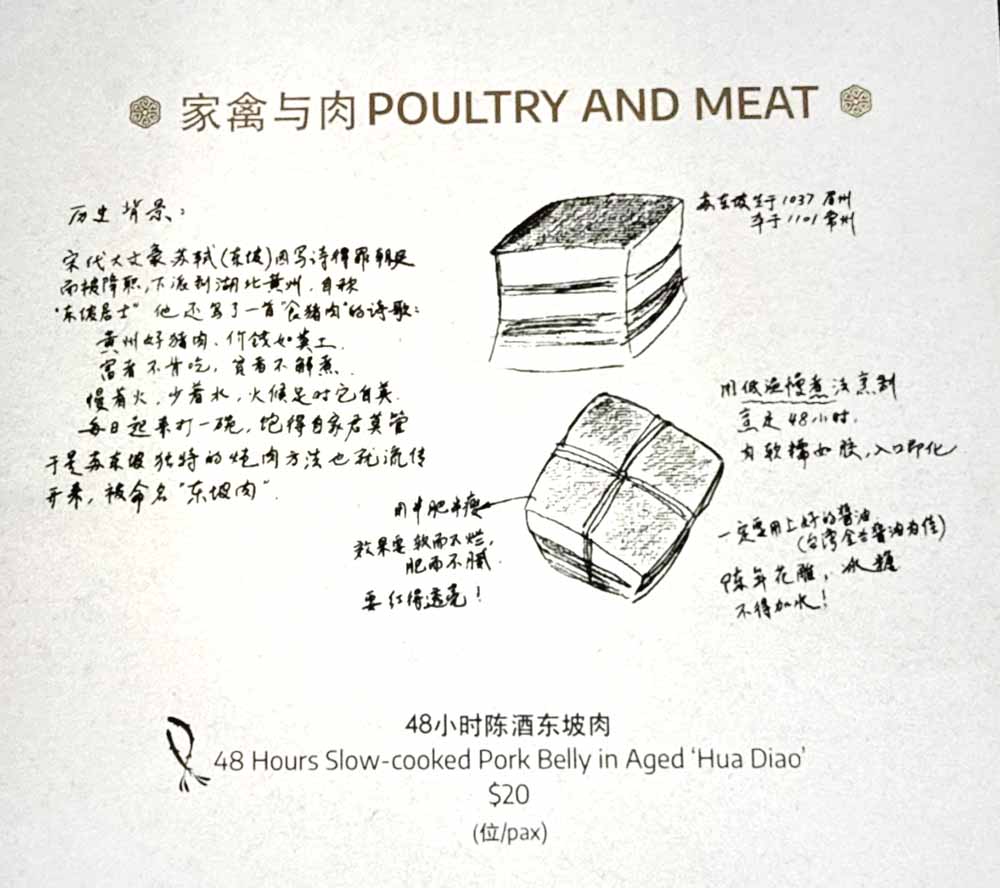
The highlight of our meal was undoubtedly the Dong Po Rou. The moment we tasted it, we understood why Chef Dicky devoted a hand-drawn page of notes to it in the menu. It is the only hand-drawn image in the entire menu. That alone tells you something about how much this dish means to him.
The illustration tells the full story of Dong Po Rou, tracing it back to the Song Dynasty poet and gastronome Su Dongpo. He was exiled to Huangzhou. And while living simply among the people, he perfected his legendary braising technique.
His own poem highlights the keys to the perfect Dong Po Rou: cook it slow, add no water, and when the time is right it is naturally delicious.
Chef Dicky’s annotations read like personal field notes. It specifyied Taiwan Jin Lan soy sauce, skin separated from fat, and absolutely no added water. All in pursuit of that elusive trifecta: fat that is not greasy, lean that is not tough, and skin that is red and translucent.
Dong Po Rou occupies a very special place in my personal gastronomic hall of fame. Every time I see it on a menu, I order it without hesitation. I have even developed my own recipe for it. But after tasting Chef Dicky’s version, I knew it was back to the drawing board.
There is something almost ethereal about the flavour here. The texture is sublime, but texture alone is achievable with a sous vide method. What is difficult to pin down is that haunting depth of flavour. It is something that lingers and makes you reach for another piece before you have even finished the first. We were told that the aged Hua Diao wine plays a big part in it, and I believe it. That floral, complex undertone is unlike any Dong Po Rou I have had before.
This is the most memorable Dong Po Rou I have tasted. And yet, I have a feeling Chef Dicky still has room to make it even better. That is not a criticism. That is the mark of a dish which has stood the test of time! 4.5/5
Iberico Pork Jowl
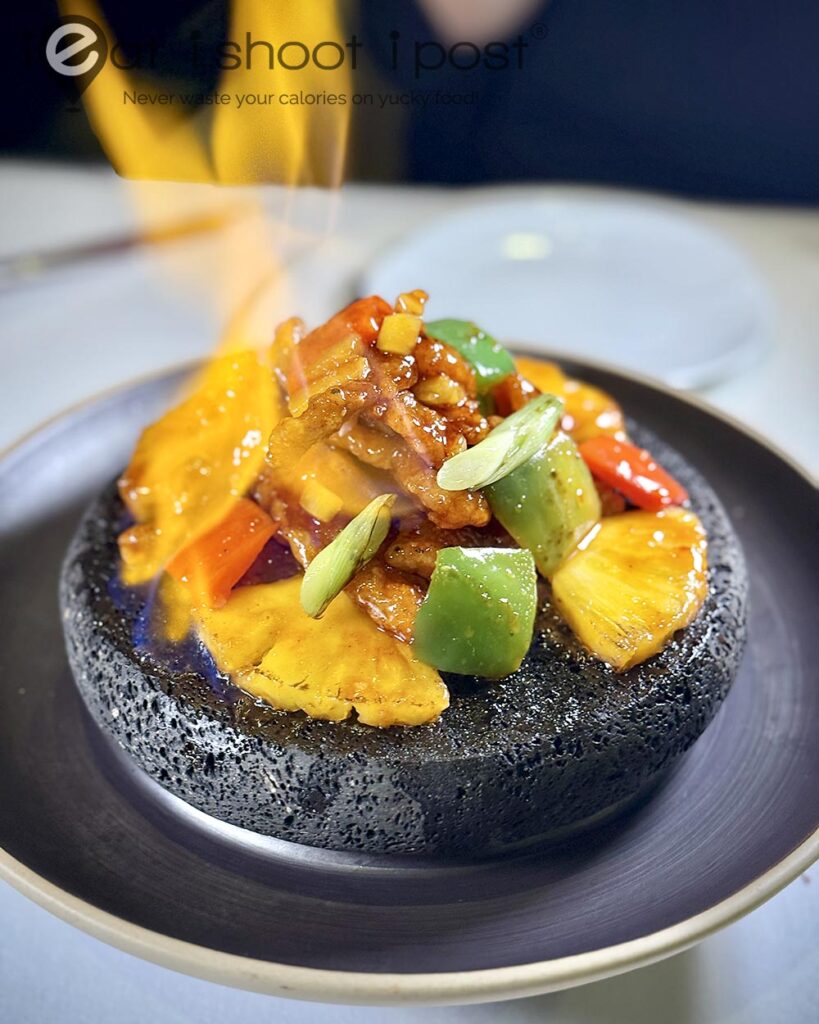
Sweet and sour pork is the other dish that occupies my gastronomic hall of fame. I have been on a quiet mission to find Singapore’s best ever since I tasted the version at Shunde Kung Restaurant in Hong Kong. That trip set the benchmark uncomfortably high.
Chef Dicky’s version is very well executed. The sweet and sour sauce has lovely balance and real depth of flavour, and the crust delivers a satisfying crunch.
But my one gripe is with the cut. The pork came in strips rather than thick cubes, and that robbed me of the moment I always look forward to. You know, that first bite through the crust when the pork juices burst and flood the mouth with their unctuous richness, quickly tempered by that sweet and tangy sauce.
It is one of the great textural experiences in Cantonese cooking, and I missed it here. 4/5
Steamed Morel Mushrooms
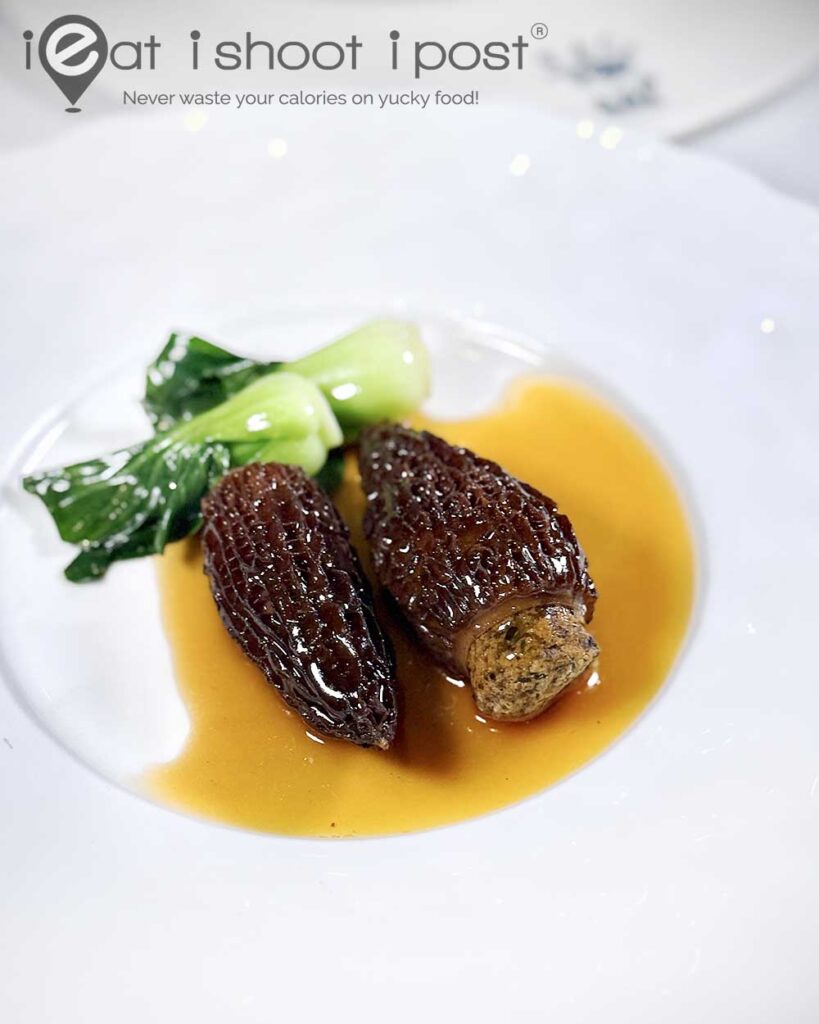
Morels, or 牛肚菌 (Niú Dù Jūn) in Chinese, literally “cow’s stomach mushroom”. The name captures perfectly the honeycomb texture of their distinctive caps. They grow wild across temperate forests in China, Europe and North America, and their short seasonal window makes them a prized luxury ingredient.
Chef chose to stuff the morels with a mixture of tofu and preserved vegetables, then braise them in a glossy amber stock until deeply lacquered. The filling was a pleasant surprise, modest and understated against the earthiness of the morel.
Not a showstopper, but a genuinely interesting dish and a worthy vegetarian option for those looking to replace one of the meatier items on the menu. 4/5
Claypot Foie Gras Fried Rice
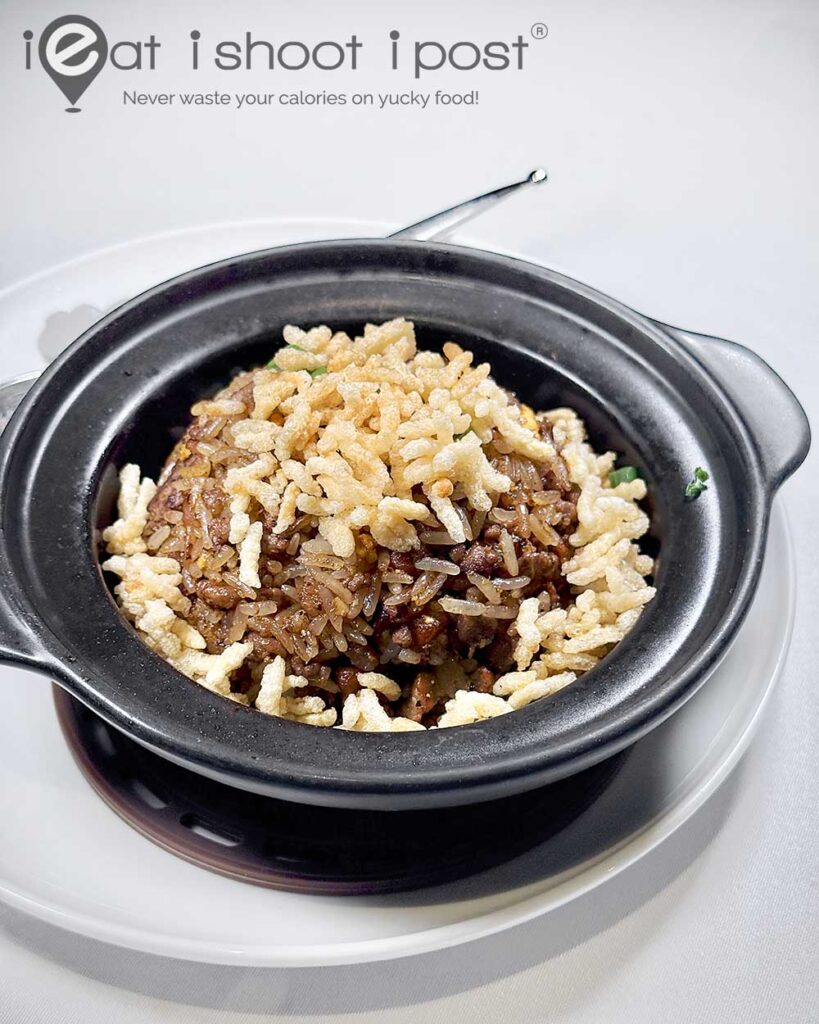
Foie gras is another ingredient I feel is often wasted in Chinese cuisine. At least, I have yet to taste it in a Chinese dish that truly does justice to what foie gras can be. The Claypot Foie Gras Fried Rice is a case in point. Despite the name, the foie gras flavour is remarkably subtle. What you actually taste is the Wagyu, which admittedly makes for a very enjoyable fried rice.
But the dish didn’t quite deliver on the promise of that headline ingredient. As a Wagyu fried rice it is good. As a Foie Gras fried rice, it felt like the Oscar had gone to the supporting actor. 4/5
Cave Bird’s Nest
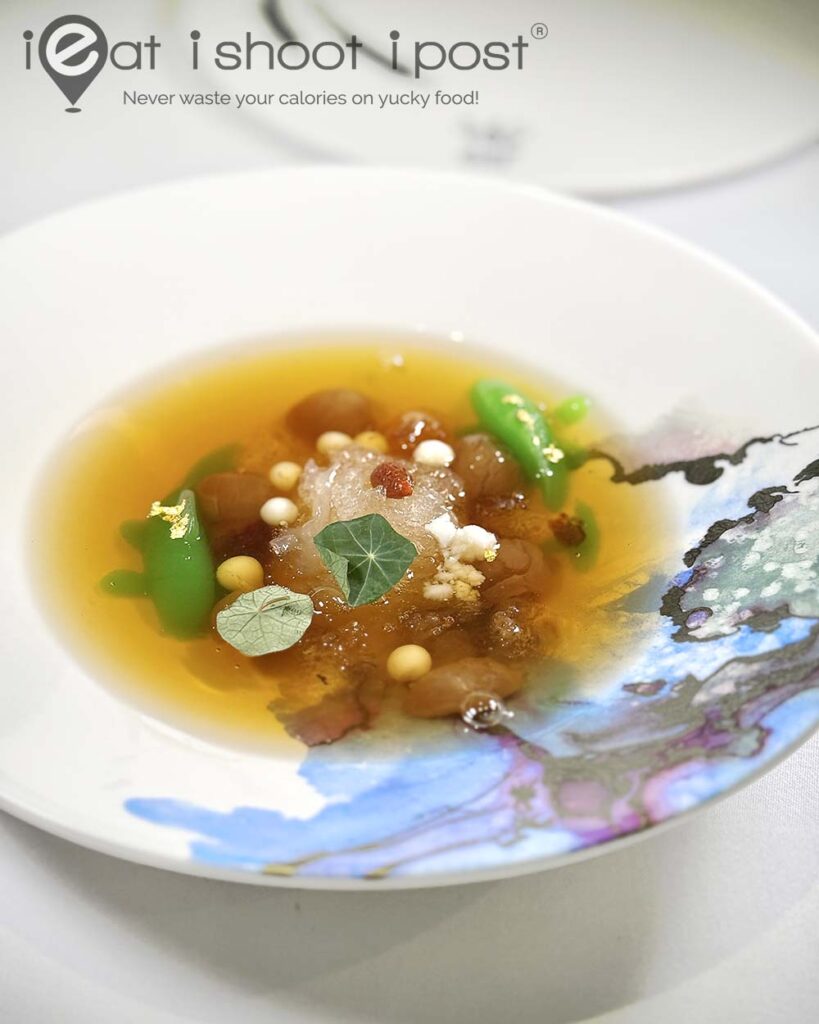
I have rarely seen a dessert this beautiful served in a Chinese restaurant. From the hand-painted plate to the way the dessert is composed, when it arrives at the table, you cannot help but take a moment to admire it. It really does look like koi fish gliding through a pond, and you almost feel reluctant to disturb it.
Flavour wise, there is nothing in the bird’s nest, the fish-shaped kiwi jelly, or the peach gum tea that will make you close your eyes in rapture. But that is almost beside the point. This dish is about the beauty of the moment, and a lovely way to end the meal. So, remember that you are paying for a piece of art when ordering this dish. 4/5
Conclusion
Our meal at Tóng Lè Private Dining is one of the most memorable Chinese fine dining experiences we have had in a while. The revolving views, the intimate dining space and a Dong Po Rou that sent me back to the drawing board on my own recipe. It really does live up to its private dining label and its vision of “breathing new life into age-old recipes that have endured through the centuries.”
It’s definitely a place to consider for a very special occassion.
Disclosure: this was an unhosted invite.