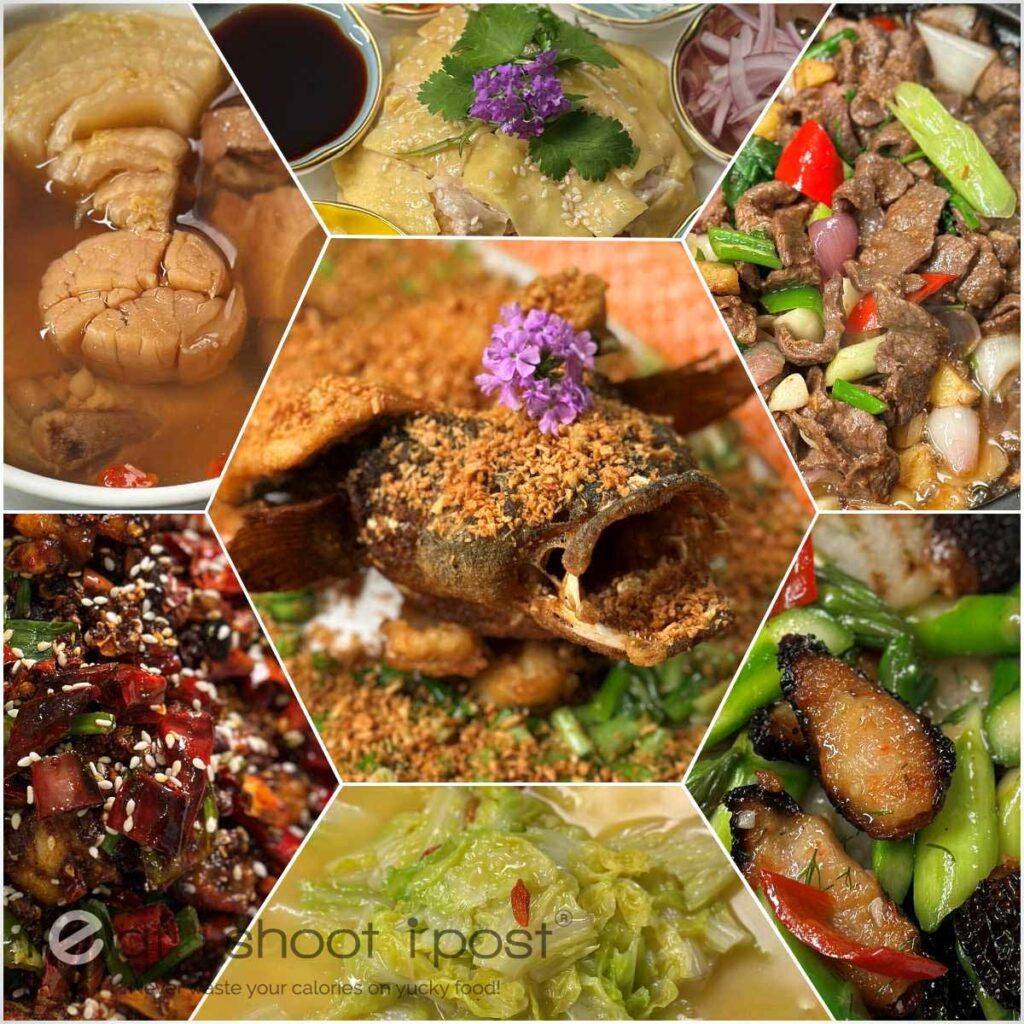

Nai Nai Flavor 椿花奶奶 is yet another Chinese restaurant entering an already crowded China food scene in Singapore. But it caught my attention because it feels different from the wave of Sichuan and Hunan places that have been landing on our shores lately, with their mountains of dried chilli and tongue-numbing mala.
Nai Nai Flavor specialises in Hang Bang Cai (杭帮菜), the cuisine of Hangzhou in the Jiangnan region, which sits along China’s eastern coastline. That geography matters. It means the dishes share many of the features of Southern Chinese cuisine that many of us grew up eating.
Unlike the food found further inland, dishes from coastal communities feature lighter seasonings and simpler preparation methods that allow fresh ingredients to express themselves. The flavours feel familiar in some ways, yet distinctly different in others.
In Hangzhou, Nai Nai Flavor has built a strong following with a format centred on daily, in-house preparation, a discipline honed through its flagship operations in China. It is consistently ranked among the city’s top dining concepts on Dianping.
Its opening at i12 Katong marks its first and only outlet outside of China. Here, dough is made fresh daily, fillings are prepared from scratch, and dishes are assembled step by step in the kitchen. It is a method that prioritises control and craft over convenience, something that is increasingly difficult to sustain in a high-volume dining scene.
It is our first time trying the food and in a nutshell, we must say that we are looking forward to go back again soon!
Dim Sum Dishes
Youbu Style Egg Cake
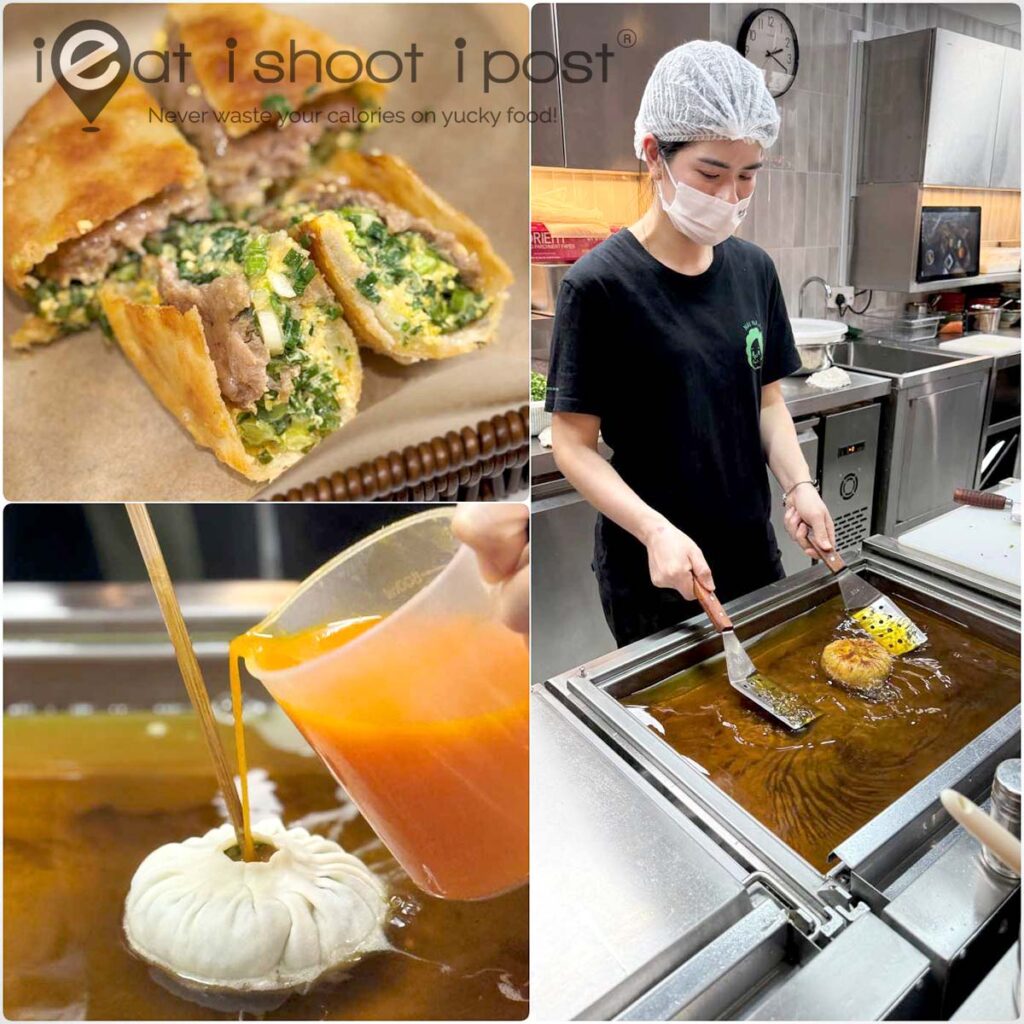
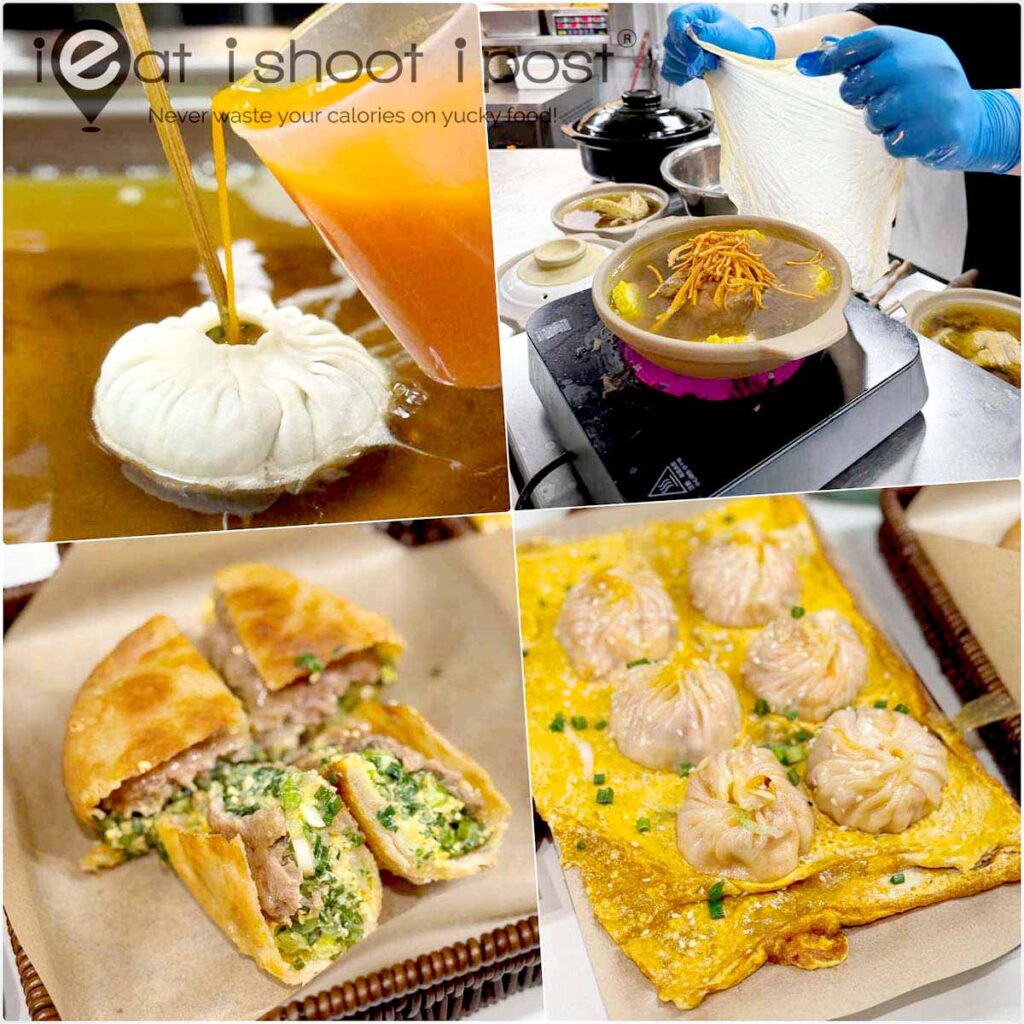
If I had to pick just one dish to go back for, it would be the Youbu Style Egg Cake. Named after the town where it originated, this is a regional specialty with roots going back 1,300 years. The technique is unlike anything I had seen before.
The egg is poured directly into the dumpling, which resembles a giant xiao long bao, while it is gently cooked in shallow oil. It is so big it should really be called a da long bao! What you end up with is something like a giant sio bao but with a thin, layered, crispy skin.
It is the kind of thing that immediately becomes a firm favourite. Just like the first time I tried xiao long bao!
Spicy Pan-Fried Bun with Tofu
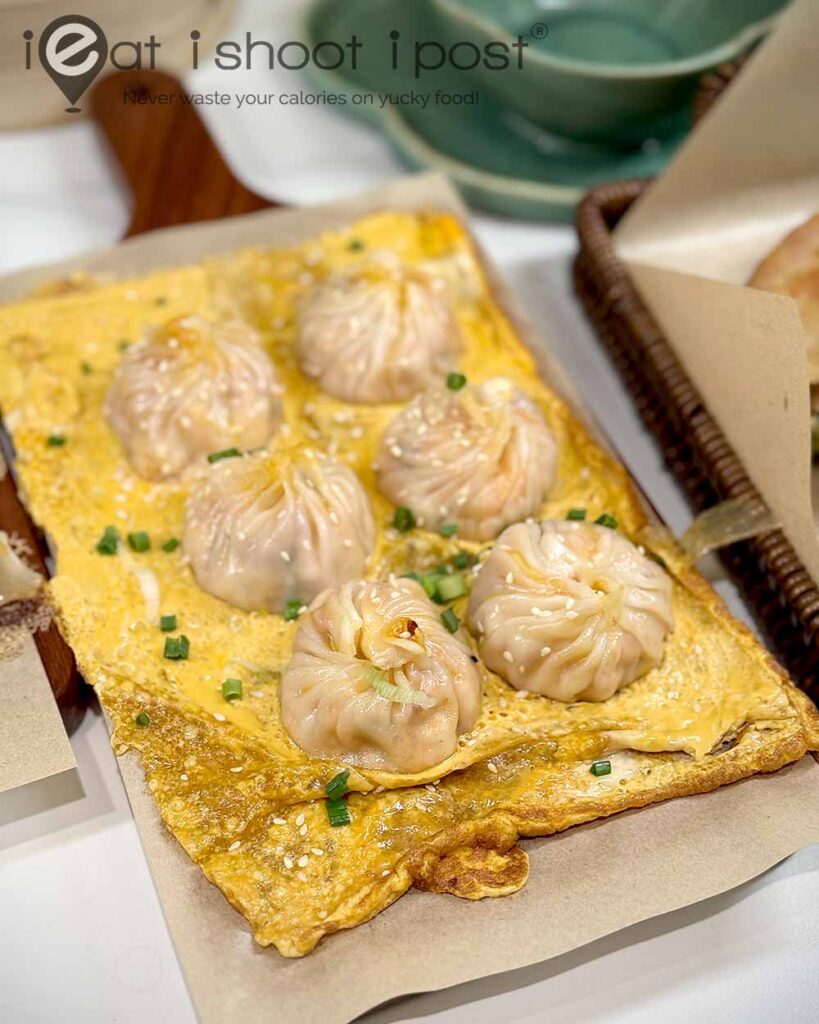
Another dish that caught my eye was the Spicy pan fried bun. Much of that is down to the egg and bean curd skin crepe that the buns sit on like a magic flying carpet.
Six plump, beautifully pleated xiao long bao perched on a golden, lacy egg crepe, scattered with spring onions and sesame seeds. The egg crisped up at the edges but soft and yielding underneath.
The bun itself is filled with spicy tofu and cooked much like a guo tie, pan fried with a cover so the top steams while the bottom crisps up. Personally, I felt it could do with a bit of minced pork inside. However, this is a dish specially designed for vegetarians, and on that front it delivers beautifully. If you are avoiding animal protein, this one is worth ordering.
Hangzhou Fried Dumplings
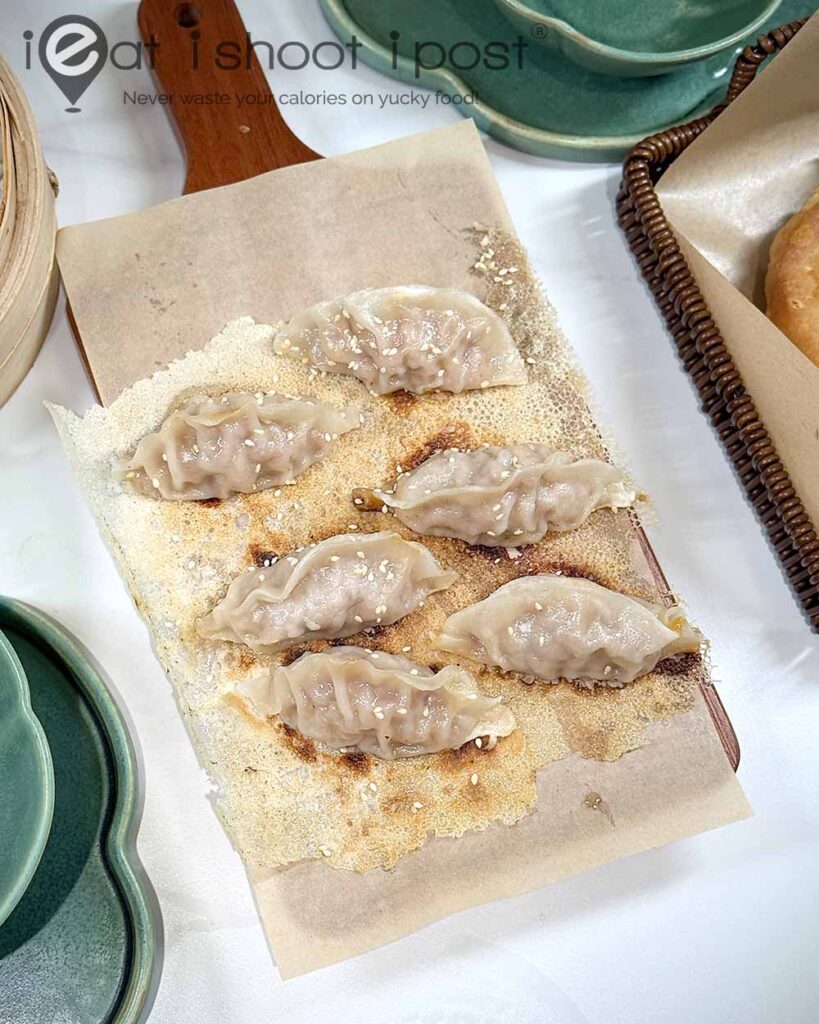
These jian jiao are very good, though they look pretty much like the classic potstickers we are all used to. What sets them apart is the filling, which is delicious, and that bottom crust, crispy and lacy in all the right ways.
Old Shaoxing Steamed Soup Dumplings
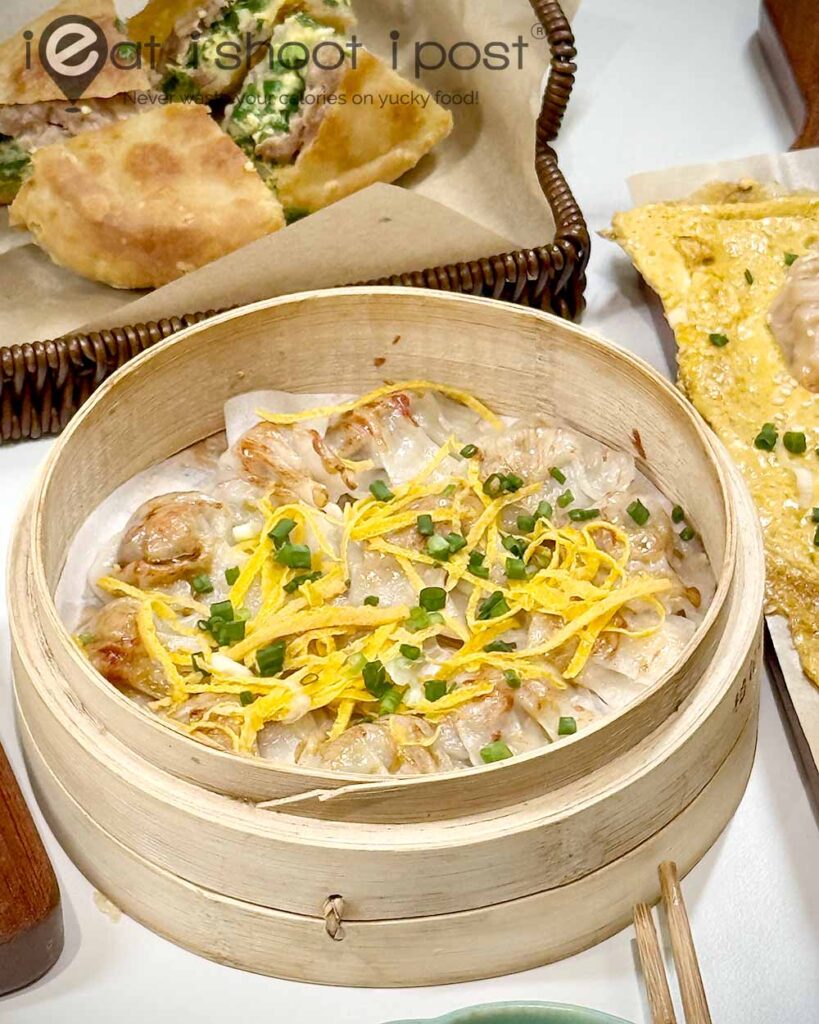
Most of us are familiar with xiao long bao, so I was expecting those little dumplings with the eighteen folds on top. What arrived instead looked more like steamed wontons. But do not let the appearance fool you.
Like xiao long bao, these steamed soup dumplings from Shaoxing in Zhejiang province are filled with seasoned pork and aspic. Another thing that sets them apart is the finishing touch. You get a topping of finely shredded egg and a light brushing of fermented bean curd sauce. That adds a quiet yet savoury depth without overwhelming the delicate dumpling beneath.
Stews
Grandma’s Secret Dishes: Chicken & Pork Soup
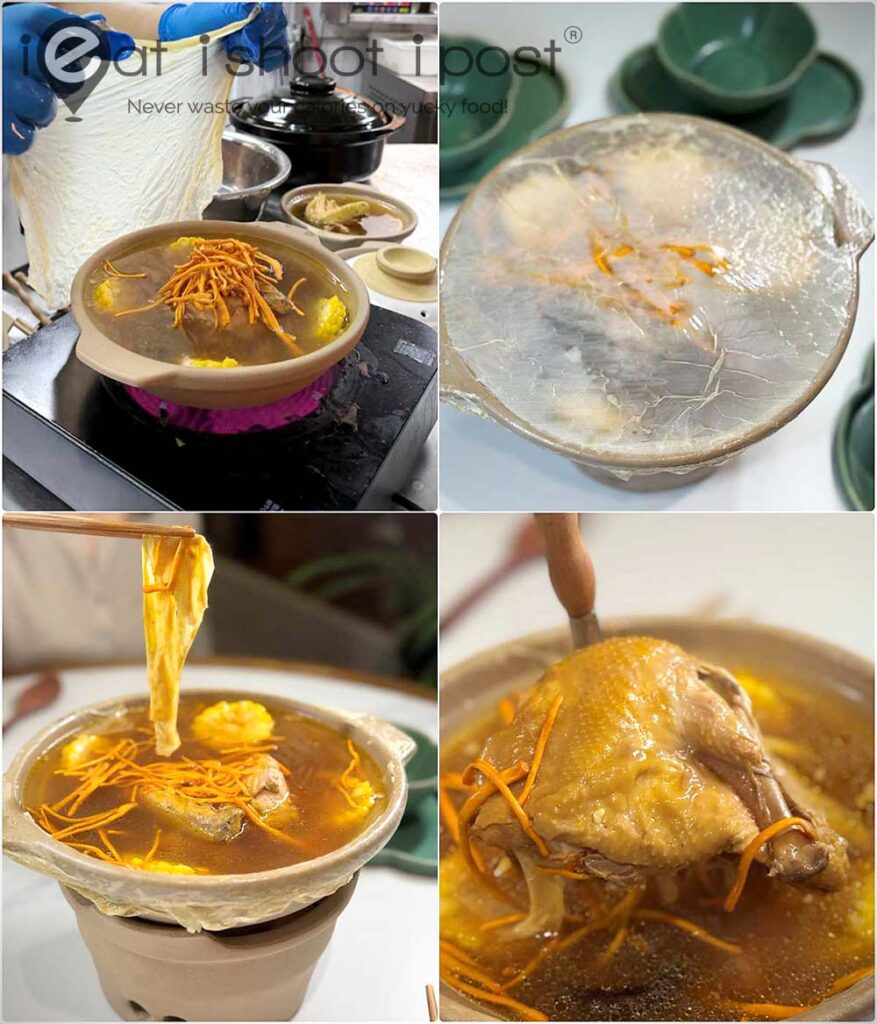
This is the restaurant’s signature dish, and the name tells you everything. 奶奶传承神仙鸡 literally translates as “Grandma’s Immortal Chicken Recipe Passed Through Generations.” In Chinese culinary culture, 神仙 is reserved for food so transcendent it feels otherworldly, the kind that even the gods would not turn down.
It is a beautifully poetic name for what is, at its heart, a humble, slow-cooked soup.
And humble it may be, but do not underestimate it. This is a deeply potent chicken soup built on 180-day-old chicken and pork trotters, boiled low and slow for a full four hours until the broth develops a bold, deep flavour.
It arrived with a thin layer of bean curd skin draped over the pot, acting as a lid to seal in the steam and prevent the soup from evaporating. It is a small detail, but it speaks to the care and intention behind every step of this dish.
Seafood Rice Soup
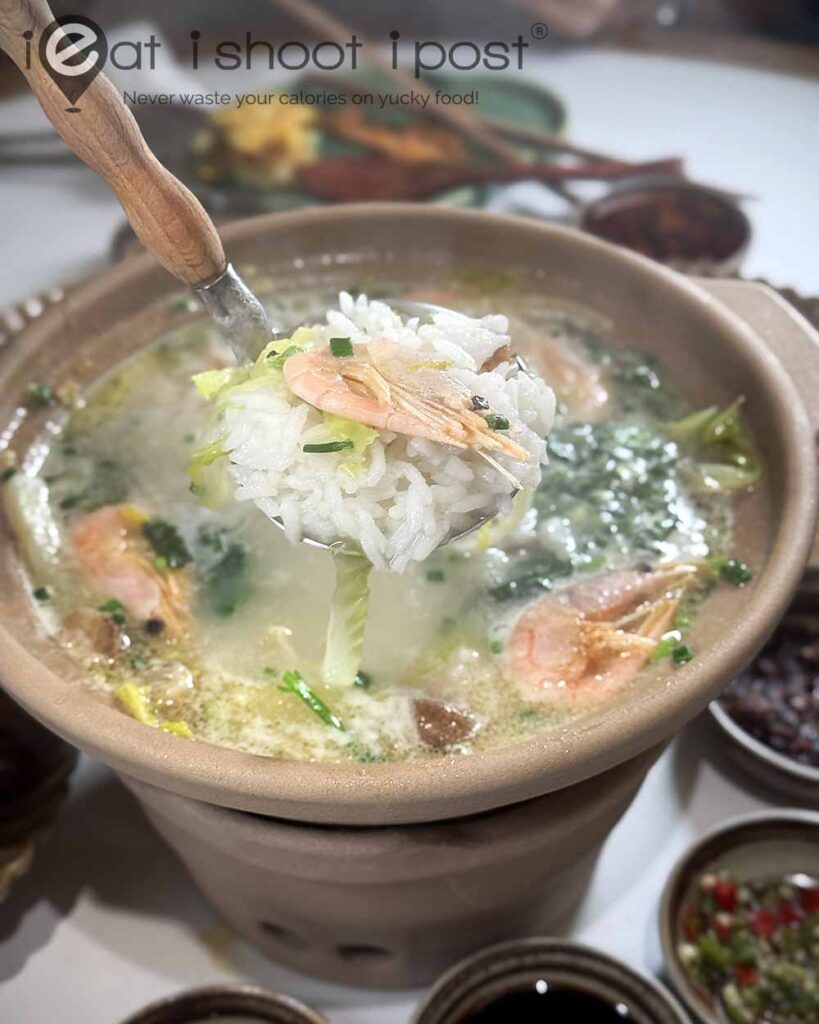
Pao fan is something we are all familiar with, especially since it has had quite a moment of late. This version is cooked rice steeped in a light, milky broth, topped with prawns, clams, mushrooms and egg.
The broth looks deceptively plain, but the seafood flavour is robust and deeply comforting. You can almost imagine a Hangzhou grandmother ladling this out on a rainy day!
Cold Dishes
Saliva Chicken
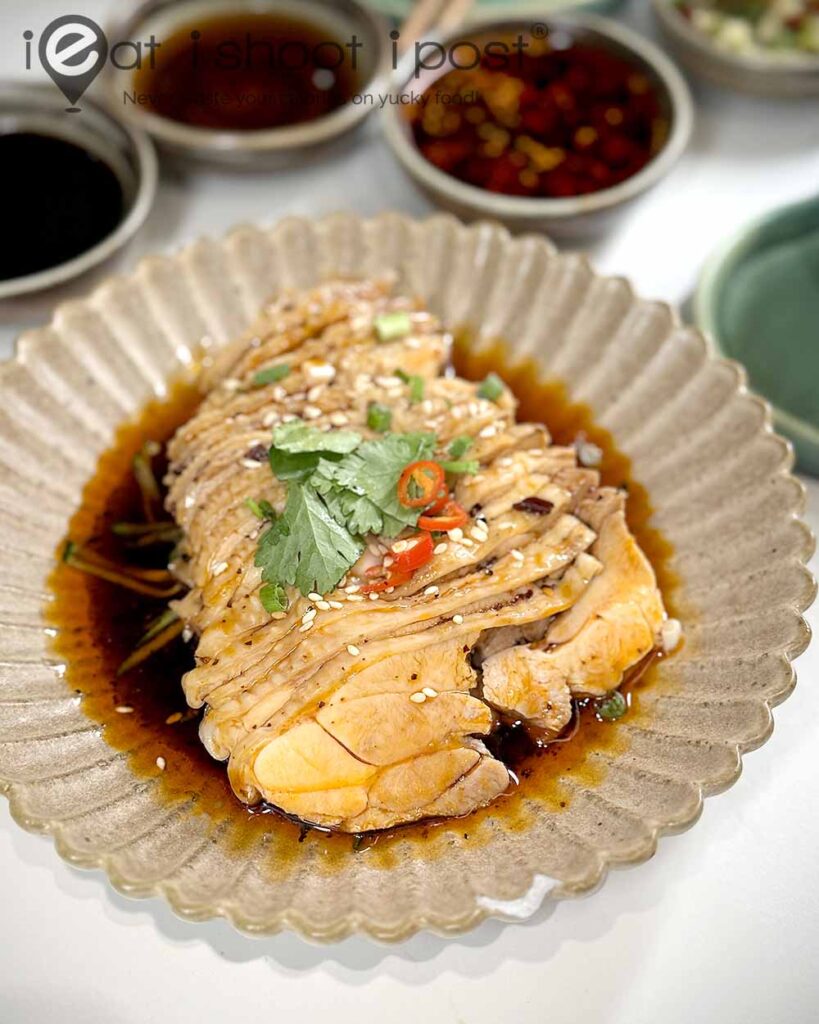
Saliva Chicken is one of those literal translations that is often the butt of many Western jokes. But in Chinese the meaning is far more poetic. The name is believed to have originated from the famous Sichuan writer and poet Guo Moruo, who described a dish so delicious that it made his mouth water as he reminisced about it. The name stuck, and today 口水鸡 is one of the most iconic dishes in all of Sichuan cuisine.
It is worth noting that this is a Sichuan dish appearing on a Hangzhou menu, which tells you something about how universally beloved it is.
The dish consists of cold cuts of chicken drenched in a spicy, numbing Sichuan chilli oil sauce. Nai Nai’s version is beautifully balanced, delivering a spicy kick that does not linger too long on the palate. Unlike our local chilli padi, which can sometimes send you reaching desperately for ice water, the heat here is bright and clean. It dissolves quickly and leaves your mouth refreshed rather than scorched. And yes, it does indeed induce saliva.
Sichuan Shredded Potato
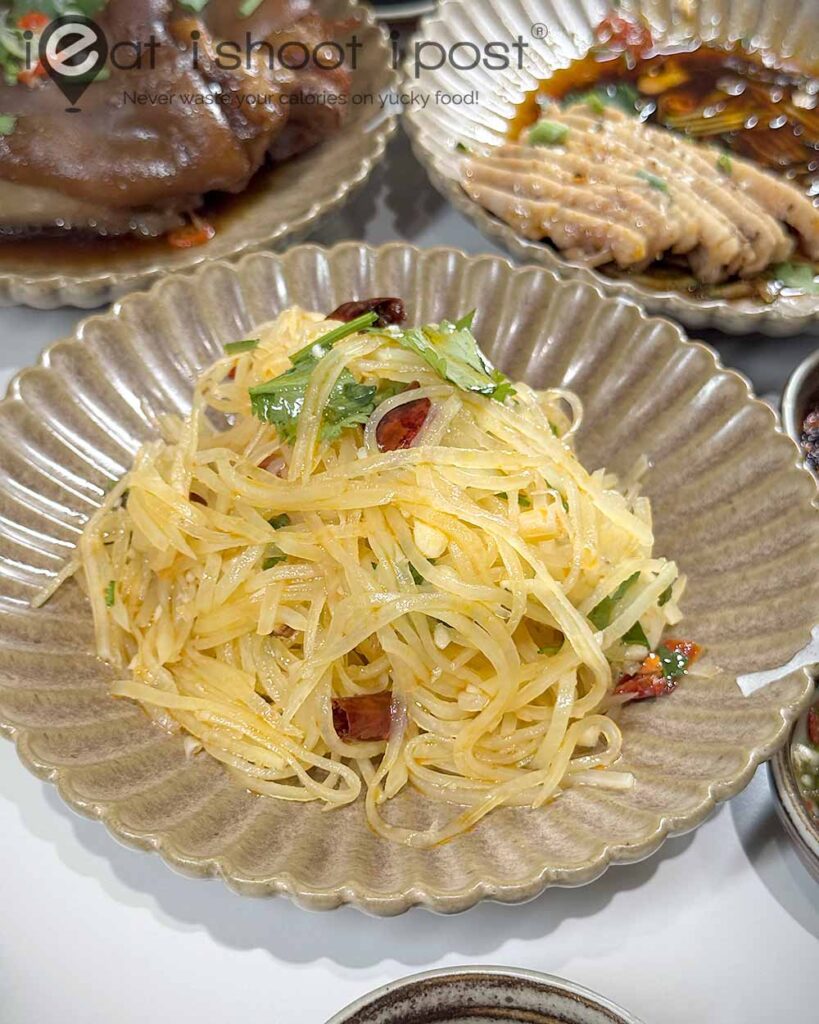
Crunchy potatoes is not something we commonly encounter in our local context. But this dish might just change your mind about how potatoes should be served. The strands need to be cut fine enough so they cook through just enough to lose that raw starchiness, while still retaining a satisfying crunch.
Nai Nai’s version gets it right. Light, refreshing and clean on the palate, with a spicy Sichuan twist that gives it just enough edge to keep things interesting. Classic Hangzhou sensibility with a Sichuan kick.
Marinated Food
Spicy Braised Pig’s Trotter
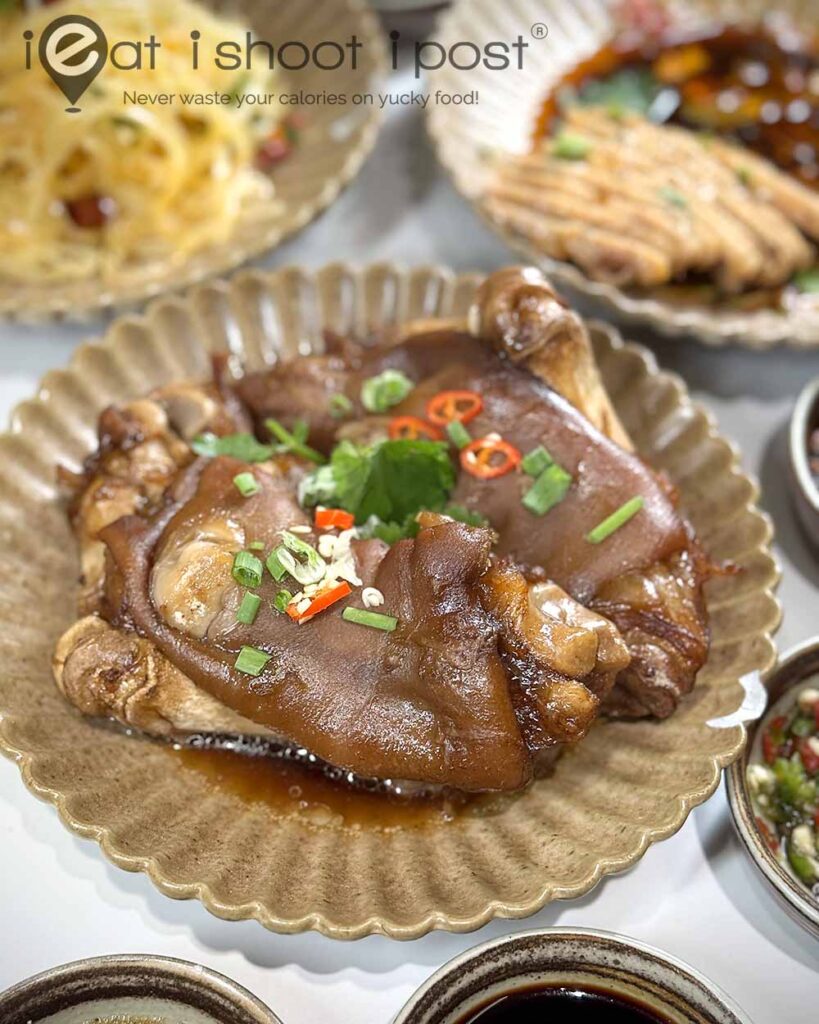
One of the most famous Hangzhou dishes is Dong Po Rou, which unfortunately was sold out on the day we visited. So we opted for the trotters instead.
The classic Hangzhou trotter follows the same hong shao philosophy. It is braised low and slow with soy sauce, Shaoxing wine and rock sugar until the skin and fat melt into something almost silky. Nai Nai’s version takes a different road, using a spiced brine base with a Sichuan chilli kick that cuts through the richness of the collagen.
Personally, I would have liked it a little softer. But the bigger question on my mind now is whether the Dong Po Rou here is done the traditional way. Looks like a return visit is in order.
Desserts
Traditional Style Double Boiled Pear with White Fungus
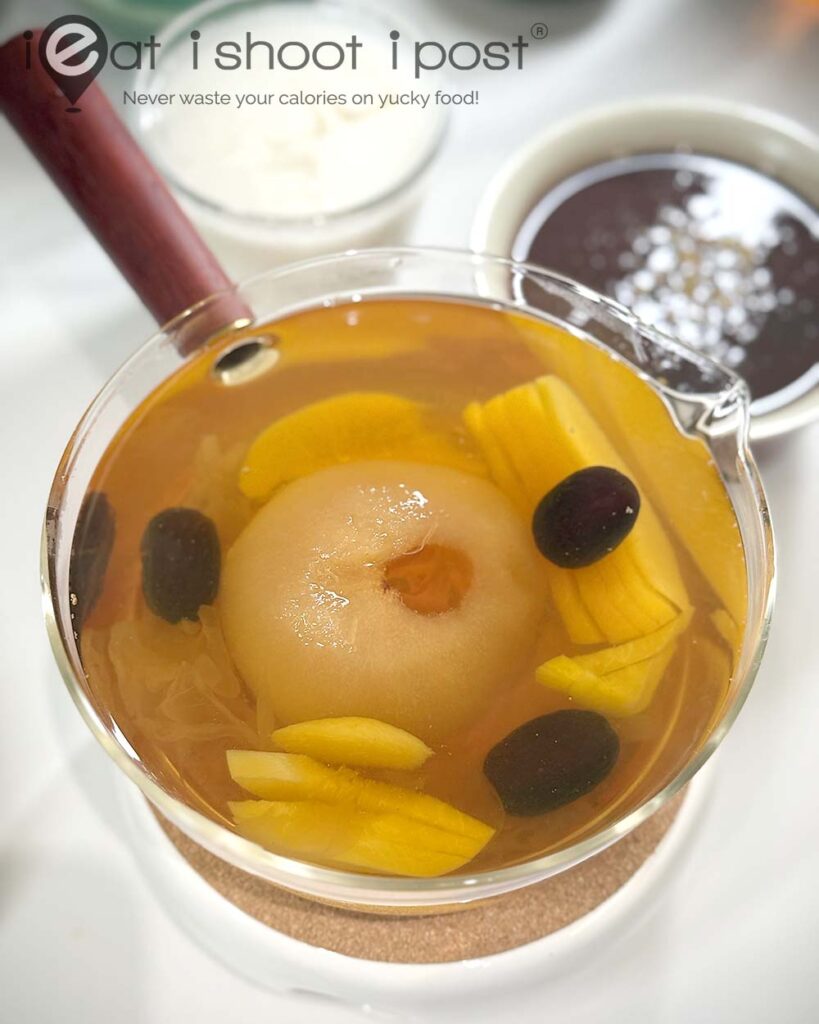
We are all familiar with this classic Chinese dessert, and for good reason. Snow pear, white fungus, goji berries and red dates, slow simmered the traditional way until the broth turns clear and lightly sweet.
It is the kind of dessert that feels like it is doing you good while you eat it, which in traditional Chinese medicine terms, it probably is. Nai Nai’s version stays true to the Jiangnan household approach, restrained and balanced, never cloying. Not overly sweet, clean on the palate, and a genuinely lovely way to close the meal.
Osmanthus Honey Hawthorn Cake
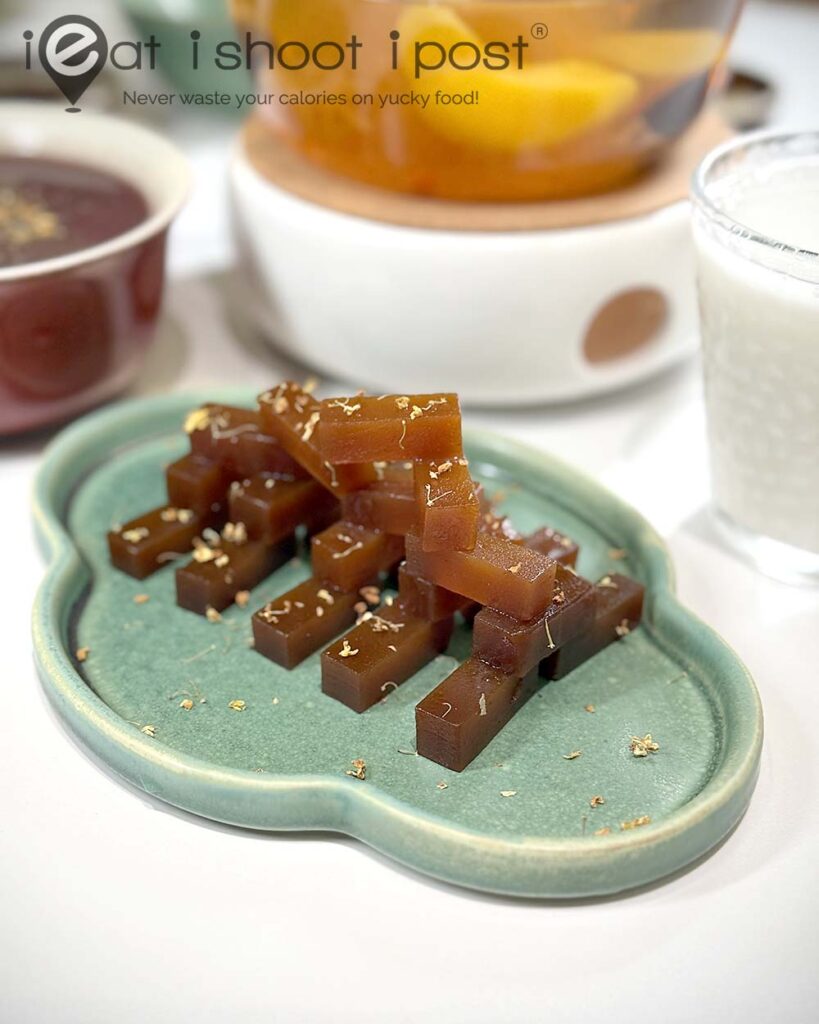
Most of us would have grown up with haw flakes, those little round discs wrapped in paper, so the flavour here is immediately familiar.
At Nai Nai, they serve it as little bite-sized kueh, with a floral lift from the osmanthus and a gentle sweetness from the honey that rounds everything out beautifully. In TCM (traditional chinese medicine), hawthorn has long been used to aid digestion, making this perhaps the loveliest way to end a meal!
Conclusion
Nai Nai Flavor 椿花奶奶 is a welcome addition to Singapore’s Chinese dining scene, with Jiangnan cuisine occupying an interesting middle ground for the Singapore diner. The flavours are rooted in the same Southern Chinese culinary tradition that many of us grew up with, yet there is enough novelty here to keep things genuinely interesting.
The brand, established in 1982, clearly knows what it is doing, and it shows in the consistency and care across the menu. With a good selection of dim sum, soups and a range of other dishes, this is somewhere you could comfortably come back to on a regular basis.
I am already making plans for a return visit for the Youbu Style Egg Cake and to hopefully try the Dong Po Rou.
Disclosure: this post is written in partnership with Nai Nai Flavor. Opinions expressed are those of our own.