


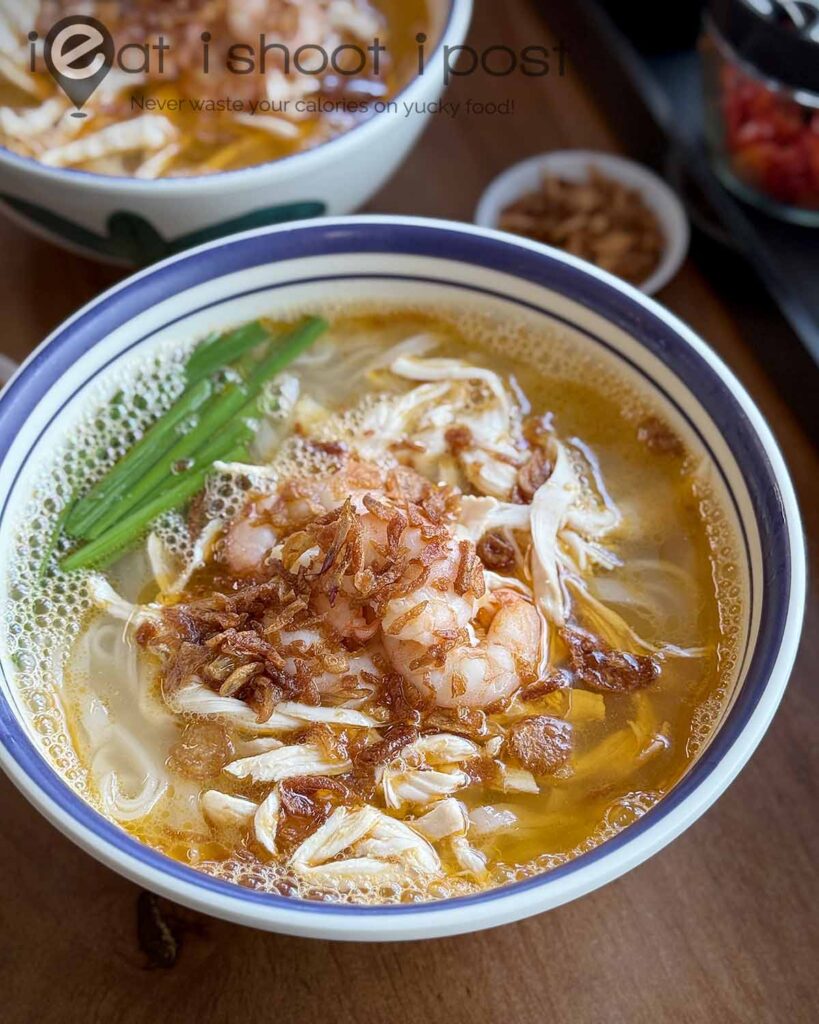
Can this be as good as the ones in Ipoh?
Having tried some excellent Ipoh hor fun in Ipoh and Kuala Lumpur last year, I was intrigued when my makan kaki alerted me to a place in Hougang that serves Ipoh hor fun said to be as good as the ones in Ipoh. Could that really be possible?
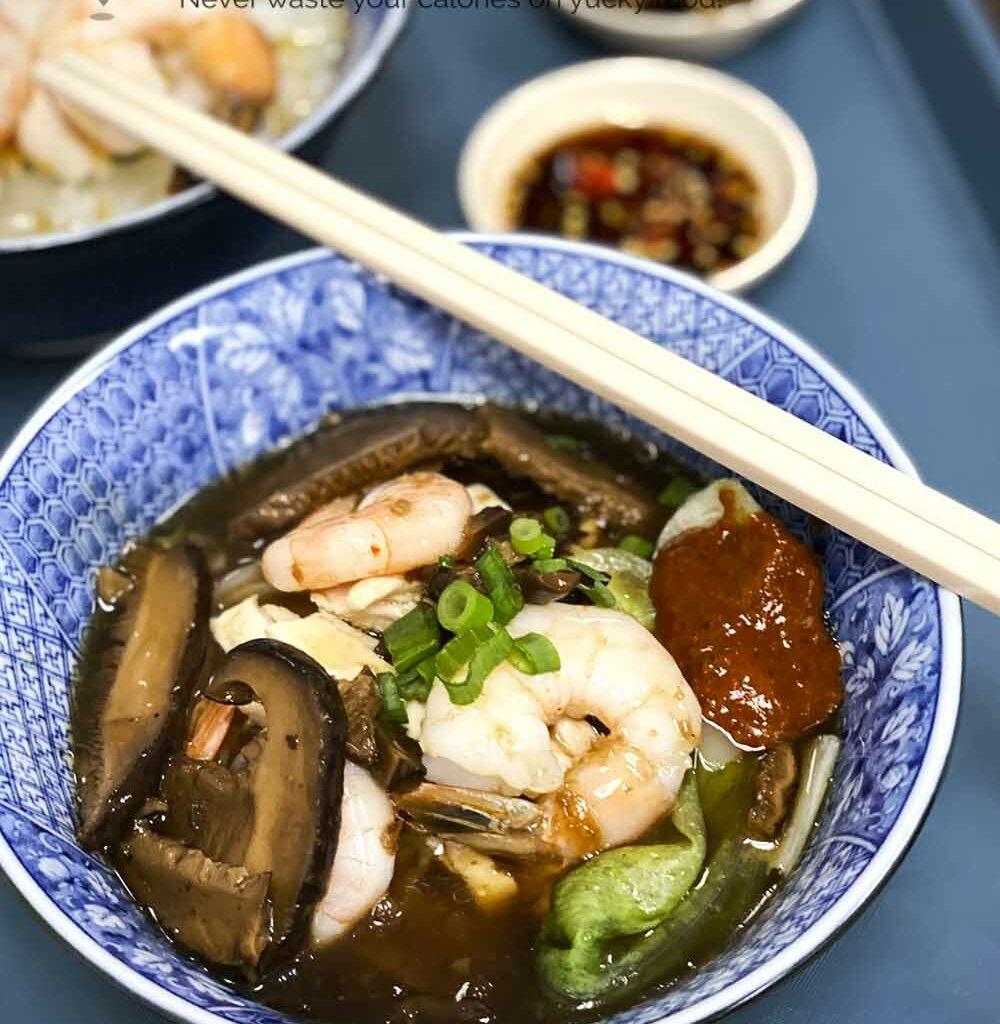
The key to a good bowl of Ipoh hor fun lies in the silky-smooth rice noodles and natural sweetness of the broth. The silky noodles is often attributed to the unique water quality in Ipoh and the broth is traditionally made from rainbow tiger prawns. This is an ingredient that is not readily available in Singapore.
So, can this Ipoh hor fun really be as good as the ones in Malaysia?
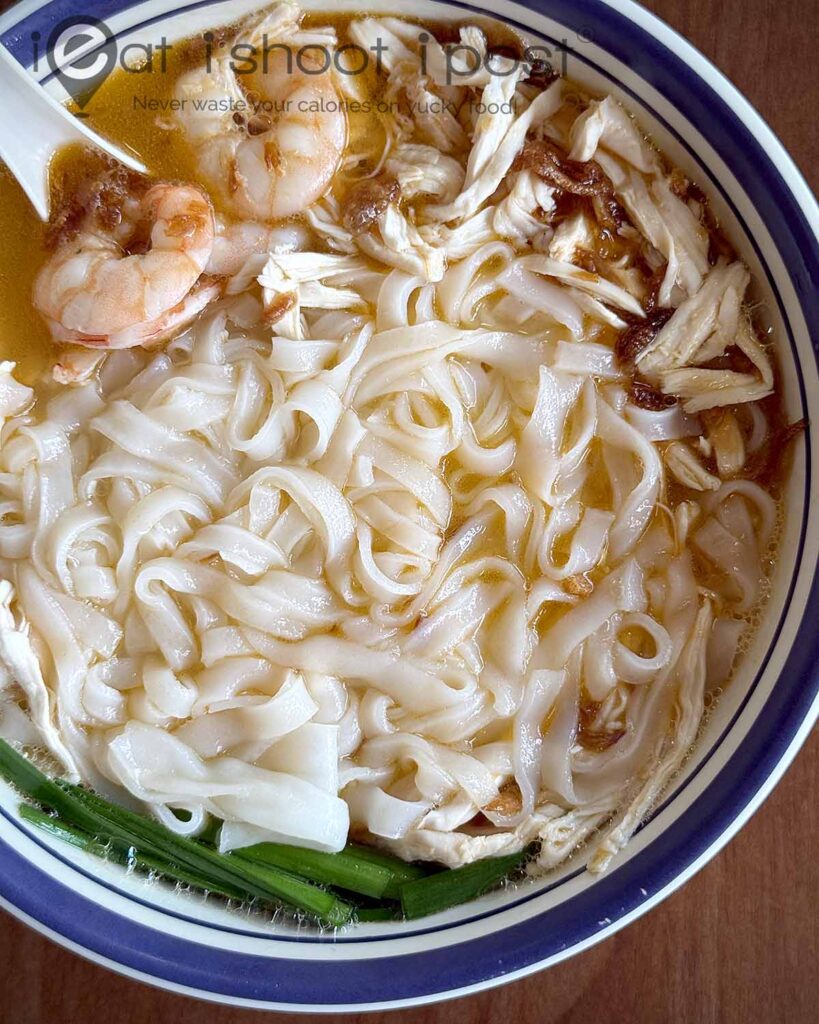
Craving for Ipoh Hor Fun Satisfied!
The short answer is yes. I didn’t believe it at first.
I have to qualify it as “almost”. It would be quite a stretch to claim that it is every bit as good.
Still, the reality is that it managed to satisfy my craving for Ipoh hor fun whenever I find myself reminiscing about the bowls I had in Ipoh. And since there’s no way to compare them side by side, I’ll probably never know just how big the difference really is.
The Key Ingredients
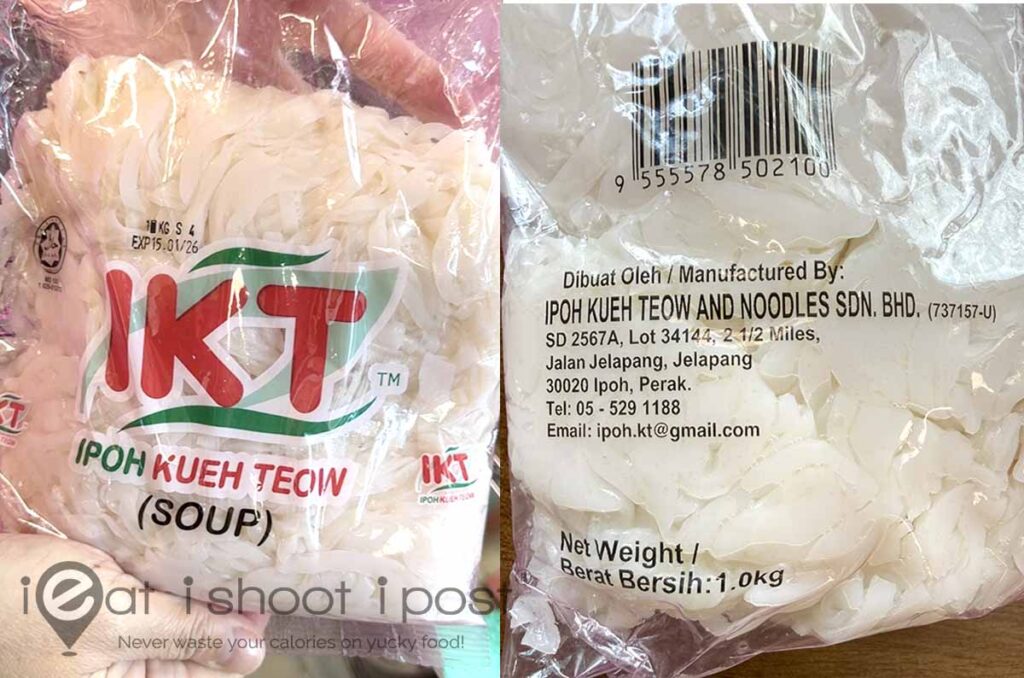
Authentic Ipoh Kueh Teow
Most people would agree that what makes Ipoh hor fun so special is the extraordinary silkiness of authentic Ipoh kueh teow. This distinctive texture is often attributed to the water in Ipoh. The water there is naturally rich in minerals, that gives the rice noodles their characteristic smoothness, slurpiness, and delicate bite.
The owners (who hail from Ipoh) have gone the extra mile of procuring authentic Ipoh kueh teow that is specially imported from Ipoh.
I had the fortune – though it felt like misfortune at first – of tasting the dish over two consecutive days. On my first visit, they had run out of hor fun from Ipoh. So I tried it with local kway teow instead. I returned the next day and managed to taste it with the Ipoh kueh teow. The difference was quite obvious.
The Ipoh version is noticeably thinner, silkier, and far more refined, with a smooth, almost slippery mouthfeel that glides down effortlessly. It is so tender you could swallow it easily even without teeth. It is, without question, superior to our local kway teow for this dish and makes all the difference to the final result.
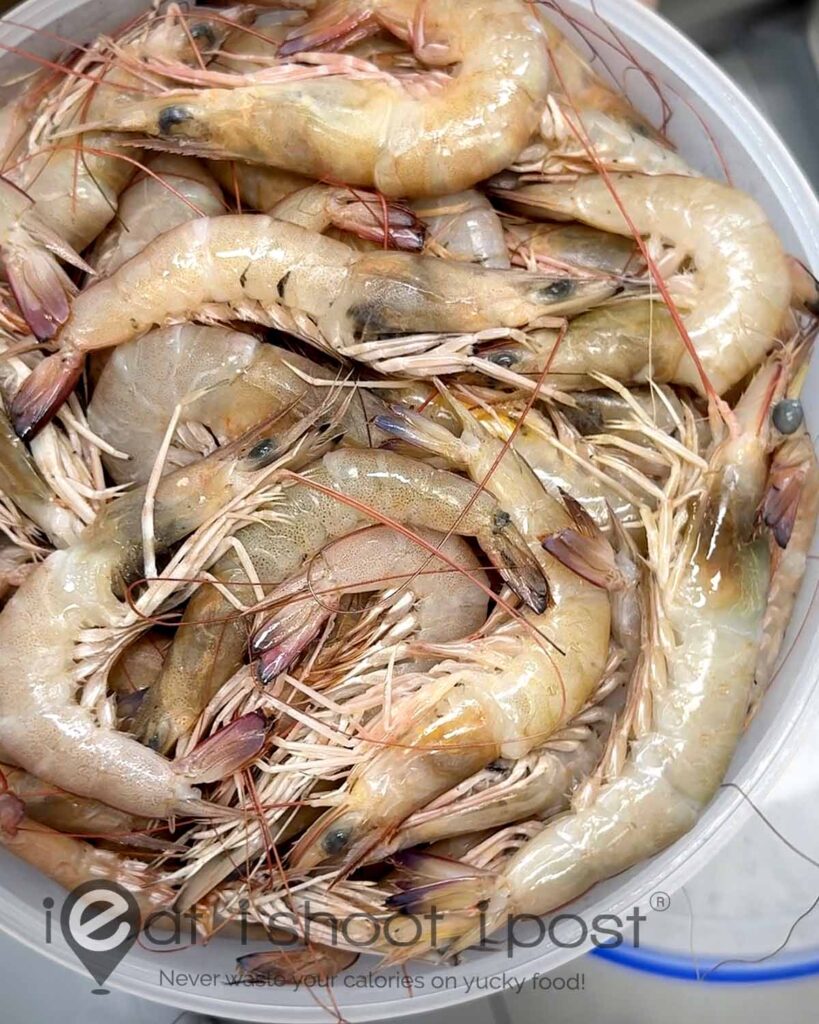
Sweet Sua Lor Prawns
Ipoh hor fun soup is traditionally made by simmering chicken bones together with prawn shells. The type of prawns used plays a crucial role in defining the sweetness and depth of the broth.
In Malaysia, rainbow shrimp are commonly used for Ipoh hor fun as well as prawn mee. These prawns have hard shells and a relatively low meat-to-shell ratio. But they are prized for their natural sweetness, which makes them ideal for stock-making. (I’ve written in more detail about this in my prawn files.)
Unfortunately, rainbow shrimp are not readily available here, so they use sua lor prawns instead. These have similarly hard shells and a clean, sweet flavour, making them a good substitute. The prawns are sourced from a fishmonger at the nearby Hainanese Village market, just across the road, ensuring freshness.
The resulting broth is excellent! It is comforting, well-balanced, and fragrant with natural prawn sweetness. I would say it comes very close to the Ipoh hor fun that I had during my recent trip to Ipoh Ipoh Cafe! (It is a restaurant serving Ipoh cuisine in KL)
Owners from Ipoh
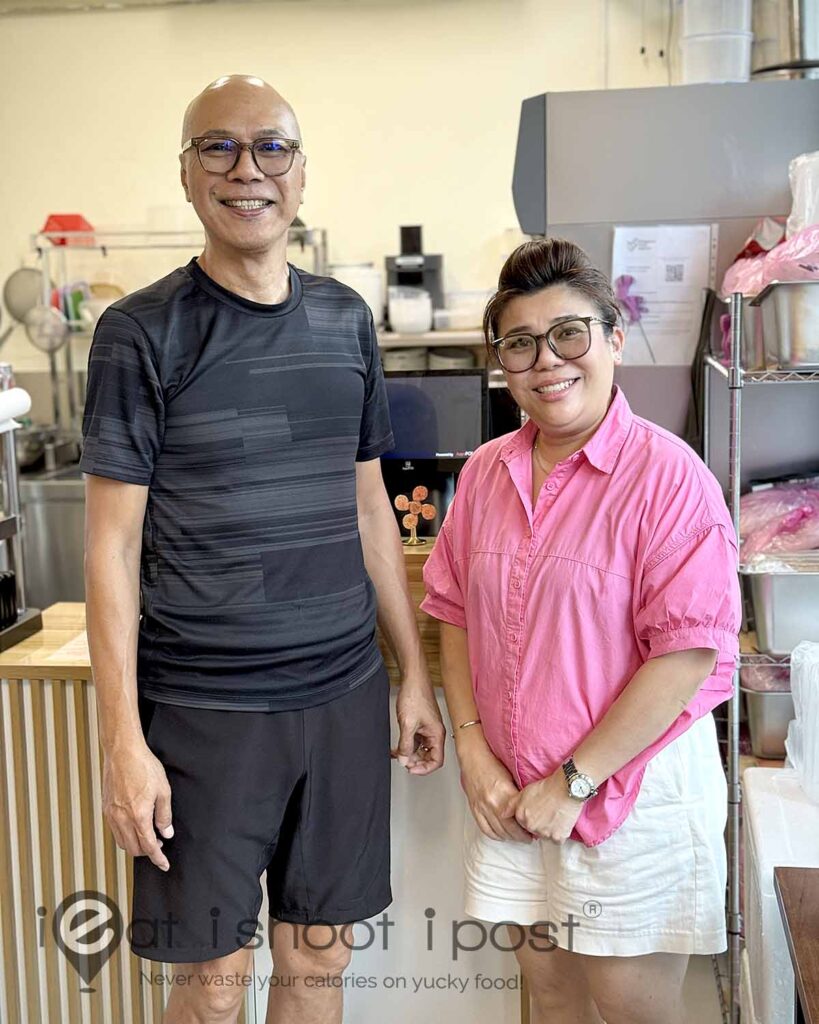
The final key to the authenticity of this Ipoh hor fun lies in the owners themselves, who were born and raised in Ipoh.
JM Noodle House is named after two Ipoh sisters, Jessica and May. “JM” also being shorthand for jie mei (姐妹), meaning sisters. They first started selling Ipoh hor fun from a small stall in the basement of The Promenade. But the response was so strong that they soon moved into a larger standalone space on level one.
Eateries like this may offer a glimpse into how our hawker heritage can be preserved for the future. They focus on doing one dish well, rather than many dishes passably. Plus, they operate from a dedicated space with proper seating.
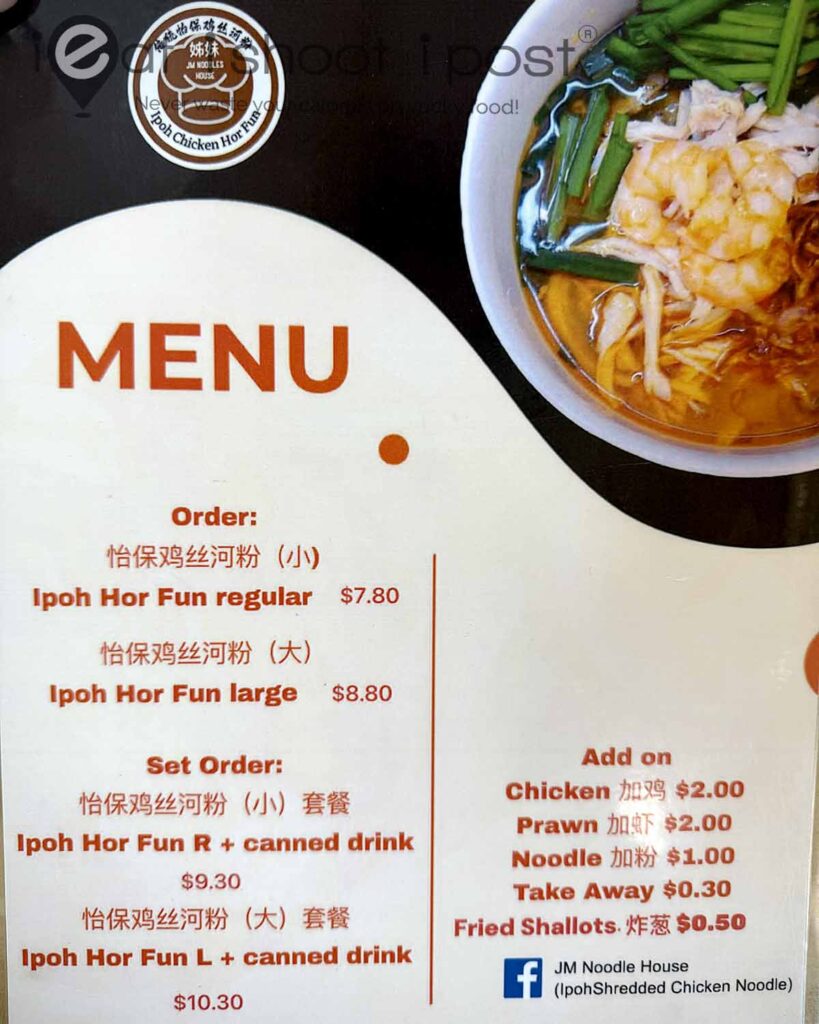
A bowl of Ipoh hor fun starts at $7.80. Though most diners will likely spend closer to $10 once extras are added. When customers are willing to pay these prices, they receive a well-crafted product. As such, the owners are able to run a sustainable, profitable business.
It’s a model that makes sense. It is one I hope to see more of! Whether for prawn mee, fish ball kway teow, Hokkien mee, or other heritage noodle dishes we all love.
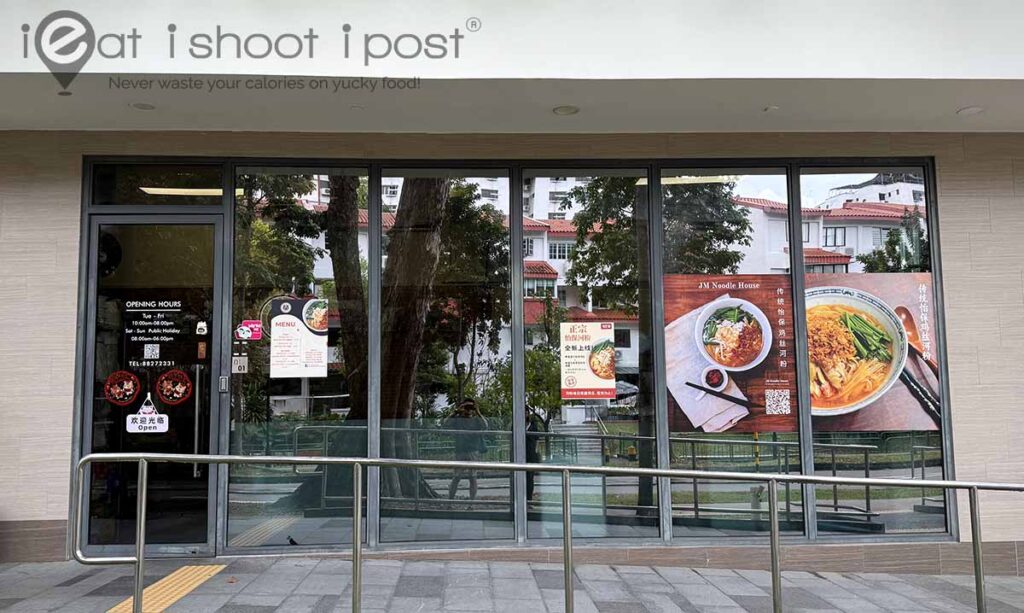
Conclusion
A very authentic bowl of Ipoh hor fun that reliably soothes those cravings for the real taste of Ipoh. Well worth a trip! 4.5/5


In all the places outside of Ipoh and the now defunct Lee Tong Kee Ipoh Sar Hor Fun restaurant that ended up on South Bridge Road before they closed for good, this has been the only place where the soup base is so flavourful and hor fun so wondrous that I leave an empty bowl when I’m done–if I could lick the bowl, I would!!! Everywhere else that I’ve tried that purports to sell this dish, their soup and/or hor fun has been just bland and tasteless and just a pale imitation of the real thing. JM Noodle serves *THE REAL THING*. I highly recommend this place but one caveat is that it’s very tiny (15 seats max across 3 tables and 1 window counter) so if one wants to eat there, it’s best to come at off hours (e.g., between the lunch and dinner times) or figure to dabao/takeout instead (I live about 30-45 minutes away by car and the dish travels well). I normally order a large portion with extra everything (i.e., extra chicken, extra prawn, extra noodles and extra fried shallots). It’s well worth every single penny spent!!! If I lived closer, I would be here almost every other day, as it’s so good…
Thanks for your feedback! Glad you enjoyed the hor fun!