
With the success of Korean tonkatsu restaurant Tonshou, it was inevitable that we’d see another Korean tonkatsu concept hit the market sooner or later.
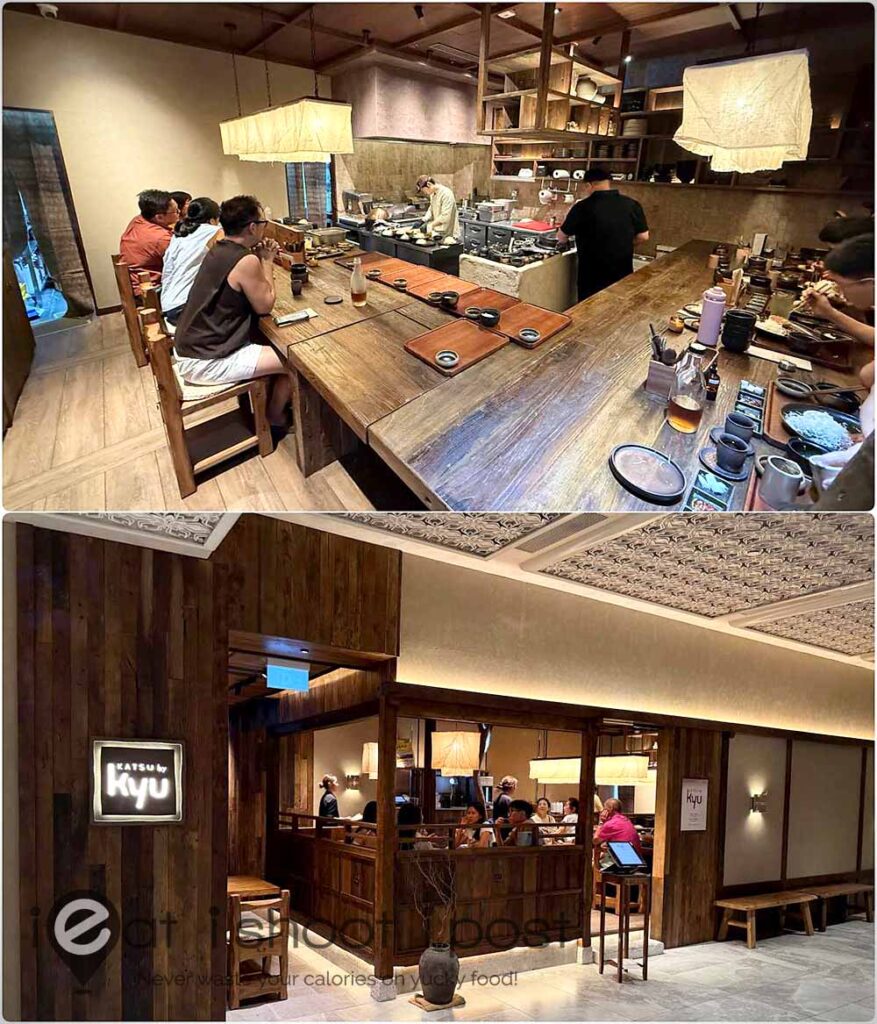
Katsu by Kyu comes from the same group behind restaurants like DRIM Gold, Song Gye Ok, and Modu Samgyetang. They seem to have a real knack for building spaces with Korean theme interiors that evoke a genuine sense of authenticity. And this one is no different. The 44 seat space is done up in a traditional Korean hanok style. There is a main dining hall, an open kitchen with counter setas, and a few private rooms for smaller groups.
Kyu doesn’t refer to a chef’s name or a restaurant. It’s a Chinese character, 究, which refers to the pursuit of something to its ultimate end. You can sense that intention in three key features here: the quality of the pork, the quality of the rice, and the extra attention paid to the technique behind the tonkatsu itself.
Let’s dive into the details.
Good Tonkatsu Starts with Great Pork!
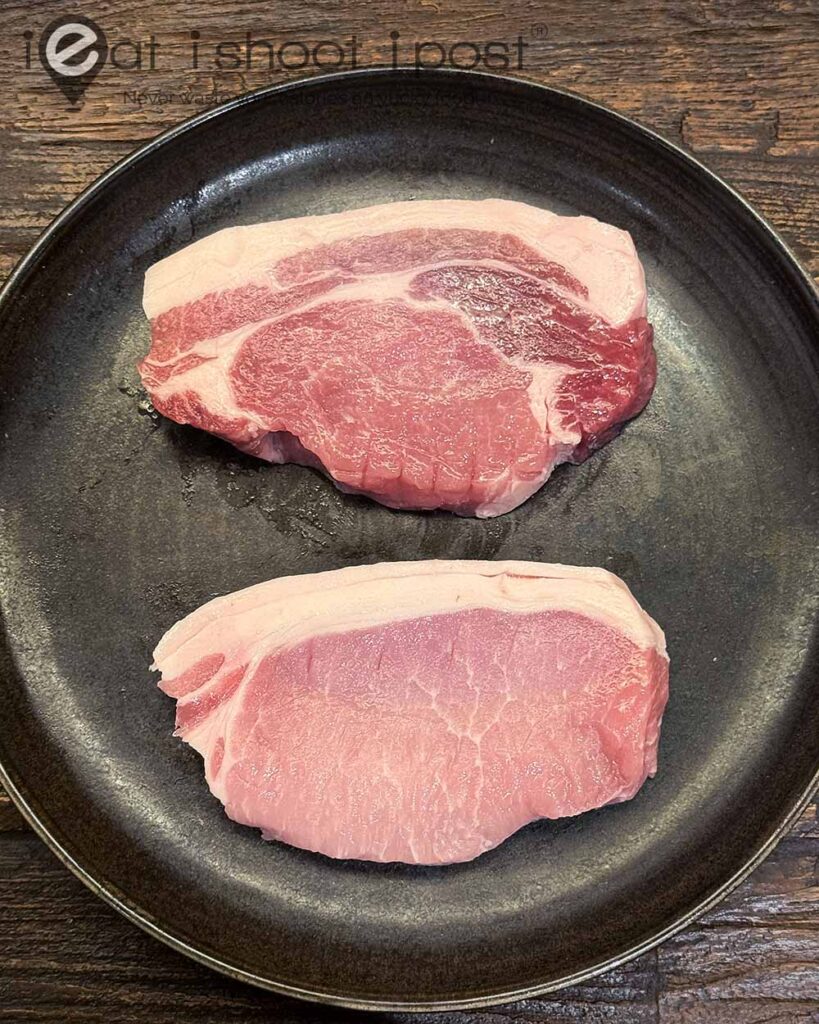
I’ve been a fan of Jeju black pork ever since it was introduced to the Singapore market late last year. I think it is one of the best pork you can get here. The pork is especially tasty when grilled Korean BBQ style, so I was very keen to try it as a tonkatsu.
There are two cuts to choose from, the classic Jeju loin and the centre-cut premium. The difference comes down to where each cut sits on the pig. The premium is taken from nearer the shoulder. So, beyond the eye of the loin, you’re also getting the surrounding strap muscles that cap it. If you think of it in terms of beef cuts, the centre cut premium is like a ribeye, while the classic loin is like a striploin steak.
If you like your meat with a bit more chew, more fat, and more flavour, go for the premium. But if you prefer straightforward, tender loin meat with a clean fat cap around it, the classic Jeju loin is the one for you.
Smoked over Charcoal
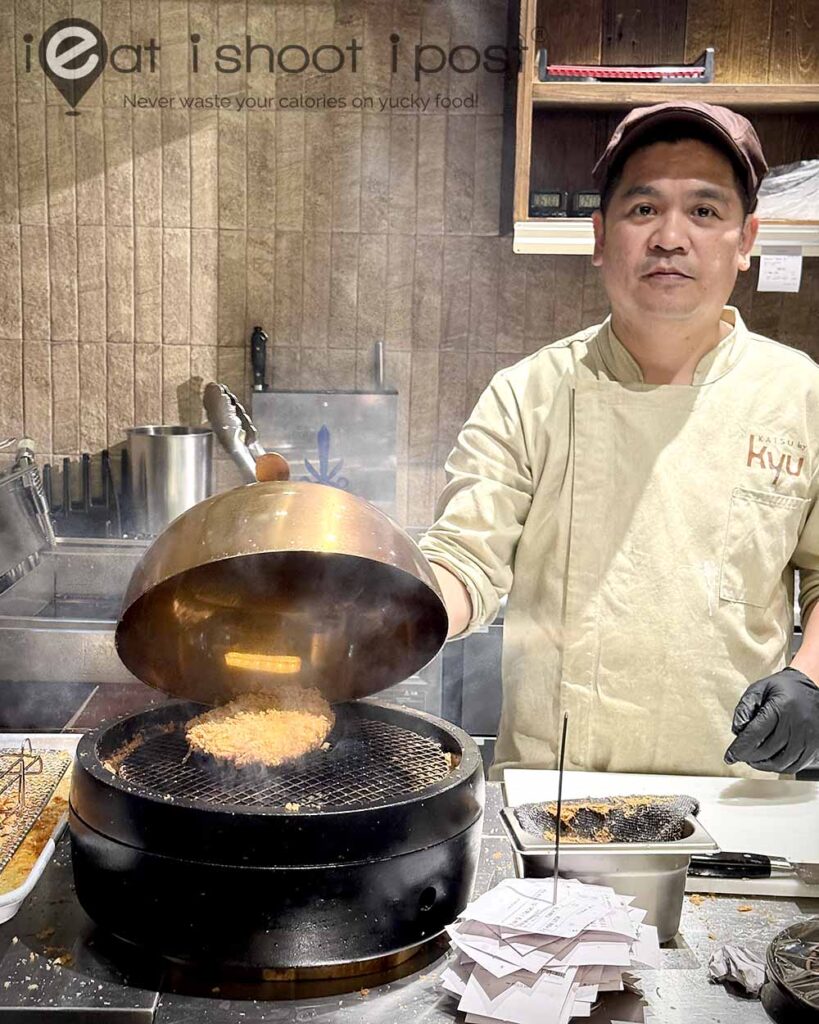
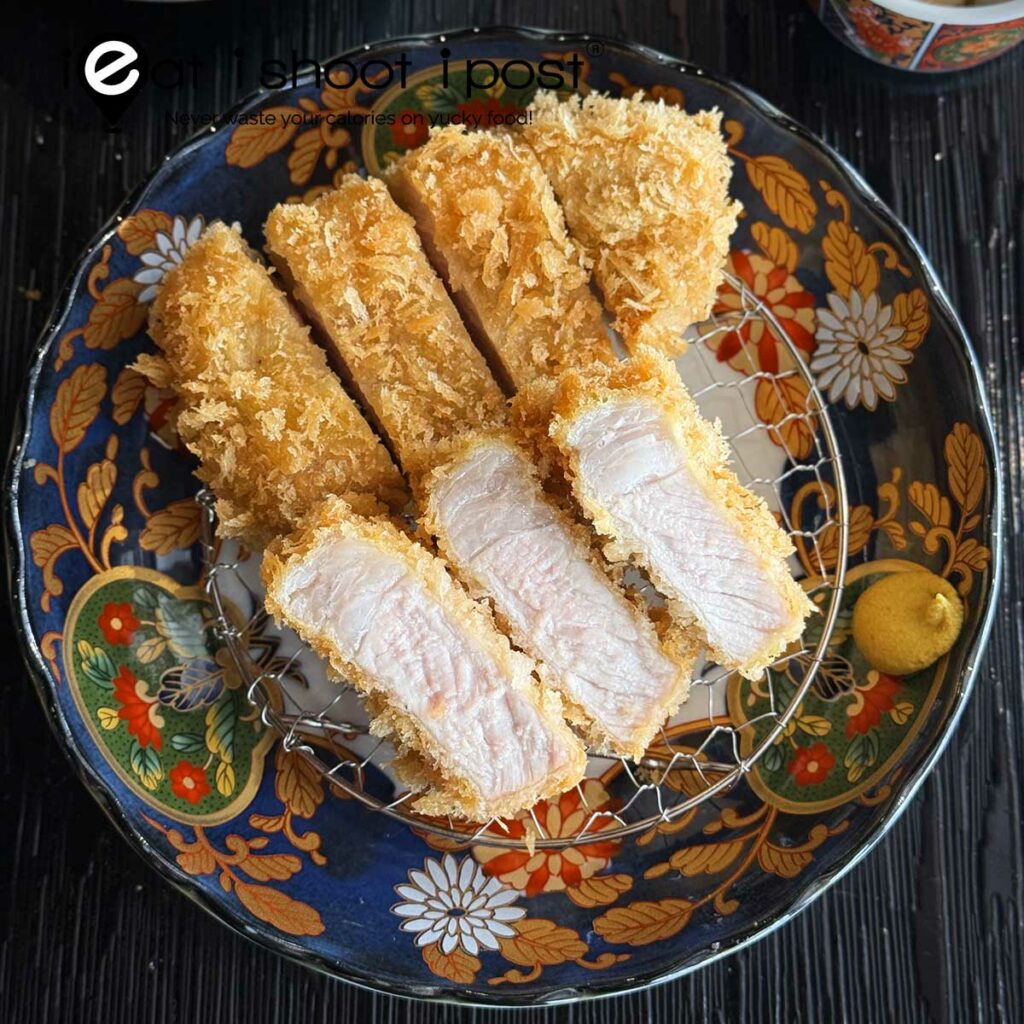
The pork is prepared the classic way, breaded in fresh Japanese panko and fried just like a traditional tonkatsu. What sets it apart happens after frying. Once cooked, the pork is rested, then finished over charcoal, which infuses it with a light smoky aroma while drying the panko out just a touch more for extra crunch.
This technique was pioneered by Tonshou, which opened in Singapore last year. It has since become something of a signature move that sets the Korean style apart from the traditional Japanese one.
Personally, I don’t think it does all that much to heighten the overall enjoyment of the tonkatsu. Nonetheless, it does serve as a visual cue to their 究 kyu.
Is it the Ultimate Tonkatsu?
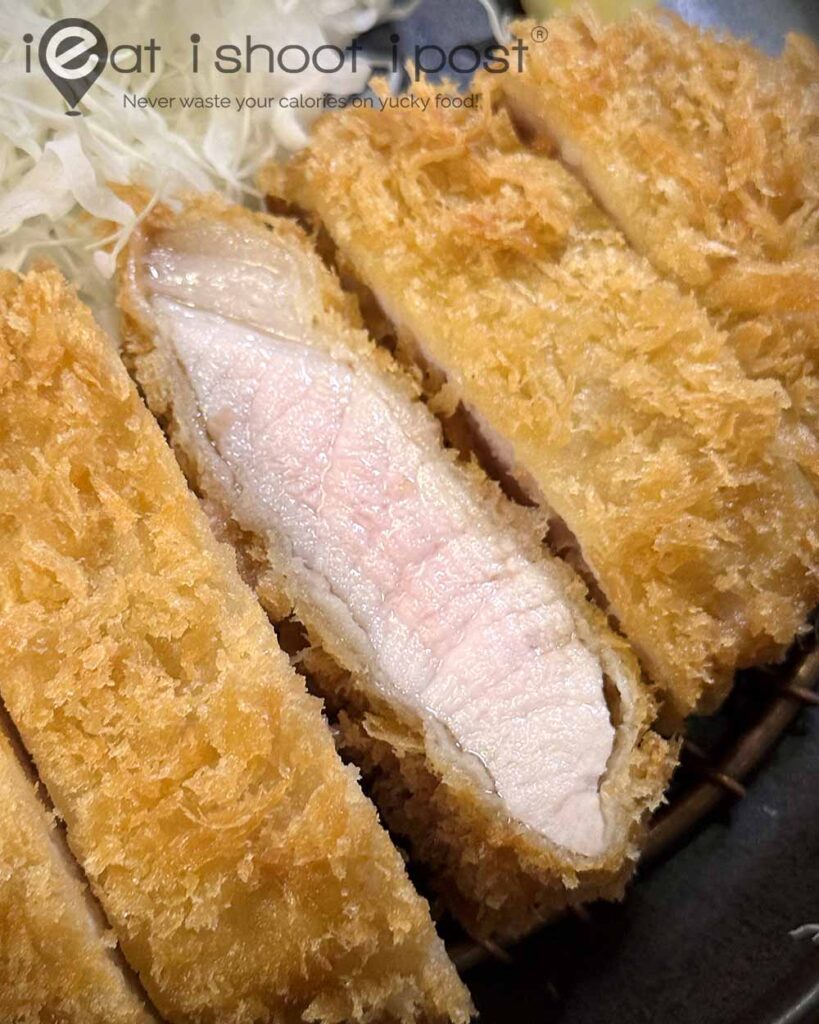
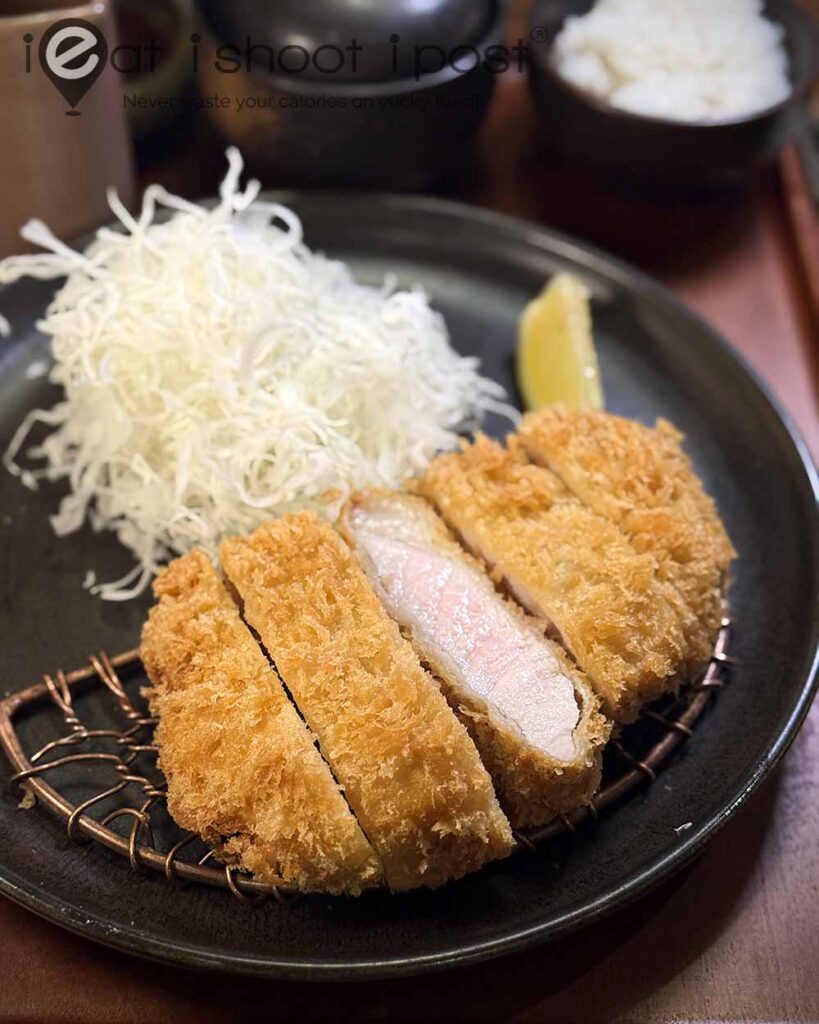
The tonkatsu itself is very good. The pork is tender, juicy, and flavourful, served slightly pink, which is exactly how a pork loin should be. I must add that our first piece came out cooked all the way through. This is likely because the kitchen was very busy that day and the pork had been left resting on the counter a little too long before it reached us. So, it’s probably not ideal to visit during peak periods when they’re really slammed.
The crust was light, crunchy, and flaky, though I felt the flavour itself could be pushed further. They currently fry in premium vegetable oil. But if they’re truly serious about their pursuit of perfection, I think adding pork lard and/or a touch of refined sesame oil to the frying oil would give the crust a more savoury depth that lingers at the back of the palate. 4.25/5
The Distinctive Korean touches to the Set
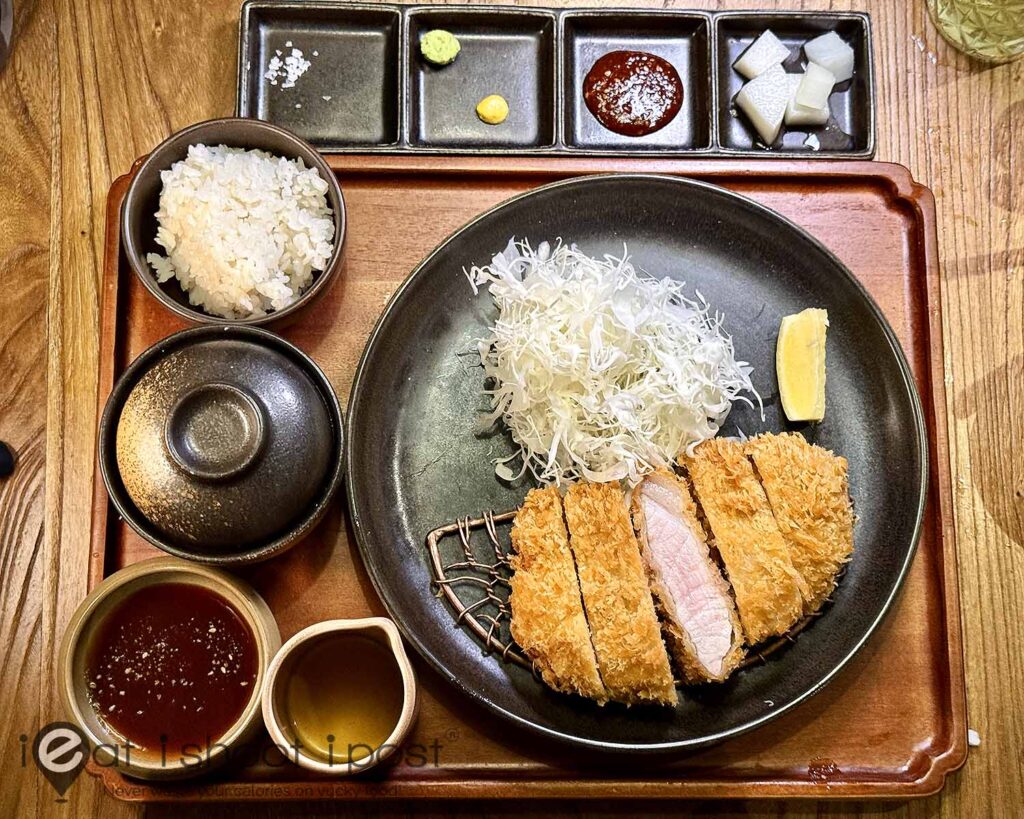
As per a classic tonkatsu meal, the set comes with unlimited rice and shredded cabbage. But in addition to the usual tonkatsu sauce, they also include Korean style ssamjang, and the salad comes dressed in a yellow, citrussy dressing that they make in house.
Freshly Milled Rice Cooked in Traditional Korean Iron Pot
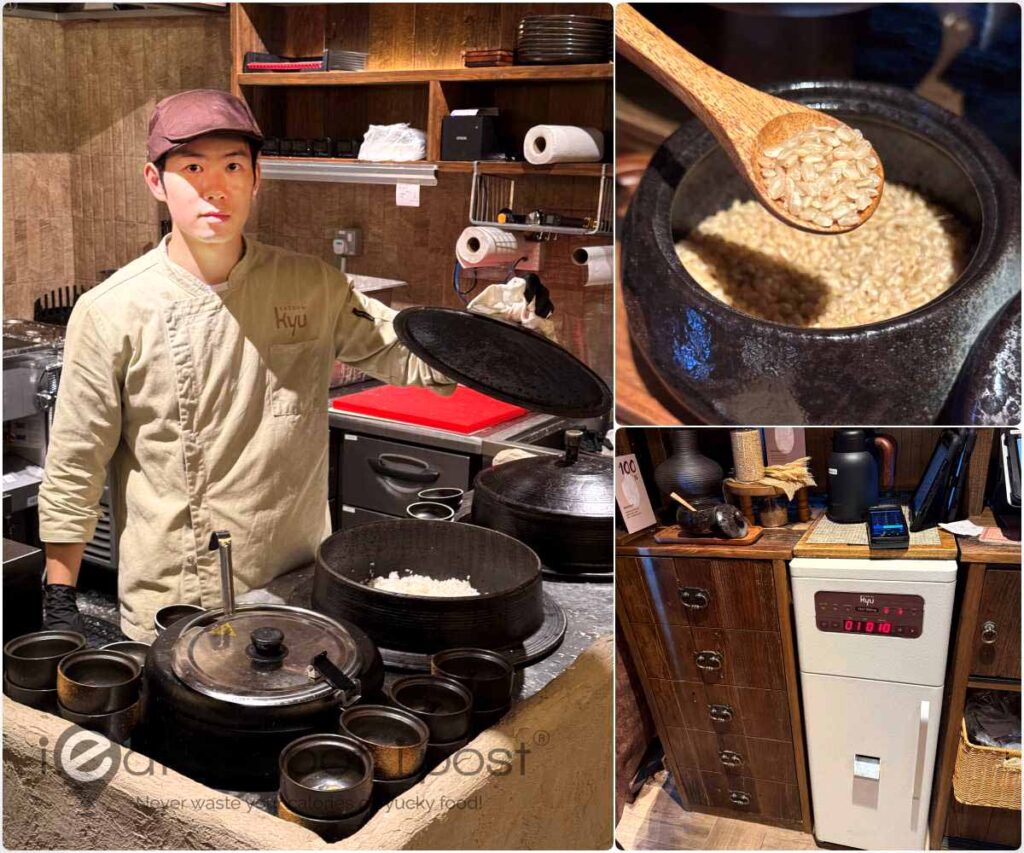
The restaurant pays special attention to the rice too. They use Korean rice, freshly milled every day and cooked in a traditional Korean iron pot, a process meant to yield a really good bowl of rice.
Unfortunately, we felt the rice fell a little short of what we have come to expect in a good Japanese restaurant. The grains weren’t quite as distinct and shiny as what we’ve come to expect from premium short grain rice. Perhaps it’s simply a matter of the kitchen still working out the technique. Over time, we hope they get it right, because when they do, this could really be something special.
Other Fried Stuff
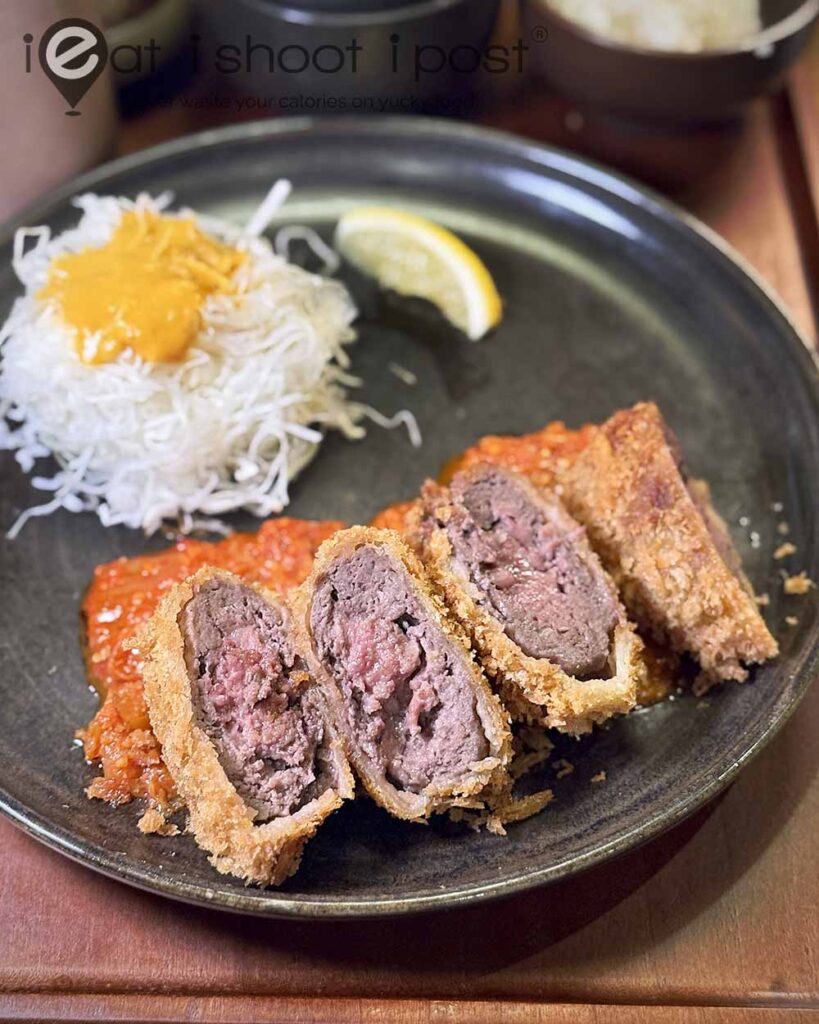
Other than the pork loin, they also offer a Panko Crusted Beef Short-rib Patty at S$38. It is essentially Korean tteokgalbi, minced short rib patty, breaded and fried. According to the menu, this isn’t simply thinly sliced beef mille feuille, the way some other tonkatsu restaurants prepare their beef versions. Instead, theirs is a proper tteokgalbi, roughly minced and marinated rib meat, served on a bed of house made kimchi.
It’s a nice dish that offers something different from the usual pork tonkatsu. I’d order an extra plate to share rather than have it on its own, since I still feel the pork tonkatsu remains the main star here. 4/5
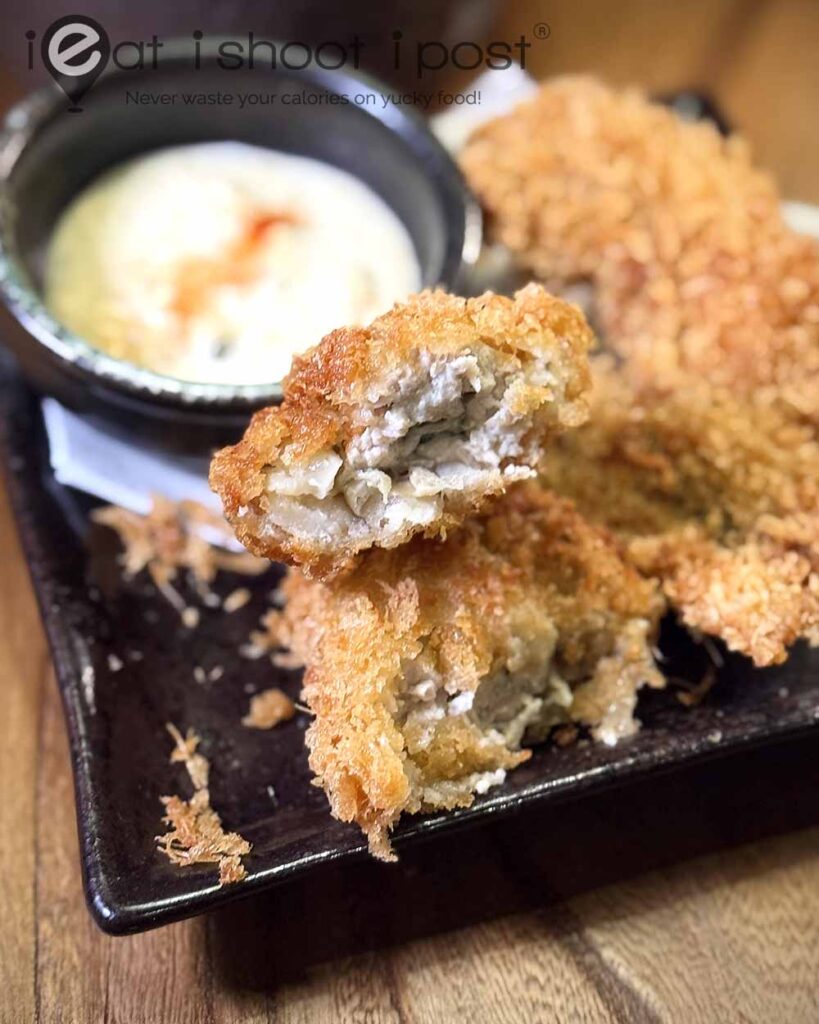
If you’re after seafood, they have an oyster katsu, three large oysters breaded in panko and fried. It’s nice, but not something I’d specially order again.
Most of what I was eating was the panko crust, and the oysters themselves weren’t particularly creamy. I didn’t get that coat your palate with briny flavour of the sea experience I was hoping for. 3.5/5
Conclusion
Katsu by Kyu clearly has the right intentions and, for the most part, delivers on them. The Jeju black pork is genuinely excellent, and their attention to detail, from the ten-day wet age to the charcoal finish, shows a kitchen that’s serious about the craft.
There’s still room to grow. They could push the crust further with pork lard or sesame oil, or refine their rice technique to get that perfect texture. The beef short rib patty and oyster katsu are worth trying if you’re keen to explore beyond pork. Though neither quite steals the spotlight from the tonkatsu itself.
Overall, this is a strong new addition to Singapore’s tonkatsu scene. I’ll be keeping an eye on them as they continue refining their craft.
Disclosure: This was a media tasting. Opinions expressed are those of our own.