
The Search for a Genuinely Great Plate of Hokkien Mee
Twenty years ago, my very first blog post was about Hokkien mee. So this month, as ieatishootipost turns 20, it is only fitting that I feature another plate of it.
Fried Hokkien mee is certainly trending at the moment. New stalls seem to pop up every month, and it is heartening to see new hawkers taking to the wok. But with so many stalls and so many opinions floating around, how do you actually filter out the really good ones from the ones that just make the news because they are new?
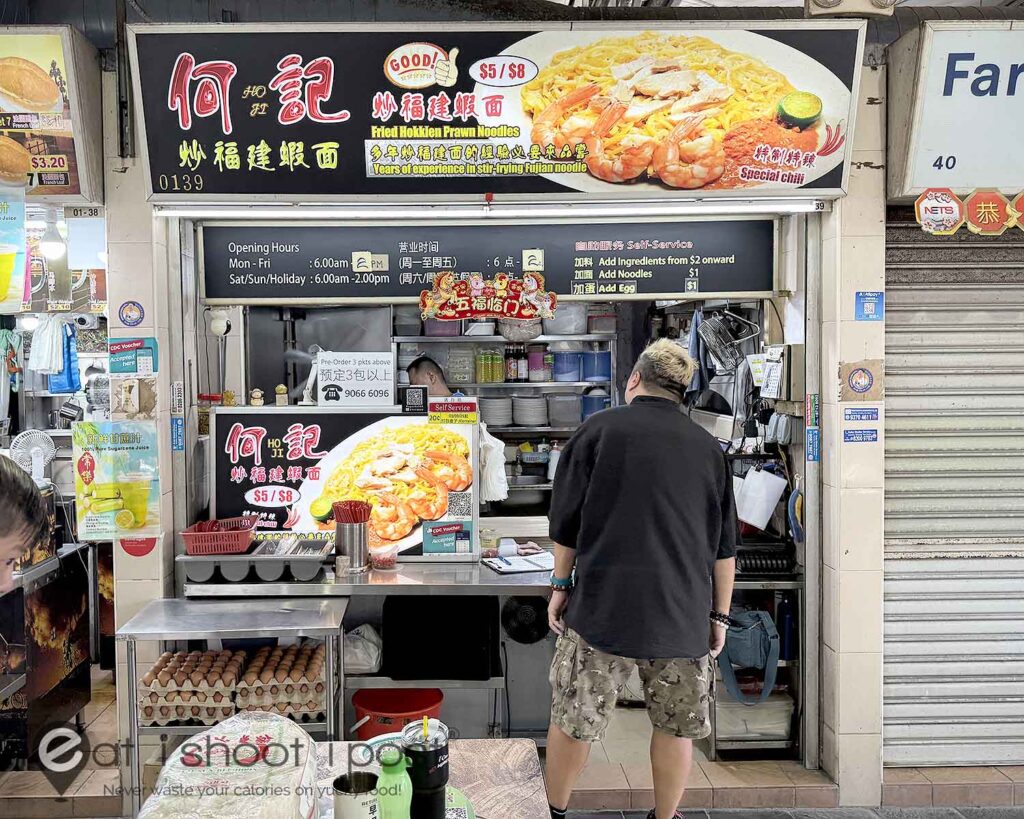
The tried and true method is to ask someone you trust, someone who actually goes around eating at every new stall that appears on social media. I happen to know a guy who is siao (crazy) Hokkien mee, let’s just call him The Golden Bear. So when I asked him to recommend some of his favourite Hokkien mee stalls, he pointed me to Ho Ji (何記) at Mayflower Food Centre.
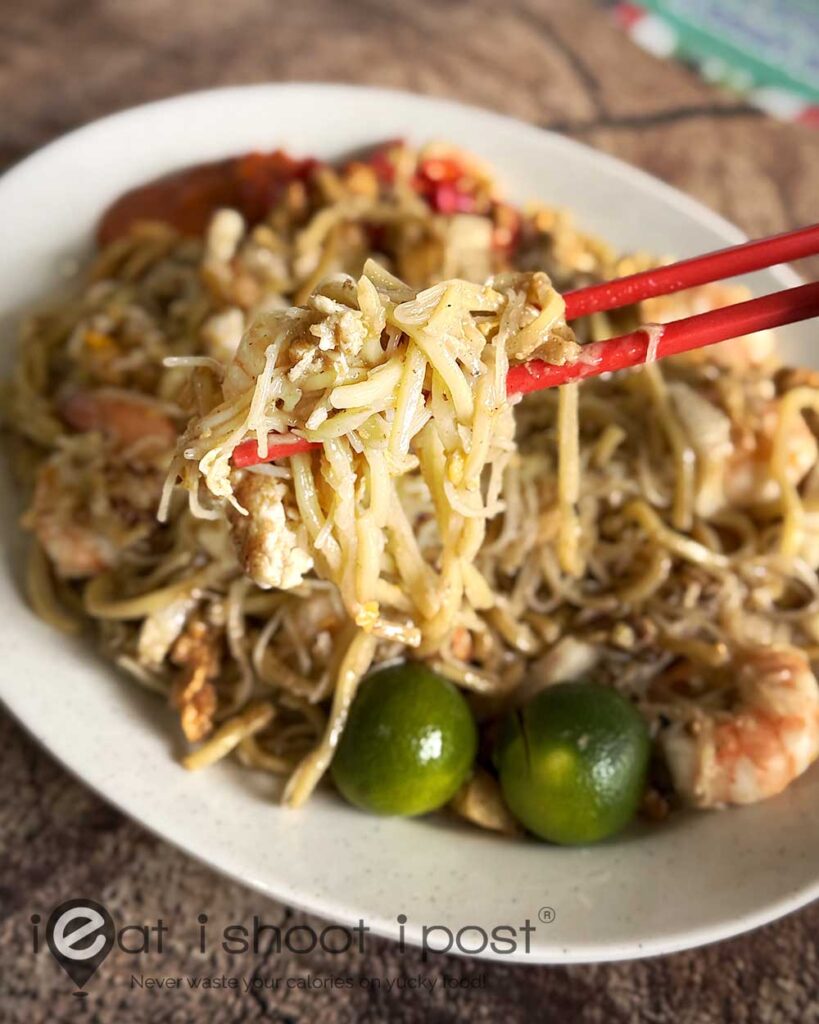
Wet or Dry, Thick or Thin?
There are really two camps when it comes to Hokkien mee. One uses thick bee hoon, braised with plenty of stock until it turns out wet and saucy. The other uses thin bee hoon, fried until dry, letting the noodles soak up the stock instead of swimming in it. The legendary names frying the dry style include Nam Sing at Old Airport Road, and Hainan Hokkien Mee at Golden Mile Food Centre. Its not coincidence that their style of Hokkien Mee is similar since both can trace their origins to the OG Hokkien Mee stall! (History of Hokkien Mee)
Ho Ji’s happens to belong to the latter, and according to The Golden Bear, Ho Ji can hold its own against these legends! So, I went down to check it out.
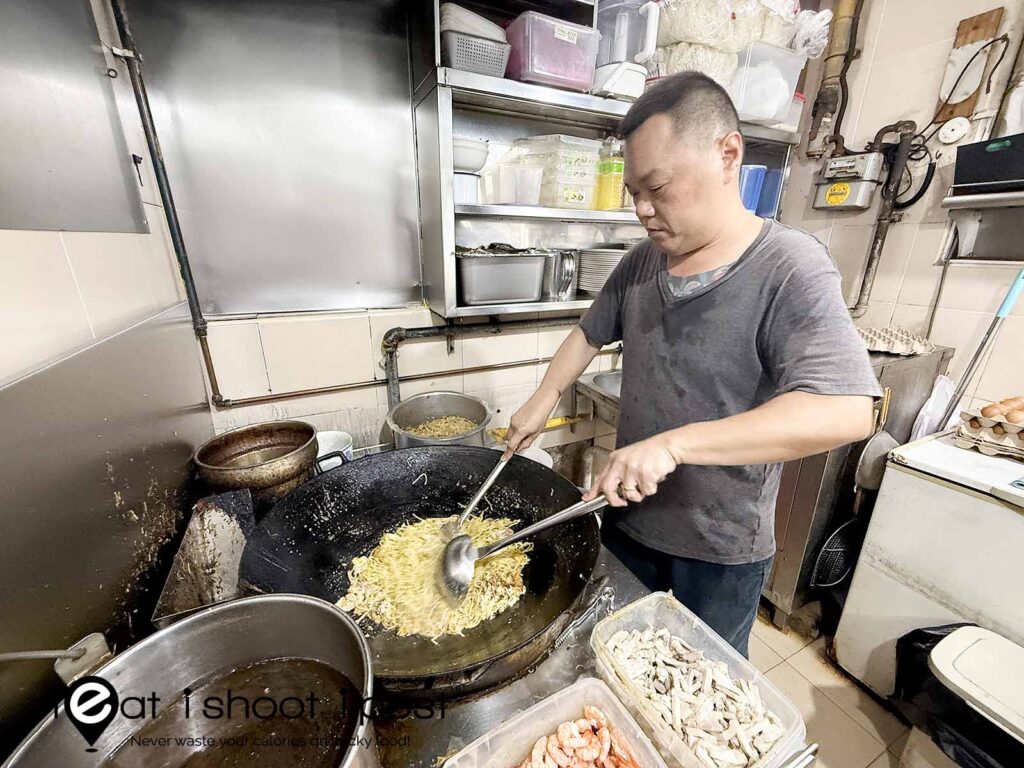
It’s all about the Wok!
When reviewing any Hokkien mee stall, I always start by observing how the hawker fries it. He starts with egg and a generous amount of lard, fries it till fragrant, then throws in the yellow noodles and gives it a thorough fry before adding the bee hoon. He lets the eggs, noodles and bee hoon really develop a nice toasty aroma, then adds more garlic, followed by the stock.
The key to a good plate lies in the quality of the stock. It is usually built from prawn heads and shells simmered for hours to draw out that deep sweetness. The freshly rendered pork lard, which he ladles on generously once it is plated is another key factor.
What was noticeably missing was that wooden cover most stalls use while braising the wok. But I must admit it did not seem to affect the final dish.
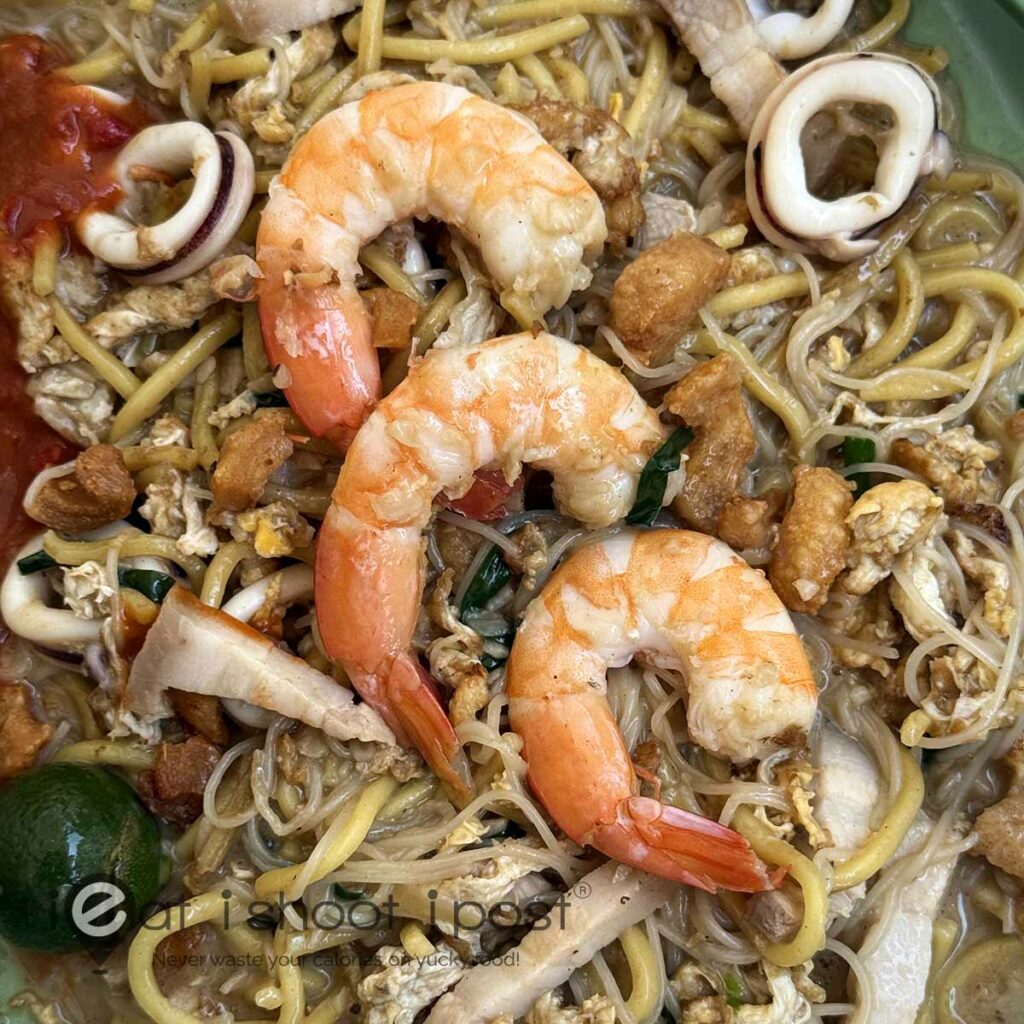
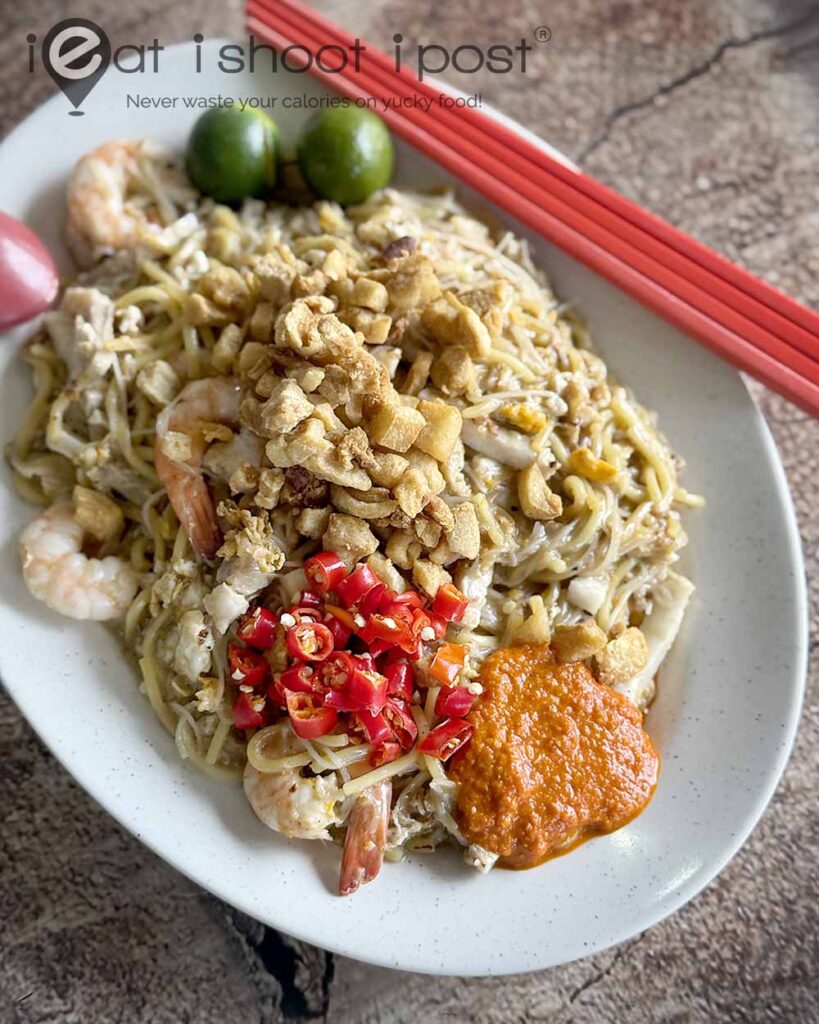
The Hokkien mee is excellent. It had enough wok hei. The noodles and bee hoon had thoroughly soaked up the stock, giving it that seafood sweetness that lingers at the back of the palate after each mouthful.
It actually tasted even better toward the end, once the noodles had rested a while. That is the character of fried Hokkien mee. Many aficionados would make it a point to pack it instead of eating it at the stall, so that there is some time for the flavours to really meld together! 4.5/5
One Hawker, One Wok, One Hokkien Mee
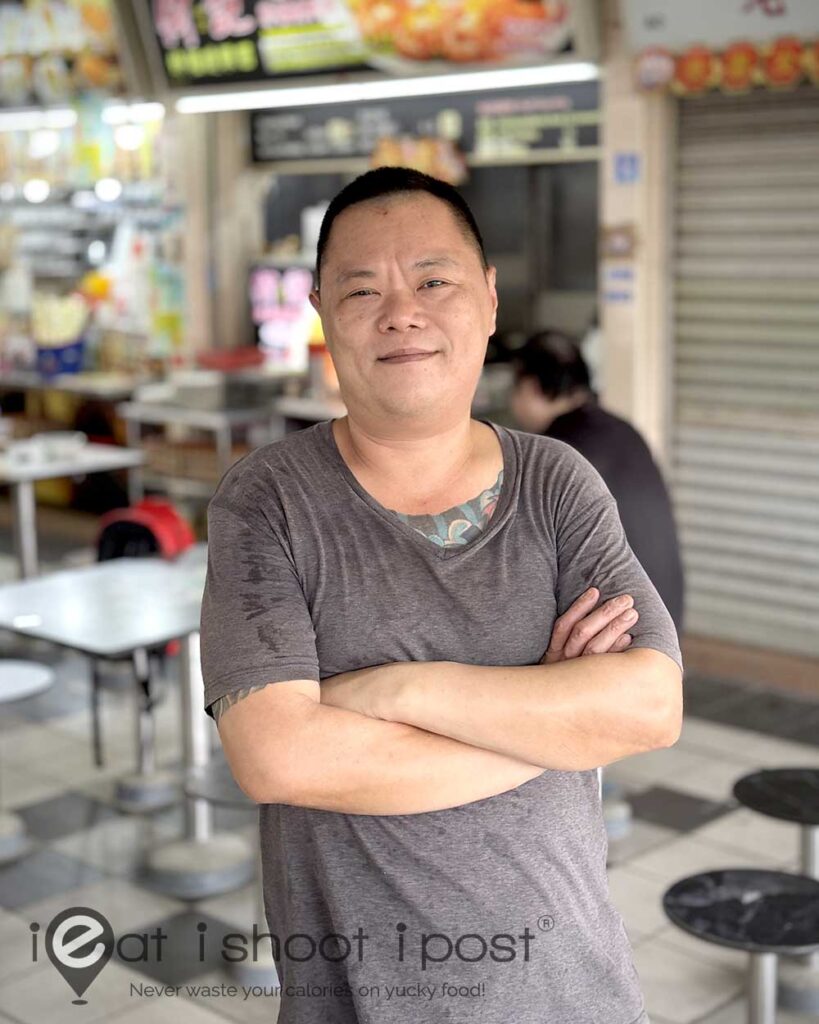
The real key to a great Hokkien mee lies in the skill of the hawker, not the brand name above the stall. That’s why so many new stalls start off well, but the moment they start expanding, the standard drops. This trend of young hawkers building a new brand and rushing to scale it up is disastrous for our hawker culture, and it’s led to the commoditisation of our hawker food. The result is a whole generation of stalls selling dishes that may be competent, but lacks the soul.
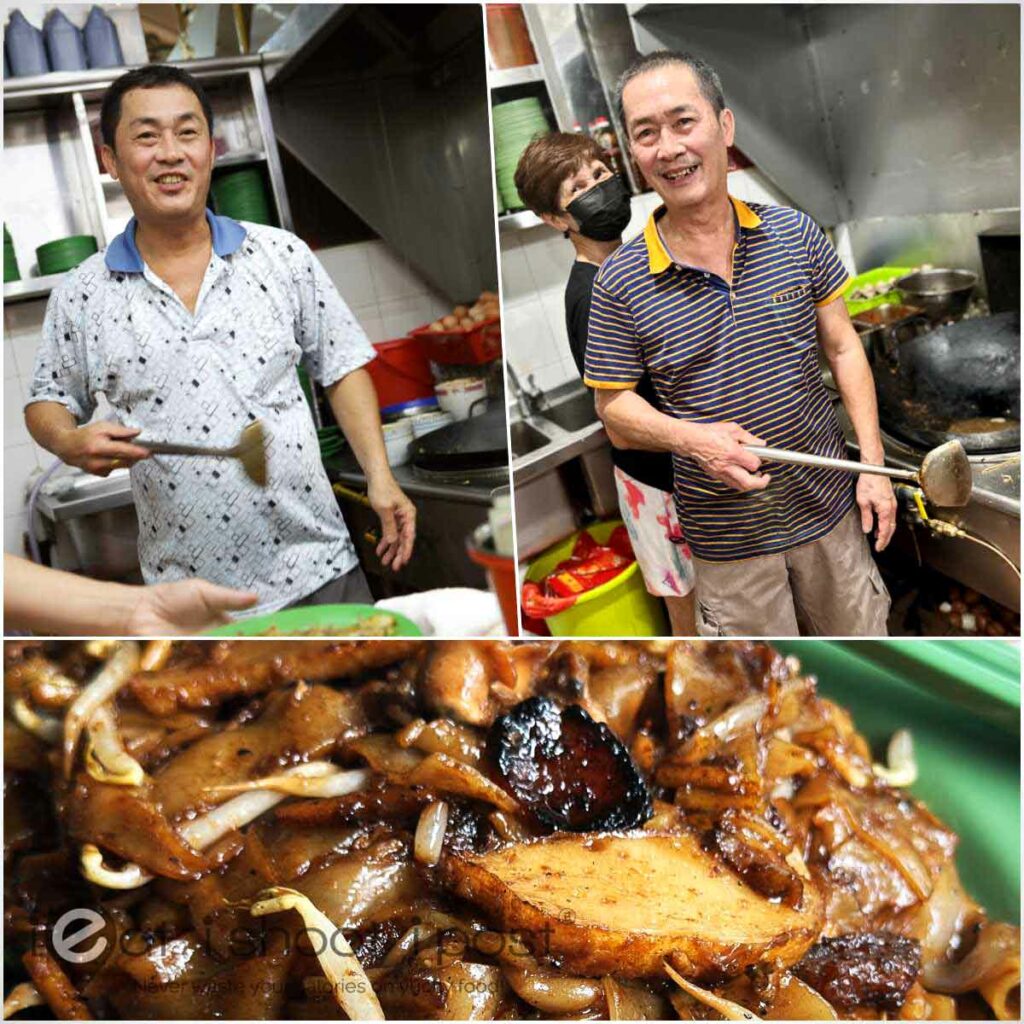
Our Hokkien Mee Master today started frying Hokkien mee in 2007, not long after being released from prison. But between 2007 and 2016, even as he kept at the wok, he was in and out of prison a total of six times. It was only in 2016 that he decided to turn his life around for good.
The turning point came when his elderly parents visited him in prison and told him honestly that they were getting too old to keep making the trip to Changi. That was the wake-up call for him, and he has stayed the course since then.
Conclusion
This really is an excellent plate of Hokkien mee. The fact that Roger is the only one behind the wok makes the difference! He is clearly passionate about his craft. He opens daily but only until 2pm, spending the rest of his time prepping and looking after his parents.
If you are in the area and hunting for a good plate of Hokkien mee, this one is well worth the calories!