
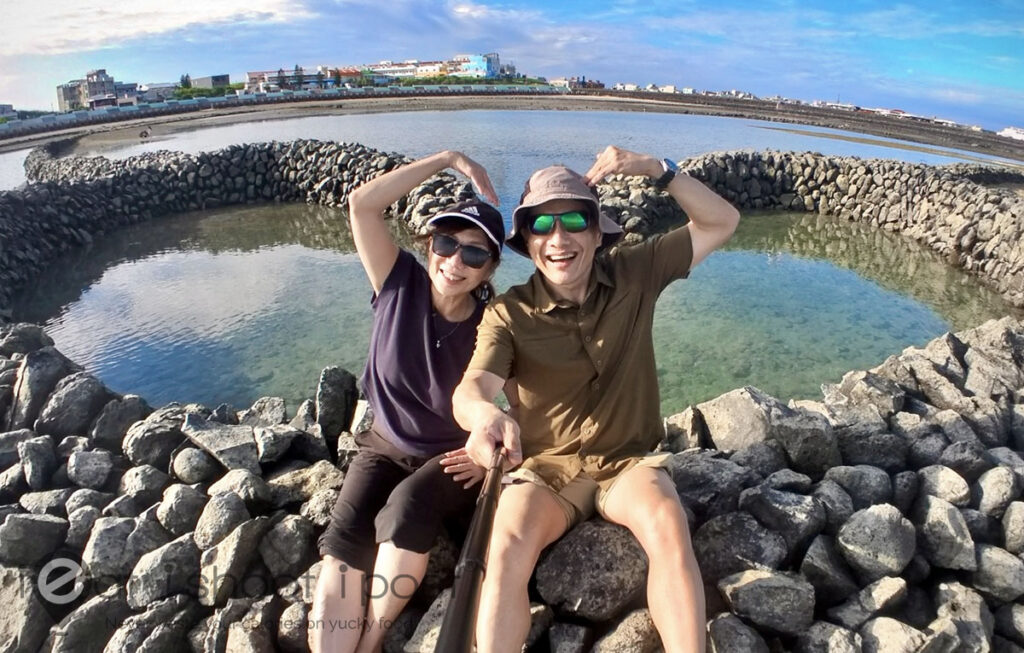
This was my first time in Penghu, and I went in thinking I knew nothing about the place. Turns out I was wrong. There was a very popular song I heard back in the 70s, Grandma’s Penghu Bay (外婆的澎湖灣).
If you grew up in that era, chances are you’d have heard it too. I’d known the tune for years without ever realising it was about a real archipelago sitting quietly off Taiwan’s west coast.
After our trip to Penghu, I felt the song really resonated with me. It praised the sun, the surf, and the quiet life of the Penghu islands, and having now walked those beaches myself, I can now relate with every line of the song!
Adrienne first invited us to explore Hokkaido years ago. She has since relocated to Penghu, where she now works with the local tourism board there.
When she asked us to come discover the islands, the beauty, the seafood, the slower pace of life, we were quite intrigued. The last time she invited us to Taiwan, it was to taste the Hakka cuisine of Taoyuan and Miaoli, and that trip turned out to be quite memorable. So we were looking forward to see what this Penghu island adventure would hold for us.
Getting to Penghu
There are no international flights into Penghu at the time of writing. You’d need fly or sail from mainland Taiwan. Our flight from Taipei Songshan Airport to Magong City took less than an hour. There are domestic flights from Taichung, Chiayi, Tainan and Kaohsiung.
They’ve got ferry services from Chiayi and Kaohsiung too.
Article Guide:
- Magong City: Gateway to the Archipelago
- Wenkang Street for breakfast
- Beichen Market for shopping and breakfast
- Souvenir Shopping
- Zhongyang Village: Magong’s old street
- Penghu Fireworks Festival
- Penghu Fish Market
- Xiyu Island: Basalt Cliffs, Erkan Village and Wai An (Taiwan’s Santorini)
- Dining in Magong City
- Yuan Wei Fishing Village Snacks
- Islands XiaoDao YiYu – Italian
- Ah Hua Seafood Restaurant
- TideLand Seafood – Thai fusion
- Island Hopping in the North Sea: Jibei and Mudouyu Lighthouse
- Island Hopping in the South Sea: Wang’an
- Accomodation and Tours
- Yurong Garden Homestay
- Dream House Homestay
Video Guide:
Magong City: Our Gateway to the Archipelago
Magong City, the capital of the Penghu archipelago, is where almost every visitor’s journey begins. It sits on the largest island in the chain and is home to roughly 63,700 people, packed into just under 34 square kilometres, a little larger than Toa Payoh and Ang Mo Kio combined.
The name itself carries history. Magong was originally called Makeng (媽宮), meaning “Mazu’s palace,” named after the goddess of the sea whose temple here is widely considered the oldest Mazu temple in all of Taiwan. During the period of Japanese rule, the name was changed to Makō in 1920, and it was only after 1945 that it became known as Magong.
The history of Magong stretches back to the Song dynasty, when Chinese settlers first made their home here. Yet it still feels like a quiet fishing village, much like Kuantan in Malaysia. Nothing here rises above ten storeys, the streets are lined with old shophouses, and there is a sense that every corner hides a small food discovery waiting to be found.
That said, Magong is not entirely stuck in time. There are two modern shopping malls, Pescadores Mall and Pier 3, both near the airport. There’s even a McDonald’s sitting right along Zhongzheng Road, the main street in town. So despite its rustic charm, Magong does not lack for modern amenities. It is just that they sit quietly alongside the old town, rather than taking it over.
Wenkang Street: Where the Locals go for Breakfast!
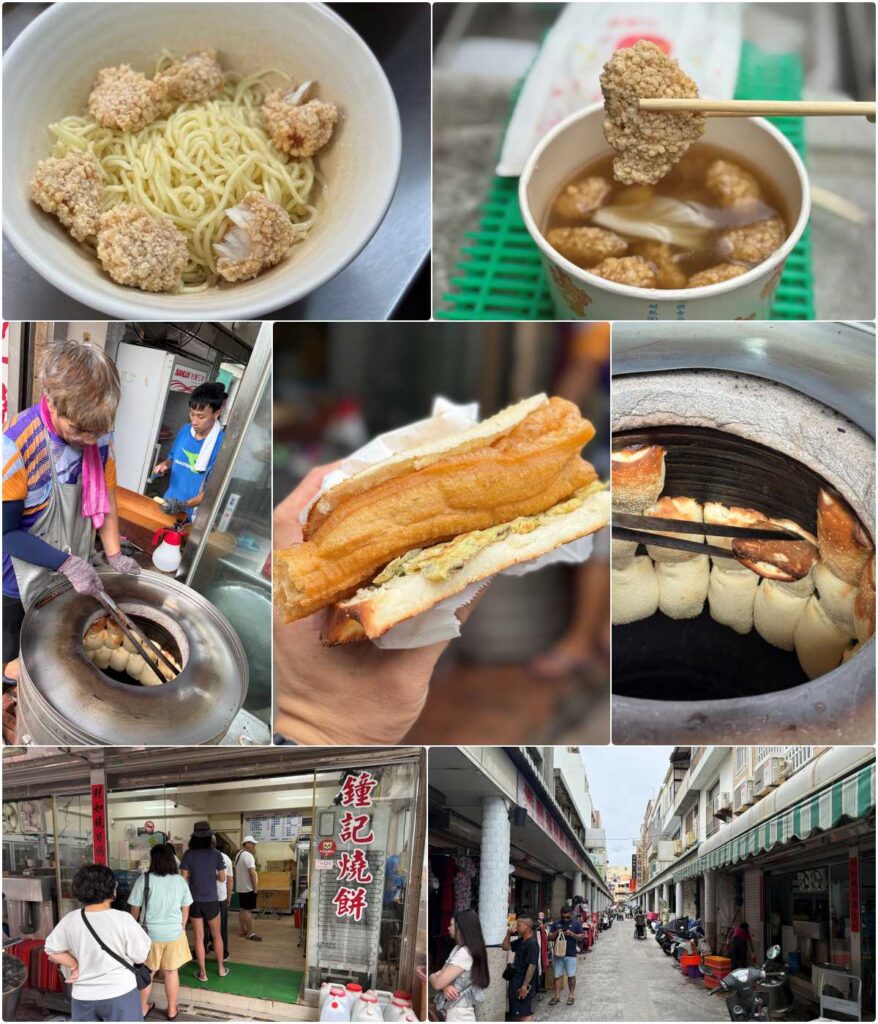
If there’s one street in Magong you have to visit in the morning, it’s Wenkang Street. This is where the locals go for breakfast and some homestays even specially procure breakfast here for their patrons!
Our first stop was [Zhong Ji Shao Bing (鐘記燒餅)], home to what I would call the best clay oven baked sandwiches on the island, and dare I say, even better than the ones I have had on the mainland. The bread comes out with a lovely crusty base, still warm from the oven, and I especially liked their signature egg and scallop version. What is most unusual, though, is that it comes with a piece of youtiao tucked inside as well. The idea of carbs on carbs might sound strange at first, but the combination works!
Zhong Ji Shao Bing (鐘記燒餅) Google Maps
35 Wenkang St, Zhongxing Village, Magong City
Just down the road is Xiang Ting Tuo Yu Geng (香亭土魠魚羹), Wenkang Street’s other breakfast institution. The fish fritters here are made from fresh fish, unlike the frozen basa that is ubiquitous in Singapore, and the accompanying soup is thick and tasty. I am not sure if the sweetness comes from simmering lots of fish bones or a good dose of msg, or perhaps both, but it is tasty. I did find the crust a little thick, though, and the soup quite starchy. Not a must try, so if there is a long queue, you will not be missing too much if you skip it.
Xiang Ting Tuo Yu Geng (香亭土魠魚羹) Google Maps
Beichen Market: Breakfast and Shopping
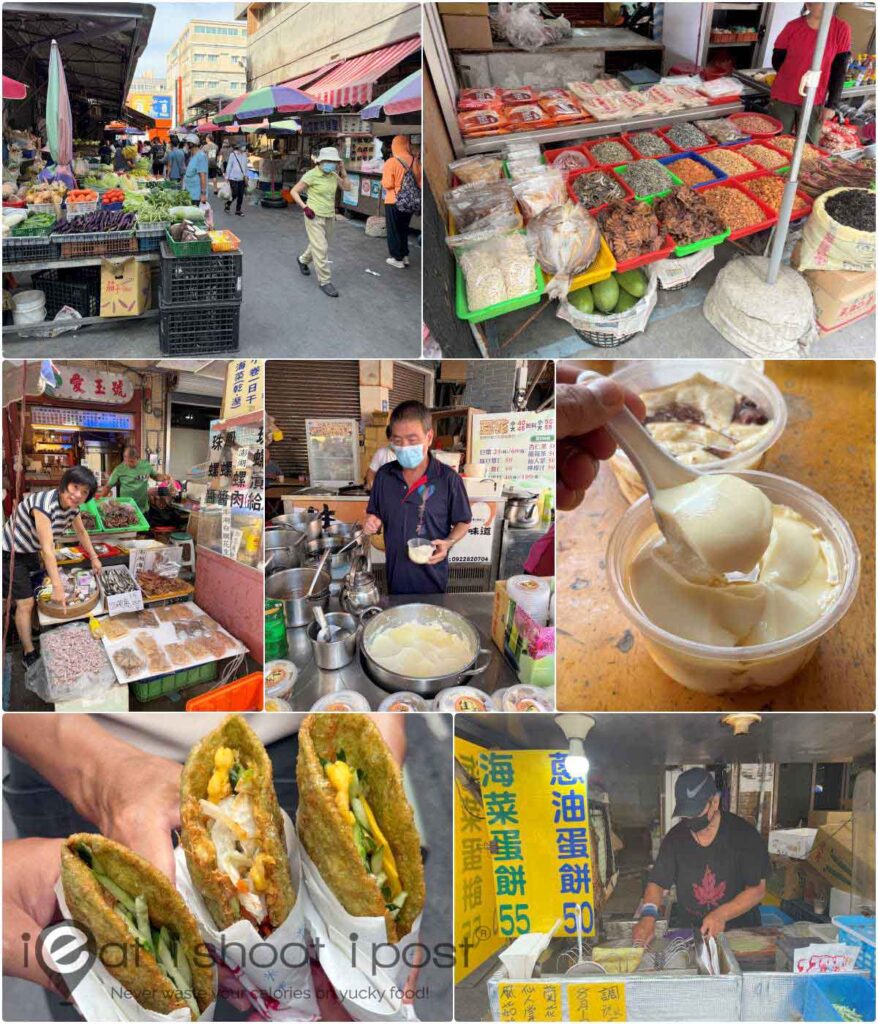
Beichen Market (北辰市場) is Magong’s largest morning market and another great place for breakfast and also to pick up some dried seafood to bring home.
Next, Beichen Seaweed Egg Pancake (北辰海菜蛋餅), a seaweed egg pancake stall where the pastry is shallow fried before being filled with a choice of cucumber, cheese, or pickled cabbage. The pastry reminded me of the frozen prata we buy at the supermarket back home, except this one is fried in oil that carries a hint of the sea, the seaweed giving it a character all its own. The version with cucumber and pickled cabbage would be my pick.
Seaweed Egg Pancake (海菜蛋餅)
18 Beichen St, Yangming Village, Magong City
Google Maps
The other stall to look out for is Jiamei Douhua (佳美豆花食品) which we are told serves one of the best traditional bean curd on the island. The handmade beancurd is smooth and silky and made the traditional way. It comes with a choice of different toppings too. If you love bean curd, this is well worth a stop.
Jiamei Traditional Handmade Tofu (佳美豆花食品)
14 Beichen St., Magong City, Penghu County
Google Maps
Tricycle Beancurd (卡打車豆花)
Google Maps
Souvenir Shopping (Snacks and Sauces)
For souvenirs, head to Xinxing Local Products (信興名產) on Minquan Road, a long-established shop famous for its XO sauce, available in several variations, scallop, squid, anchovy, or a mix of all three. Another well established stall worth checking out is Penghu Uncle, which sells mainly their own brand of fish skin chips, dried cuttlefish snacks and seafood sauces.
Xinxing Local Products (信興名產) Google Maps
Penghu Uncle (澎湖伯伴手禮坊) Google Maps
Zhongyang Village: Magong’s Old Street
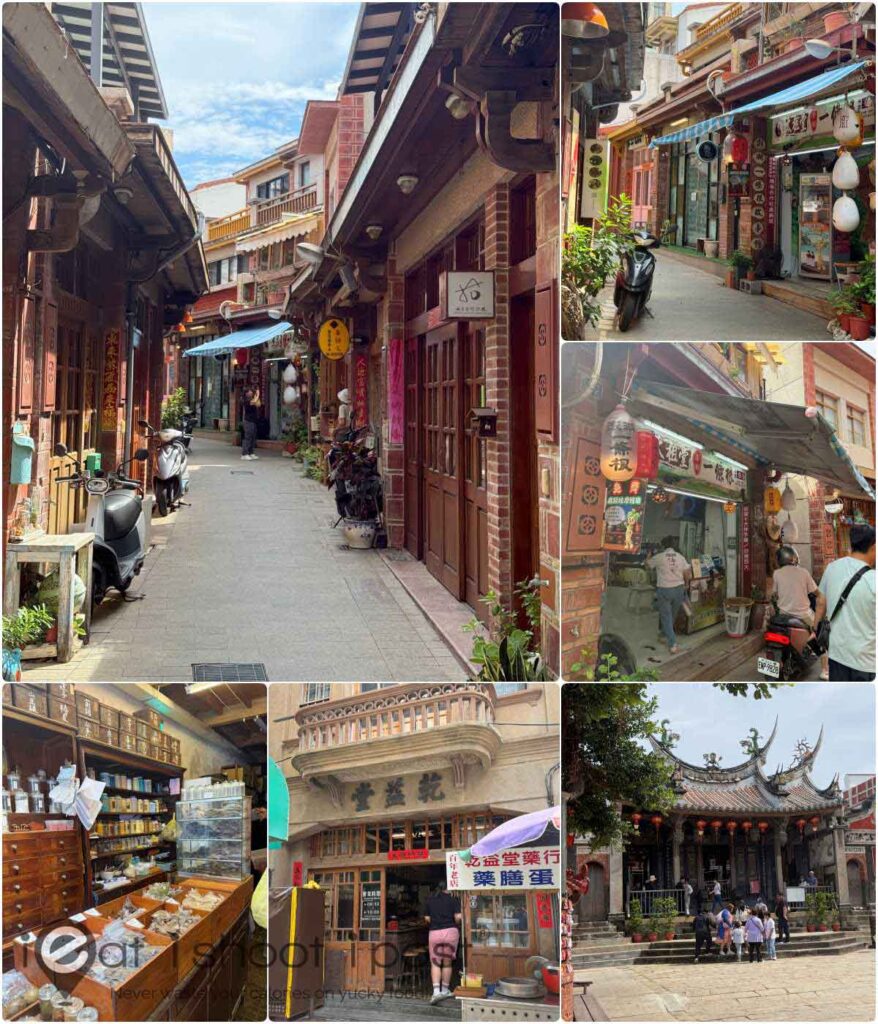
Zhongyang Old Street, Penghu’s oldest street, is lined with small heritage shops in traditional red brick style, and sits right beside Magong Tianhou Temple, Taiwan’s oldest Mazu temple, dating to before 1604. There is an old Chinese medicinal shop there where you can taste the tea eggs and pick up five spice powder for your braising sauce. I am told it contains more than just five spices!
Chien-Yi-Tang Chinese Medicine Store(乾益堂中藥房)
42 Zhongyang St., Zhongyang Village, Magong City
Google Maps
Penghu Fireworks Festival
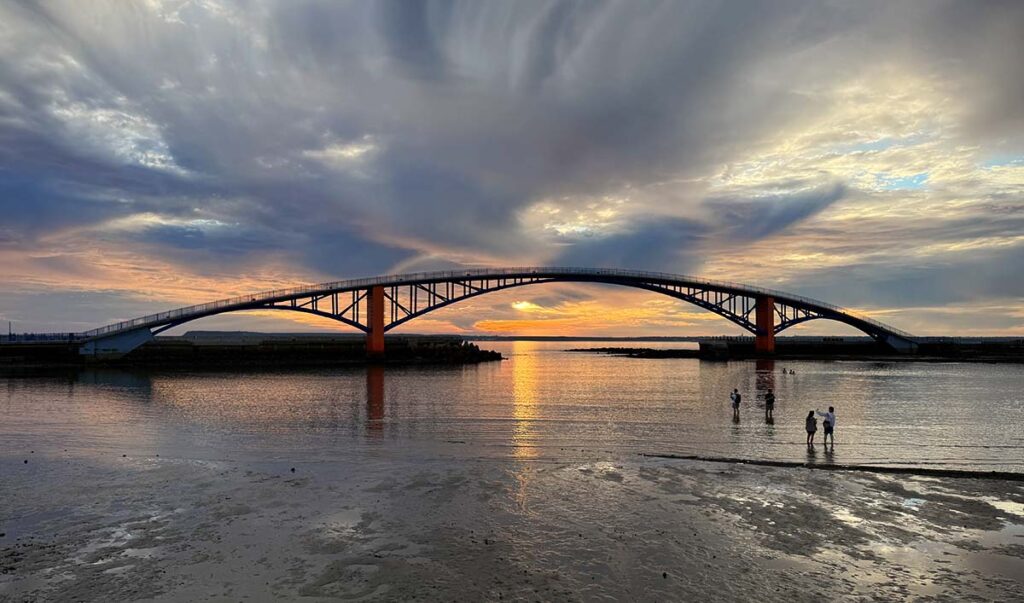
The Penghu International Fireworks Festival has been lighting up the skies over Guanyinting Recreation Area in Magong since it first began in 2003, making it one of Taiwan’s longest-running summer traditions. What started as a modest effort to draw visitors to the outer islands has since grown into a season-long affair, stretching from April to August, with shows held several nights a week against the backdrop of the Xiying Rainbow Bridge and the sea. Over the years, the festival has widened its reach beyond fireworks alone, now folding in drone light shows, cultural performances, and pyrotechnic teams from around the world, all set against Penghu’s unusually still summer skies.
The fireworks occur every week, but just missed it by a day! So if you are planning to catch the fireworks, make sure you check the dates first before planning your trip!
Guanyinting Recreation Area 觀音亭親水遊憩區 Google Maps
Penghu Fish Market
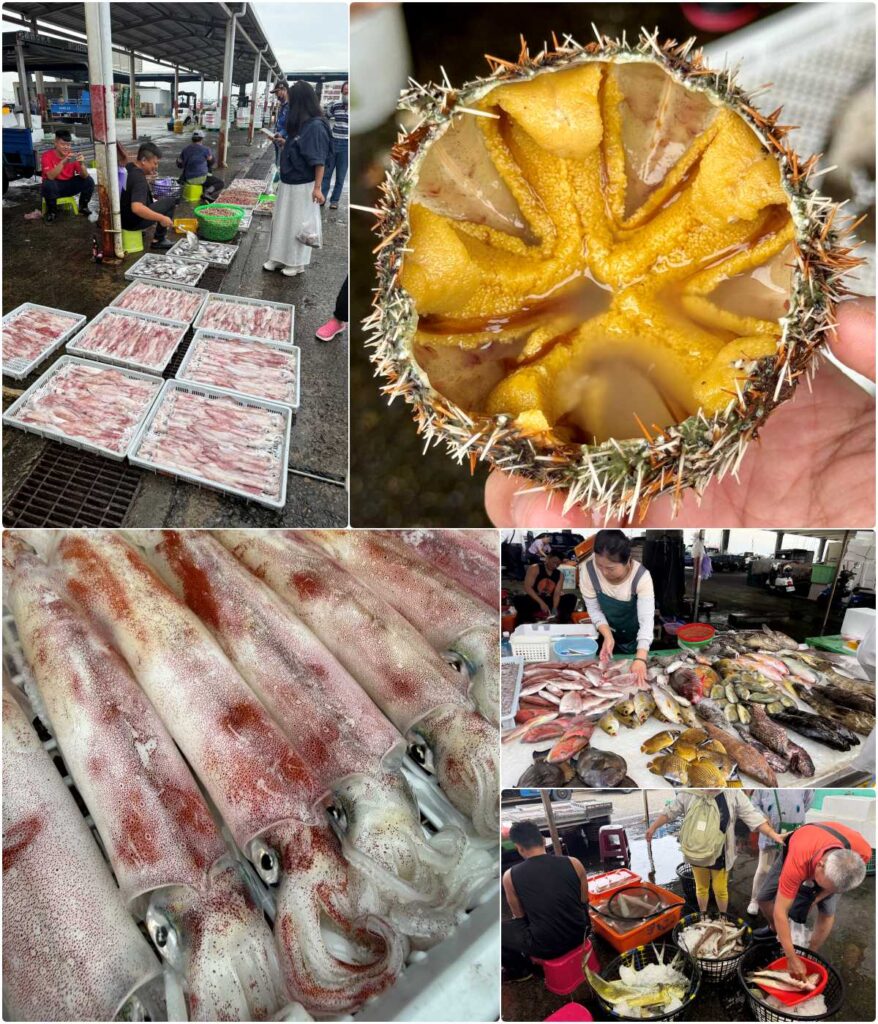
We started early with a visit to the Penghu Fish Market, where squid is such a major product that it looked almost iridescent, still glistening fresh. We picked up and ate fresh uni right there on the spot.
This kind of fresh seafood market is not for everyone. But if you love doing things like visiting the Jurong Fishery Port or the Pontian seafood market, then this one will be fascinating, since you get to see seafood you simply would not find back home.
Penghu Fish Market Google Maps
Xiyu Island: Basalt Cliffs, Erkan Village and Wai An (Taiwan’s Santorini)
There are many islands you can visit as a day trip from Magong, and one of the most interesting is Xiyu Island. It is actually connected to Magong by road, but it is quicker and far more picturesque by boat. We travelled across by boat and returned by road.
We boarded our boat from this jetty. Midway, we made a quick stop at a small sandbar, then cruised right underneath the Penghu Great Bridge. It is hard to appreciate the scale of the bridge until you are passing beneath it.
Built between 1965 and 1970, it was, at the time, the first deep sea crossing bridge in the Far East. It linked Baisha and Xiyu across a notoriously rough channel known as the Roaring Gate. It briefly held the title of Taiwan’s longest bridge too, until Kinmen’s bridge took over in 2022. We would cross the bridge ourselves on the way back to Magong.
Daguoye Columnar Basalt
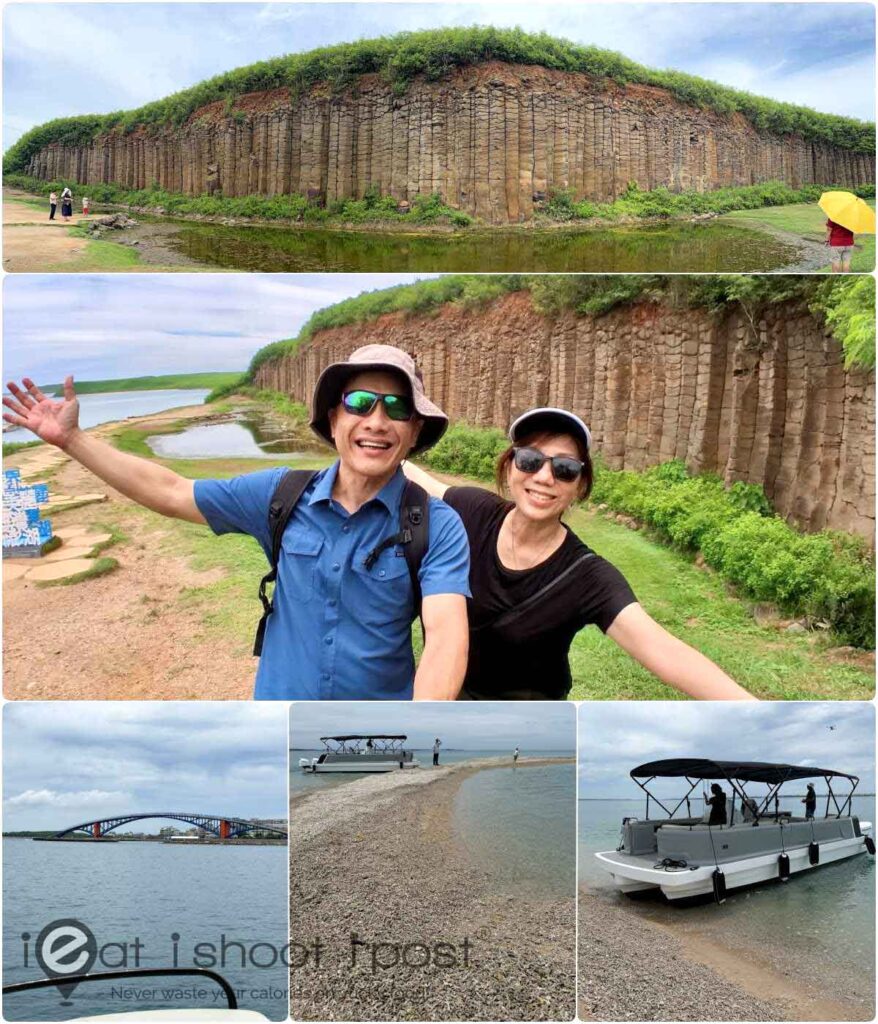
From there we arrived at Daguoye Columnar Basalt, a striking formation of tightly packed volcanic columns in earthy tan tones. It was actually discovered by accident. During the Japanese era, workers were digging out earth to build a wharf here when they stumbled upon these basalt pillars.
It had lain buried and hidden for thousands of years. It is quite amazing to think that these columns, so geometric and precise, are entirely natural. The texture and colours look very much like the kind of thing you would find recreated in a theme park. There are many such formations across the archipelago, but this is one of the most accessible.
Daguoye Columnar Basalt
Google Maps
Erkan Historic Village
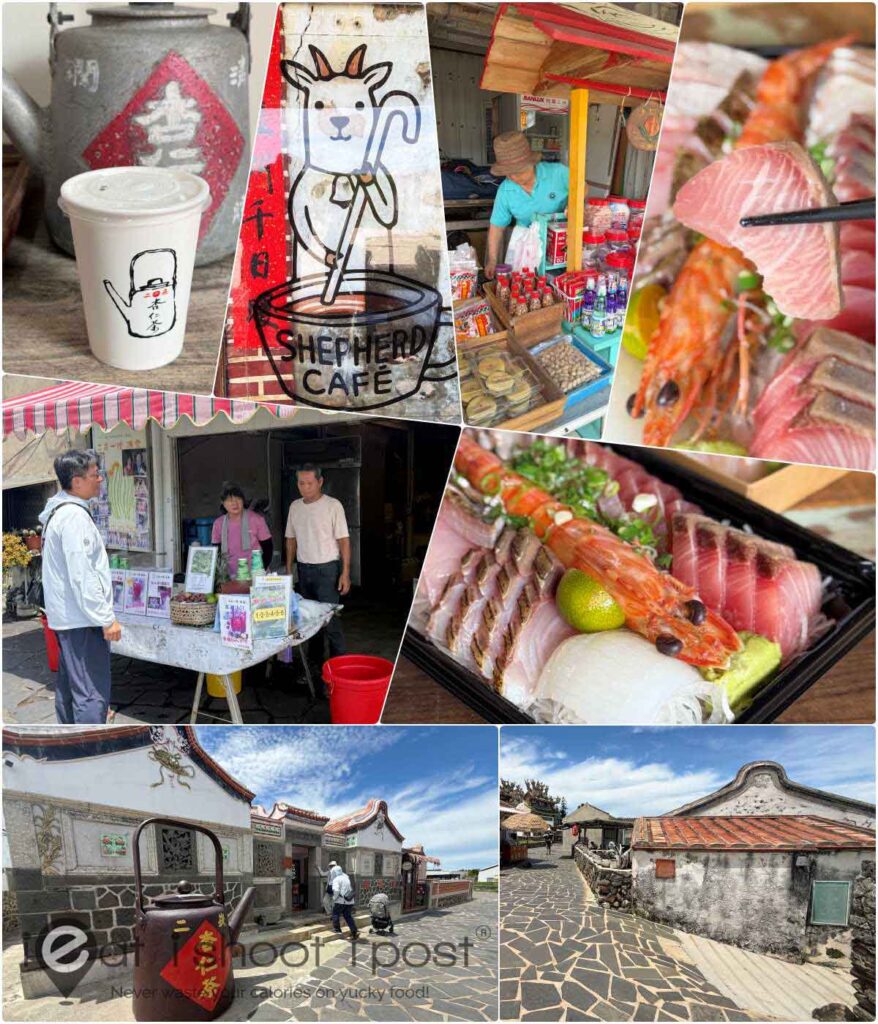
Ten minutes from Daguoye is Erkan Village, a settlement that’s been home to the Chen clan for over 300 years and now protected as a Traditional Settlement Conservation Area. We spent a good half-day just wandering its coral-walled lanes to take in its history and to taste some of its food.
Lunch was sashimi at Yu Hao Sashimi (魚好。刺身專門店), tucked inside a heritage house and run by a chef who trained in Japanese cuisine. There’s no fixed menu, just a daily catch platter at NT$300 or NT$500. The sashimi is undeniably fresh but what makes it special is the local fish some of which is not typically found in a typical Japanese restaurant. The fish miso soup is excellent. It was sweet and without any hint of fishiness. One of the best miso soups I have come across. Do note they serve sashimi only and miso soup.
Yu Hao Sashimi (魚好。刺身專門店) Google Maps
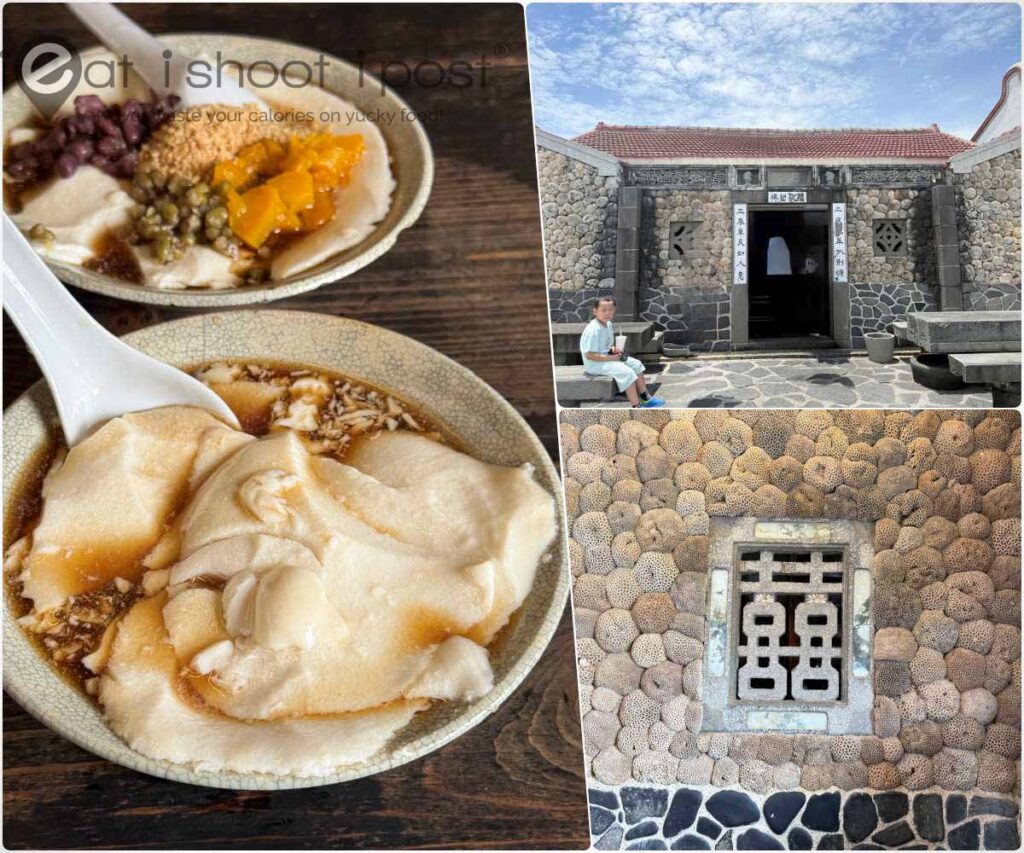
We also stopped for bean curd at Erma Douhua, set inside a beautiful old cottage with coral stone walls. Honestly, the douhua itself wasn’t the best I’ve had, but the setting more than makes up for it.
Erma Douhua Google Maps
For drinks, we tried a smoothie made from ice plant, pineapple, and yoghurt at Erkan No. 1, Chen Family (二崁一號(陳家)), wonderfully cooling on a hot day.
Erkan No. 1, Chen Family (二崁一號(陳家)) Google Maps
We also had an almond milk at Er Kan Almond Tea, still made the traditional way by grinding what is called “almond” in Chinese. By the way, did you know that what is called almond here is actually the kernel of the apricot seed? That is why it tastes different from real almond milk, with that distinctive, slightly bitter aroma. In Singapore we are probably already acquainted with this unique flavour through the popular almond jelly dessert, which is made from the very same seed.
Er Kan Almond Tea Google Maps
If it is coffee and desserts you are after, there is one cafe located just outside the main village. Shepherd’s Café, a cosy, air-conditioned (the only establishment we found with air-con!) cottage serving good coffee and lemon tarts, offers welcome respite from the summer heat.
Shepherd’s Café Google Maps
Wei An: Taiwan’s Santorini
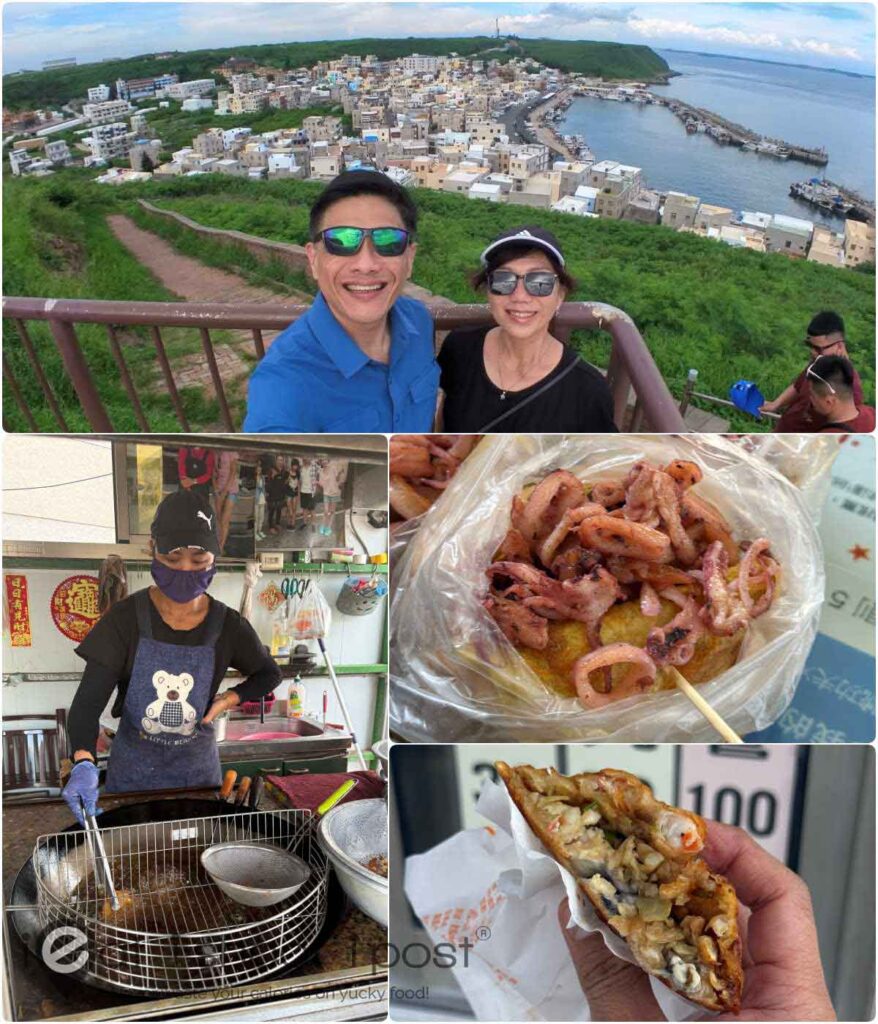
After Erkan, we made our way to Wai’an Village, at the southernmost tip of Xiyu Island, first stopping at the observation deck for that classic postcard shot, with the village sprawled behind us looking, rather uncannily, like a scene lifted straight out of Santorini.
From there we headed down into the village itself, where we found Fuqi Breakfast Store (福氣早餐店), selling a rather special gua bao.
The bun is made from black sugar mantou instead of the usual plain steamed bun, and ours came stuffed with braised pork, a fried egg, and a mound of fried squid on top. Squid is abundant in Penghu, and we have had it at almost every meal. At first, the thought of eating squid with braised pork in a bun seemed a little strange, but I have to say, they actually went quite well together. The black sugar mantou made the buns quite special. I’d say its a must try if you are visiting Wai’an village!
Further down the road, we stumbled on another little stall selling seafood fritters, which were also very nice. They reminded me of our own oyster fritters, or what I like to call UFOs, but stuffed with all sorts of different seafood instead. If I were not already so full from lunch, I would have easily downed a few more of these.
We only had a few hours to explore Wai’an Village, and it was clear we barely scratched the surface. There are surely many more nooks and crannies, and hidden gems, tucked away in this old fishing village, waiting to be discovered!
Wai’an Observation Deck Google Maps
Fuqi Breakfast Store (福氣早餐店) Google Maps
Seafood Fritter Stall Google Maps
Bai sha
Bo Teng Base – Coraal
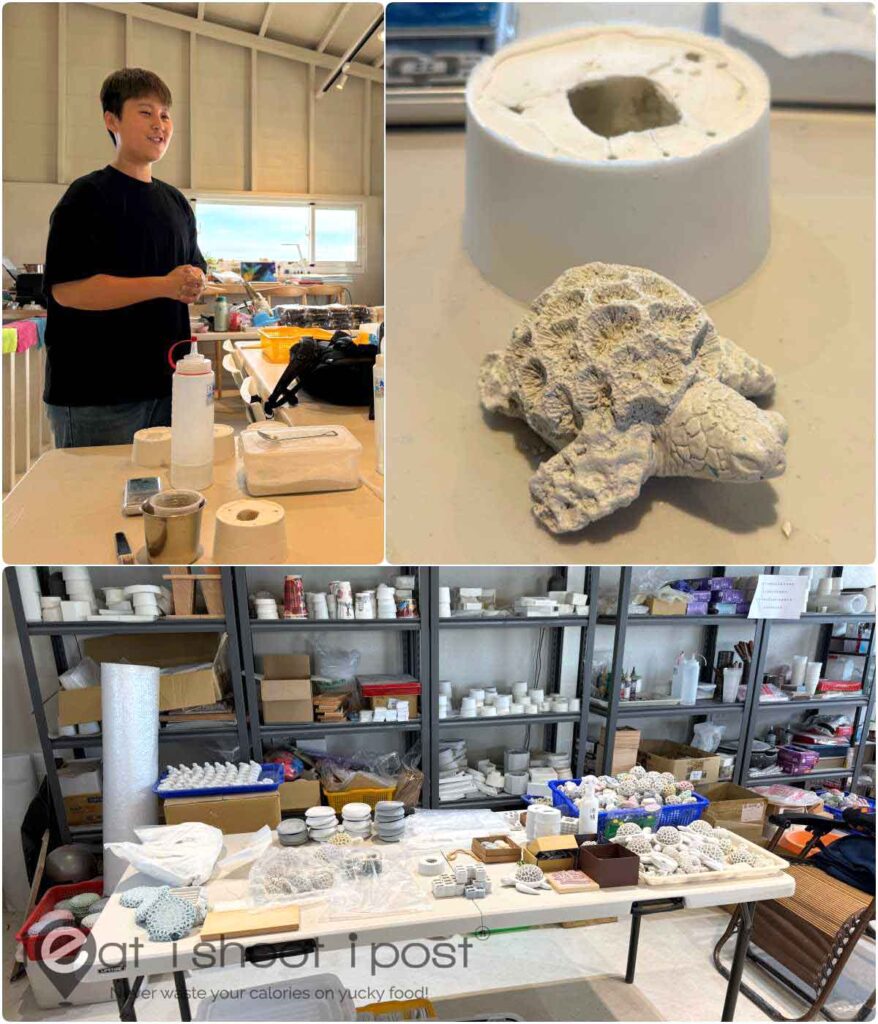
On our way back to Magong city, we made a stop at Bo Teng Base (博藤基地) on Baisha Island for an oyster shell craft workshop. The folks here have pioneered a technique for molding powdered oyster shell into little coral figurines.
Penghu is famous for its corals, but you are not allowed to take any home as souvenirs. But the workshop gives you a way around that. You get to mold and paint your own coral piece, and bring home something that captures the spirit of what we saw built into the walls of Erkan village (二崁村), where old corals were used as construction material generations ago. It’s a hands-on activity which is great as a kids activity!
Bo Teng Base (博藤基地) Google Maps
Dining in Magong City
They say in Penghu, you get seafood with every single meal! So if you love seafood, you are going to love it here. The seafood is abundant, fresh, and affordable.
The only catch is that because it is so fresh, the locals do very little to it. They would rather let the original flavours shine than mask them with heavy seasoning. So, for example, their favourite way of cooking squid is to simply pan grill it. No seasoning, no sauce, just the squid, and heat.
Fish gets the same treatment, steamed simply with a splash of soy sauce and not much else. So if you like your sambals and rempahs, you might find its a little bland.
We did, however, find a few restaurants that tried to buck the convention and give the seafood a more interesting twist. We will feature later in the article.
Yuan Wei Fishing Village Snacks (原味漁村小吃)
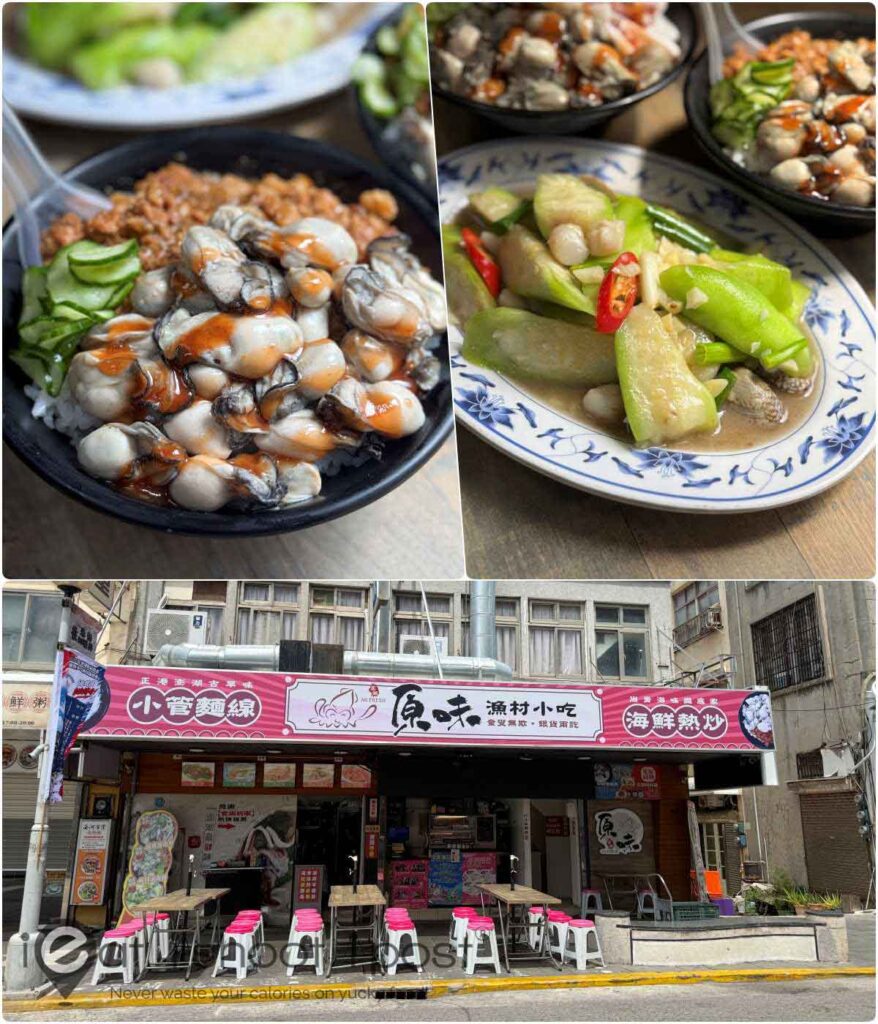
Yuan Wei Fishing Village Snacks (原味漁村小吃) is a Magong institution, and once you taste the oyster braised pork rice, you will understand why there is always a queue. It has been featured on more than a few Taiwanese food shows, and rightfully so.
The rice texture is excellent, the braised pork is tasty, and the oysters are so fresh, there is not a hint of fishiness at all. We also tried the loofah, simply fried with semi-dried scallops and clams, which was also very good. We only had time for a quick lunch there, but if we had another day, we would love to come back for dinner. 4.25/5
Yuan Wei Fishing Village Snacks (原味漁村小吃)
35-1 Zhongzheng Rd, Zhongyang Village, Magong City
Google Maps
Islanders 小島一隅 – Italian Style Restaurant
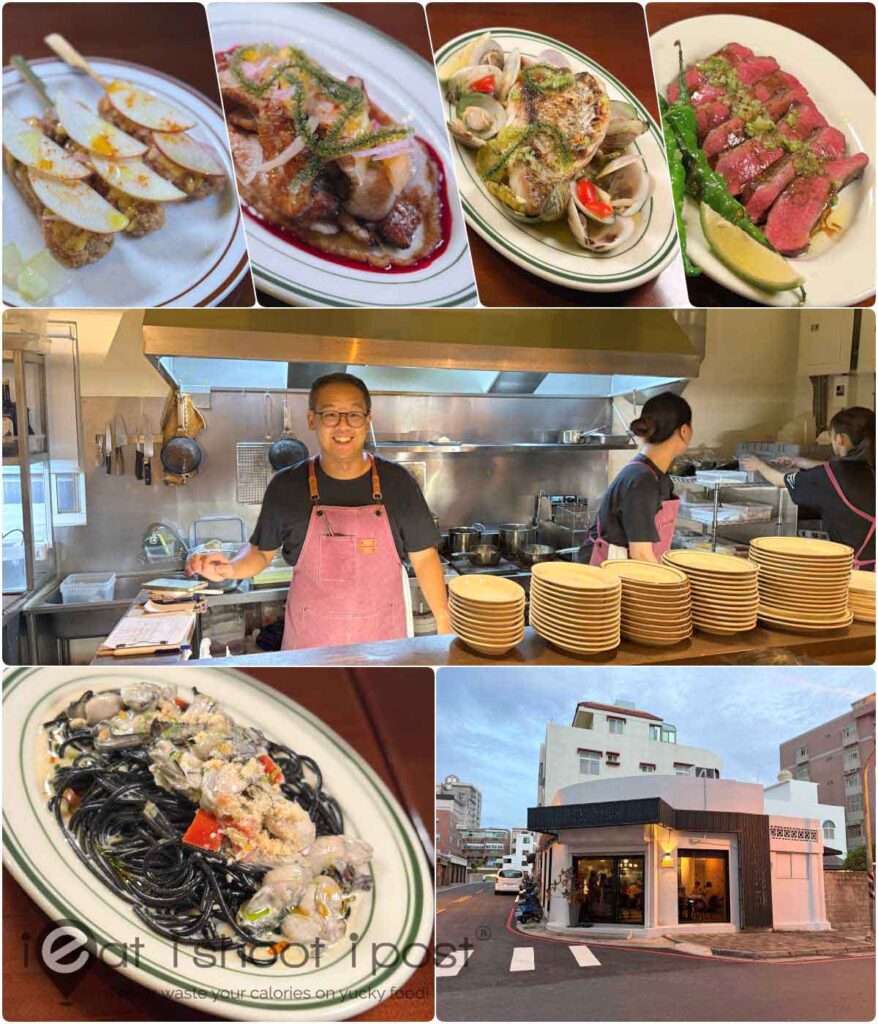
After a few meals where we were served the same style of simple seafood dishes, Islanders (小島一隅), was a welcome reprive. They are an Italian restaurant that mostly local Penghu ingredients.
The chef would substitute local condiments to give it an unusual twist. Think local dried shrimps replacing bottarga and you will understand where I am coming from . The chef is genuinely skilled, and the squid ink pasta which is made with fresh local oysters and topped with dried prawn floss is a must-try.
The grilled pork was so good, we ordered an extra portion! 4.25/5
Islanders (小島一隅)
No. 148, Wenguang Rd, Guangrong Village, Magong City, Penghu County, Taiwan 880
Google Maps
Ah Hua Fishing Village Seafood (阿華漁村海鮮料理)
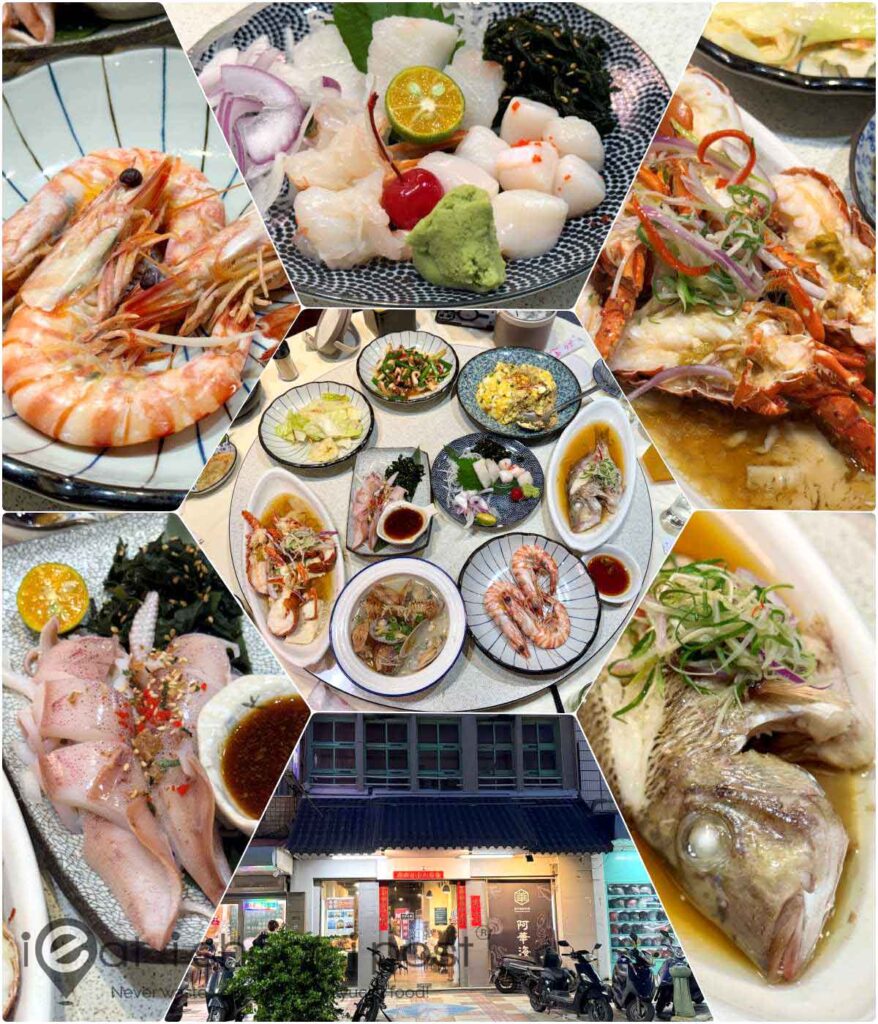
One thing you would soon discover about restaurants in Penghu is that most of them offer a set menu priced per pax. You might see a choice of NT$600, NT$900, or NT$1200 per person, and the kitchen simply portions out the fresh catch of the day across the table. Of course, if you want something special, like a five kilogram lobster, that is priced at market rate, on top of the set.
Ah Hua is the kind of live seafood restaurant you would find scattered across the island. Their philosophy is to let the seafood speak for itself, so most dishes are kept simple. We paid NT$1000 per pax for a full table, sashimi, prawns, lobster, fish, octopus, fish soup, uni fried rice, and squid, though I could not resist splurging on a spanner crab we had never tried before, at an extra NT$4000. Without the crab, the whole table of food you see in the photo, plus a few other dishes we polished off, came to less than S$40 per head.
The seafood is undeniably fresh, but as I have said before, do not expect the kind of bold, punchy flavours you would get at a zi char stall back home. 4/5
Ah Hua Fishing Village Seafood (阿華漁村海鮮料理)
No. 25號, Ren’ai Rd, Qiming Village, Magong City, Penghu County, Taiwan 880
Google Maps
Tideland Seafood Restaurant
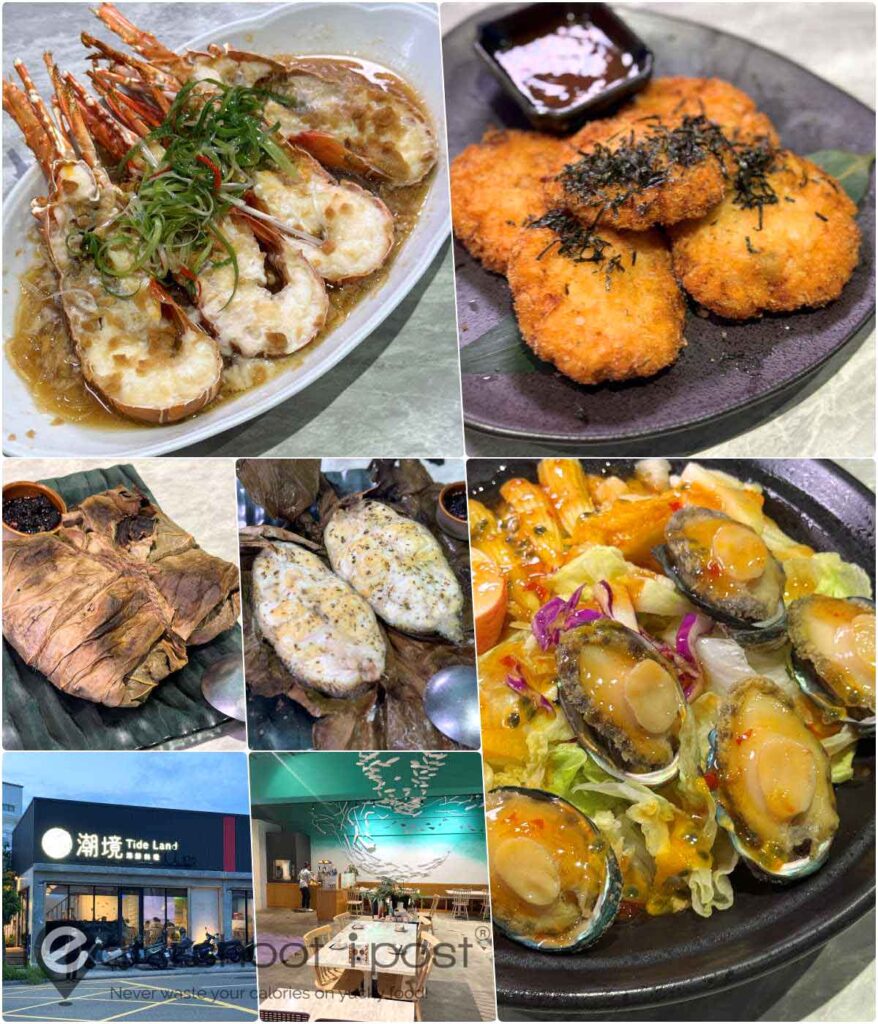
If you want seafood with a more modern twist, TideLand (潮境海鮮料理) might fit the bill. They started off as a Thai restaurant but have, over time, morphed into something more like Penghu Thai fusion.
The fried baby abalone salad with sweet chilli dressing was excellent. Both the banana prawn fritters, prawn fritters studded with bits of banana, and the lobster vermicelli were very good. Their signature dish, fish wrapped in lotus leaf with a sweet mulberry sauce, was a little too esoteric for most of us. The Italian herbs clashed with the lotus leaf, and the sweet sauce did not quite go with the steamed fish. 3.5/5
Nonetheless, the 8-course meal was just NT$900 (S$36 nett) per pax. Overall, very good value.
TideLand (潮境 TideLand|海鮮料理)
Magong City, Xiwen Village
Google Maps
Pe
Island Hopping in the North Sea: Jibei and Mudouyu Lighthouse
Jibei (吉貝) is one of Penghu’s most beloved outlying islands, known for its powdery sand bar and clear waters, but it also happens to be the “hometown of fish weirs.” The island has 101 existing stone fish weirs, giving it the highest concentration of such structures anywhere in the world. Taiwan Panorama
These stone weirs, locally called shi hu (石滬), are an old and ingenious method of fishing. Built using basalt, coral, and limestone, with a pair of long stone arms extending out to sea and back toward land, they work with the tides rather than against them. Fish swim in over the wall at high tide to feed, and as the water recedes, they find themselves trapped inside, ready to be scooped up by hand, no nets, no boats, no fuel required. Some of these weirs date back more than 300 years, giving a real window into how sophisticated Penghu’s earliest settlers already were. Sea Gardens Ministry of Culture
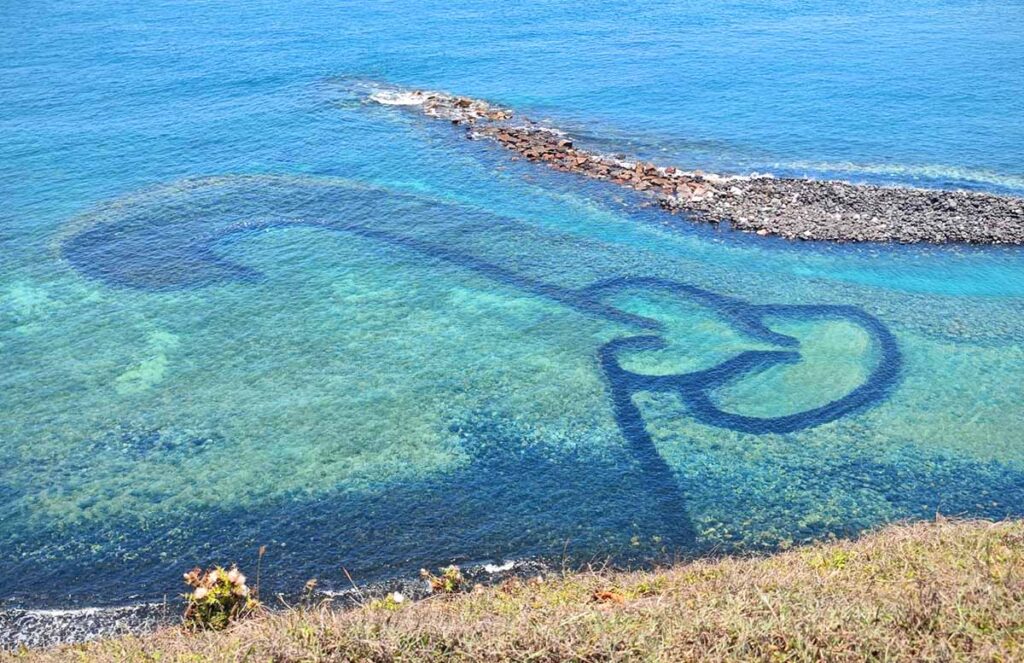
The famous double heart-shaped weir you have probably seen on every Penghu postcard is not on Jibei. It is on Qimei Island (七美), which is a two-hour ferry ride from Magong Harbour. Built over 700 years ago from basalt and coral, it just happens to have taken on a natural double heart shape, which is why it draws so many couples, even though, like every other weir here, it was really built for one purpose, catching fish.
North Sea Visitor Center Google Maps
Ah Zhong Ge (阿忠哥) Google Maps
Mudouyu Lighthouse and Xianjiao Islets
Our first stop was Xianjiao Islet (險礁嶼), a bird sanctuary. As the boat neared the island, we could see thousands of seabirds scattering into the sky, and when we started throwing anchovies into the air, the terns soon noticed and within moments, thousands of them surrounded the boat, some snatching fish clean out of the air, others diving straight into the sea.
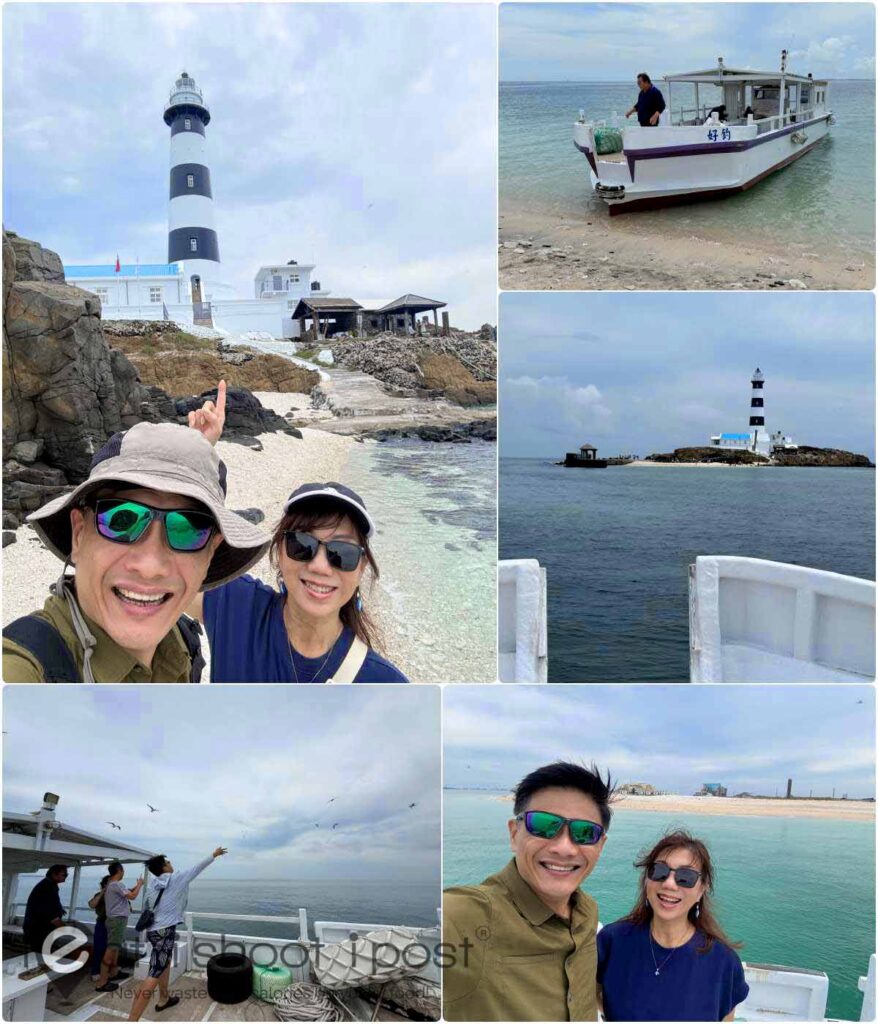
Xianjiao Islet (險礁嶼) (Bird Sanctuary) Google Maps
Next was Mudouyu Lighthouse (目斗嶼燈塔), the northernmost point of the whole archipelago. Built in 1902 during the Japanese era, it stands 39.9 metres tall, still the tallest lighthouse in Taiwan, manned round the clock by three keepers on rotation. The lighthouse is opened to the public at certain times of the year. Unfortunately, we were there just a week too early, so we did not get to go inside. What makes it special, aside from its height, is that it stands entirely alone on its own tiny island, surrounded by crystal clear waters.
Mudouyu Lighthouse Google Maps
JIbei Island
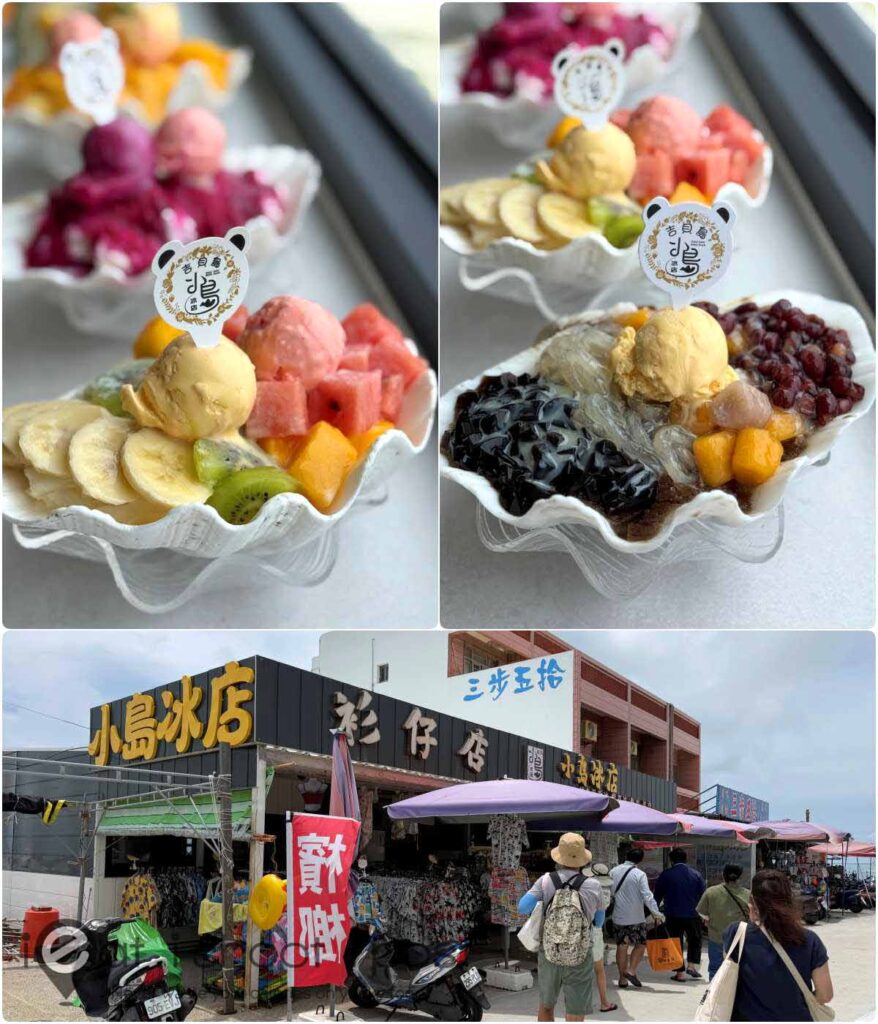
After the detour to Mudouyu, we finally arrived at Jibei, where we made a beeline for Xiaodao Ice Shop (小島冰店), a shaved ice shop right next to the pier, for a cool respite before heading for lunch. The shaved ice is lovely, and despite being on such a tiny island, it is as good as anything I have tasted elsewhere.
Xiaodao Ice Shop (小島冰店) Google Maps
Jibei Zhengjia Sushi
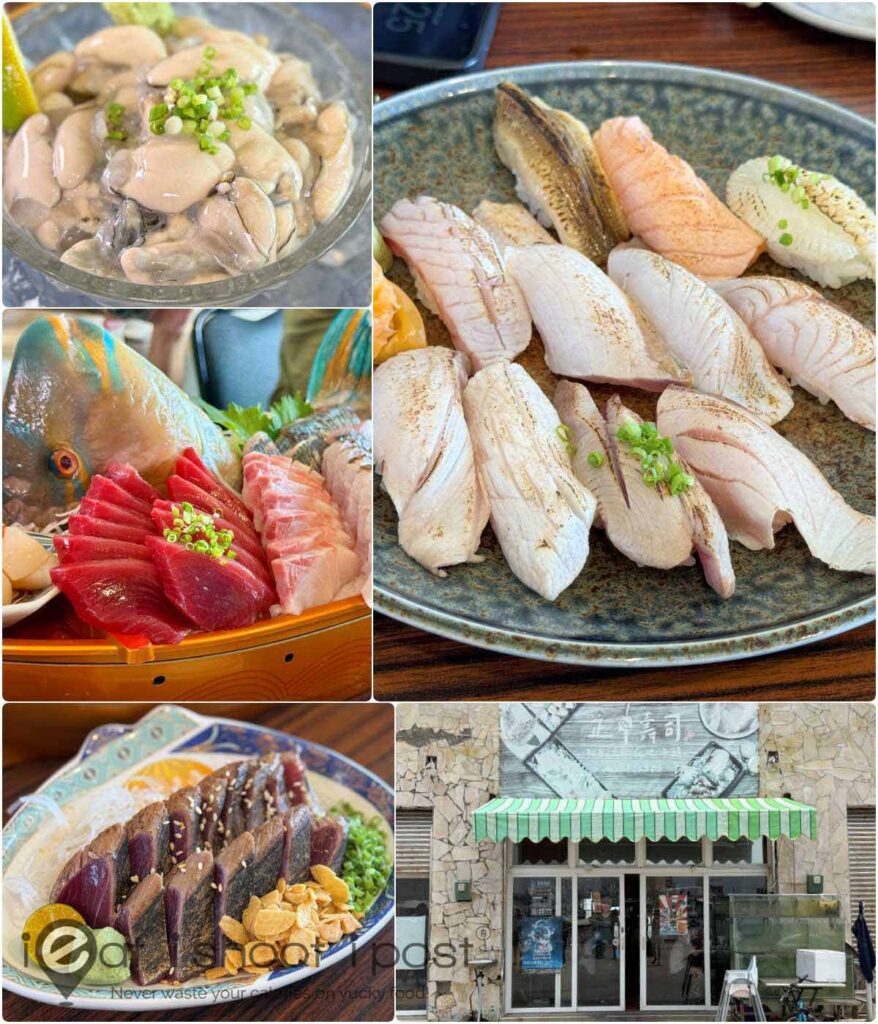
Lunch was at Jibei Zhengjia Sushi (吉貝正甲壽司) It is helmed by a native of Jibei, Chef Zhuang, who honed his skills at a Japanese restaurant in Kaohsiung. With exception of salmon and hotate, he uses fresh local fish. Some were caught by the chef’s own father!
The sushi and sashimi are very good and it’s well worth the visit. Our friend Adrienne tells us that locals from Magong would make a special trip out to Jibei just for this sushi!
Jibei Zhengjia Sushi (吉貝正甲壽司) Google Maps
Bao Dun Traditional Fishing
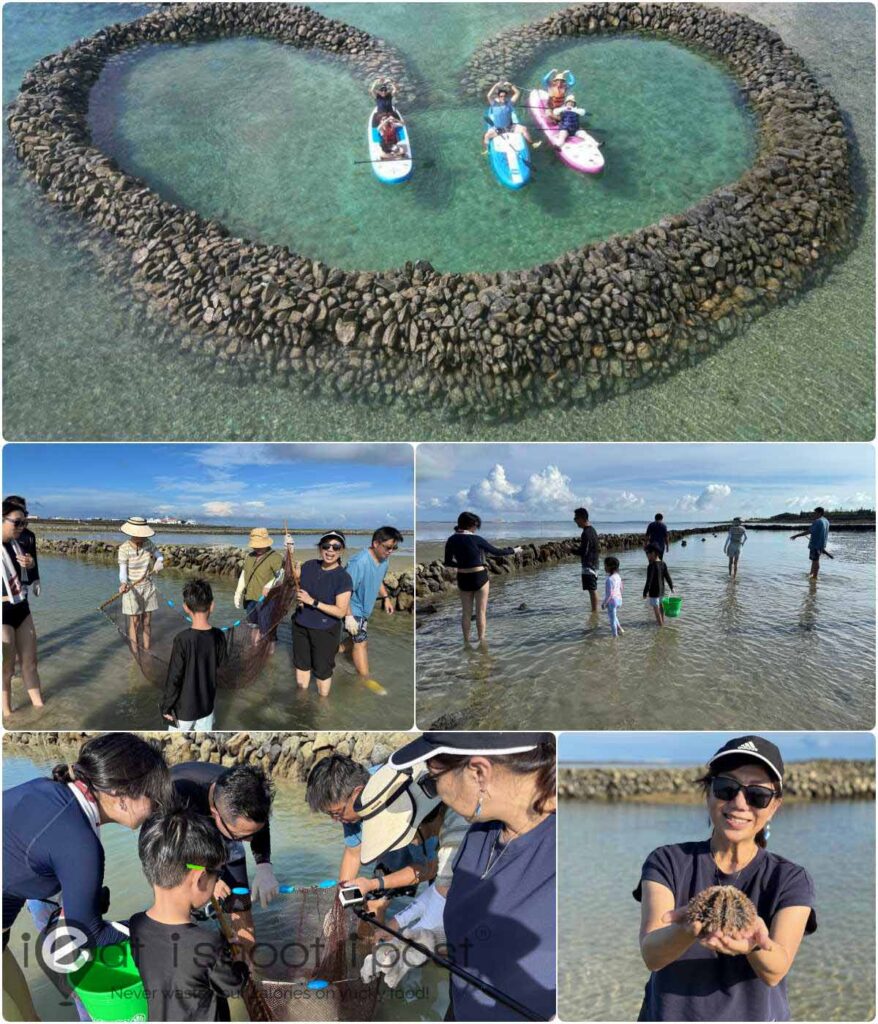
The afternoon was spent learning about Jibei’s famous heart-shaped stone weir. We were at one of roughly ninety weirs on the island, on an island nicknamed the hometown of stone weirs (石滬的故鄉).
When we arrive, it was still high tide. So Lisa went on a SUP board and paddled out for some aerial shots of the heart-shaped stone weirs first.
Later, when the waters receded, we got a demonstration of the Bao Dun fishing method. It basically entailed surrounding a coral pile with a net, then removing the coral to reveal the catch. The coral pile was left “behind “built” days before. We managed to catch two puffer fish, which we released. I am sure it would have been more productive in the past.
Contact PH Bay Tours if you’re interested in having the same experience.
Island Hopping in the South Sea – Wang’an
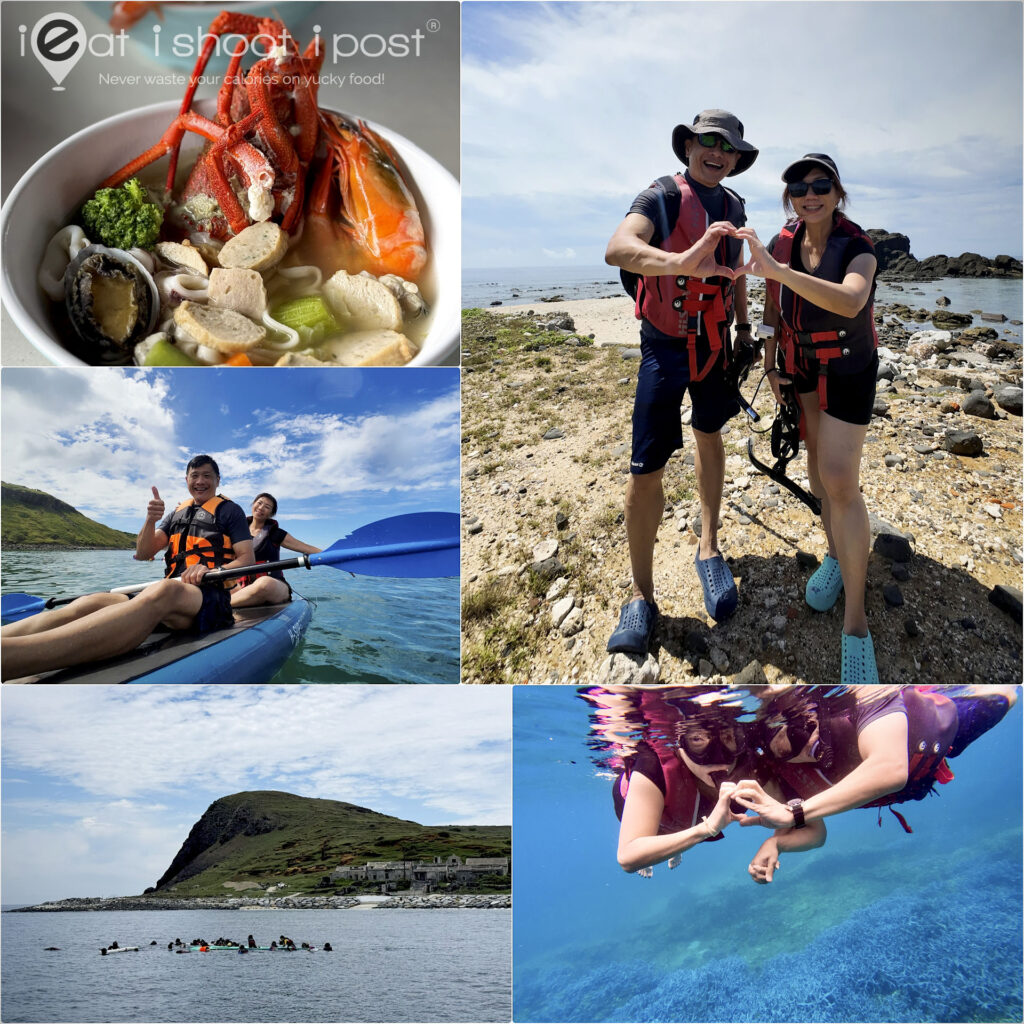
For our last big adventure, we boarded a boat from Nanhai Visitor Centre in Magong City for a day of snorkelling and sea sports in the South Penghu Marine National Park. It is Taiwan’s ninth national park and its second marine one, gazetted back in 2014.
The purple coral was the star of the show, a lavender reef unlike anything I’d seen before. From there we moved on to a second stop for more water activities, sharing the boat with a lively group of primary school kids who were clearly having the time of their lives. It’s a good activity to organize if you enjoy a bit of sea sports activity and is especially good for the kids!
Nanhai Visitor Center Google Maps
You may want to check out the different tours here.
Accomodation and Tours
Yurong Homestay – Bed and Breakfast
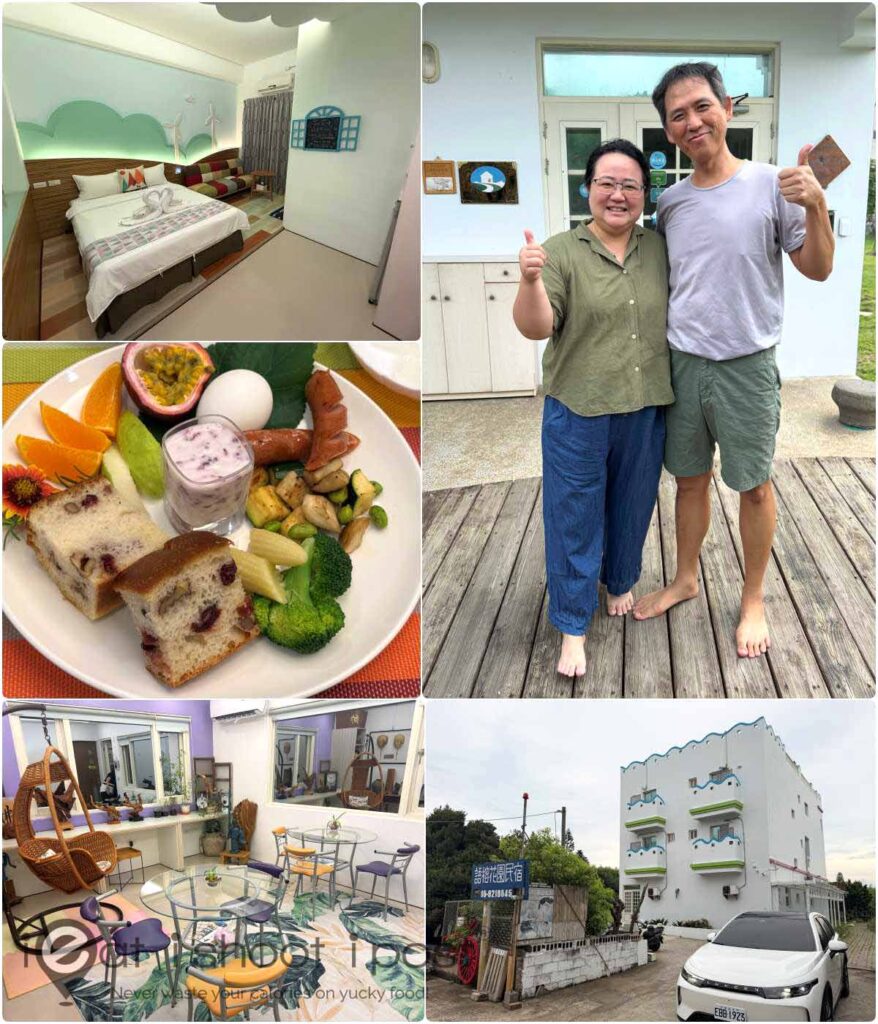
During our trip to Penghu, we stayed at two homestays. We spent one night at Yurong Homestay, timed just before our North Sea boat trip, since it is also close to the Penghu Fish Market, which we visited early that same morning.
Yurong is run by a lovely couple, Dino and Cherry, who built the house themselves some fourteen years ago. They still live under the same roof as their guests.
Cherry is a certified baker and Chinese chef, and every morning brought a different homemade breakfast. Her fresh bakes were the highlight for us. They even built their own wood fired pizza oven in the garden! They would sometimes run pizza making classes or fire it up for dinner!
The rooms are spotless and look almost brand new despite their age. If you are looking for a proper homestay experience in Penghu, this is a solid option.
Yurong Homestay (語榕花園民宿)
21-3 Qianliao Villag, Magong City, Penghu Taiwan 前寮二十一之三號
Google Maps
The Dream house Homestay
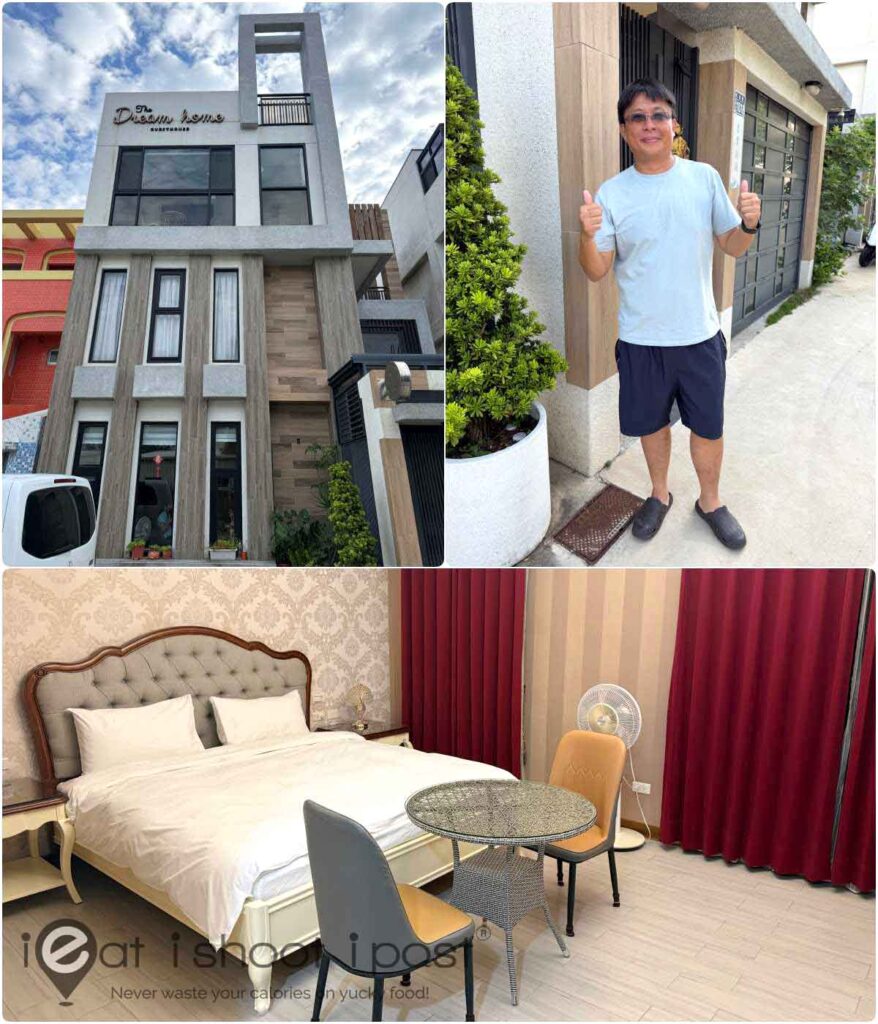
For the rest of the trip, we were hosted by Mr Xue (Hsueh Lung Fu) at Dream Homestay. It is a four storey townhouse converted into a homestay. The house is very clean and has all the necessary amenities, including a water dispenser at every floor! It is located in a residential part of Penghu, within walking distance to the seaside. The estate is also home to some 400 other homestays.
Mr Xue works closely with the Penghu Tourism Board and also runs his own tour company (PH Bay). The whole trip was organised by him. If you wish to organise a trip to Penghu, you can get in touch with him.
Book Here
Dream Homestay (澎湖夢想民宿)
No. 1018 Xiwen Village, Magong City, Penghu County, Taiwan 880
Google Maps
Final Thoughts
Penghu has an old world charm and is still very much under the radar. After this trip, we felt we truly understood why. It is a place to enjoy sun, surf, beautiful sandy beaches, island hopping adventures, rustic old towns, and an abundance of fresh seafood. If you are looking for somewhere in Taiwan that still feels undiscovered, this might just be your next perfect escapade.
Disclosure: This was a media trip sponsored by Penghu Tourism Board. Opinions expressed are those of our own.