
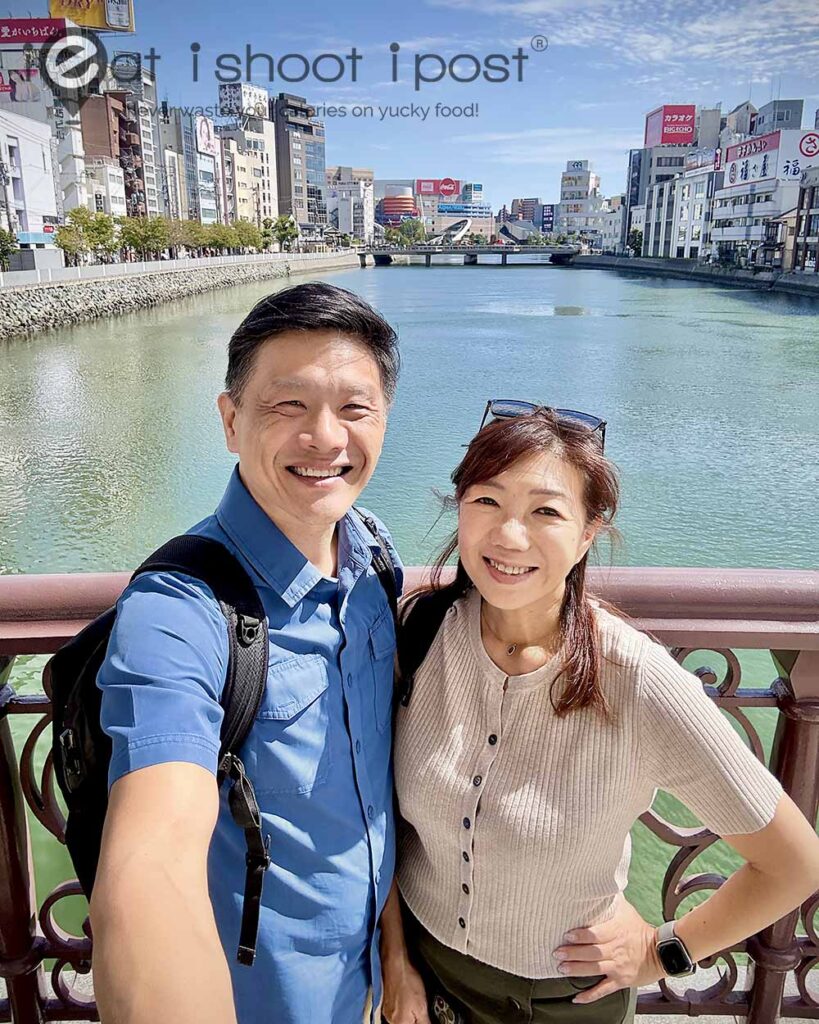
Our Latest Favourite Japanese City!
Like many Singaporeans, we count Japan among our favourite holiday destinations. Over the years we have visited Tokyo, Osaka, and Hokkaido, and more recently we have been venturing beyond the major cities to explore the rest of Japan. Kyushu had always been on our radar, and friends who had been there kept telling us how nice it was.
So we finally made it to Fukuoka, and we were very pleasantly surprised. It has become our new favourite city in Japan.
Fukuoka is not as big and busy as the other Japanese cities we have visited. It is big enough for great shopping and food, but small enough that the airport is only 15 minutes away by taxi.
We also love the canals. And at night, the streets come alive with yatai, the open air food stalls that are Fukuoka’s version of streetfood. It is a city that feels really happening.
From Fukuoka, we rented a car and spent two days in Yufuin. It was so pretty and magical that it has become our favourite place in Japan. We are already planning a return trip to visited the rest of Kyushu!
When it comes to food, Fukuoka punches well above its weight. First and foremost is Hakata ramen, with its rich tonkotsu broth, one of our favourite regional ramen styles.
Fukuoka is also famous for motsunabe, a hotpot of beef offal simmered with cabbage, chives, and garlic. We didn’t manage to try it, but we had mizutaki, the local chicken hotpot, instead. We enjoyed it so much that we shifted our focus to the local chicken, since Kyushu is known for its excellent brand birds.
Two of our restaurants came from the Japan Food Guide. We have used it before, and every time we came away with a good deal and a very pleasant surprise. So, we have another two restaurants from the guide to feature!
Food We Recommend
Yakiniku/Yakitori
Hakata Yakiniku Yasohachi Chikushiguchi
Hakata Yakitori Sakaba Suu
Sushi Omakase
Hakata Sushi Matsumoto
Tori Nabe (chicken hotpot)
Toriden Hakata Honten
Ramen
Hakata Issou Honten
Hakata Ramen ShinShin
Shodai Hidechan, Raumen Stadium
Hakata Yakiniku Yasohachi Chikushiguchi
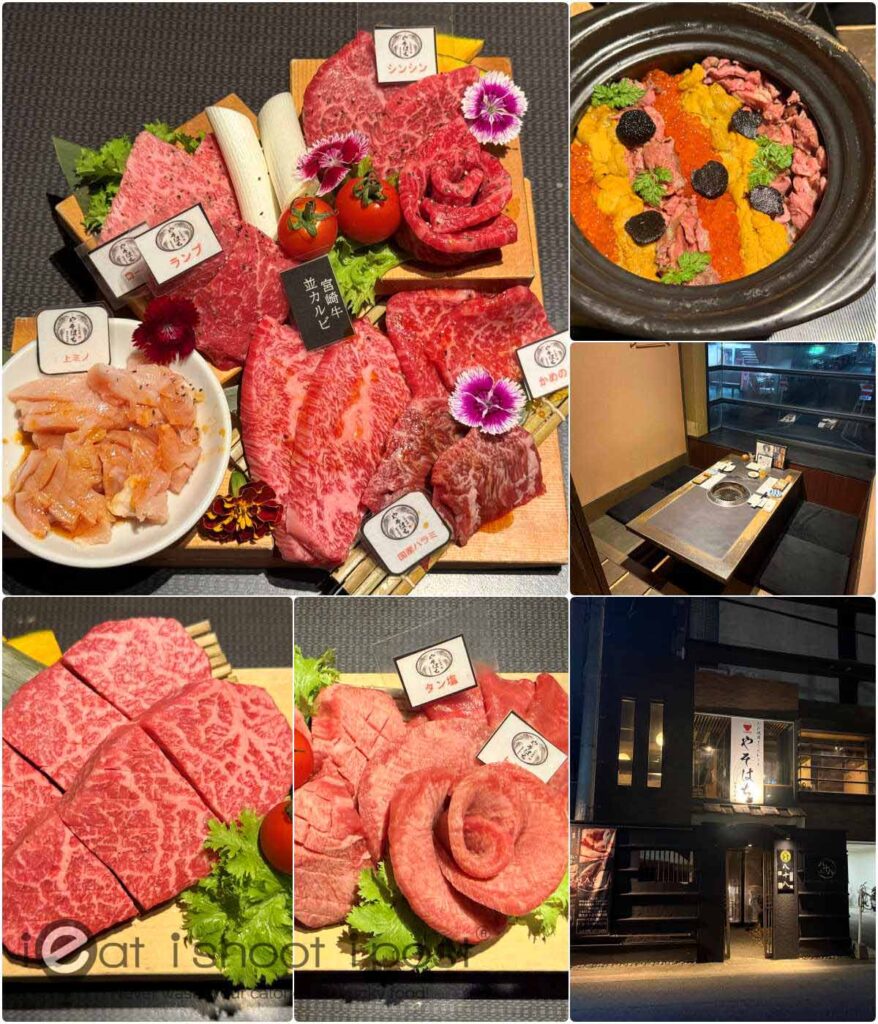
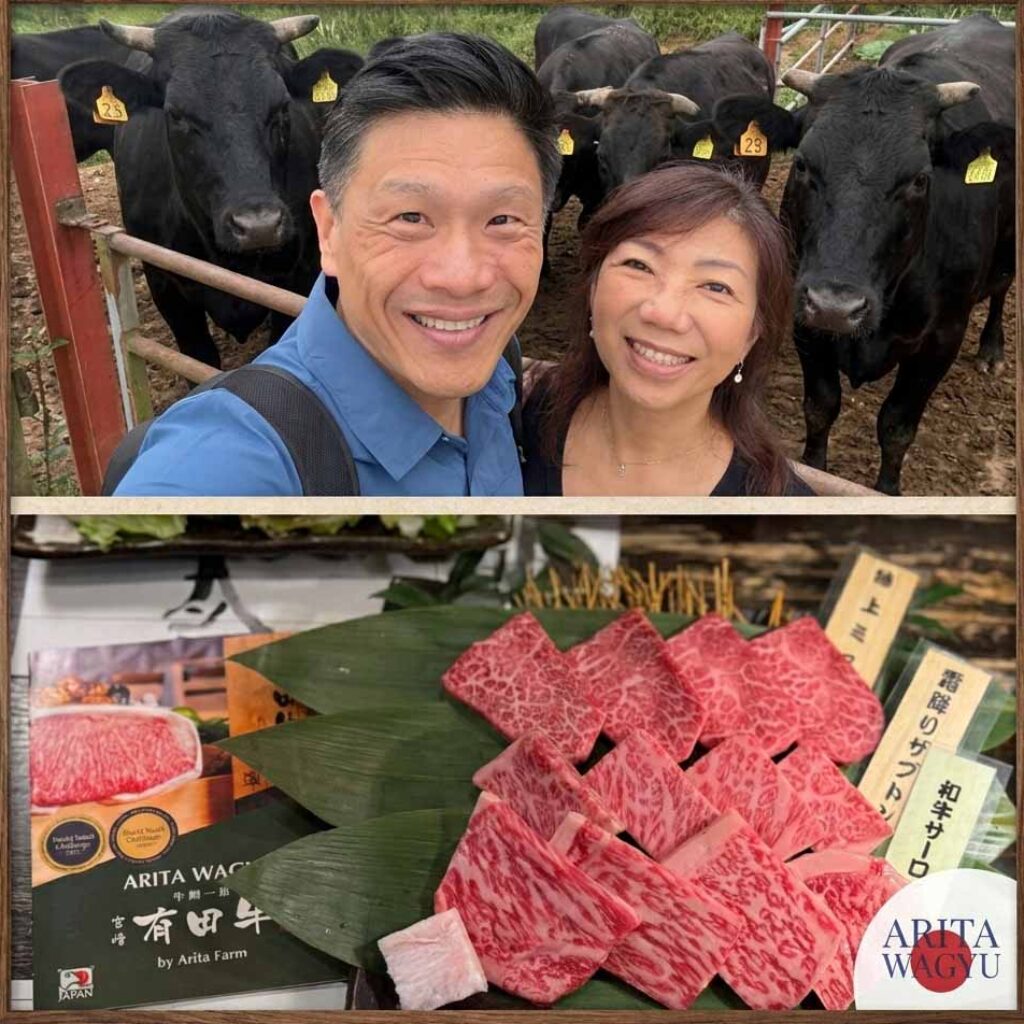
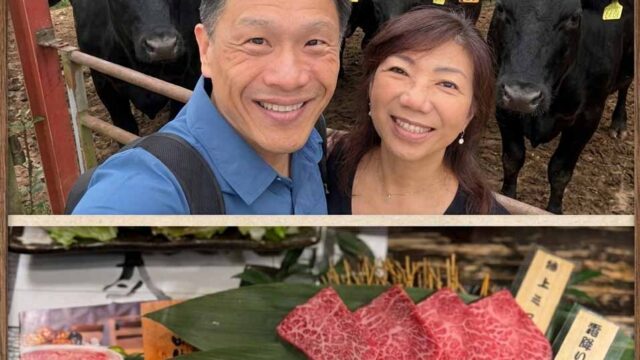
Wagyu is expensive in Singapore. If you love it and want a lot of it, it will definitely burn a hole in your pocket! If you feel the same way, you need to visit Yasohachi.
The restaurant is a little off the tourist path, but still an easy 8 minute walk from Hakata Station.
When our course arrived, my first reaction was, wah, so much meat! I don’t remember ever feeling there was more Wagyu than I could finish. Not everything was a prime cut, most were secondary cuts, but even those were well marbled and tasty.
The highlight was the beef tongue. Gyutan is prized in Japan, a tradition that took off in Sendai after the war. We had thick slices from the root, the tenderest part, and thinner slices from the tip, which have more bite. Gyutan in Singapore usually comes from Australian Wagyu, so Japanese gyutan is a real treat. The flavour is clean, with very little gaminess.
Aside from gyutan, we also had a range of secondary cuts, including skirt (harami), short rib (karubi), and knuckle (shinshin), as well as intestines (horumon)! They really deepened my appreciation for cuts we don’t usually see in Singapore.
The rice came topped with uni and ikura. I love both, but they actually stole the shine from the real star, the rice. The restaurant prides itself on using the best rice in Kyushu. Even its name says so. Yasohachi means 88, and the characters 八, 十, and 八 stack together to form 米, the kanji for rice. So don’t overlook the rice!
The meal cost ¥13,000 per pax (inc tax). No need for me to tell you that is really good value. Oh, and I did finish all the beef in the end, though I probably should have stopped before that!
Hakata Yakiniku Yasohachi Chikushiguchi (博多 焼肉 八十八 筑紫口本店)
3-3-12 Hakata Eki Higashi, Hakata-ku, Fukuoka
Google Maps
Book on Japan Food Guide and use our 3% discount code jfg3r3pr
Hakata Sushi Matsumoto
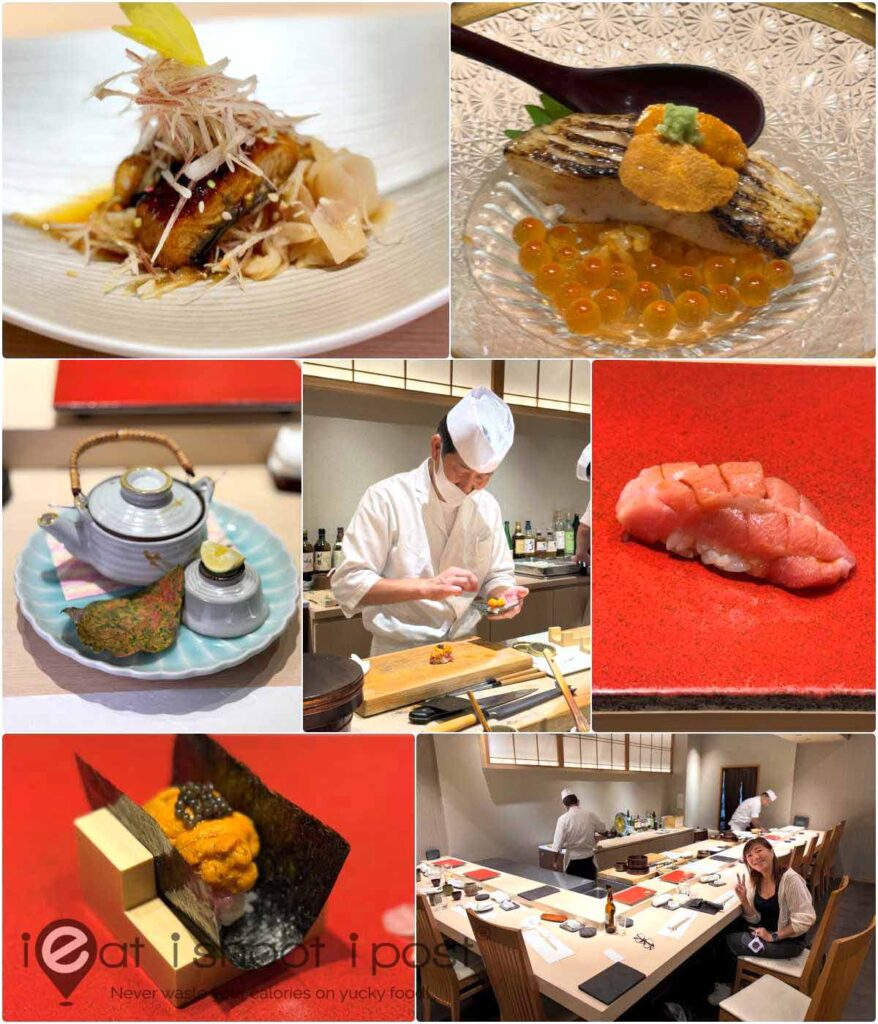
If you are after a classy sushi omakase, with exquisite cooked dishes served between the nigiri, this is a place to consider. We really enjoyed our meal here, and it costs half the price of a comparable omakase in Singapore.
This is the Fukuoka branch of Akasaka’s Sushi Matsumoto, which earned one Michelin star in 2019 and 2020. The Hakata branch doesn’t have a star, but the food is still at that level.
The sushi is very good, but it was several of the cooked dishes that really impressed us. One was the grilled nodoguro. Blackthroat seaperch is called the toro of white fish, rich and oily like the fattiest cod. Here it is grilled crisp and laid over sushi rice with uni and ikura. It is the best version of nodoguro I have come across.
The other surprise was the wild unagi. Almost all eel eaten in Japan is farmed, so it was a real treat to taste wild caught eel, which comes mostly from Kumamoto and Kochi. It is leaner, firmer, and cleaner tasting.
We finished with negitoro, uni, and caviar sushi. Negitoro is minced fatty tuna, its name said to come from negitoru, scraping meat off the bone. We have had this as the climax at many omakase meals, but it still hit the crescendo!
The chef is friendly and speaks a little bit of English, so we didn’t feel too left out of the sushi action.
The meal cost ¥22,800 per pax (inc tax). This would easily cost double in Singapore. Excellent value.
Hakata Sushi Matsumoto (博多 鮨 まつもと)
Spazio Building 2F, 9-4 Nishinakasu, Chuo-ku, Fukuoka
Google Maps
Book on Japan Food Guide and use our 3% discount code jfg3r3pr
Our Japan Food Guide Experience
So far, we’ve had good experiences with the restaurants listed on Japan Food Guide.
In Tokyo, we visited Sushi Yurakucho Kakida, where we enjoyed free sushi refills! We also had a very satisfying Wagyu feast at Kobeya Shinjuku Yakiniku.
Do use our code jfg3r3pr when making any restaurant or experience booking to enjoy 3% off!
We may earn a small commission if you book through our code and complete your visit. It’s a very modest amount, and we share the code primarily to help our readers save a littlle.
Eat Cow but don’t forget the Chicken!
Kyushu is chicken country. Miyazaki and Kagoshima take turns as Japan’s top two chicken producers, and both have their own prized birds, like Satsuma Jidori and Miyazaki Jitokko. What surprises most visitors is how they like to eat it, raw.
Torisashi, chicken sashimi, is a local tradition in both prefectures. It is often lightly seared over charcoal as tataki, so the outside is smoky and the inside is still pink. So make sure you try some local chicken when you are in Kyushu!
Toriden Hakata Honten
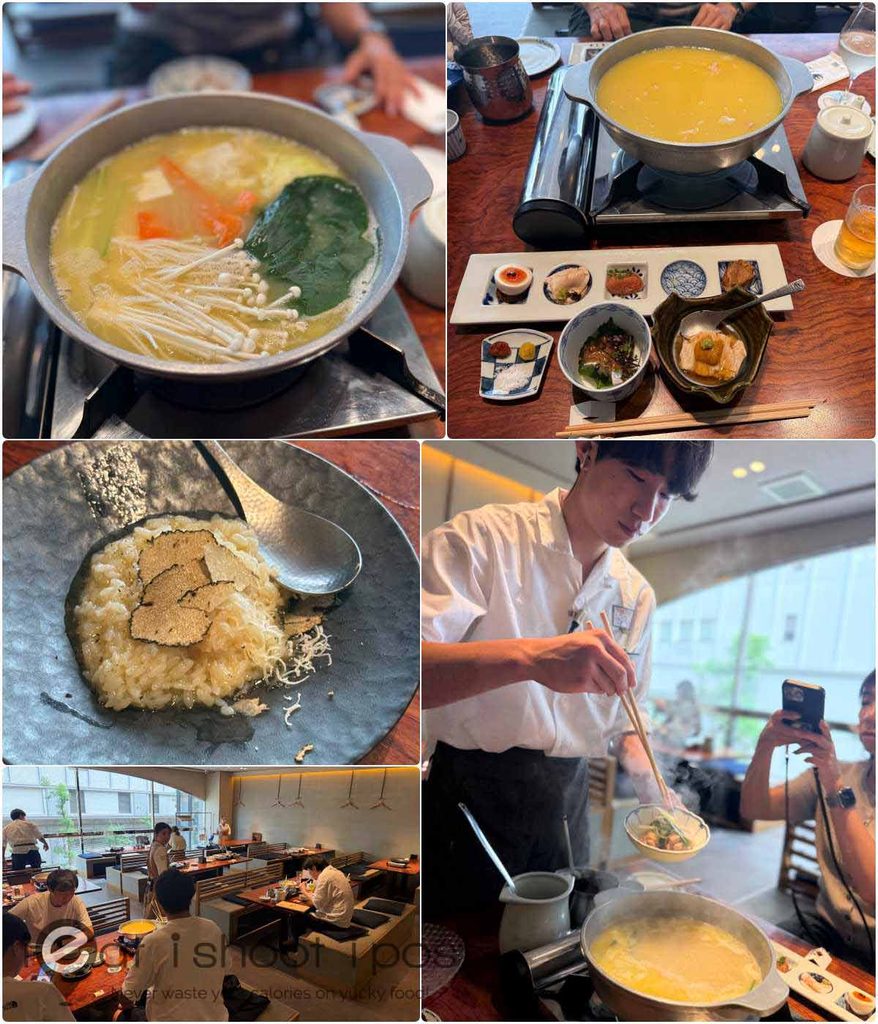
You can’t come to Fukuoka and not have mizutaki. Hakata’s chicken hotpot has been simmering away here since 1905, when a cook who had trained in Hong Kong blended Western consommé with Chinese poached chicken.
There are several well regarded mizutaki restaurants in Fukuoka, but we went with Toriden on the recommendation of Kenny Toh, Chief Strategic Officer of Toh Thye San Farms. When the CSO of Singapore’s largest chicken producer tells you a chicken restaurant is good, you take note!
Toriden is a modern take on the classic. Owner Okutsu Hirokatsu opened it in 2012 so that locals who think of mizutaki as home cooking could rediscover it. The modern setting makes for a very comfortable meal. This is not the kind of hotpot we are used to in Singapore. The meal comes as a set course, and the server prepares each stage at your table.
The starters were lovely, and you could taste the quality of the ingredients from the first bite. But the real star is the soup. It’s made from just whole young Kyushu chickens and water, simmered for six hours. Freshness matters too, the birds are slaughtered the same morning, which is why the broth turns so milky and robust.
There is a ritual to mizutaki. We sipped the soup on its own with a pinch of salt. Then the Hakata negi went in for a quick swish, and we ate the tender chicken with it, dipped in ponzu. Next, we were presented with chicken tempura. They used chicken breast meat but managed to do it such that it was tender and juicy. The server returned after a while to cooked the meatballs which were studded with chopped gizzard for a lovely crunch.
Finally, we had a choice of rice or noodles cooked in the concentrated broth that was left. We went for the truffle risotto, an extra ¥1,500. The rice was cooked in the chicken broth, then finished with truffle oil and freshly shaved truffle on top!
It was an excellent meal! But I still hadn’t tried the branded chickens I had heard so much about. So we had to track down another restaurant!
Toriden Hakata Honten (とり田 博多本店)
10-5 Shimokawabatamachi, Hakata-ku, Fukuoka
Google Maps
Hakata Yakitori Sakaba Suu
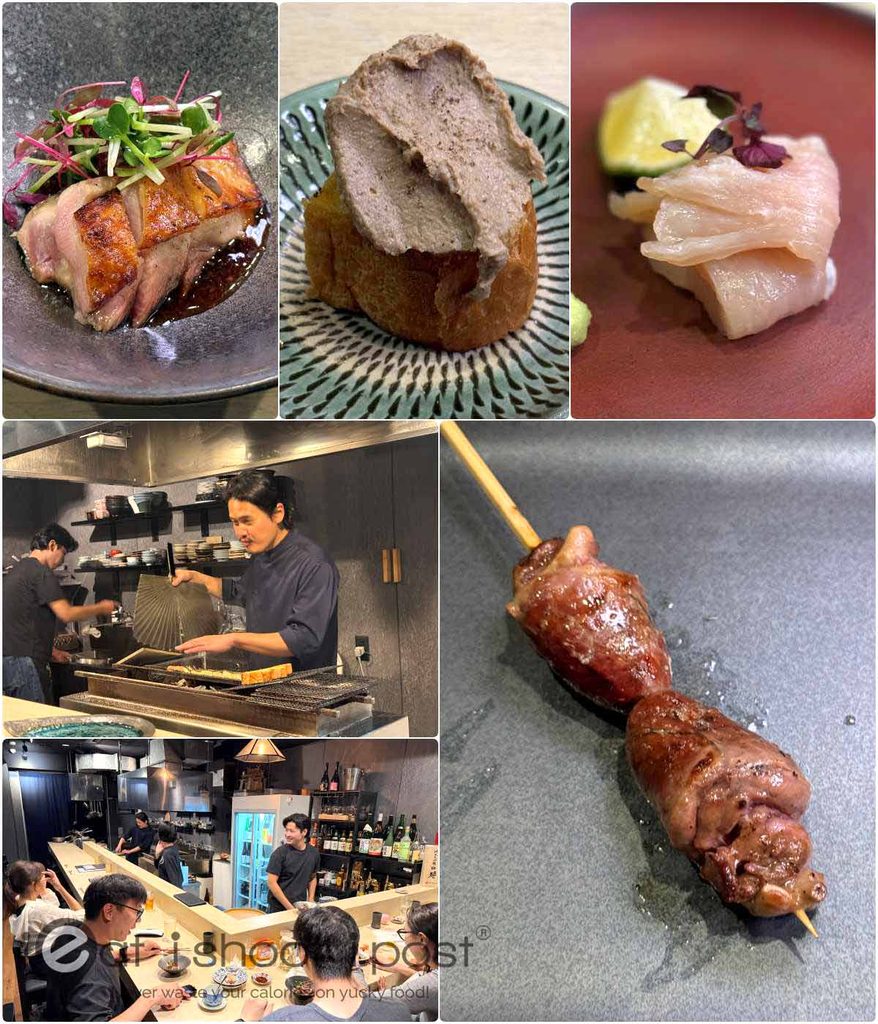
This small yakitori bar in Haruyoshi opened in 2023 and grills over binchotan. They only serve the Suu Set, 15 courses for ¥9,000, and it was a wonderful experience.
Through the courses, we were introduced to three brand chickens. This isn’t the usual yakitori bar, where the chef breaks down one whole bird and you taste its different parts. Instead, the chef sources specific cuts from different birds to showcase what makes each one unique.
We started with chicken sashimi, followed by tataki, both from Daimaou (大摩桜), a giant from Kagoshima. It is a regular broiler breed, raised for about 150 days instead of 45, and the birds can reach 10 kg. The breast sashimi was the most memorable dish of the night. The texture is so unique, almost like hamachi, with fine marbling. The tataki used the thigh, with a good bite and a flavour that develops the more you chew.
Then came Miyazaki Jitokko (みやざき地頭鶏), a true jidori whose ancestor is so rare it was declared a Natural Monument. The chicken liver pâté made from this bird was a revelation, the best I’ve ever had. No gaminess at all, just very, very delicious!
Next was hatsu, chicken heart, from Shintoku Jidori (新得地鶏), which came all the way from Hokkaido. It’s the island’s only jidori, raised in a soba town with soba mixed into its feed.
Our final skewer was the tsukune, so good I had to order extra at the end!
Overall, it was an excellent yakitori experience. The setting is casual, the food is good, and we learned that a chicken isn’t just a chicken!
Hakata Yakitori Sakaba Suu (博多 焼鳥酒場 すぅ)
3-21-22 Haruyoshi, Chuo-ku, Fukuoka
Google Maps
Home of the Hakata Ramen
Fukuoka is the home of tonkotsu ramen. That milky pork bone broth started in Kurume in 1937, and the cloudy version came about by accident when a cook let his pot boil too long. Hakata ramen is characterised by thin, straight noodles, a style said to come from the Nagahama fish market, where busy workers wanted a bowl that cooked in seconds. We tried three well known ramen shops, and one was a clear winner.
Hakata Issou Honten
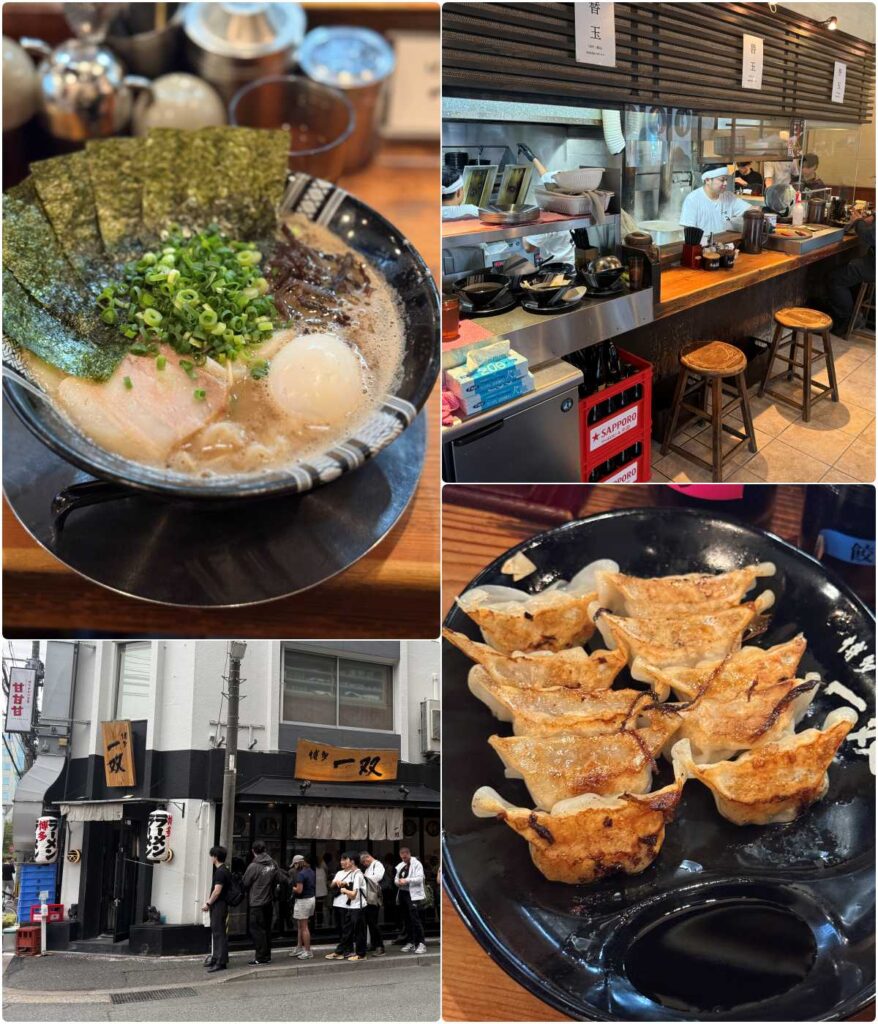
Of the three ramen shops we tried, this was our favourite. We actually saved Issou for last, on the final day of our trip. The truth is, the other two bowls were very good, but they didn’t make us feel we had to come all the way to Fukuoka for them. You can get something similar back home.
We were a little hesitant when we saw the long queue. Mind you, we timed it to arrive after 2pm, and the line was still snaking down the street! But we decided we had to give it a try, and we were glad we did, because it changed our whole perception.
The soup was thick and creamy, with a unique funky, almost blue cheese flavour. It’s made from piglet head bones, backbones, and knuckles, simmered until it turns thick and frothy, fans call it tonkotsu cappuccino. It is very different from any ramen I have eaten. We also ordered the gyoza, which was very good too.
We waited 45 minutes to get in, but it was worth it for such a unique bowl of ramen!
Hakata Issou Honten (博多一双 本店)
Hakata Eki Higashi, Hakata-ku, Fukuoka
Google Maps
Hakata Ramen ShinShin
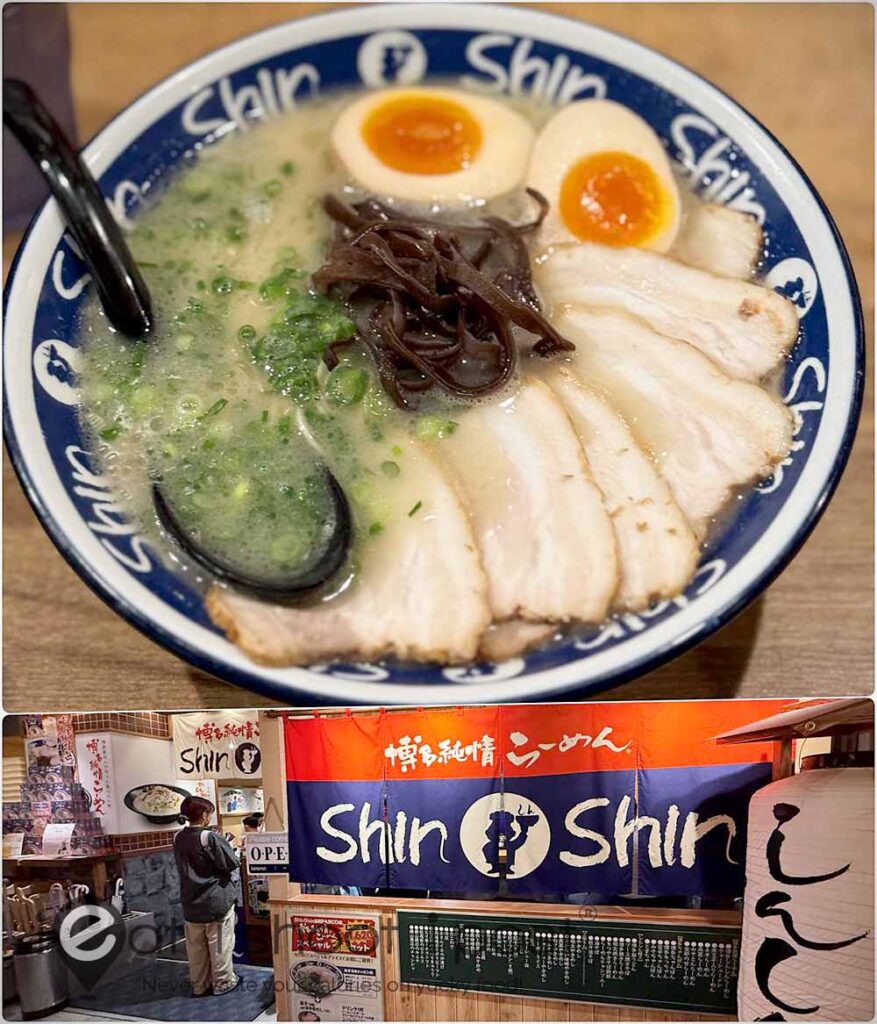
Search for the best ramen in Hakata, and ShinShin will always be on the list. Their soup is not as rich and thick as typical Hakata style ramen. Besides pork bones, it uses chicken bones from Saga’s Arita chicken, simmered for 24 hours. The result is a lighter, rounder bowl, still full of flavour.
Perhaps it was just the hype and our expectations. It was a good bowl of ramen, but it didn’t quite blow us away.
Hakata Ramen ShinShin KITTE Hakata (博多らーめん ShinShin KITTE博多店)
KITTE Hakata B1, 9-1 Hakata Eki Chuogai, Hakata-ku, Fukuoka
Google Maps
Shodai Hidechan, Raumen Stadium
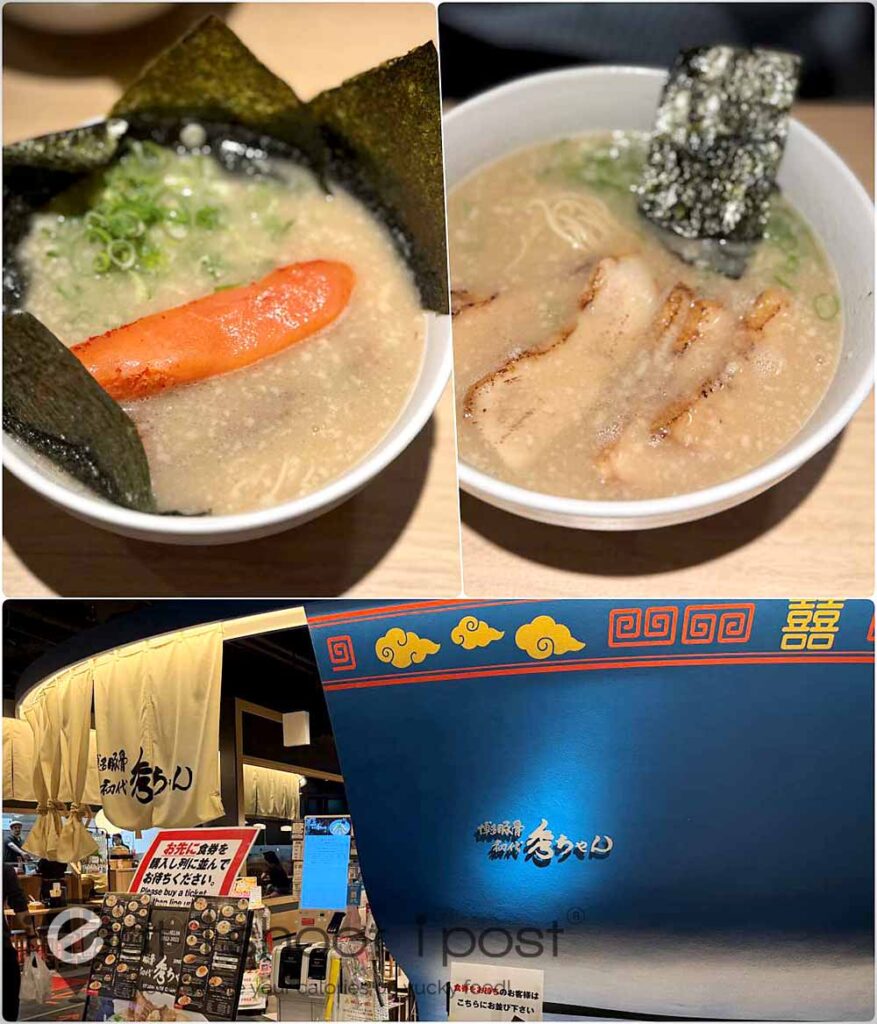
If you visit Fukuoka, you will no doubt end up at Canal City. It sits conveniently between Tenjin and Hakata, so you’ll pass through it sooner or later. On level 5 is the Ramen Stadium. When I heard the word stadium, I pictured something grand, with 20 brands or so. It turned out to be about eight shops, and Hidechan is supposedly one of the best, according to Claude.
We arrived just before the lunch rush, so we got a seat without waiting. What sets the soup apart is the bits of pork fat floating in it. There is no doubt it is rich. I went for the special, topped with a whole mentaiko and a slice of chashu so thick, almost 1 cm, that it was practically a steak.
The mentaiko and chashu made the bowl special. The soup was rich, but for me it wasn’t distinctive enough to return for. Still, it’s a convenient spot for a bowl of ramen while you’re shopping at Canal City!
Shodai Hidechan, Ramen Stadium (初代 秀ちゃん ラーメンスタジアム店)
Canal City Hakata 5F, 1-2 Sumiyoshi, Hakata-ku, Fukuoka
Google Maps
Conclusion
Fukuoka is currently our favourite city in Japan. We love its gentler pace compared to Tokyo and other major cities, and it’s a great base for exploring the rest of Kyushu. We’re already looking forward to our next visit!