
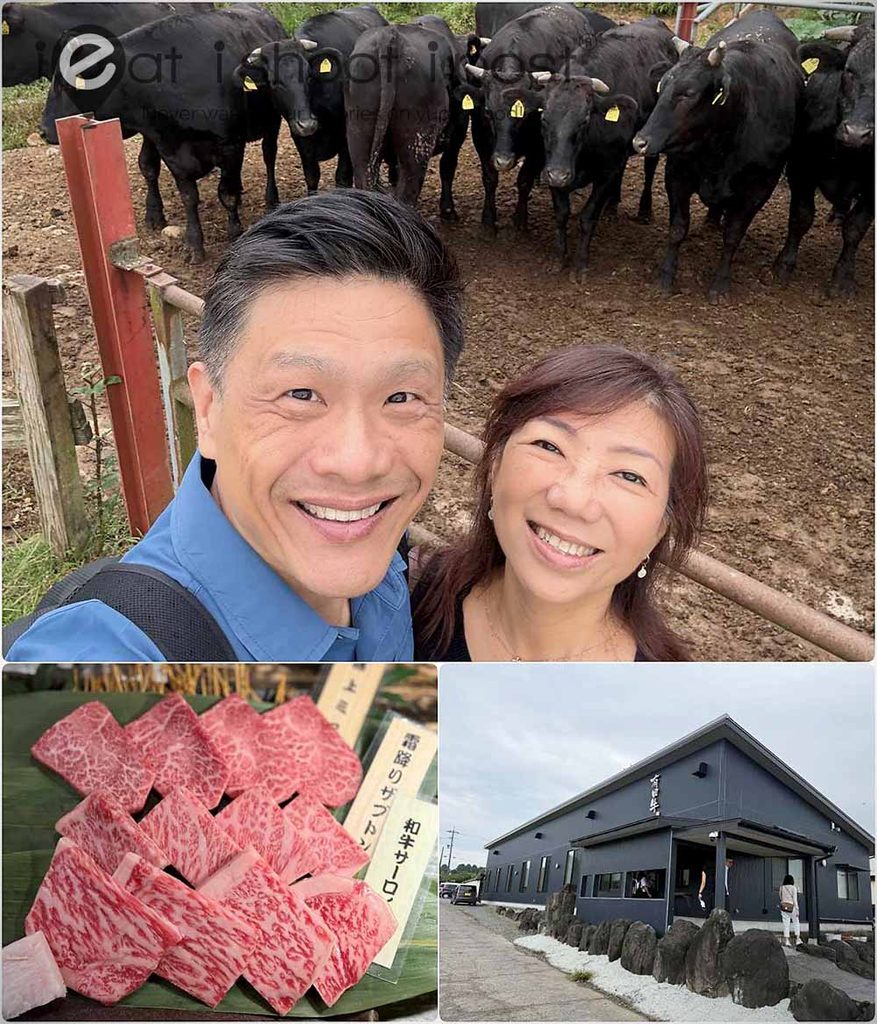
Miyazaki Wagyu: Four Time Winner of the Wagyu Olympics
If you enjoy beef, chances are you’ve tasted Miyazaki Wagyu. Miyazaki is Japan’s second largest producer of Japanese Black cattle, the breed behind most of the wagyu we eat, after neighbouring Kagoshima. It has also won the Wagyu Olympics four times in a row. Held only once every five years, this is Japan’s most prestigious wagyu competition, and it’s why Miyazaki has become such a well regarded brand.
We were recently invited to tour the Arita Farm and its processing facilities in Miyazaki to find out what makes Arita Wagyu special.
Arita Wagyu – A Healthier Wagyu
The first thing that sets it apart is the fat. All wagyu is naturally higher in oleic acid than other breeds of cattle. But Arita says theirs is even higher than the average Japanese Wagyu.
Oleic acid is the same monounsaturated fat you find in olive oil. It melts at a lower temperature than saturated fat. The beef tastes lighter and less jelak. It’s also kinder to your cholesterol levels. It’s still saturated fat, but less than normal beef. So as with everything, you should enjoy it in moderation.
Toh Thye San Farm (TTSF) is the exclusive importer of Arita Wagyu in Singapore. Kenny Toh, the third generation of the family business and TTSF’s Chief Strategic Officer, led our tour. He tells us they tasted many different wagyu brands before settling on Arita.
What sealed the deal was the consistency of the beef, and a farming philosophy that matches the way TTSF raises its own GG French Poulet chicken. Both put the emphasis on a healthy product, raised without hormones or antibiotics.
TTSF aims to bring in the best quality wagyu at the most reasonable prices for both restaurants and home cooks, through their online store Mr Farmer and RedMart.
They can do this because they buy directly from Arita. They have their own logistics to import the beef and bring it all the way to the customer. With no middleman taking a cut, the savings are passed on to both businesses and consumers. This is still a work in progress, but it should be fully stocked by early next year.
In Miyazaki, we toured the farm, learnt about its history and practices, visited the halal certified abattoir and processing centre. And of course, tasted the beef. We came away with a much better appreciation of wagyu. Like us, you might assume that all wagyu are the same, but we were about to discover otherwise!
Content
From Pasture to Processing
Arita Farm was established in 1976 in Saito City. It is one of the largest wagyu farms in Japan, raising around 8,000 head of Japanese Black cattle. It’s still very much a family business.
Yonemasu (Yonezo) Arita is the President of Arita Livestock Industry Co Ltd, while his son in law, James Arita, is CEO of Nikuhille Co Ltd, the trading company that deals directly with Toh Thye San Farm to bring the beef into Singapore. Together, they handle every stage themselves: breeding, fattening, slaughter, processing, and sales. That’s quite rare, and it means they control every step of the journey from calf to plate.
They are very focused on producing wagyu that is not only delicious but also good for your health. To do that, they raise their cattle without growth hormones or antibiotics. It is a philosophy they call Earth Medicine Zero. The idea is that soil, water, feed, cattle, and the people who eat them are all connected. So if you want healthy beef, you start with a healthy cow.
Out to Pasture Before Fattening
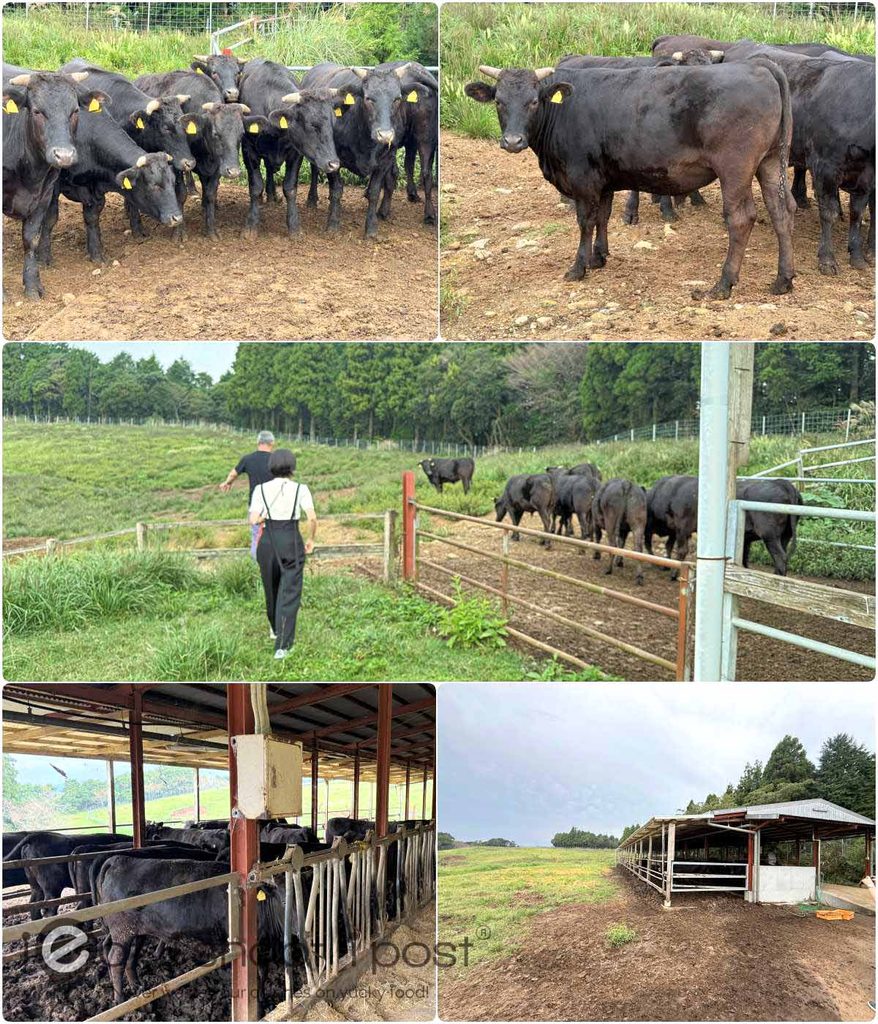
Our first stop was to see how the calves spend their first 14 months. In Japan, most wagyu spend their whole lives in barns. Arita is one of the few farms that raise their calves on pasture first, before sending them to the fattening barns.
Unlike the vast plains of America and Australia, Japan is mostly mountains, about three quarters of the country in fact. To reach the pasture, our vehicle had to climb a winding mountain trail to the top of a hill.
Up here, the young calves roam free and graze in the open. Arita has invested in several small mountain pastures like this one, because fresh air, open space, and room to run make for a calmer, healthier animal.
It’s amazing to think they would go to the extra effort of finding pasture land high up in the hills just to give their calves a better start. It really shows their commitment to producing healthier wagyu.
The Fattening Barns
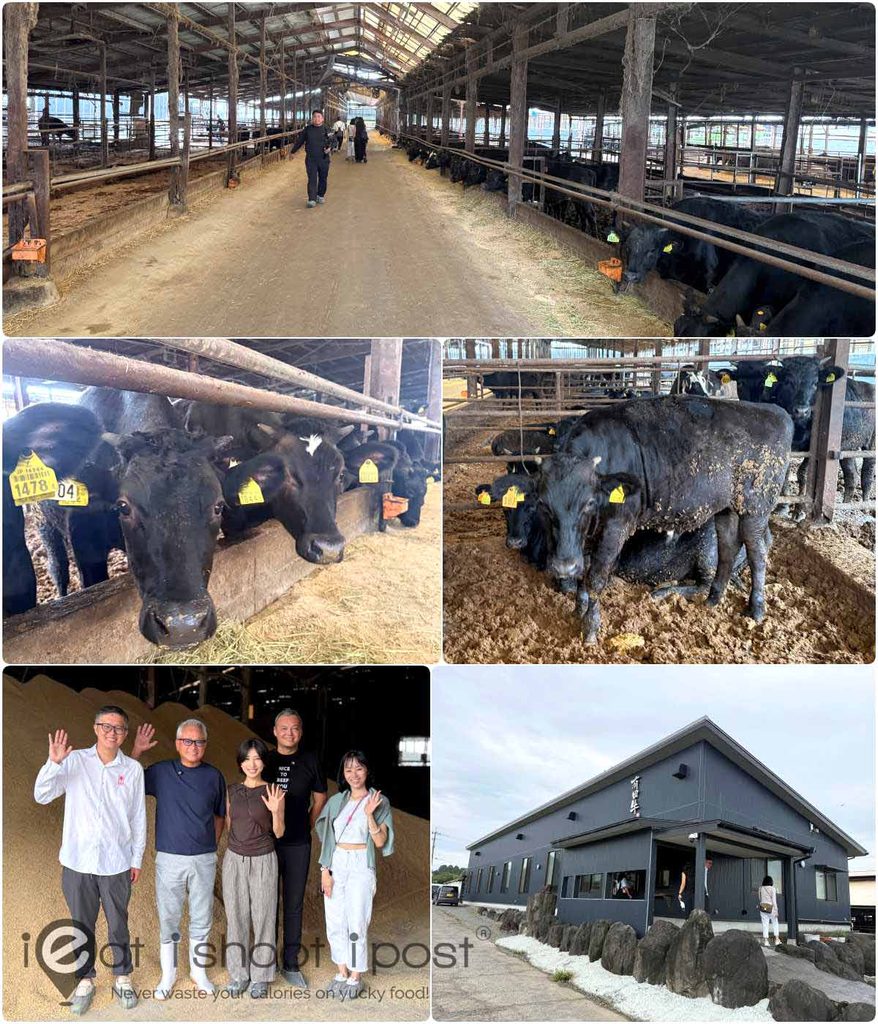
From the pasture, we made our way to the fattening barns, where we were greeted by Yonezou Arita, the President of Arita Farm. Mr Arita looks like a very healthy man in his 60s, and he puts it down to eating Arita Wagyu every day!
Good Water makes for Good Wagyu!
He then told us why Arita Wagyu is different, and much of it comes down to the water. A grown cow can drink 50 litres or more a day in hot weather, so water quality matters. Mr Arita believes that eating well and clean water keeps the cattle healthy and stress free. It shows in their organs and the meat.
That’s why Arita draws 100% pure groundwater from 100 metres underground near Mt Osuzu. It is a 1,405 metre peak known for its biodiversity and more than 30 waterfalls. Mr Arita showed us the original well, first dug by his father many years ago. Not many farmers make this investment, because digging a well is a very expensive venture.
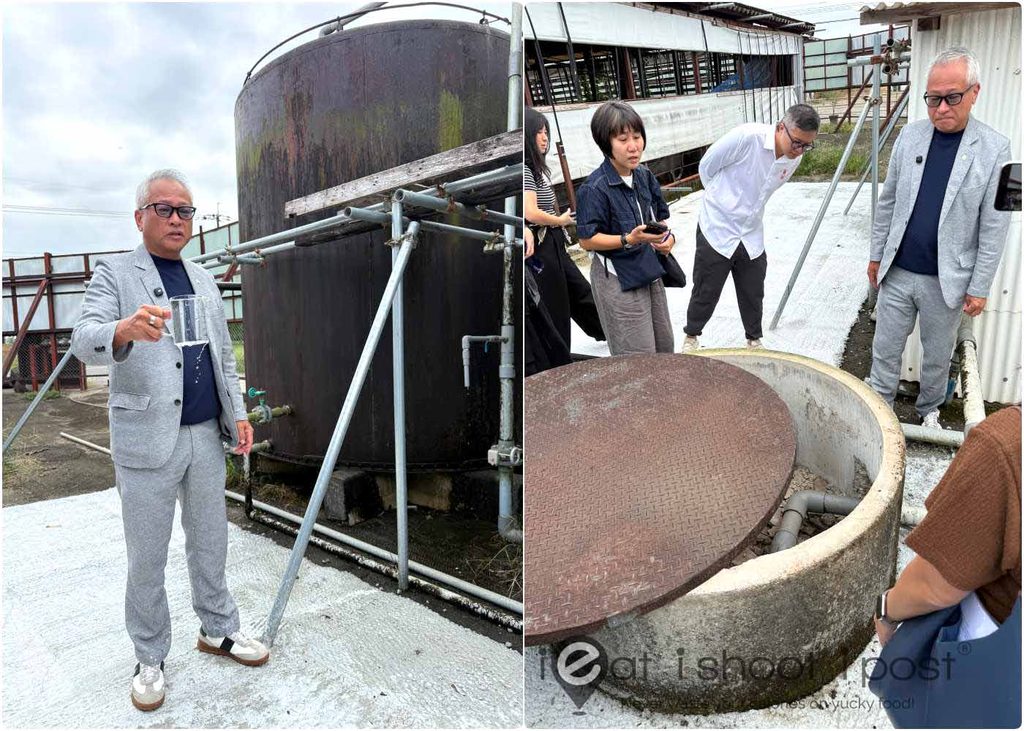
To prove the point, he drew a jug of water, drank it himself, and offered it to us. It really did taste very pure!
Mr Arita told us the water is very soft, and some of it is believed to have been lying in the earth for a hundred years. The first time it touches oxygen is when it flows out of the tap for the cattle. He believes this soft water is better absorbed by the cattle, which helps them grow well.
Specially Formulated Feed
Next came the feed. Mr Arita was so serious about getting it right that he took a course and became a certified livestock feed production manager when he was 22 years of age. The certification is licensed by Japan’s Minister of Agriculture, Forestry and Fisheries.
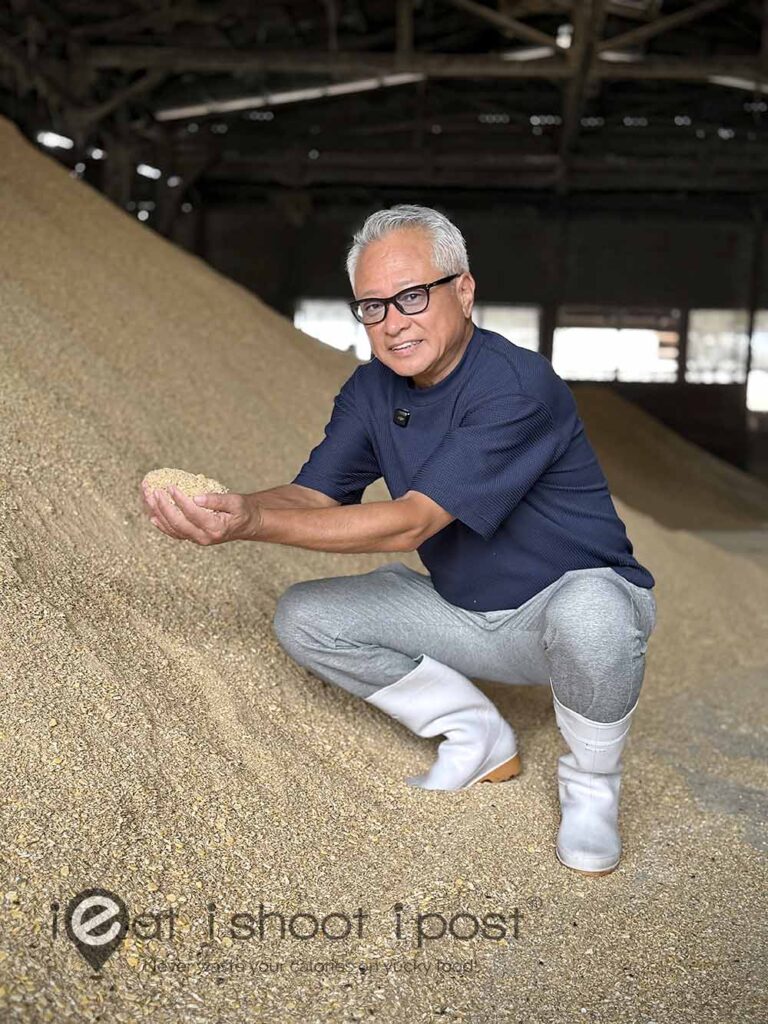
He formulated the feed himself: a pesticide free blend of 10 grains and 4 grasses, rich in protein, fibre, vitamins B and D, iron, zinc, and magnesium. It’s all made in house, and the feed shed is piled high with small mountains of grain. Just like with the water, he scooped up a handful and ate some himself, to show us just how safe it is.
How about Beer, Music and Massage?
In the good old days, Wagyu was shrouded in mystique, with all sorts of myths about cows listening to music, getting massages, and drinking beer. We saw none of that here! According to Mr Arita, the key to better Wagyu is simple: good water, a specially formulated feed, and keeping the animals clean and stress free.
SE Meat Miyazaki: A Halal Certified Meat Processing Plant
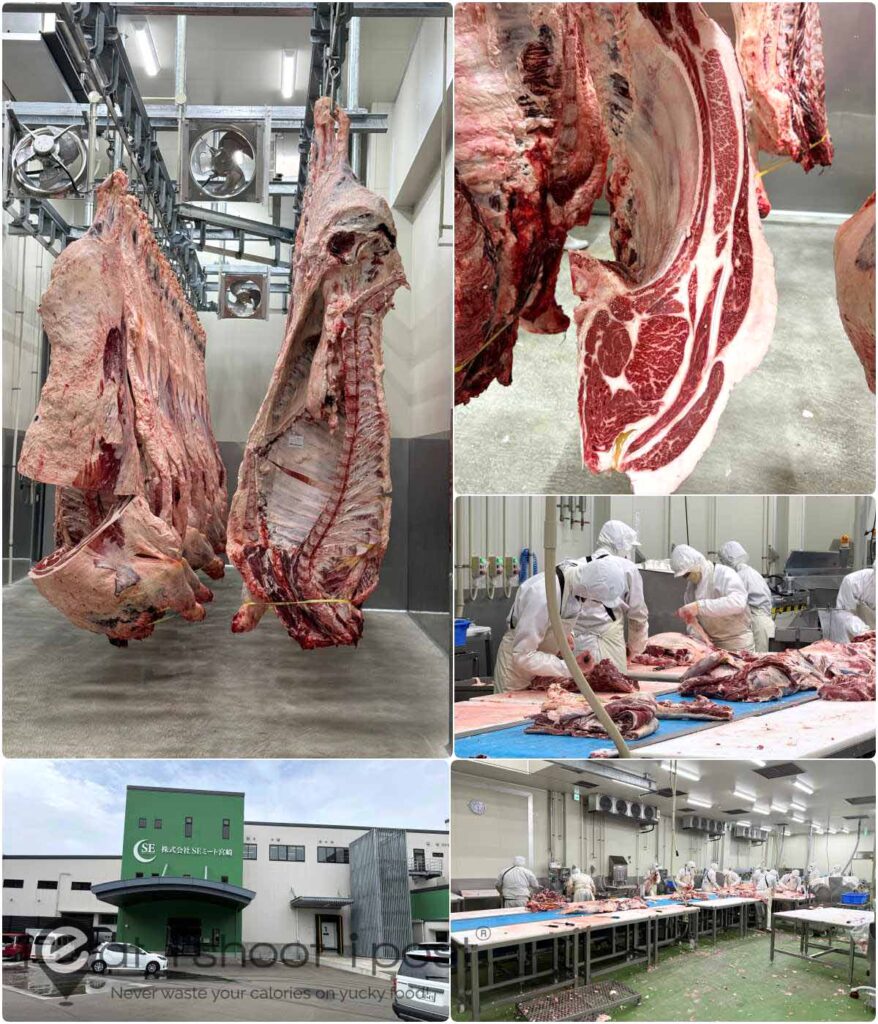
The next morning, we visited SE Meat Miyazaki, the halal certified plant where Arita’s cattle are slaughtered and processed. It was set up by four local farmers, including Arita, to produce halal wagyu for export, and Mr Arita is its current president.
Their first halal shipment went to Qatar. With Muslims making up about a quarter of the world’s population, it’s a big market, and closer to home, it means Muslim friends in Singapore can enjoy proper Japanese wagyu too.
Inside, we saw rows of carcasses hanging in the chiller, each one already graded. In Japan, every carcass is cut open between the sixth and seventh ribs so graders can inspect the ribeye.
The letter, A to C, is for yield, meaning how much usable meat the carcass gives. The number, 1 to 5, is for meat quality, judged on marbling, colour, firmness, and fat. So an A5 is the top grade on both counts.
What struck me most was Arita’s commitment to whole animal utilisation. They believe that respecting the life of an animal means making use of the whole carcass, not just the premium loins. So they export whole sets of cuts, not just ribeye and striploin. They even teach Japanese butchery techniques overseas so chefs know what to do with the secondary cuts.
Tasting Arita Wagyu
Progressing to Secondary Cuts!
Throughout the trip, we were treated to meals that focused a lot on the secondary cuts. These are usually a little less tender than prime cuts like ribeye and striploin, but they are still very tasty when properly cooked.
I feel that many Singaporeans are now familiar enough with Wagyu to move beyond the usual prime cuts and start exploring. Not only does it make the meal more interesting, it’s also more affordable. That means you can enjoy more wagyu more often!
We were hosted to two very different meals to savour the flavour of Arita Wagyu and see the potential of the secondary cuts. The first night was a classic yakiniku dinner, while on the second night, we met a teppanyaki chef who uses nothing but secondary cuts.
Suminone Yakiniku Restaurant
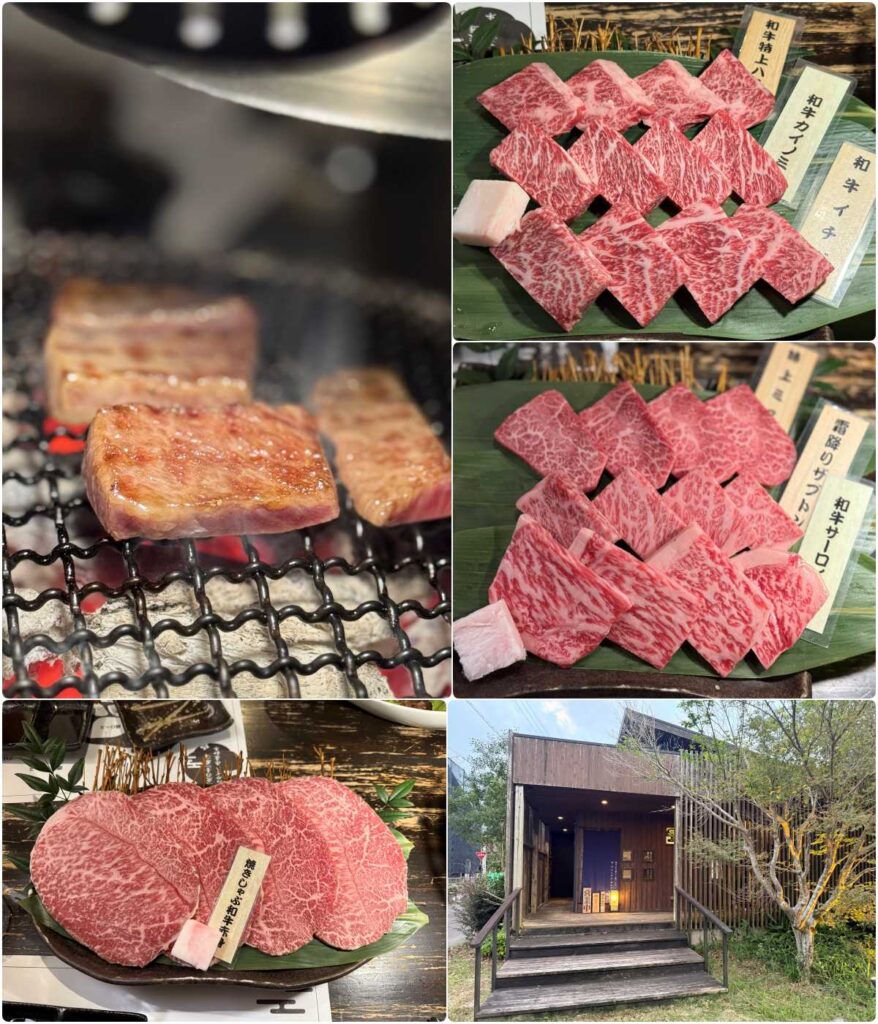
Our very first taste of Arita Wagyu was yakiniku at Suminone. It’s a cosy standalone restaurant done up in dark wood, with private rooms for each group. It sits in the mid to high end range, and the meats are grilled over real binchotan. This is the famous Japanese white charcoal made from oak, fired until it’s almost as hard as metal. It burns hot, long, and clean, with very little smoke, so you get a lovely sear without the meat tasting sooty.
We were presented with a good selection of secondary cuts: harami (skirt), kainomi (flap meat), ichibo (rump cap), striploin, misuji (oyster blade), and shinshin, the tender heart of the knuckle. It was a nice way to see how different parts of the same animal can taste so different.
The beef was full of flavour, but light and not as heavy as the wagyu I’m used to. Remember that oleic acid? You can taste the difference. The fat was clean tasting and didn’t come across as too rich. So you can keep eating without feeling jelak (uncomfortably full).
The real surprise of the night was the wagyu tongue (gyutan). It was quite different from Australian wagyu tongue, which is what we usually get in Singapore. Tongue is considered organ meat, so hardly anyone imports it from Japan. This one was clean and sweet, with none of the gaminess. Arita credits their pure groundwater for how clean their offal tastes. And after seeing the farm, I’m inclined to believe them.
Suminone
Japan, 〒880-0835 Miyazaki, 阿波岐原町前浜4276-434
Google Map
Dinner from 6pm to 10pm and is closed on Tuesdays.
Gyunikuron Teppanyaki Restaurant
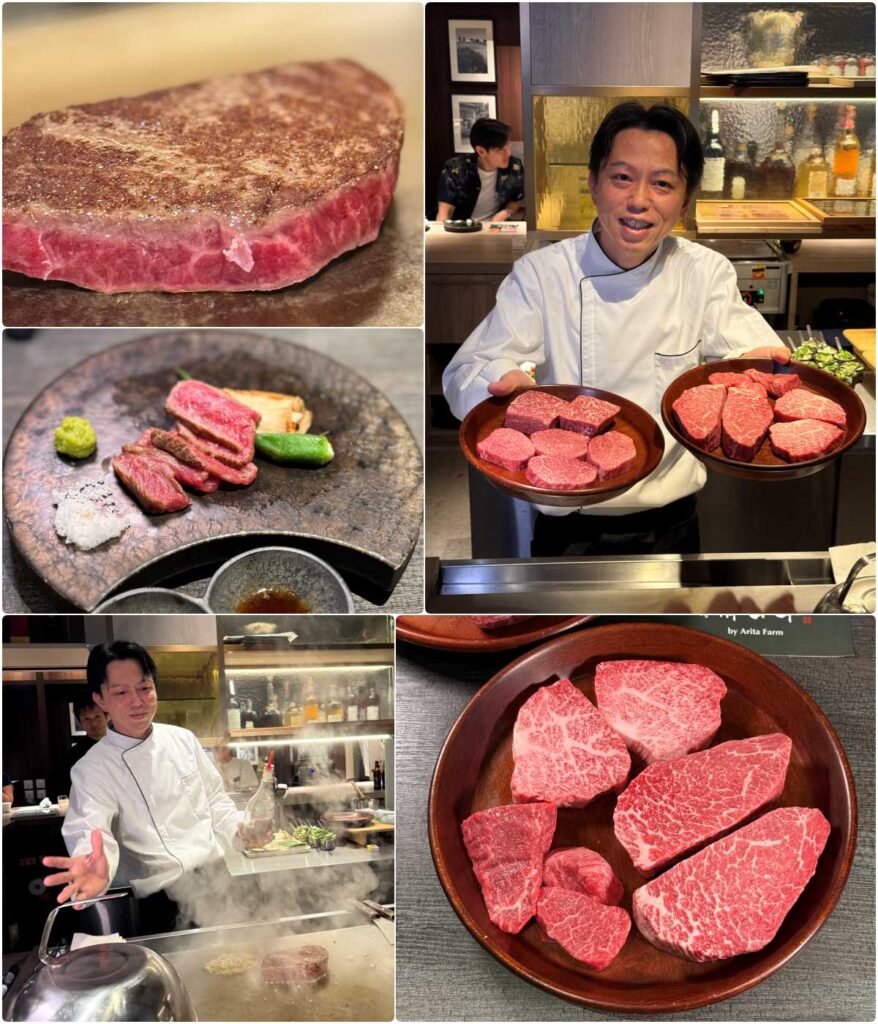
Our second Arita Wagyu dinner was at Gyunikuron, a teppanyaki restaurant which uses Arita Wagyu, specifically the secondary parts.
Chef Suzuki tells us that anyone can make prime cuts like ribeye and striploin taste good. Where’s the challenge in that? The fun is in the cuts most people overlook. So with togarashi (chuck tender, named for its chilli pepper shape), shinshin (knuckle), and tomosankaku (tri tip), as well as hatsu (heart) and horumon (intestines), he uses special techniques to bring out the best in each one and make the meal more interesting for his guests.
My favourite trick of the night was his teppan shabu shabu. Normally, shabu shabu is thin slices of beef swished in a pot of simmering broth, the name coming from the swish swish sound the meat makes. Chef Suzuki has no pot. Instead, he splashed water onto the hot teppan to create a cloud of steam. He had laid thinly sliced beef on a rack, and slid the rack right over the steam to lightly poach it. It came out silky and just cooked through, with that clean beefy flavour that a hard sear sometimes masks.
I must say it was a most interesting and tasty meal. Every cut had its own personality. I came away with a new appreciation for the parts of the cow that don’t usually get the spotlight. And since it’s secondary cuts, the cost is quite reasonable, at S$110 per pax. For wagyu teppanyaki, that’s very good value.
Gyukuron (牛肉論)
Japan, 〒880-0002 Miyazaki, Chuodori, 7−25 2F
Google Maps
Where we stayed in Miyazaki: Phoenix Seagaia Resort
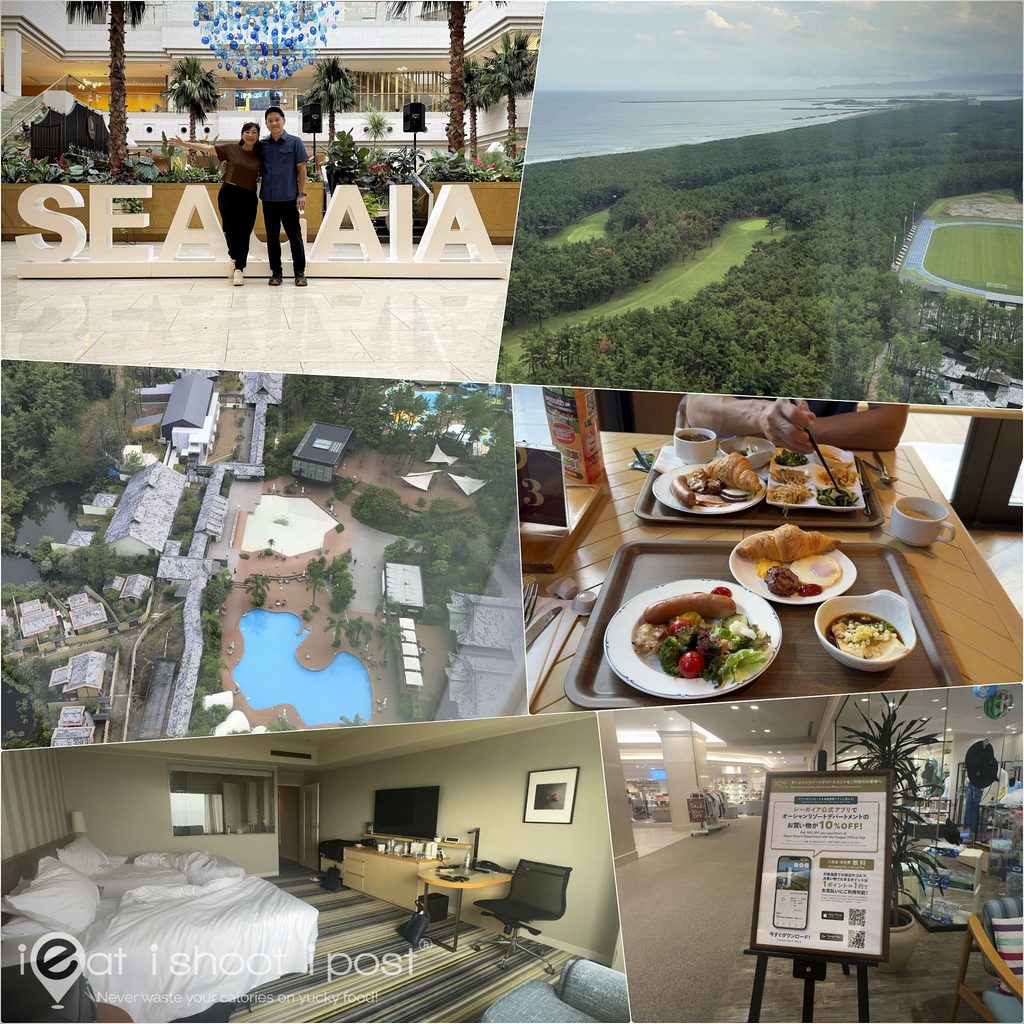
While in Miyazaki, we stayed at Phoenix Seagaia Resort, which is a destination in itself.
The first thing that struck us about our room at Phoenix Seagaia Ocean Tower was the view. Beyond the pine forest lay the Pacific Ocean, stretching right across the windows. The rooms were spacious too, with plenty of room to unpack and settle in during our Miyazaki stay.
The resort has plenty of facilities within easy reach. There are 3 onsens, Banyan Tree Spa for some pampering, swimming pools, golf courses, tennis courts and even a mini go-cart.
Breakfast offers a choice of three restaurants. We got to try Pine Terrace, that serves a Japanese and Western buffet with local Miyazaki specialities, and Himuka, that offers a Japanese breakfast. There’s also ARCO on the 42nd floor that serves a semi-buffet breakfast, which we didn’t get to try.
The basement shopping arcade is also handy for picking up snacks, sake and gifts to bring home.
Phoenix Seagaia Ocean Tower
Yamasaki-Cho, Miyazaki City, Miyazaki Prefecture 880-8545, Japan
Book here
Conclusion
I came to Miyazaki expecting great beef. That we certainly got, but what I didn’t expect was to come away with an epiphany: not all wagyu are created equal. I also left with a new appreciation for making use of the whole animal.
From raising the calves on pasture, to drilling deep into the ground for pure water, to avoiding hormones and antibiotics, every step is about raising a healthier cow. The result is wagyu that is lighter on the palate, and a little kinder to your health too.
The good news is you don’t have to fly to Miyazaki to try it. Arita Wagyu is already available in Singapore at restaurants such as Burnt Ends, and you can buy it on RedMart and Mr Farmer. For now, only the prime cuts are on sale, but the plan is to roll out the secondary cuts next year. So do look out for it!
This media trip was hosted by Toh Thye San Farm.