
Chasing the Stars in Wellington and Auckland
We are privileged to be invited again by Tourism New Zealand to visit a country known for its fresh air, wonderful produce, and beautiful scenery. We had thoroughly enjoyed our last trip to Christchurch and Arrowtown, which is why we were quick to accept the invitation.
This trip carried a little extra weight, though. We were there for the inaugural Michelin Guide Award ceremony. It is the very first time New Zealand would be receiving Michelin recognition. It is the first country in all of Oceania to do so, ahead of Australia.
Having visited Christchurch and Queenstown two years ago, this time around we wanted to visit Wellington, sampling restaurants potentially tipped as Michelin contenders, with side trips to the Wairarapa region and Martinborough wine country.
But, New Zealand had other plans for us.
Wellington is famously windy, and true to its reputation, the winds got the better of our schedule almost immediately. Our connecting flight was cancelled, leaving us stranded an extra day in Auckland. (We were told this is NOT a common occurrence, but it does happen occasionally) Then, just as we finally landed in Wellington, the roads into the Wairarapa were flooded, taking that whole leg off the table.
Unlike our Christchurch and Queenstown trip, which leaned into vineyards and produce, this one was more restaurant focussed. We still found time to visit Wētā Workshop, the studio behind The Lord of the Rings. Being fans, that was a real boon. We also managed to paddle a waka and visit Te Papa Museum. But the focus this time around was really on the food, especially restaurants tipped to win Michelin stars, or at least be included in the Guide.
Here is our whole trip itinerary for your reference, in case you are planning a trip.
Featured One Michelin Star Restaurants
Featured MICHELIN Selected Restaurants
Featured MICHELIN Bib Gourmand Restaurant
DAY 1: ARRIVAL IN AUCKLAND
Kingi (Michelin Selected)
We left Singapore on Thursday evening and were supposed to take the connecting flight to Wellington on Friday. However, when we reached the airport, we found that the flight had been cancelled because of high winds. So we had an unplanned day to spend in Auckland instead.
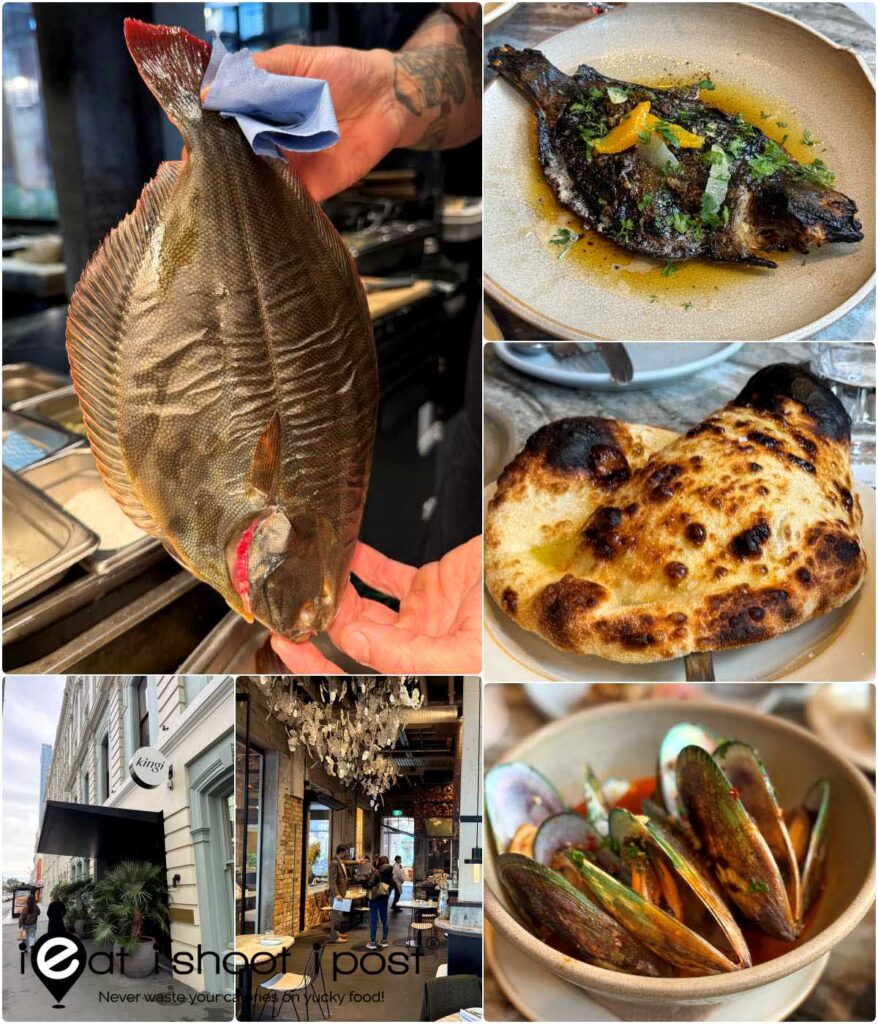
We checked into SO/ Auckland, who were nice enough to host us at short notice. This happened to be the same hotel we would be staying at again on our way back through Auckland. Lunch was conveniently located just across the road at Kingi. We were pleasantly surprised. It was an excellent lunch, and a great introduction to the entire culinary trip in New Zealand.
At the time, I remember thinking the food was good enough for at least a Michelin Selected listing, possibly even a star. Turns out I was not far off. Kingi did indeed make it onto the MICHELIN Selected list when the results were announced days later.
The restaurant sits inside a beautifully renovated heritage building in the Britomart precinct. The space has real character, but it was the food that won me over. I was especially taken with the flatbread, fluffy, charred just right, the kind of bread you keep reaching for even when you know you should save room for the rest of the meal. The flounder was excellent too, clean and simply done, letting the fish speak for itself.
What impressed me most was the kitchen’s intent. Kingi is serious about serving only fresh, New Zealand caught seafood. You could taste it. Everything had that unmistakable freshness that only comes from fish that left the water recently and travelled a short distance to your plate. We really appreciated that level of sourcing integrity, especially on a trip that was fundamentally about understanding New Zealand’s relationship with its own produce. 4.25/5
Kingi
29 Galway Street, Hotel Britomart, Auckland Central
Google Maps
All Blacks Experience
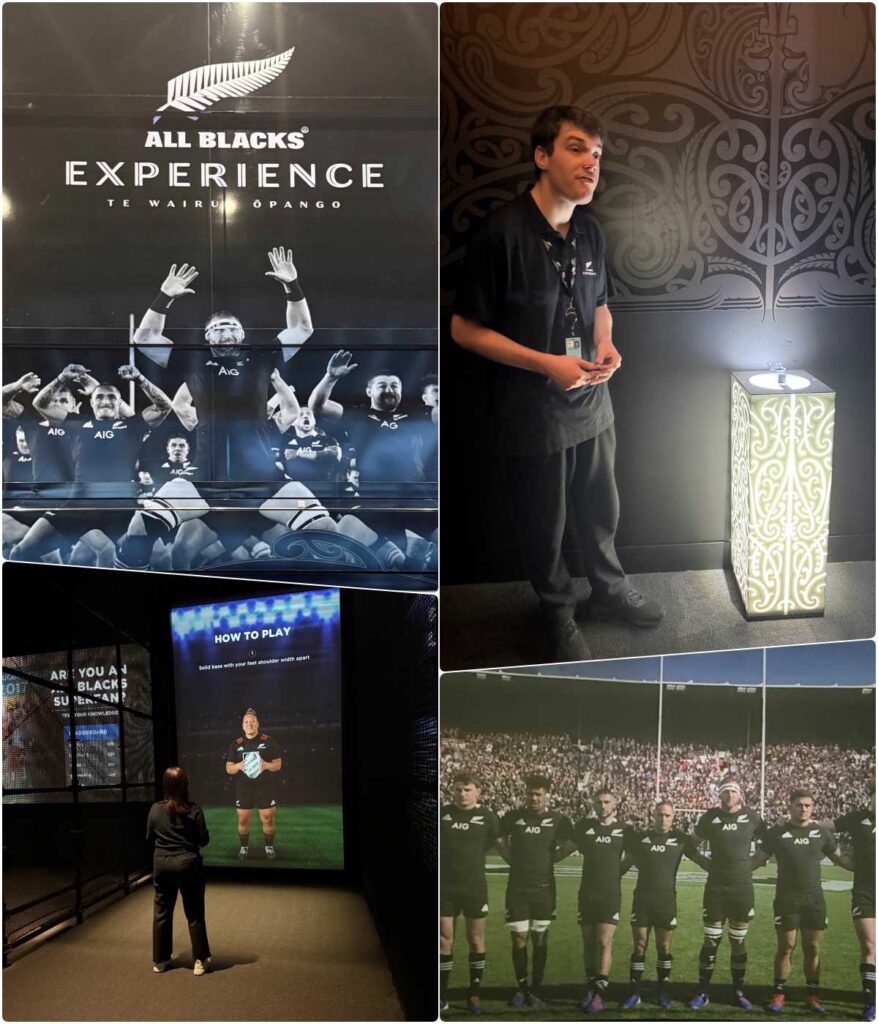
After our excellent lunch at Kingi, we walked over to the All Blacks Experience and spent some time learning about the history of New Zealand’s most famous sporting institution.
For rugby fans, this is going to be a fantastic stop. Rugby in New Zealand is much more than a national sport. It is closer to religion. The reverence shown to players here runs deep, and the museum does a good job of explaining why. We learned about the history of the All Blacks, the weight of that black jersey, and how the team has come to occupy such a sacred place in the national identity. We also learned more about the haka, the traditional Māori war dance the team performs before every match, and the meaning and history behind it.
A fair word of caution, though. If you genuinely enjoy rugby or follow the All Blacks, this experience will resonate deeply. If you do not know thirty big burly men are running around chasing after an olive-shaped ball, it might be better for you to settle in a nice cafe instead.
All Blacks Experience
667 Great South Road, Manukau, Auckland
Google Maps
Cafe Hanoi
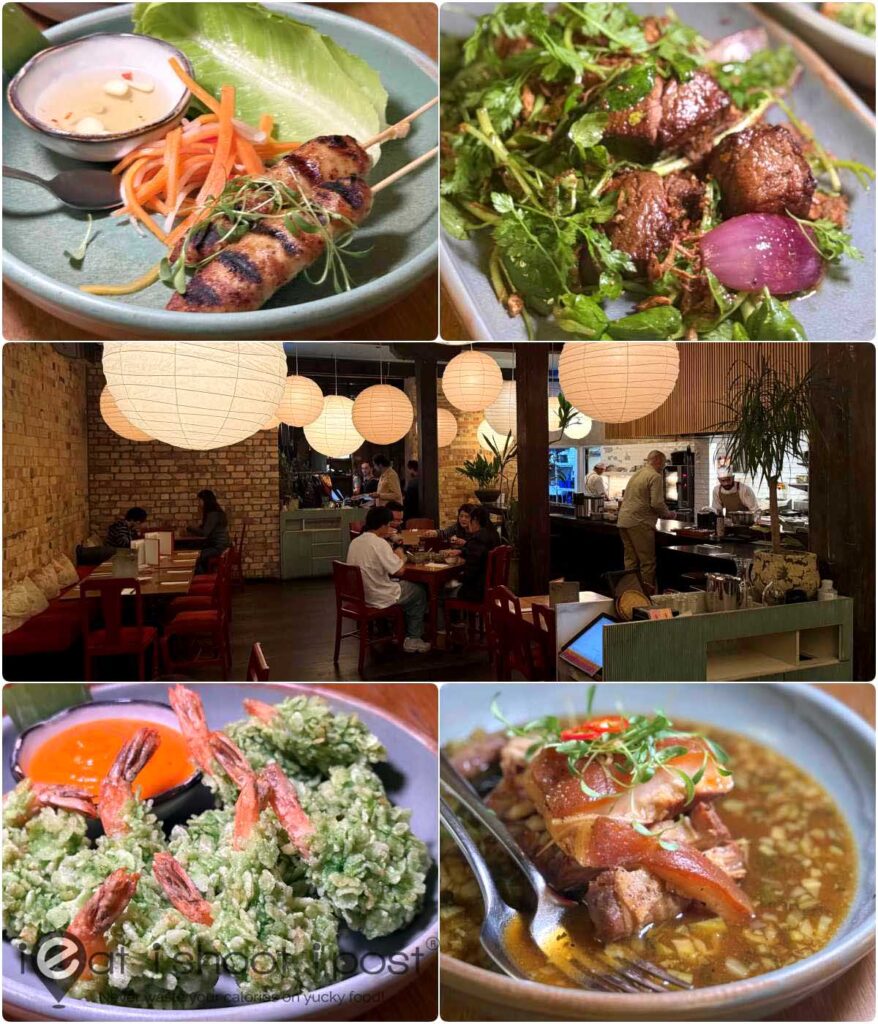
For dinner that evening, we didn’t want to travel too far, so we crossed the road to the same building that housed Kingi to dine at Cafe Hanoi, for some Vietnamese-inspired cooking.
Overall, we had a good meal but it isn’t something I would expect would get into the Michelin Guide. If you walk in expecting authentic Vietnamese food, you will come away a little disappointed. This is very much a modern, interpretation of Vietnamese food rather than a direct translation of it.
That said, it is worth trying if you are in the mood for something a little more Asian for the evening. 4/5
Cafe Hanoi
27 Galway Street, Britomart, Auckland
Google Maps
So/ Auckland Hotel
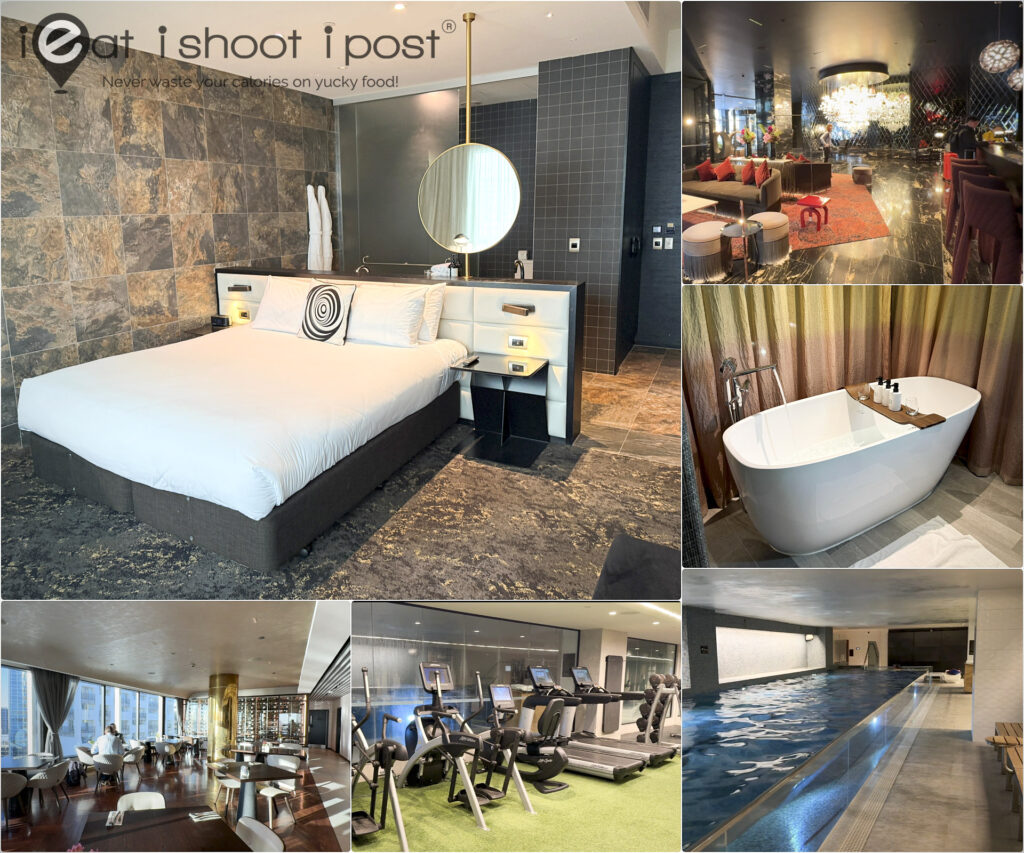
We stayed at SO/ Auckland, and the location could not have been more convenient. Right in the Britomart precinct, walking distance to some of the city’s best restaurants and bars.
The design of the rooms was unconventional, to say the least. Picture a bathtub tucked behind the bed, sitting right out in the open instead of hidden away in the bathroom. Each room draws inspiration from Auckland’s volcanic origins, full of bold, sculptural touches that feel nothing like your standard hotel room.
Hotel guests can enjoy the heated pool and gym on the lower floors where there is also a spa. Breakfast is at the Harbour Society Restaurant at level 16 where you can get a good view of the city and harbour.
SO/ Auckland
67 Customs Street East, Auckland CBD, Auckland 1010, New Zealand
Book here
DAY 2: PETONE AND WELLINGTON
Early the next day, we caught the early flight into Wellington and finally arrived safely. However, our planned trip to the Wairarapa had to be scrapped because the roads were flooded. So our tour guide had to come up with an alternate plan, and we started the morning with a cup of coffee at Forage Merchants in Petone, a place where the locals like to head to on weekends.
Petone is just ten minutes from Wellington’s CBD, on the northern shore of the harbour. It was actually the site of New Zealand’sfirst European settlement back in 1840, before the settlers moved across to what is now Wellington city. These days it has a reputation as one of the capital’s best-kept secrets, where locals go to eat, shop, and walk their dogs.
The main draw is Jackson Street. More than 60 bars, cafes and restaurants packed into just 800 metres of heritage shopfronts. Per head of population, this is said to be New Zealand’s largest shopping street.
Forage Merchants of Wellington
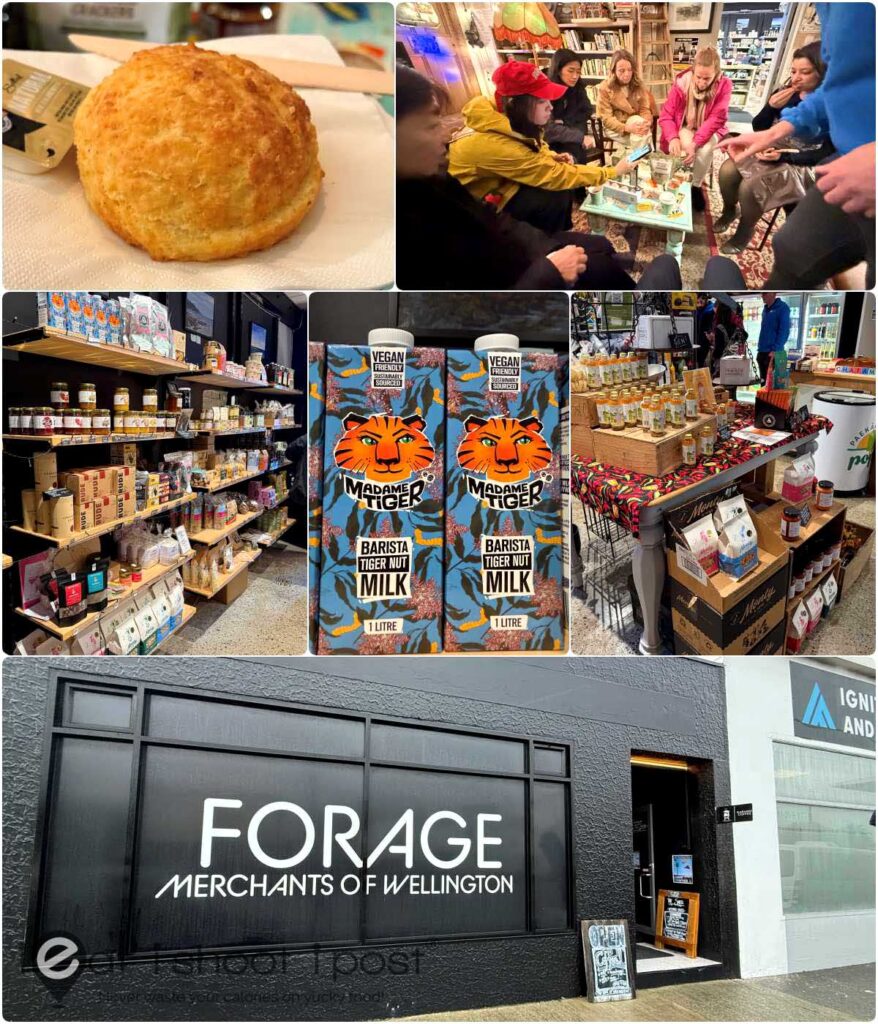
Our first stop was coffee at Forage Merchants of Wellington, which also happens to have a big collection of gourmet foods sourced locally.
They usually run tastings of their gourmet products on weekdays, but not on weekends, when things get too busy. Lucky for us, our tour guide knew owner Guy McInroe well enough to organise an impromptu tasting just for our group.
We started with our morning cup of coffee, one of the best cups I had on the entire trip. They were using Karamu Coffee, and my flat white was made with sheep’s milk. The sheep’s milk gave it a creaminess that regular milk just cannot match.
It was here I picked up a good bit of trivia. The flat white is widely claimed as a New Zealand invention, and the most popular version of the story goes that it started life as a botched cappuccino. The milk did not foam properly, so the barista handed it over anyway and called it a flat white instead!
We also tried a cheese scone, which we learned is something of a national obsession here. New Zealanders take their scones seriously, and I can understand why. The sharp cheddar gives the scone an addictive edge. You simply cannot stop eating it, especially with a thick slice of cold butter!
If you have an extra half day, a trip to Petone and a visit to Forage Merchants is well worth it.
Forage Merchants of Wellington
46a Victoria Street, Alicetown, Lower Hutt
Google Maps
The Chocolate Story
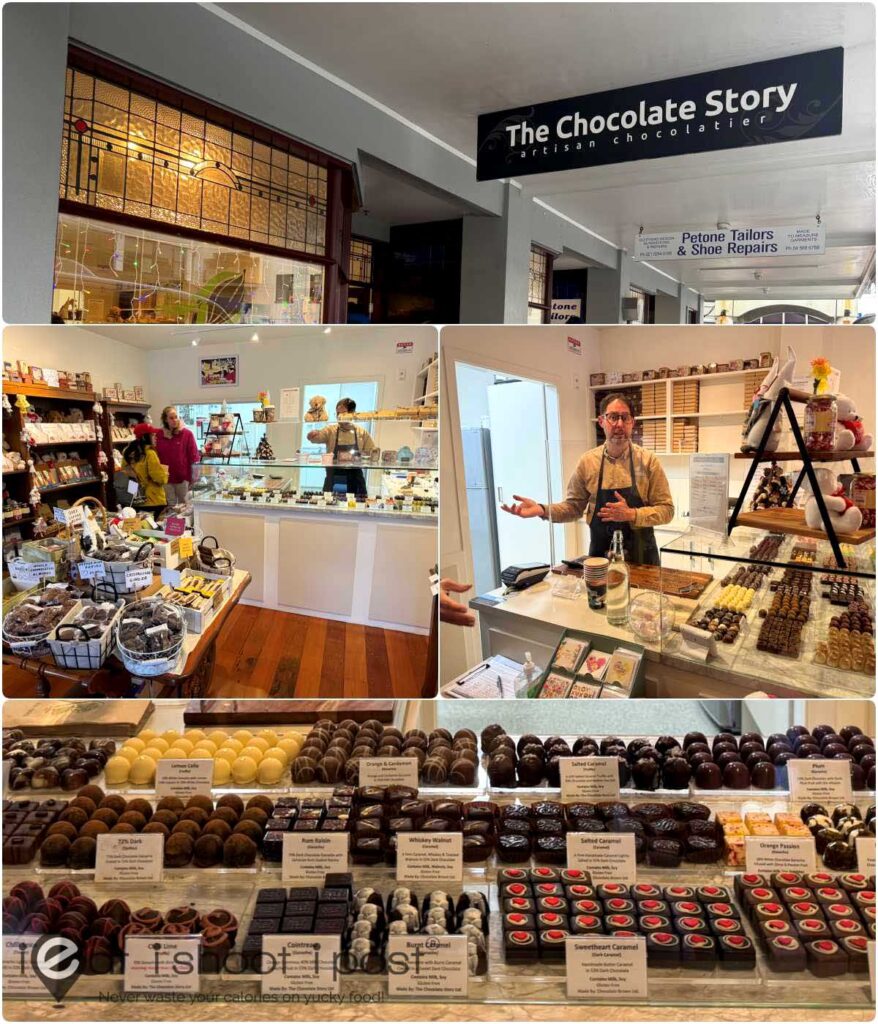
Our next stop was The Chocolate Story, a tiny chocolaterie tucked into Jackson Street.
Store owner and chocolate maker Brett Nicholls opened the shop in 2012, back when New Zealand’s appetite for boutique chocolate was just getting started. He took us through a short, proper education. What real chocolate actually is versus the mass-produced stuff most of us grew up eating.
We got to do a proper tasting alongside all this. I found it genuinely interesting, especially since I have never actually done a proper chococlate tasting before.
I would not say this is worth a special trip to Petone on its own. But if you are already there, and you love chocolate, you should add this as another stop on your itinerary.
The Chocolate Story
185a Jackson Street, Petone, Lower Hutt
Google Maps
Tea Atelier
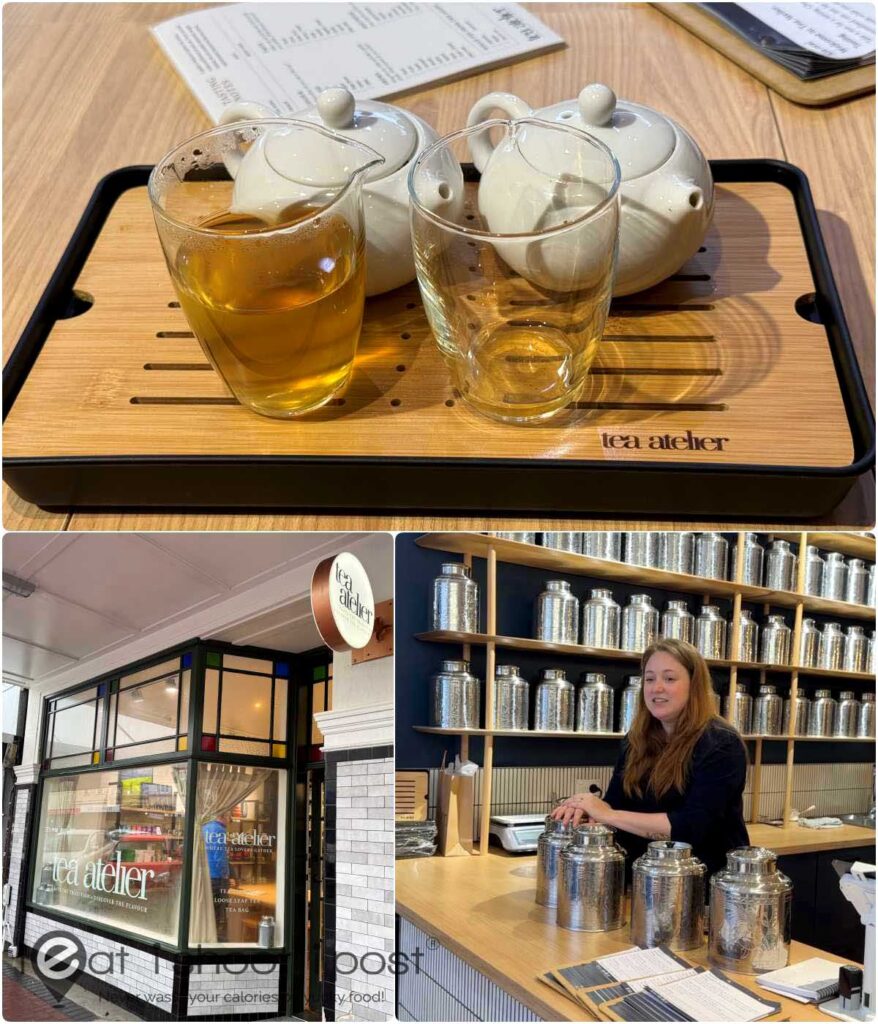
Our next stop was a tea atelier, where we sat down and got introduced to kawakawa, a plant that kept reappearing throughout the trip. By the end of our time in New Zealand, we had encountered it enough times to know that this really is a significant part of their culinary identity.
Kawakawa is a native shrub, a distant cousin of black pepper, with distinctive heart-shaped leaves often riddled with small holes. Those holes actually come from a native looper moth, and Māori healers traditionally sought out the holed leaves specifically, believing the plant pumps extra medicinal compounds into the leaf tissue as a defence response after being eaten. Modern science has since confirmed the leaves are genuinely full of active compounds, including one linked to pain relief and another that may help the body process sugar.
The atelier itself was a lovely space to sit and taste. We only managed two cups before we had to move on for lunch, but if you genuinely love tea, you could easily spend a good hour here working through their range.
Tea Atelier
Petone, Lower Hutt, Wellington
Google Maps
Lunch: La Bella Italia
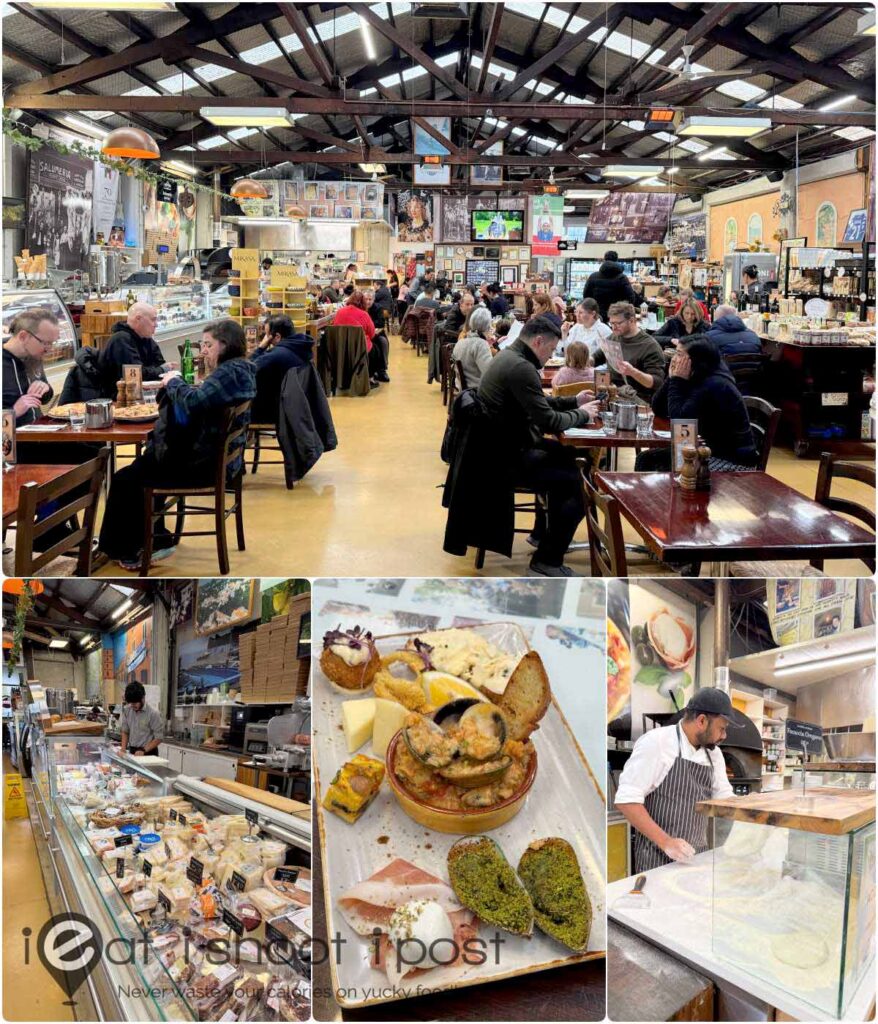
We had lunch at La Bella Italia which is quite an institution in Petone, we are told. Owners Antonio and Luisa Cacace left the Amalfi Coast to set up here, and the place has a genuine continental market feel to it. Dining tables sit right up against the deli counter, with shelves of imported Italian pantry goods on the other side. Cured meats, European cheeses, house-made bread, a proper wine cellar. It felt like dining in a big shed, and I actually liked the rustic feel of it.
We were given a set menu, so unfortunately, I did not get to try the pizza or the pasta that La Bella Italia is known for. What we had was decent, but not something I would have to go back for. But I could not help noticing the other tables around us, all digging into what looked like proper wood-fired pizzas and generous pasta dishes.
This is definitely a place I would return to if I were back in Petone, to try their actual offerings and order properly. The setting alone tells you this is the real deal. Judging by what everyone else was eating, I think we only scratched the surface, and I still feel the itch! 3.5/5
La Bella Italia
10 Nevis Street, Petone, Lower Hutt
Google Maps
Wētā Workshop
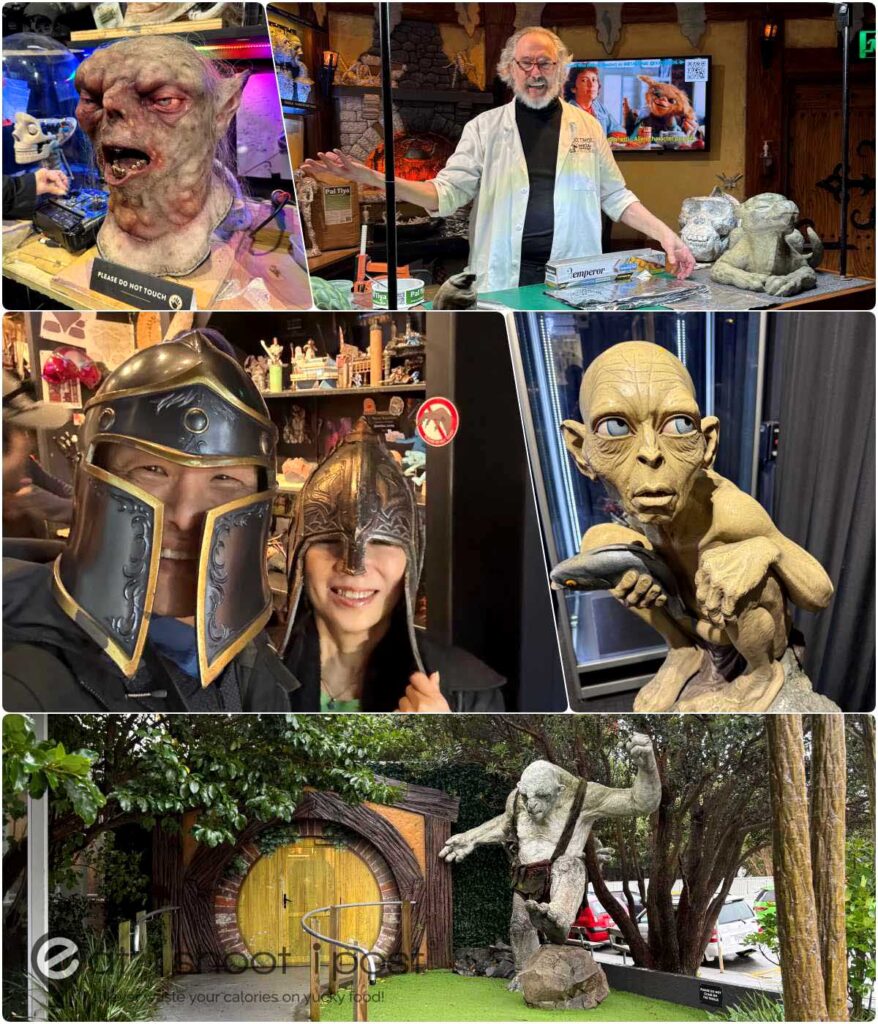
After lunch, we headed back into Wellington city for a tour of Wētā Workshop. This was not on our original itinerary. With the Wairarapa trip cancelled because of the flooding, our guide slotted this in instead. Being fans of the Lord of the Rings franchise, this was a welcome consolation.
If you love props, costumes, and miniatures, this is a must-visit. Wētā Workshop has been making cool stuff for film and television since 1987. They are based in Miramar, about 20 minutes from Wellington’s city centre. This is where the special effects and physical props for The Lord of the Rings, The Hobbit, Avatar, and countless other blockbusters were built.
The standard tour runs 90 minutes and costs NZD60 for adults if booked online in advance, or NZD65 if you pay on the day. Kids aged 5 to 14 pay NZD32 online or NZD36 on the spot. You walk through the tour space, see actual props, prosthetics, costumes, and swords up close, and if you are lucky, catch one of the artists at work. Photography is only allowed in certain rooms, so I can’t show you some of the cool things we actually saw!
If you are a genuine Lord of the Rings fan, or just someone who appreciates the craft behind movie magic, this is one of those Wellington stops worth carving out time for.
Wētā Workshop
1 Weka Street, Miramar, Wellington
Google Maps
Dinner: Logan Brown (One Michelin Star)
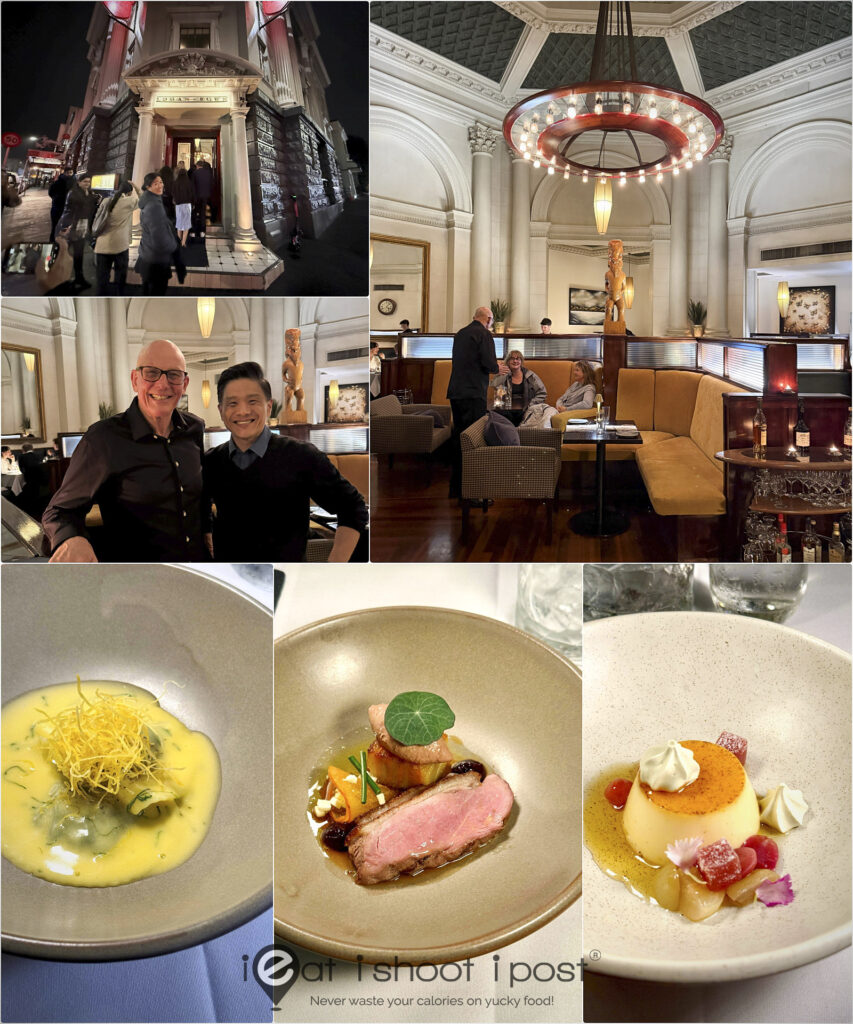
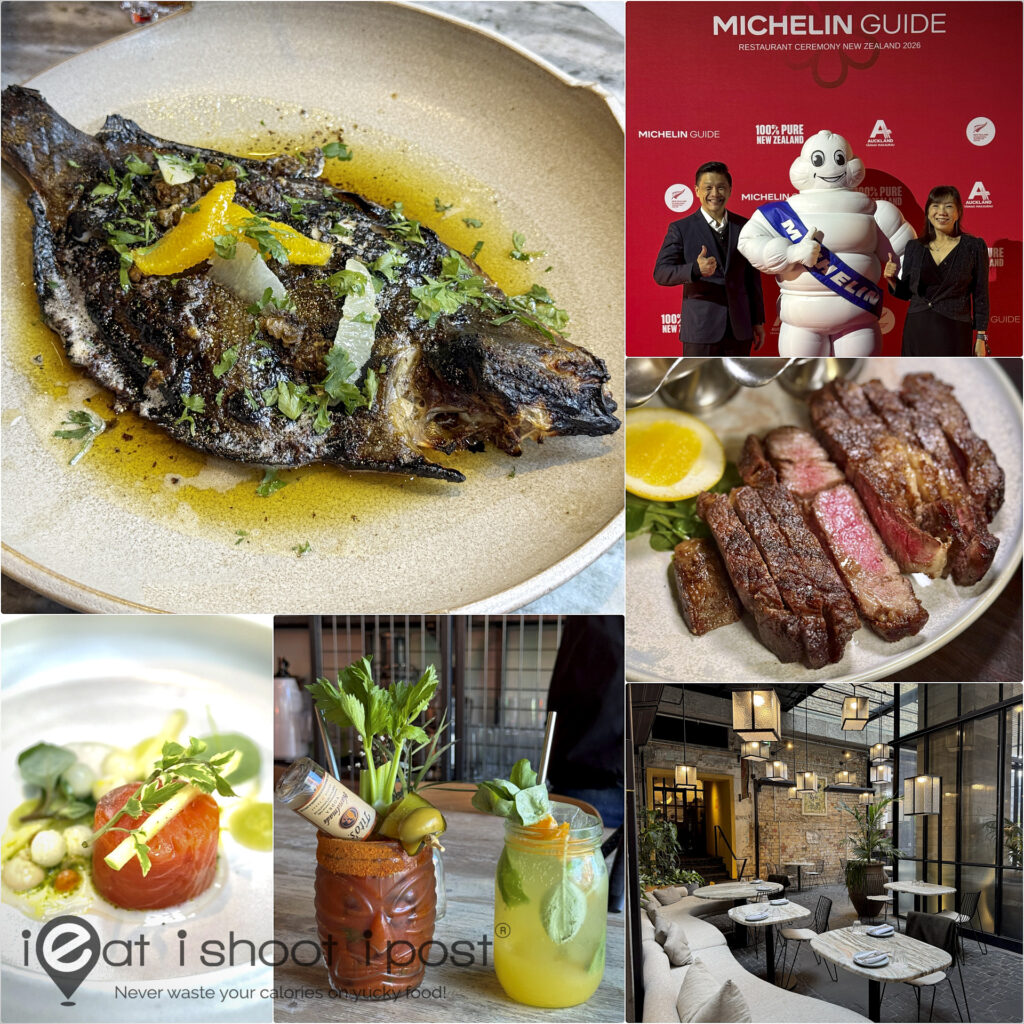
Bottom: Paua Ravioli, Honey Glazed Duck Breast, Cardamon Creme Caramel
Logan Brown is the place Wellingtonians go to celebrate anniversaries and other special occasions. Once you enter the dining room, you immediately see why. The restaurant is housed in a building that dates to the 1920s, a former bank, and it shows. Six-metre domed ceilings, soaring Corinthian columns, grand arches that frame the room like a cathedral.
Co-founded by Steve Logan and chef Al Brown, Logan Brown opened on Friday the 13th of December, 1996. Thirty years on, it remains the gold standard of fine dining in Wellington. That consistency in itself fulfills one of the criteria for a Michelin Star.
The kitchen is helmed by executive chef and co-owner Shaun Clouston, who has been pushing the boundaries of New Zealand fine dining here for decades. The restaurant’s commitment to local, sustainable produce is uncompromising, sourcing strictly avoids dredged scallops and at-risk species. Co-owner and restaurateur Steve Logan added that 95% of the ingredients are actually sourced locally.
We had the six-course degustation at NZD140 per person. Every dish was well executed, technically precise, thoughtfully composed, rooted in the land and sea around Wellington. Signatures include Shaun’s celebrated pāua ravioli with coriander, basil and lime beurre blanc, roasted hāpuku with prawn and crayfish roulade and dashi beurre blanc, and the honey-glazed duck breast that regulars keep returning for.
To be totally honest, I was not blown away by any particular dish. But there is no denying that the dishes are all well executed and meticulously put together. However, the thing that struck me most was the cost of the tasting menu. When you factor in the exchange rate, and the fact that New Zealand has no GST surcharge and no service charge added to the bill, that six-course degustation works out to the equivalent of about SGD 86++. You will not get anything remotely close to this quality for that price back home in Singapore. 4.25/5
We are glad that Logan Brown did indeed win a Michelin Star at the inaugural Michelin award ceremony. Not only that, but they were also one of the six Michelin-starred restaurants that served canapes after the award ceremony. And of the six, they were the station we gravitated to most often.
Logan Brown
192 Cuba Street, Wellington
Google Maps
DAY 3: WELLINGTON
Harbourside Market
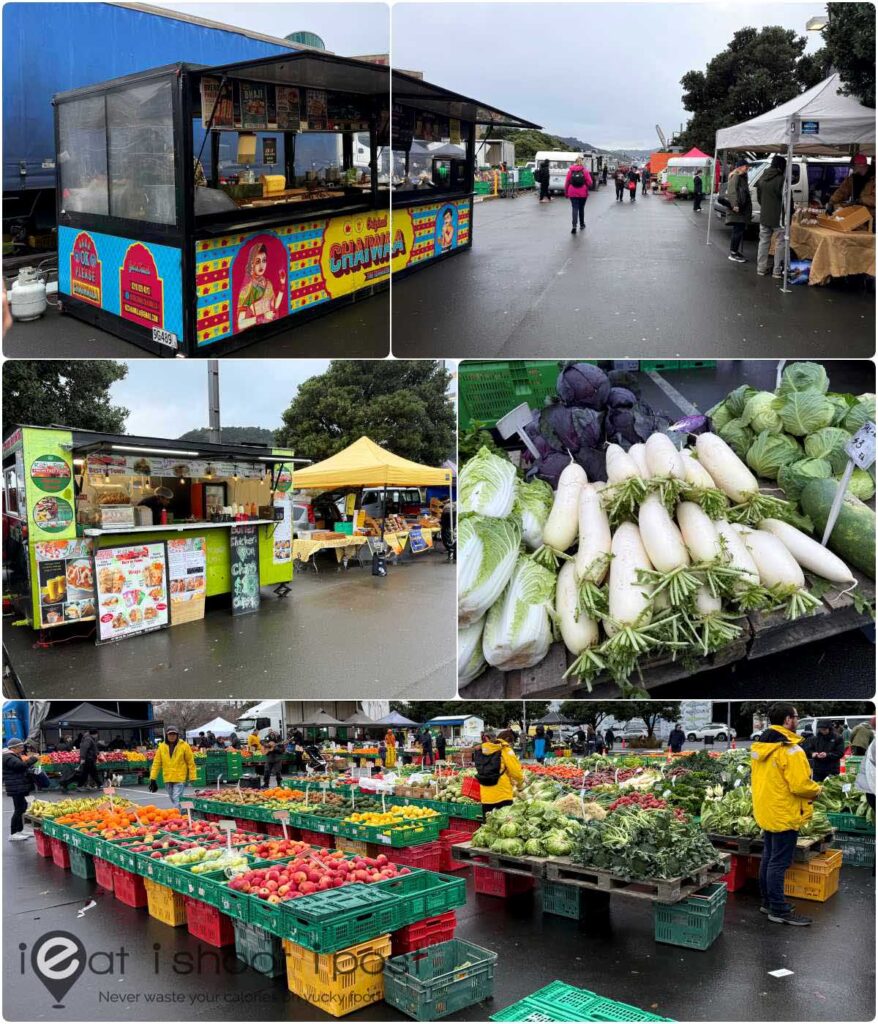
It’s Sunday morning, and the Harbourside Market was open, so we took a walk along the waterfront to see what Wellington’s oldest and longest-running market looks like.
The market actually traces its roots back to 1920, originally set up around Allen Street and Blair Street just off Courtenay Place, where wholesalers and growers once traded produce out of warehouse buildings that still stand today. It moved to its current spot beside Te Papa in 2002, and now pulls in up to 25,000 people on a good Sunday.
To tell you the truth, it was not quite what I was expecting. I had pictured something more like a Paddington Markets type setup in Sydney, somewhere indoors or at least more curated. Instead it turned out to be an open air car park filled with fresh produce stalls, a row of food trucks, and vendors selling everything from coffee to Indonesian food. It looked more like a weekend market you would find in a quiet suburb than something you would expect in a major city.
It would have been a wonderful stop if we were staying in an Airbnb and could buy beautiful local vegetables to cook in our own kitchen. But for travellers staying in a hotel, it was not quite as relevant. The weather did not help either. It was cold, windy, and lightly drizzling, which dampened the experience somewhat. On a sunny weekend morning I imagine this would be a genuinely lovely place to grab a coffee and wander. As it stands, I would call it a nice-to-see rather than a must-do.
Harbourside Market
75 Cable Street, Wellington Central
Google Maps
New Zealand Musuem – Te Papa Tongarewa
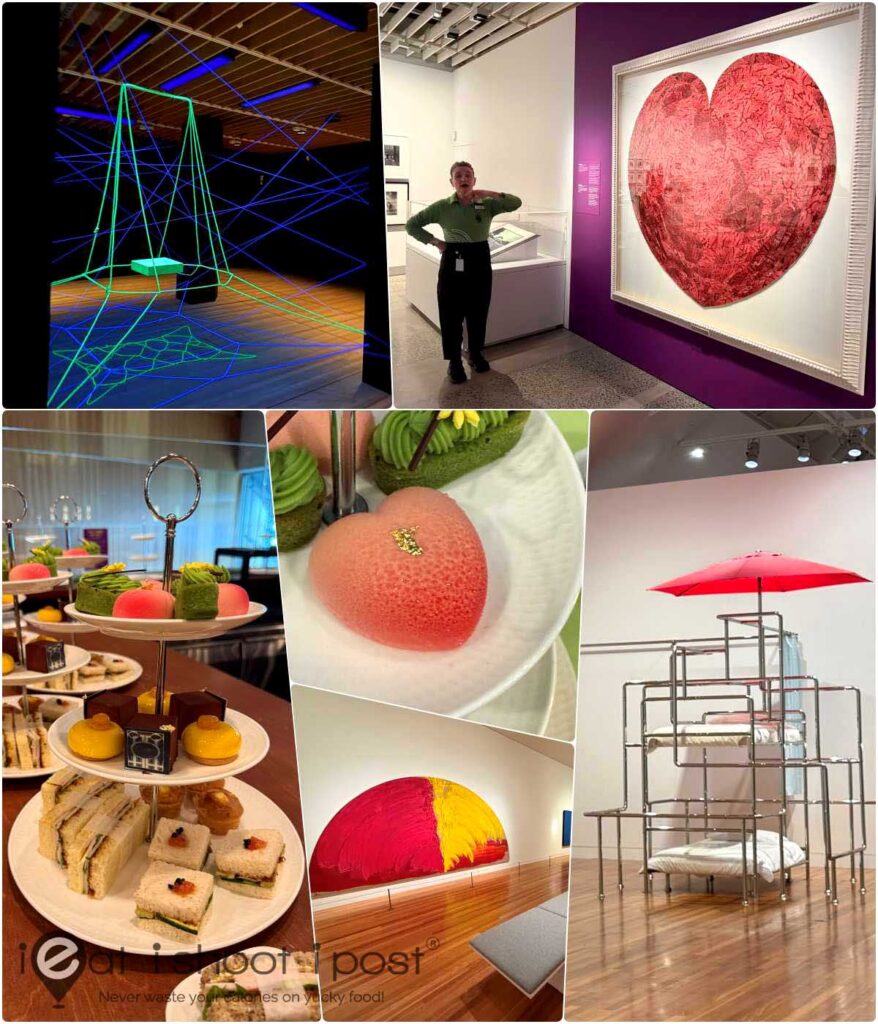
After the market, we made our way to Te Papa Museum, and this one I would genuinely recommend if you are visiting Wellington. New Zealand’s national museum opened its doors on 14 February 1998, formed by merging the old National Museum and National Art Gallery, tracing back to the tiny Colonial Museum that first opened in 1865. Te Papa translates to container of treasures, and at six storeys and 36,000 square metres, it lives up to the name. Since opening, it has welcomed over 35 million visitors.
We did a guided tour through Slow Burn: Women and Photography, a major exhibition that had just opened, bringing together six decades of work by women and non-binary photographers in Aotearoa. I am the sort who can only really appreciate art with a guide, and having someone walk us through the themes and stories behind the photographs made all the difference. Without that context, I doubt I would have gotten much out of it. With it, I found myself genuinely intrigued.
Beyond the photography wing, the museum houses several other exhibits. I personally enjoyed the natural history section the most. We got to see some of New Zealand’s native birds, several of which are now extinct, a sobering but fascinating look at the country’s ecological history. The undisputed highlight for me, though, was the colossal squid. The sheer size of the thing was astounding. I found myself wondering how many calamari rings, or should I say tyres, you could cut from that single specimen!
Te Papa Tongarewa
55 Cable Street, Wellington
Google Maps
Eat Your Art Out High Tea
After the tour, we experienced their Eat Your Art Out High Tea, a menu built to reflect the artwork at the current exhibition.
Pastry chef Suraj Kolarveettil, who took bronze at the 2025 NZ Pastry Chef of the Year, designs each piece as a playful nod to a specific artwork or theme from the show. Inspired by Slow Burn, the current menu leans into photography itself, with dishes like A Heart Exposed and The Chocolate Camera.
I felt it was an interesting idea, but the connection to the actual artwork could have been more closely linked to the pastry pieces themselves. It would have been far more satisfying to be able to walk back into the gallery after tasting each piece and immediately spot the specific artwork it was inspired by. As it stands, the link feels more thematic than direct, clever in concept but a little loose in execution.
Te Papa Cafe
55 Cable Street, Wellington
Google Maps
Wellington Cable Car
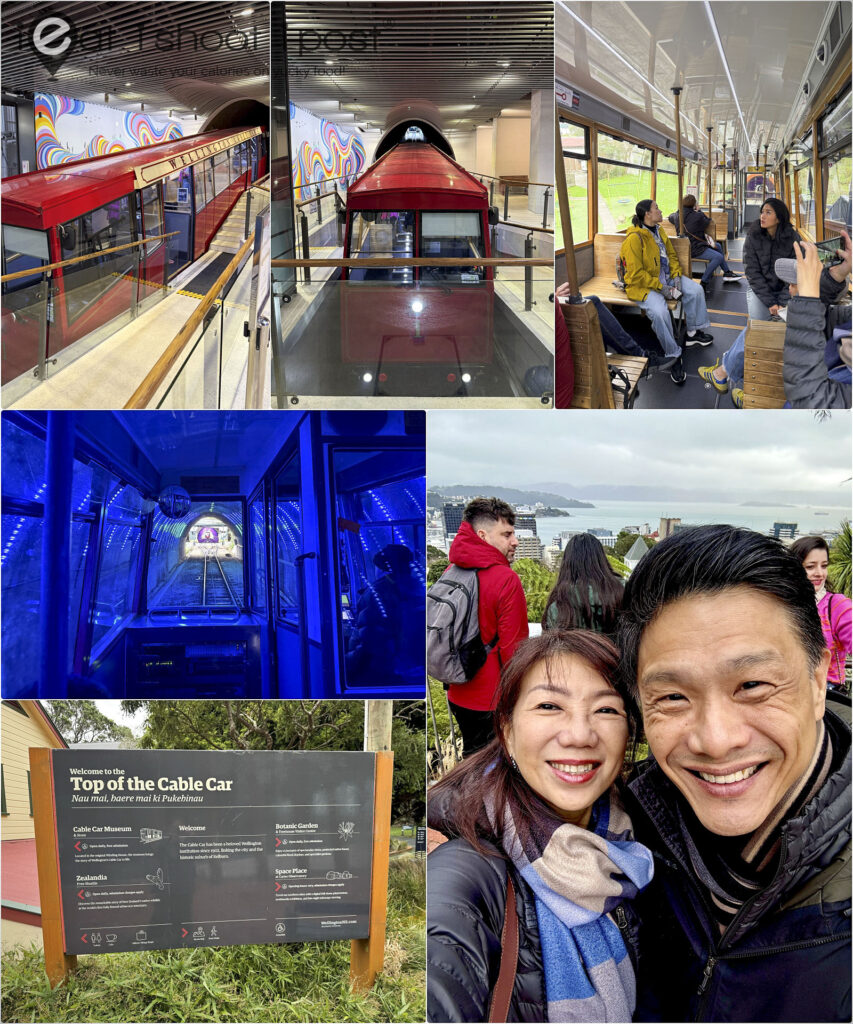
After Te Papa, we made our way back toward the city centre for the Wellington Cable Car.
It first opened on 22 February 1902, built to give residents of the newly developing hillside suburb of Kelburn quick access into town. The engineering behind it was genuinely ambitious for its time, a 785 metre line climbing 119 metres through three tunnels and over three viaducts, originally powered by a steam engine before going electric in 1933. Today it is New Zealand’s only surviving funicular railway, carrying close to a million passengers a year.
The ride itself takes about five minutes, and it is worth doing for its own sake. Beyond the practical business of saving you a steep uphill walk, you get proper views over the city and harbour once you reach the top.
Wellington Cable Car
280 Lambton Quay, Wellington
Google Maps
Lunch: Graze Wine Bar (Michelin Selected)
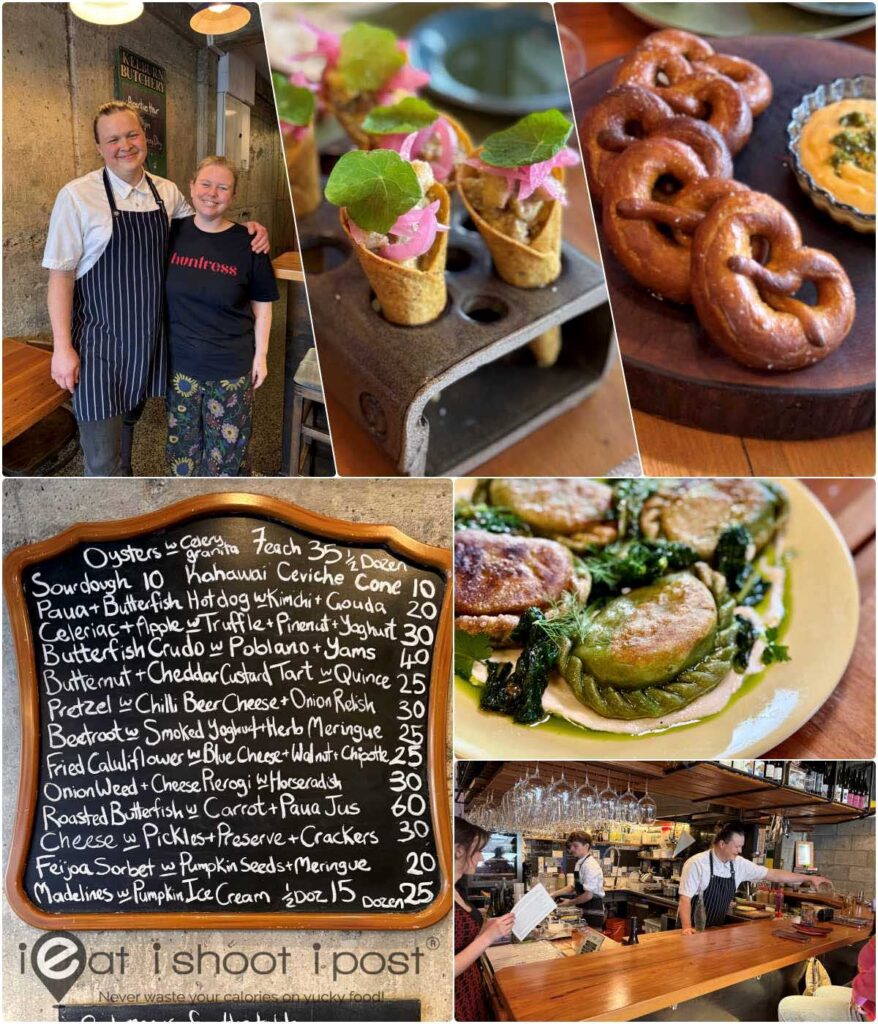
As we walked through Kelburn, I will admit we were starting to wonder what kind of restaurant we were actually heading toward. The little suburb does not look like much at first glance. A row of shophouses, clearly old, some of them shuttered, a few looking rather decrepit. By the time we finally arrived at Graze, my expectations were pretty low. The restaurant really did not look very promising on the outside.
But once inside, my gastronomic Geiger counter started clicking.
The restaurant is small. Twenty-two seats small. It occupies what used to be the neighbourhood butcher’s shop, and they have kept the original butcher’s sign on the wall as a reminder of what came before. The interior was rebuilt entirely from upcycled and secondhand materials, mirroring the philosophy of the restaurant.
Behind the wine bar is Chef Max Gordy, who runs the little kitchen with quiet conviction. His wife Stina Persen looks after the front of house with the kind of warmth that makes you feel like a regular from the moment you sit down. Together they have built something genuinely rare, a restaurant where every decision, from the menu to the furniture, reflects exactly who they are.
Max is adamant that every ingredient is sustainably sourced and locally produced. That philosophy shapes everything. Graze is pescatarian, they serve only seafood, and only what comes from local fishermen they know and trust.
We had essentially the entire menu between the group of us. Every single dish was worth ordering. The vegetable dishes were so well executed that I honestly would not have minded if there had been no seafood at all, and coming from me, that is saying something.
Graze won the Champions for Change Award at the 2024 Cuisine Good Food Awards for its commitment to sustainability and ethical sourcing. It is the kind of recognition that feels entirely deserved.
Our group was unanimous. If there is one restaurant in Wellington that would be unthinkable to leave out of the Michelin Guide, it is this one. In fact, we were all rooting for this underdog to win a Michelin Star. Unfortunately, they only got into the Michelin Selected list.
However, the silver lining was that Stina Persen won the Best Service Award. It might not have won a star, but if I were planning a trip back to Wellington, this is the first restaurant I would book a reservation for. 4.5/5
Graze Wine Bar
95 Upland Road, Kelburn, Wellington
Google Maps
Zealandia by Night
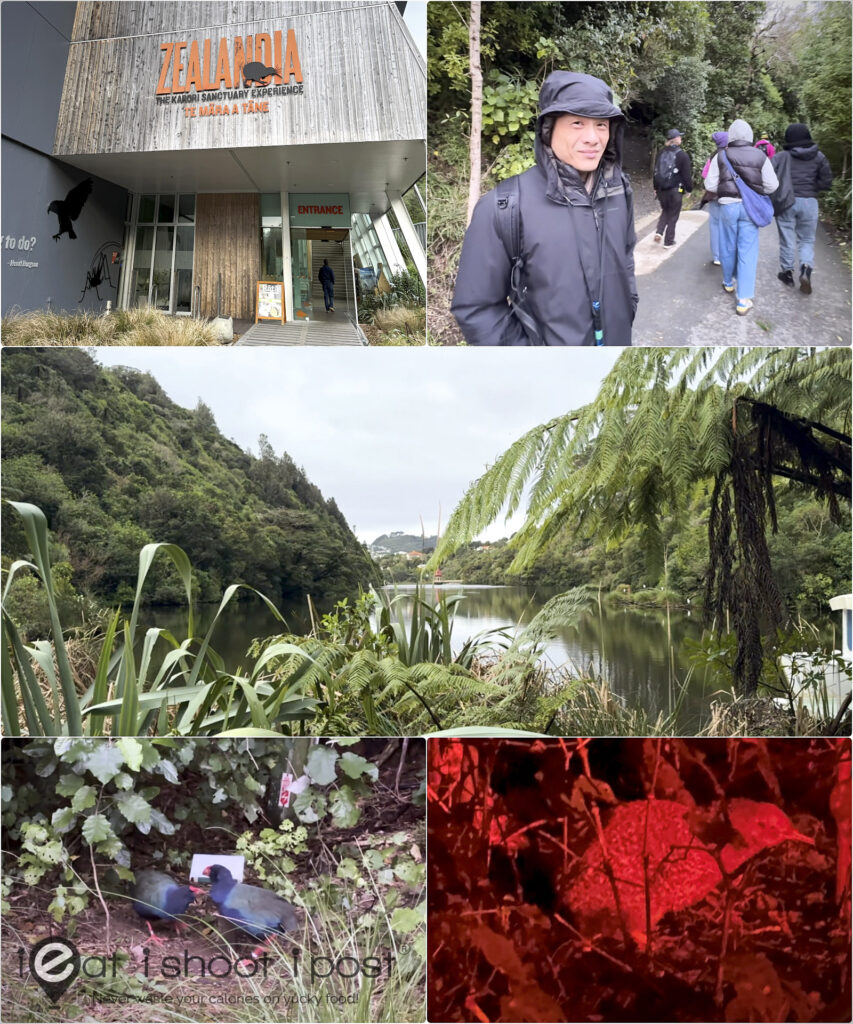
After our unexpectedly amazing lunch at Graze, we made our way to Zealandia.
We did not know much about Zealandia going in. We were simply told it was a wildlife sanctuary and that we would be searching for a kiwi. As it turned out, the concept behind the place is genuinely fascinating.
What Zealandia is trying to do is turn back the clock to what New Zealand looked like before the arrival of humans. They fenced off the entire area and systematically trapped and removed every introduced mammal. Then they began reintroducing native bird species back into the sanctuary. It is, remarkably, a 500-year project aiming to restore the ecosystem to something close to what it was before new species of animals were introduced.
Walking through the sanctuary, we managed to see the takahē, a striking blue bird with a bright red beak that was once thought extinct. The rediscovery story is genuinely remarkable. The bird had not been seen since 1898, and was widely written off as extinct. But an Invercargill doctor named Geoffrey Orbell, who had been fascinated by the takahē since childhood, refused to believe it.
In April 1948, while out hunting deer with two friends in the remote Murchison Mountains, he heard an unfamiliar bird call and spotted strange footprints by a lake shore. He was convinced it was a takahē. Most ornithologists at the time dismissed the idea entirely. Orbell returned that November and there, on the shore of what is now called Lake Orbell, they found a small population of takahē. The story made headlines around the world.
Through careful breeding and protection since then, there are now several hundred living in the wild. We were lucky enough to spot a few of them at Zealandia. They were surprisingly tame, coming right up to a feeding trough where they clearly expected to be fed.
Along the way, we were also introduced to some of New Zealand’s native insects, most remarkably, the wētā, which gave its name to the workshop we visited.
The kiwi proved far more elusive. They are nocturnal, so we had to continue walking until dusk turned into night, and then listen carefully for the distinctive kiwi call somewhere in the bush. Towards the end of our walk, with the night getting late and still no kiwi in sight, when all else was lost, our guide finally managed to spot one.
Practically speaking, the tour we did was a guided experience starting around 4:30pm and running through to roughly 6:00pm, deliberately timed to take you from daylight into full darkness. We were each given a red torchlight, since red light disturbs nocturnal wildlife far less than white light. We were issued with an earpiece so we could hear our guide throughout without needing to gather closely around them.
Watching the sanctuary transform as the light faded was an experience in itself. It felt like a completely different terrain and atmosphere by the time we were searching for the kiwi than when we had started.
One practical note. This is not something you can simply walk up and join. The Zealandia by Night tour needs to be booked in advance. In the summer, you have to start much later if you want to be able to spot a kiwi!
Zealandia Ecosanctuary
53 Waiapu Road, Karori, Wellington 6012
Google Maps
Dinner: Charley Noble (Michelin Selected)
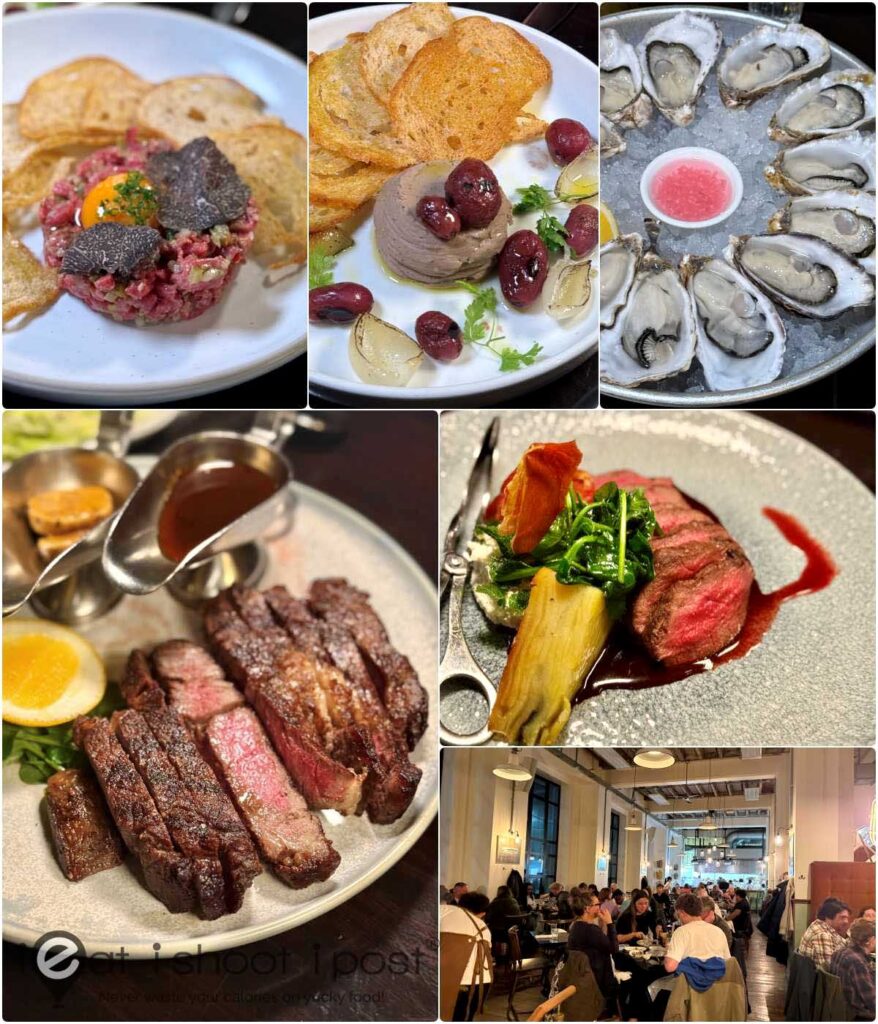
Dinner that night was at Charley Noble, one of the restaurants we thought might have a shot at a Michelin Star.
Charley Noble is a very different proposition from Logan Brown. Where Logan Brown is unmistakably fine dining, Charley Noble is more of a wonderful place to get a properly cooked steak or anything pulled off the open woodfire grill. Less formal, but no less serious about what comes out of the kitchen.
Overall, I thought the food was excellent. The meats here are extremely well sourced, and I was especially intrigued by the venison. It is helicopter-shot wild venison, which is then transported by net directly to the abattoir, where it is quickly butchered. The short processing time means the meat is bled out quickly and tastes less gamey.
Venison is a genuinely interesting category of meat in New Zealand, because the deer themselves are considered something of a pest, having no natural predators on the islands. That makes venison one of the few truly wild meats youcan responsibly eat. The animal has lived entirely on natural forage in the forest its whole life, and yet its abundance is actually a conservation problem rather than a conservation concern.
The venison itself was very good. It was lean and still tender without being too gamey. I still prefer a nicely marbled beef, but wild venison is something you have to try when in New Zealand.
Charley Noble also has access to some of the best beef in the country. They use Greenstone Creek beef, one of New Zealand’s premium grass-fed Angus programmes. The ribeye, which they call the scotch fillet on the menu, was for me the single most enjoyable piece of meat we had that night. Beefy, tender, beautifully marbled without ever tipping into excess richness, it was a very good steak!
The desserts were equally impressive. The whole table loved the honey cake, along with a couple of the other desserts we sampled along the way.
In the end, Charley Noble was recognised in the MICHELIN Selected category, which feels entirely fair. There was genuine potential here for a star, and the quality on the plate makes a strong case for it. Maybe the next round.
Charley Noble
Ground floor, Huddart Parker Building, 1 Post Office Square, Wellington 6011
Google Maps
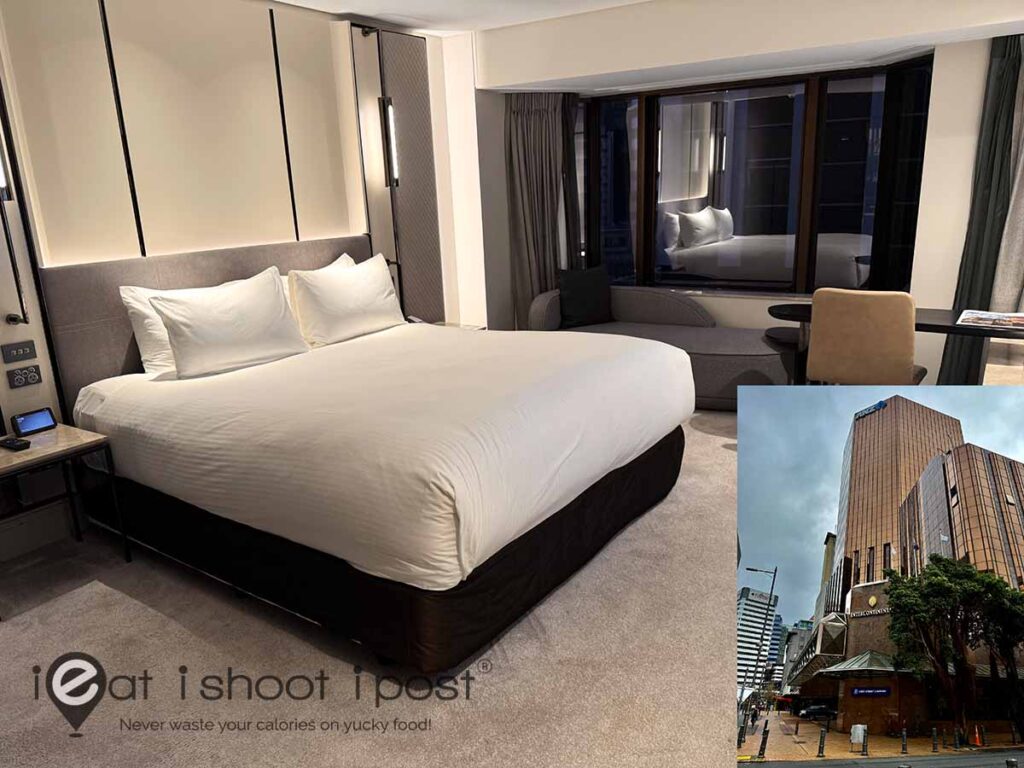
We stayed at the InterContinental Wellington which was conveniently located in the city centre. It is very much a business hotel, with everything you would expect from the brand. The rooms are modern and comfortable, and I particularly liked the plush carpet underfoot. Nothing flashy, just solid, dependable comfort in a great location for exploring the rest of Wellington on foot.
InterContinental Wellington
2 Grey Street, Wellington 6011
Book Here
DAY 4: WELLINGTON TO AUCKLAND
It is said that Wellington is the coffee capital of New Zealand, so we could not leave without visiting at least one serious coffee place.
The Flight Coffee Hangar
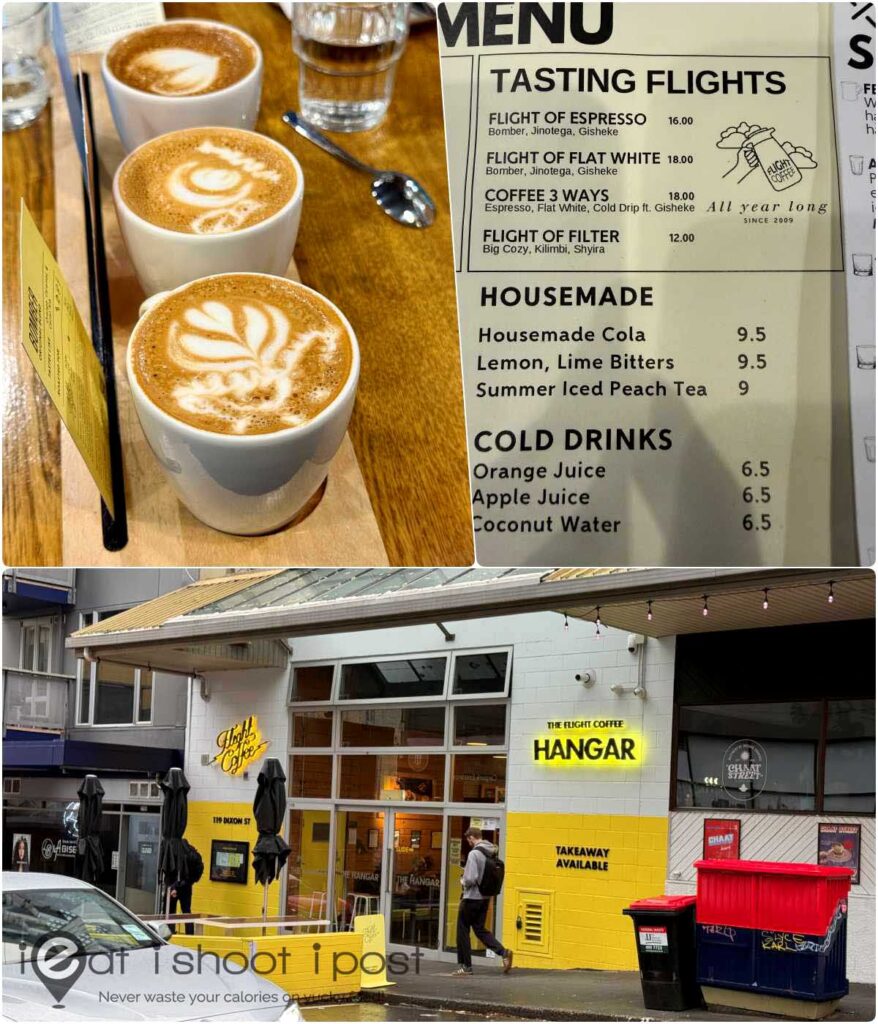
The Flight Coffee Hangar got its start in 2012, built inside an old car park. If you look down, the yellow parking bay lines are still visible on the floor. Warm macrocarpa wood lines the walls and an espresso bar runs down one side. The roaster used to sit at the back before it outgrew the space and moved elsewhere.
It is the flagship cafe for Flight Coffee, a roastery that started in Hawke’s Bay back in 2009 before making Wellington its home. The team behind it is stacked with serious credentials, including a former NZ Barista Champion and a World Barista Championship judge.
This place has a genuinely unique concept. They offer you a flight of coffee in several formats. Three different beans, all done as flat whites. Three different beans, all done as pour overs. Or one single bean, prepared three different ways, say an espresso, a flat white, and something else, so you can taste how the method changes the same coffee. I went with the flat white flight across three different beans, which let me taste the range without any variable except the bean itself, albeit with milk.
We also ended up ordering a hamburger. It is not something I usually order for breakfast, but we had been talking about Wellington’s annual hamburger festival held every August. So I had to order one before I left Wellington. The burger was alright. Stick to the coffee.
The Flight Coffee Hangar
119 Dixon Street, Te Aro, Wellington
Google Maps
Guided Waka Ama Tour
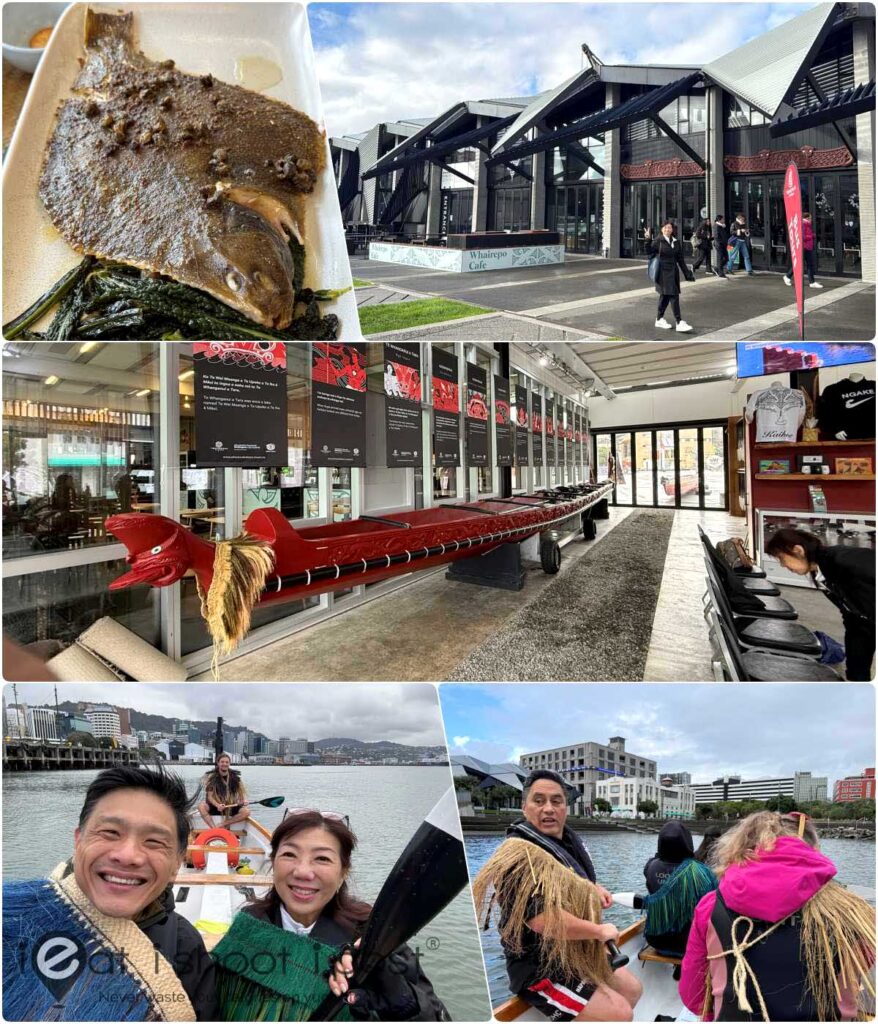
After breakfast, we headed to Te Wharewaka o Pōneke, the striking building called Te Raukura. It sits right between Te Papa and the waterfront. The site itself has a deep history. It was once the harbour frontage of Te Aro Pā, one of Wellington’s largest Māori communities, right up until the 1880s.
The building houses three traditionally carved working waka, and our experience began the proper way, with a mihi whakatau. It is a formal welcome that included waiata and introductions. Only after that did our guides start teaching us the basics of becoming kaihoe, or paddlers. Commands, chants, salutes, even a bit of haka, all before we so much as touched the water.
We were taught how to paddle the waka ama which is a Māori sport in its own right, not just a mode of transport. As we paddled out onto the harbour, our guide told us about traditional Māori food culture, how the sea and land around Wellington were harvested for generations.
Flounder, pāua (abalone), kina (sea urchin or uni), much of which we would go on to taste ourselves a short while later at lunch. The whole experience is run by the local iwi, Te Āti Awa, which gives the tour a real sense of authenticity rather than a packaged cultural show.
Te Wharewaka o Pōneke
2 Taranaki Street, Wellington
Google Maps
Lunch: Whairepo Cafe
After our “strenuous” Waka Ama tour, it was time for lunch.
Our guide had been telling us all about the seafood Māori traditionally ate, so it felt fitting that lunch let us actually taste it. We got to try flounder, pāua, and muttonbird, and the food was surprisingly good. And of course, for drinks, we got served what else but kawakawa tea.
A convenient place to grab a bite right after your waka ama tour and to get a taste of Māori cuisine.
Whairepo Cafe
2 Taranaki Street, Wellington
Google Maps
Dinner: Chaat Street by Vaibhav Vishen
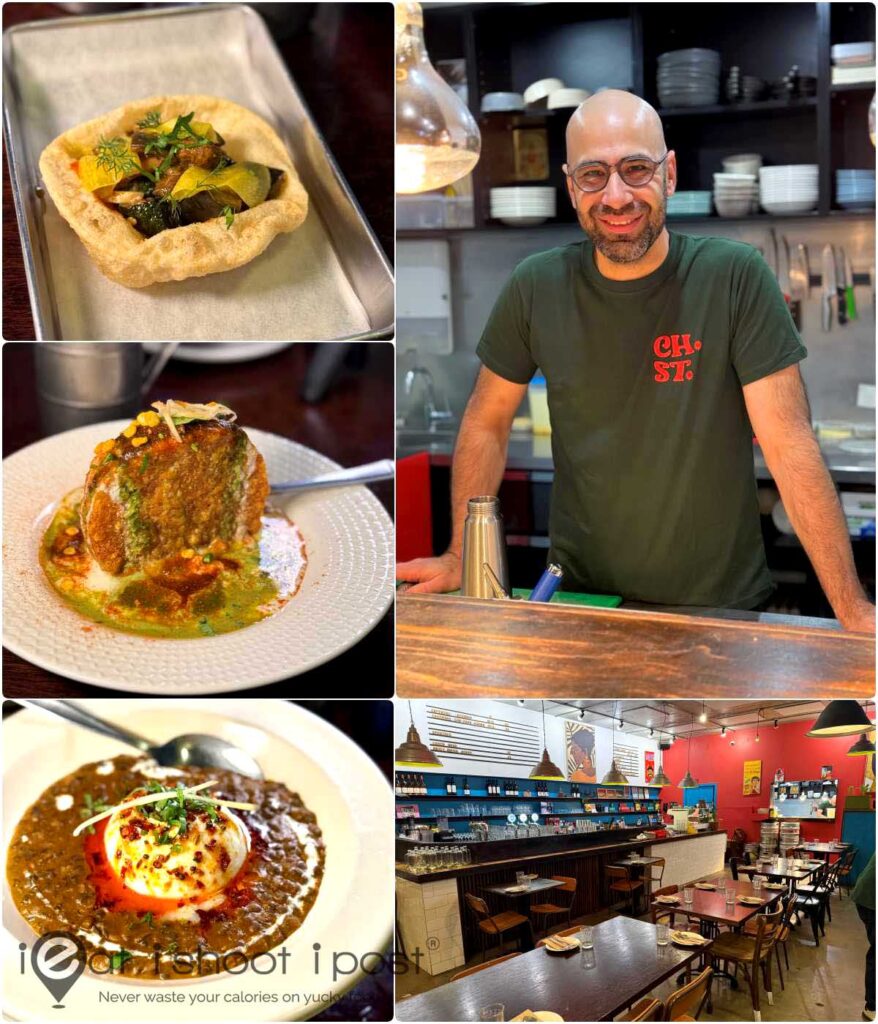
We had an early dinner at Chaat Street before heading to the airport where we were introduced to a modern take on Indian street food.
Owner Vaibhav Vishen has an unusual path into the kitchen. He started his career as a software developer in India, working for years in tech before finally listening to his own instincts. Coming from Kashmiri heritage, the expectation was always to become a doctor or an engineer, never a chef. He eventually gave up trying to fit that mould, moved to Wellington in 2014, and studied at Le Cordon Bleu. He worked as head chef at Mr Go’s and later at the Spring Kitchen in the DoubleTree by Hilton before finally striking out on his own.
Chaat Street began humbly, as a pop-up during Wellington on a Plate. Vaibhav sold close to 2,300 servings over two days, which told him everything he needed to know. A permanent restaurant followed a year later.
What sets Chaat Street apart is Vaibhav’s clear philosophy. He is not interested in serving what most of us think of as Indian food. No butter chicken, no curry in the conventional sense. As he puts it, curry is not even really an Indian word, more a colonial mispronunciation that got stuck.
What he wanted instead was a genuine slice of Indian street food, the kind eaten off carts and at roadside stalls, rarely seen outside the subcontinent. Chaat itself means to lick, and the food here is built entirely around that idea. Small, punchy, deeply flavoured dishes meant to be eaten without much ceremony.
The food here was genuinely very good. We particularly enjoyed the Aloo Tikki Chaat, a skillet hashbrown stuffed with crunchy lentils and coriander, served both hot and cold alongside yoghurt, tamarind and mint chutneys. The interplay of textures and temperatures in that single dish told you everything about what this kitchen is trying to do.
We found ourselves wondering whether Chaat Street might at least pick up a Bib Gourmand, given the quality on the plate. As it turned out, they did not make the cut this time.
If you find yourself in Wellington craving Indian food, Chaat Street comes highly recommended. 4.25/5
Chaat Street
Corner of Dixon and Willis Streets, Wellington
Google Maps
After dinner at Chaat Street, we made our way to the airport for our connecting flight to Auckland. The next day was the big day when we get to find out which of the restaurants we visited would win a Michelin Star!
DAY 5: AUCKLAND AND THE MICHELIN CEREMONY
Day five started with a guided gourmet food tour of Auckland, where we were taken to five different stops to sample some of the best the city has to offer. The tour was organised by the Big Foody Food Tours.
Stop 1: Miller’s Coffee
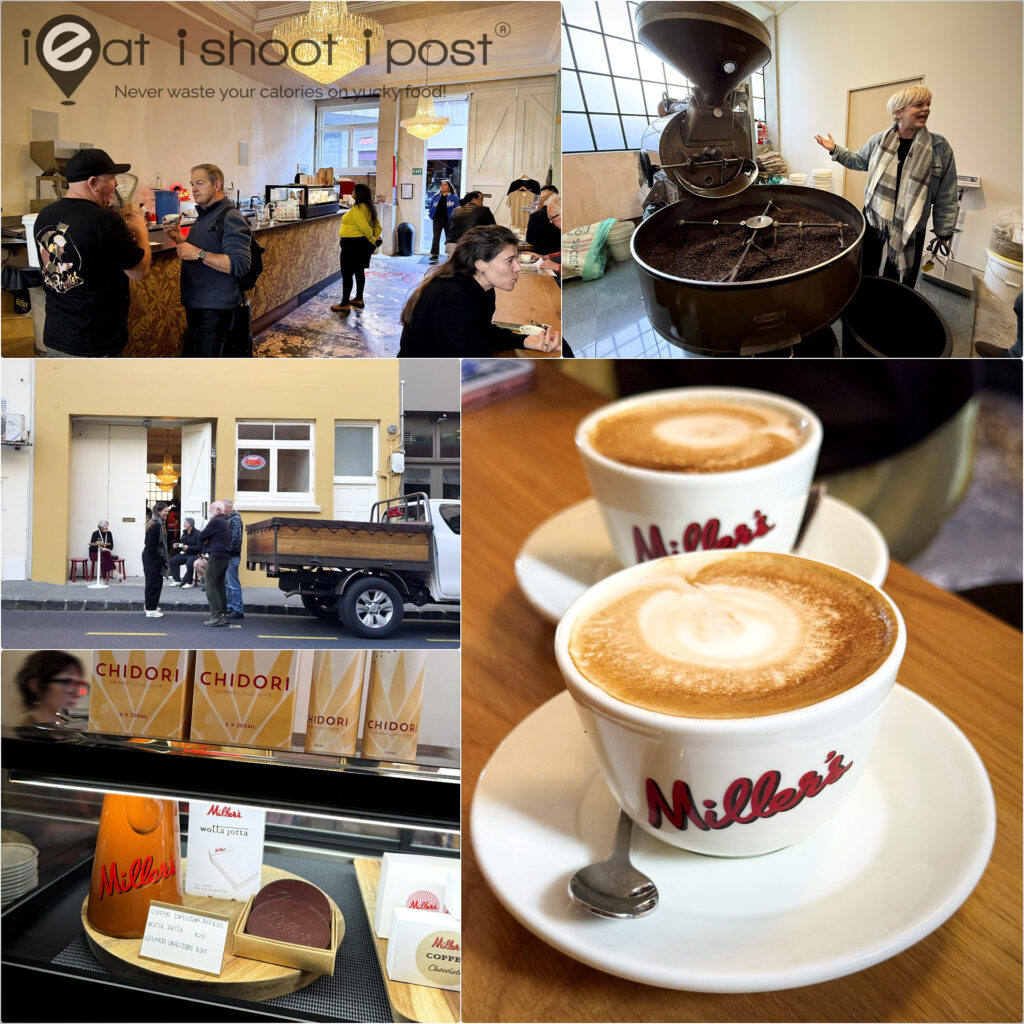
Our first stop was Miller’s Coffee, a proper roastery that has been serving espresso in Auckland since 1984. Owner Craig Miller started roasting his own beans in 1988, among the first in New Zealand to do so, and the blend has never changed since. Tucked down a quiet side street off Karangahape Road, the space itself is almost deliberately unmarked. No fancy signage, just a small red building and a neon OPEN sign in the window, the kind of place clearly more interested in being taken seriously as a roastery than in being a destination cafe.
They roast just one single blend, a mix of beans from Papua New Guinea, Colombia and Kenya, and you can order a cup on the spot if you happen to be buying beans too. This is exactly the sort of place coffee insiders seek out, the kind of spot you only find out about through word of mouth.
I found the coffee slightly over-roasted for my taste. I would have preferred something milder. That said, an institution that has survived this long, with the same owner and the same blend for close to four decades, deserves real respect. A genuinely artisan operation, and Craig himself is something of a legend in New Zealand’s coffee scene.
Miller’s Coffee
31 Cross Street, Auckland Central
Google Maps
Stop 2: Cazador (Michelin Bib Gourmand)
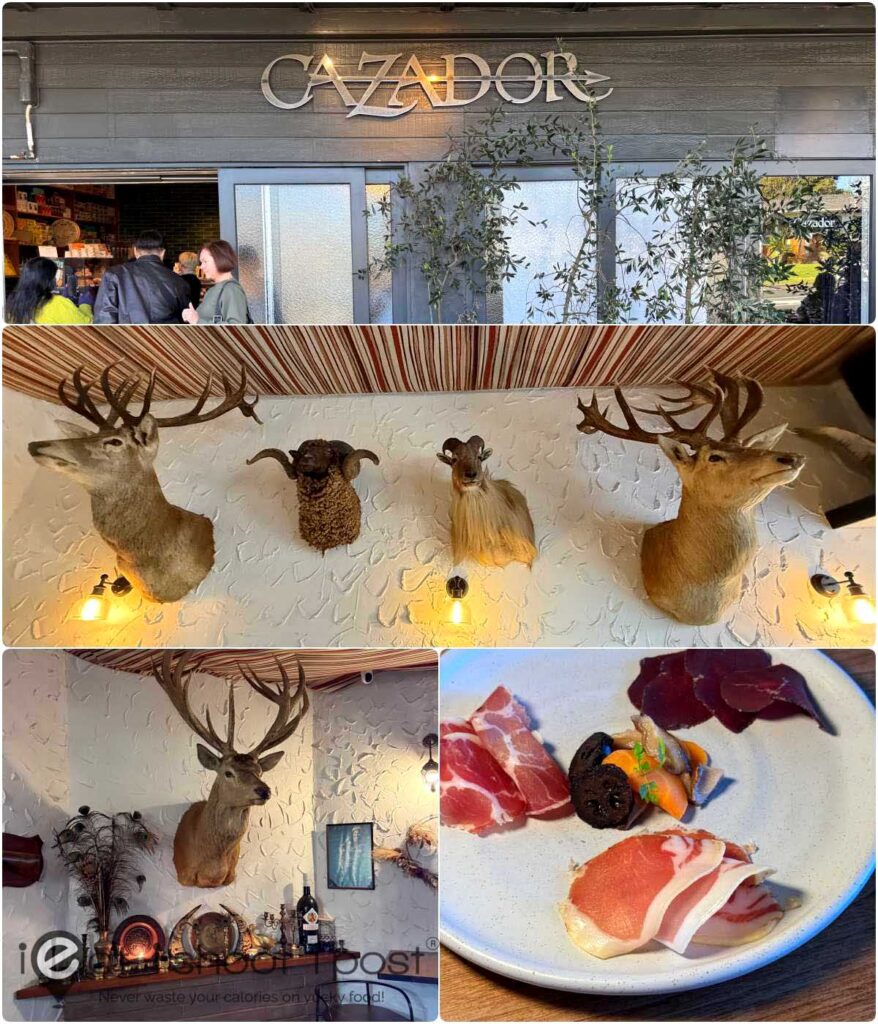
Our second stop was Cazador, which we later learned went on to earn a place in the MICHELIN Bib Gourmand list.
What makes this restaurant special is its singular focus on game meat. Everything on the menu is sourced around wild and unusual proteins, venison chief among them. It was founded in 1987 by Tony Lolaiy, a hunter turned chef originally from Iran, who built the concept as a place where people could come specifically to eat game, at a time when Auckland’s dining scene consisted mostly of old-school French bistros. His son Dariush Lolaiy took over the kitchen in 2013, together with his wife Rebecca Smidt, who actually met Dariush while working there. The name itself is Spanish for to hunt game, which sums up the whole ethos in one word.
We were given a charcuterie board and shown how the kitchen cures their own venison in house. There was also lomo, made from heritage breed pigs and aged in koji for eighteen months. We didn’t get to experience the full dinner menu on this visit, but if you’re a genuine meat lover going for dinner, there are some seriously exotic proteins here worth exploring.
Cazador
854 Dominion Road, Auckland
Google Maps
Stop 3: San Ray
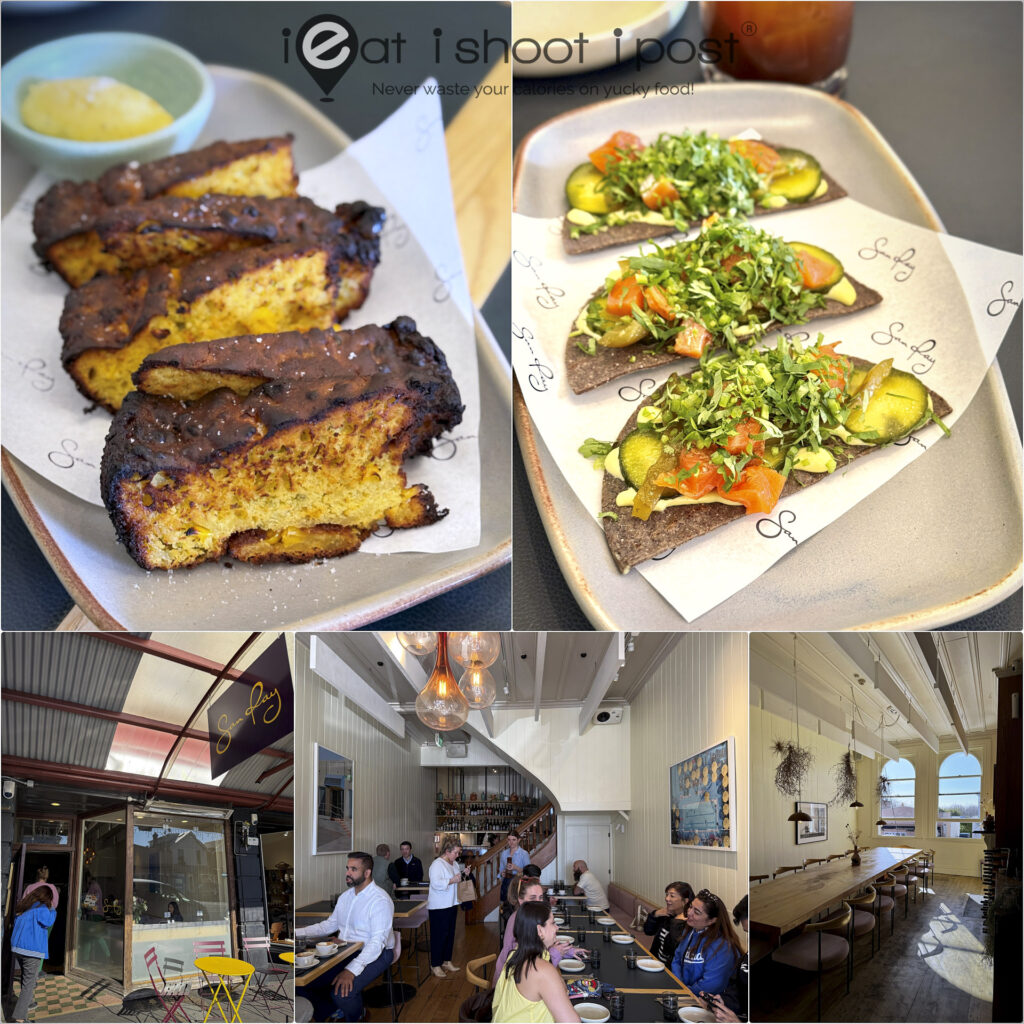
San Ray was a direct contrast to Cazador. Whereas Cazador has an old-world vibe, San Ray is bright and energetic, much like its host, Rebecca.
San Ray is the sister restaurant of Cazador. After more than ten years building Cazador’s legacy, Chef Dariush Lolaiy and wife, Rebecca Smidt wanted to see what they would create if they started completely from scratch. San Ray is the answer.
It occupies the old Orphans Kitchen space on Ponsonby Road, with Rebecca out front bringing her trademark warm, knowledgeable service. Dariush is back in the kitchen doing what he does best. The concept is deliberately more relaxed than Cazador, an all-day space where you can ease in with a morning coffee, linger over a carafe of wine at lunch, or just pop by for a small plate.
I was particularly taken with the cornbread, which was excellent. We also had the salmon tostada, beautifully done. San Ray is the kind of place I would happily return to, a genuinely casual spot serving very well-prepared food in a cheerful, light-filled room.
One small detail worth hunting for if you visit. There is a mural featuring a swimming pool scene, and if you look closely, there is an exposed butt cheekily tucked into the painting. See if you can spot it!
San Ray
Ponsonby Road, Auckland
Google Maps
Stop 4: Bedford Soda & Liquor
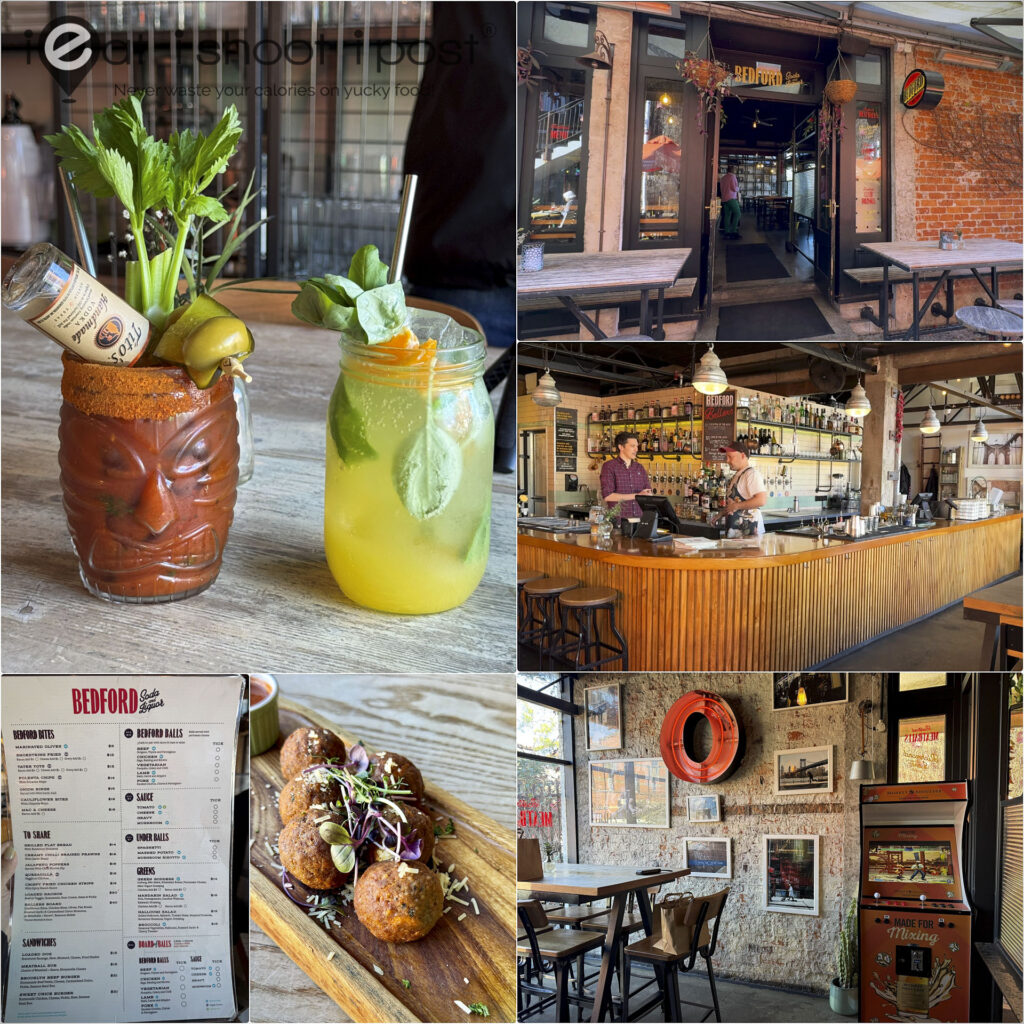
Our fourth stop was Bedford Soda & Liquor, in the Ponsonby Central precinct, a place where you can get a proper cocktail any time of day.
Bedford was the brainchild of three friends, Matt Nicholls, Sam Ansley and Jeremy Wells, and the whole concept is a love letter to New York’s neighbourhood bar culture. The name itself is a nod to that idea, sumptuous cocktails and tasty meatballs, served up in a laminated menu you tick off yourself with a marker pen, the kind of playful touch that brings out your inner kid.
We tried the meatballs, something of a signature dish here. Honestly, I did not think the meatballs alone were worth a special trip. But if you are looking for a relaxed spot to enjoy small plates and a well-made drink, Bedford fits the bill nicely.
Bedford Soda & Liquor
Ponsonby Central, 136 Ponsonby Road, Auckland
Google Maps
Stop 5: Giapo
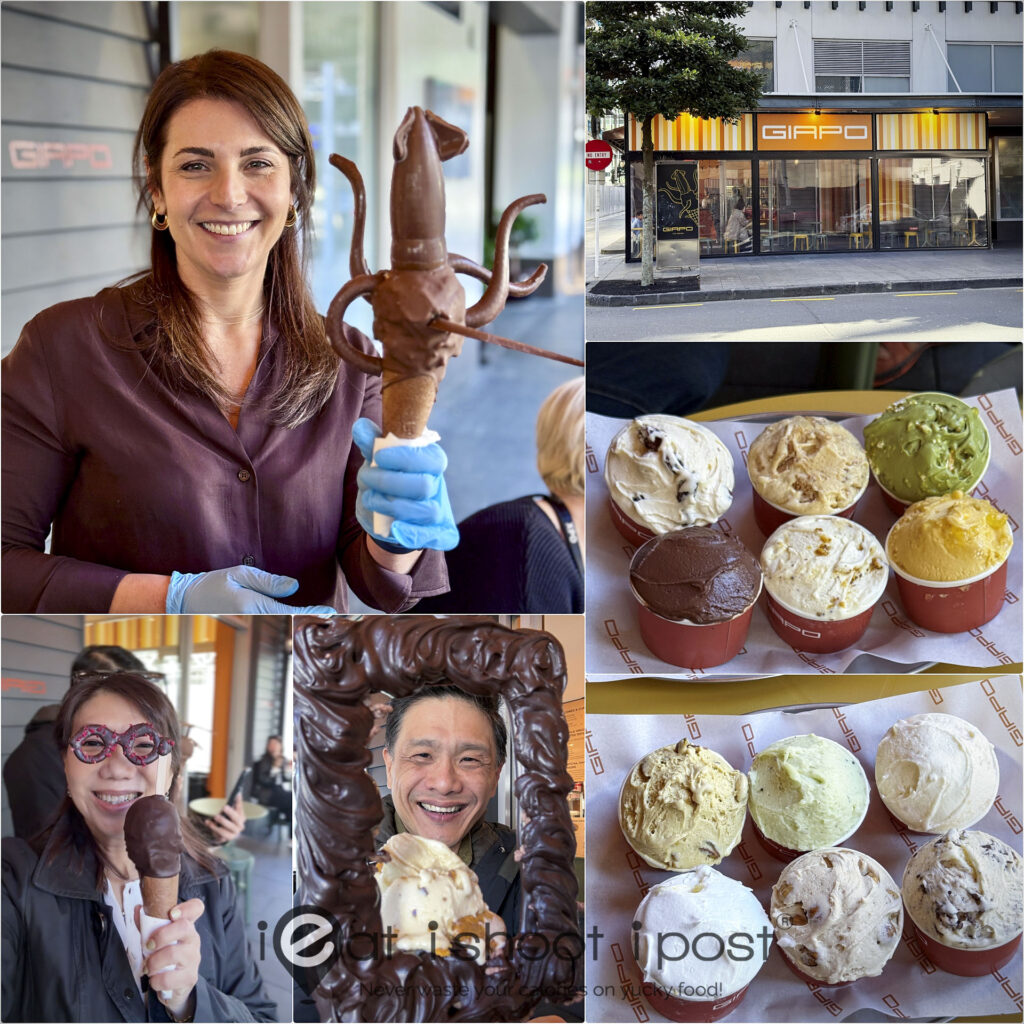
Our final stop was Giapo, for some excellent Italian-style gelato.
The place was founded eighteen years ago by an Italian couple who remain deeply passionate about what they do. The ice cream is made with real care, sourcing ingredients from New Zealand wherever possible, and only going overseas when a particular ingredient cannot be found locally.
If you are after seriously good quality ice cream, this is the place. Conveniently, it sits directly opposite our hotel, SO/ Auckland. What makes Giapo especially distinctive is their elaborate chocolate cone creations, sculpted into different characters and shapes. There is everything from a Batman cone to something resembling a masquerade mask. They also have one that pays homage to the colossal squid we saw at Te Papa. Great fun, and especially if you love to see the kids squeal with delight!
Giapo
12 Gore Street, Auckland Central
Google Maps
The Michelin Ceremony
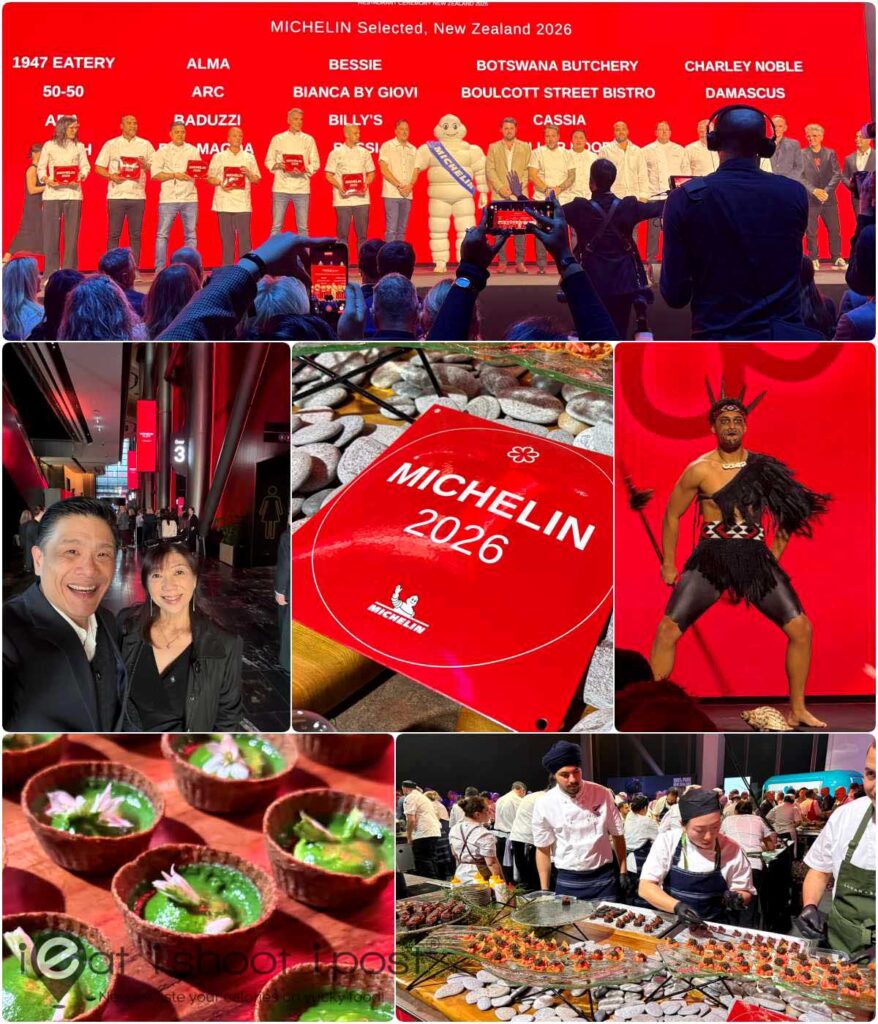
On 30th June 2026, the Michelin Guide launched in New Zealand, and we were there for the ceremony. Several restaurants we had personally visited over the past week walked away with stars. We found ourselves rooting for the ones we visited, especially those where we managed to have a chat with the chef.
The most significant for us was Logan Brown, where we had dinner on Saturday night in Wellington. We were thrilled to see them awarded a One Michelin Star. Logan Brown is one of those rare places where the moment you step through the door, you feel like you’re in a Michelin establishment. The grandeur of that converted bank building, the precision on the plate, it all adds up. They’ve been around for thirty years, and I think consistency is one of the most important things Michelin inspectors look for. Logan Brown has been operating long enough, and consistently enough, to earn this.
We were, of course, disappointed that Graze did not walk away with a star. Our whole group of influencers and media were rooting for them. But they were recognised in the MICHELIN Selected category, which is no small thing for a 22-seat restaurant in a converted butcher’s shop. Then came the real surprise of the night. Stina Persen, the co-owner who runs front-of-house with such warmth, was awarded the MICHELIN Guide Service Award, one of only three Special Awards given across the entire country. That’s genuinely unique recognition, and it tells you everything about what makes that little restaurant special. We hope to see them picking up a star of their own in the years to come.
Charley Noble was about as we expected. It was a wonderful meal, and we’ll absolutely return when we’re next in Wellington. But the fact that they didn’t receive a star wasn’t entirely surprising either. They serve genuinely excellent food, but perhaps without the finesse that Michelin inspectors look for in a starred restaurant.
Then there’s Queenstown. With Essence, Sherwood and Amisfield all picking up stars, Queenstown can now lay claim to being home to the world’s southernmost Michelin-starred restaurants. That’s a remarkable thing for New Zealand to be able to say on its very first night in the Michelin universe.
The Tasting Pavilion
After the awards were announced, we had the chance to taste food at the Tasting Pavilion Revelation, where six Michelin-starred chefs presented their own dishes.
Most significant for us was again, Logan Brown, given our connection to them from dinner on Saturday. Honestly, of all six chefs presenting that night, I found Logan Brown’s canapes to be the best. We managed to speak with the chef directly and learned something rather remarkable. On the Saturday we had dined there, he was already preparing for this very moment. He personally drove a nine-hour journey to Auckland, carrying all his own ingredients with him, just so he could present his dish properly at the pavilion.
The other chefs presenting had come from all around the world. We tried dishes from Michael Cimarusti of the three Michelin-starred Providence in California, and from Chef Nobu Lee of Nobuo in Taiwan, whose story we’d already come to appreciate given his own roots in New Zealand kitchens. We also got to try food from Sherwood and from Tala, who presented some beautiful Samoan-inspired dishes. Not quite Maori cuisine, but Pacific islander cuisine is close enough.
All in all, the food showcased some of New Zealand’s finest produce. Abalone, crayfish, and plenty of caviar made appearances, though the caviar itself isn’t actually from New Zealand.
It felt like a fitting end to the evening. We got to congratulate Stina Persen from Graze on her Service Award, and spoke at length with Steve Logan from Logan Brown, who was understandably ecstatic about the win. For him, it represented thirty years of consistent hard work finally being recognised at the highest level. A genuinely well-deserved star.
Overall, an excellent night in New Zealand. We found out that we will be eating at Ahi and Paris Butter, two of Auckland’s newly minted One Michelin Star restaurants the next day and were very much looking forward to it. Our organizers had booked the restaurants prior to knowing the results, so it seems they made the right pick!
Final Day 6: Dining at 2 One Michelin Star Restaurants!
Ahi. (One Michelin Star)
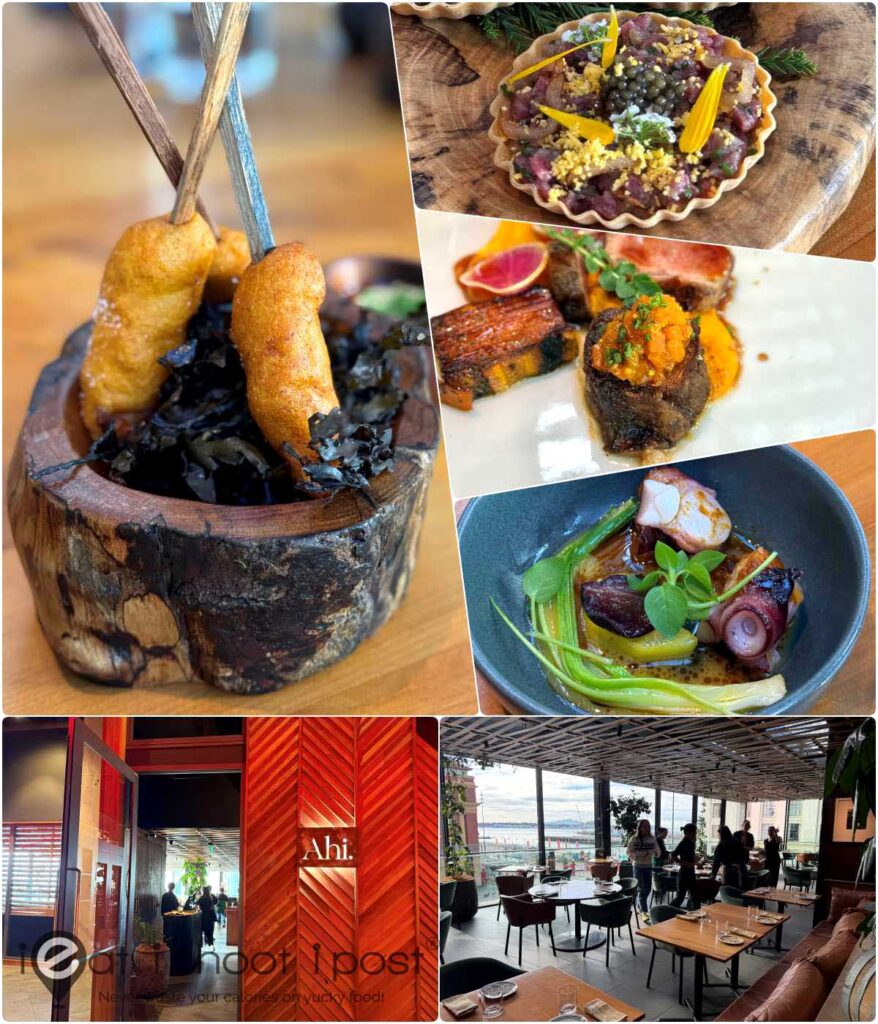
Day six was our final day in New Zealand, the day after the Michelin Guide had been released. We had the privilege of dining at two One-Star restaurants, back-to-back.
First up was Ahi, where we went for an early lunch. We were, in fact, the first group to arrive at this newly-minted Michelin-star restaurant.
Ahi winning a star wasn’t exactly a surprise to us. Owner-chef Ben Bayly was one of only a handful of chefs recognised as a Mindful Voice at the Michelin Awards night, a special honour for chefs championing sustainability. Bayly runs his own kitchen garden in South Auckland, growing much of his own produce and composting kitchen waste straight back into the soil. He’s fiercely attentive about where his meat and seafood come from too, sourcing from some of the best small producers around New Zealand. Sustainability isn’t a buzzword for him, it’s how the whole restaurant runs.
The space itself is polished, an open kitchen, big windows looking out over the harbour. But it was the food that told us why Ahi had earned its star. From the first course, the produce was clearly well-sourced, and every dish was thoughtfully put together.
My highlight was the scampi, served up like a corn-dog. Everyone at the table loved it. Honestly, every course that followed was just as good. The cooking was precise, the plating beautiful, and the service warm without being stiff.
If there’s one restaurant in Auckland I’d go straight back to, it’s Ahi. We got to catch up with Ben again, who came by our table for a chat. He struck me as genuinely humble for someone running one of the country’s best kitchens, the kind of chef who’s still grateful every time a guest makes the trip to eat with him. A well-deserved star, no question.
Ahi.
Level 2, Commercial Bay, 7 Queen Street, Auckland CBD
Google Maps
Maungawhau / Mount Eden
We spent the afternoon at Maungawhau, better known as Mount Eden, Auckland’s highest volcanic cone at 196 metres, trying to make room for one more meal before our flight home. It last erupted around 28,000 years ago, and the crater at the top, 180 metres across and 50 metres deep, still gives you a sense of how violent that must have been. Long before it was a lookout point, Maungawhau was one of the largest Māori pā in the region, home to thousands, with terraces and food-storage pits still visible in the earth if you know where to look. The walk up is short but steep, and the 360-degree view over the city and the harbour at the top made it the perfect way to walk off lunch.
Maungawhau / Mount Eden
Mount Eden Domain, Mount Eden, Auckland
Google Maps
Paris Butter (One Michelin Star)
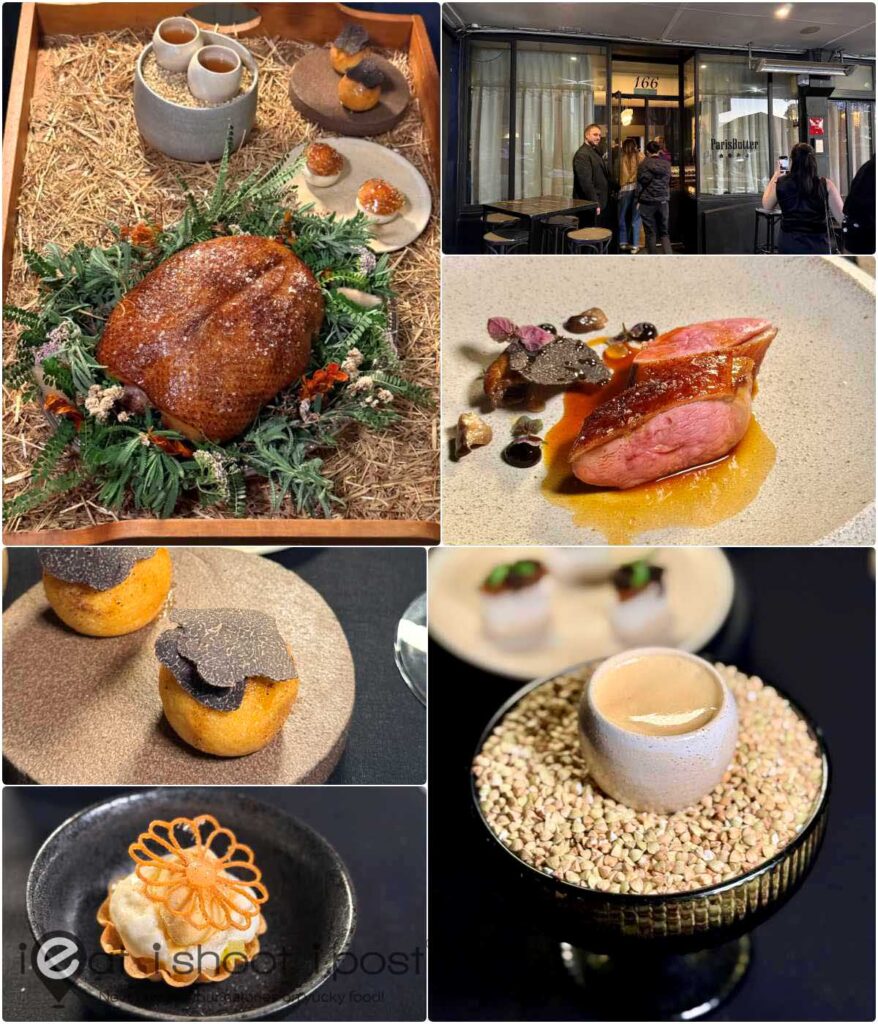
Dinner was at Paris Butter, our second One-Star restaurant of the day. We were intrigued by the name. Paris Butter sounds more like a neighbourhood bistro than a fine-dining destination, and that’s exactly what it started out as, before it evolved into the restaurant it is today. One of the partners, Nick Honeyman, also runs Le Petit Léon, a Michelin-starred restaurant of his own in the south of France, so together with resident chef Zennon Wijlens there are now two Michelin-star chefs behind this one kitchen.
The food was, again, beautifully sourced and presented. What struck me most was the kitchen’s obsession with fermentation. The chef ferments constantly, coaxing out flavours you don’t often find on a plate. He showed me one ferment made from a sourdough-koji base, and another built entirely from mushroom off-cuts that would otherwise have gone to waste. When the dishes arrived, you could taste it, the flavours were layered, balanced, had that special something you can’t quite put your finger on.
Another thing that sets Paris Butter apart is resident chef Zennon Wijlens’ liking for flavours he’s picked up on his travels. You can taste it in the roast duck, glazed and roasted with flavours reminiscent of a Cantonese roast duck. The duck itself was perfectly cooked, perfectly medium, tender and juicy, with a flavour that hints at that Cantonese influence while still feeling distinctly French. Another very well-deserved star.
Paris Butter
166 Jervois Road, Herne Bay, Auckland Google Maps
Goodbye, New Zealand, and Thanks for the Food!
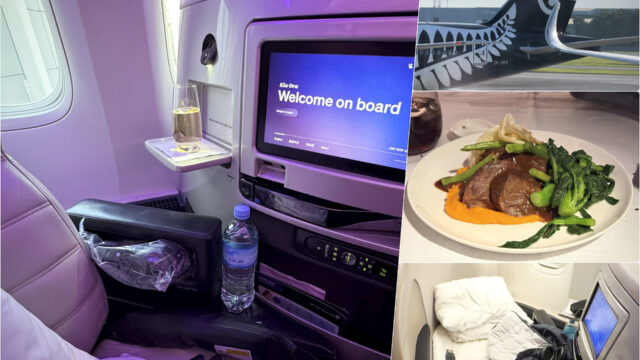
After that lovely meal, we said our goodbyes to the fellow influencers and friends we’d spent the week with, and made our way to the airport. We were pleasantly surprised by the dedicated check-in lounge for Air New Zealand’s premium business passengers, a quiet room that made the whole process quick and easy. Onboard, back in Business Premier, I got to lie flat and catch some sleep before landing.
Conclusion
For me, New Zealand has always been about the great outdoors. This time around, we didn’t get to see the mountains; our focus was on covering the restaurant scene instead. But our next trip will definitely be an adventure trip, one where we get to soak up the scenery properly.
That said, this trip gave us a good feel of New Zealand’s culinary scene. I was impressed by the quality of the food, as I have been before, but this time round, we were more attuned to how the chefs here regard their natural produce, especially the seafood. Every chef we spoke to was proud of it, and rightly so. It’s the one resource that really sets New Zealand apart. The seafood is fresh, clean and full of flavour, and the same goes for the produce.
If you’re Singaporean, the Michelin stars will only be relevant to you if you’ve been to New Zealand and eaten at one of these restaurants before. But if you’re planning a New Zealand trip, you can now use the Michelin Guide to shortlist some of the country’s best restaurants to visit. Having eaten at a range of Michelin Selected and Michelin Star restaurants during this trip, it does feel like the inspectors were very consistent in their assessments.
The other thing I’d say is that, at the time of writing, fine dining in New Zealand is a lot more attractively priced than in Singapore. I’m not sure how the Michelin stars will change that over time. But for now, if you’re looking to eat at Michelin-quality restaurants without the Michelin-city price tag, New Zealand is a great choice. Between the exchange rate and the lack of GST and service charge tacked onto your bill, it’s a genuinely good deal.
Disclosure: this media trip was made possible by Tourism New Zealand.