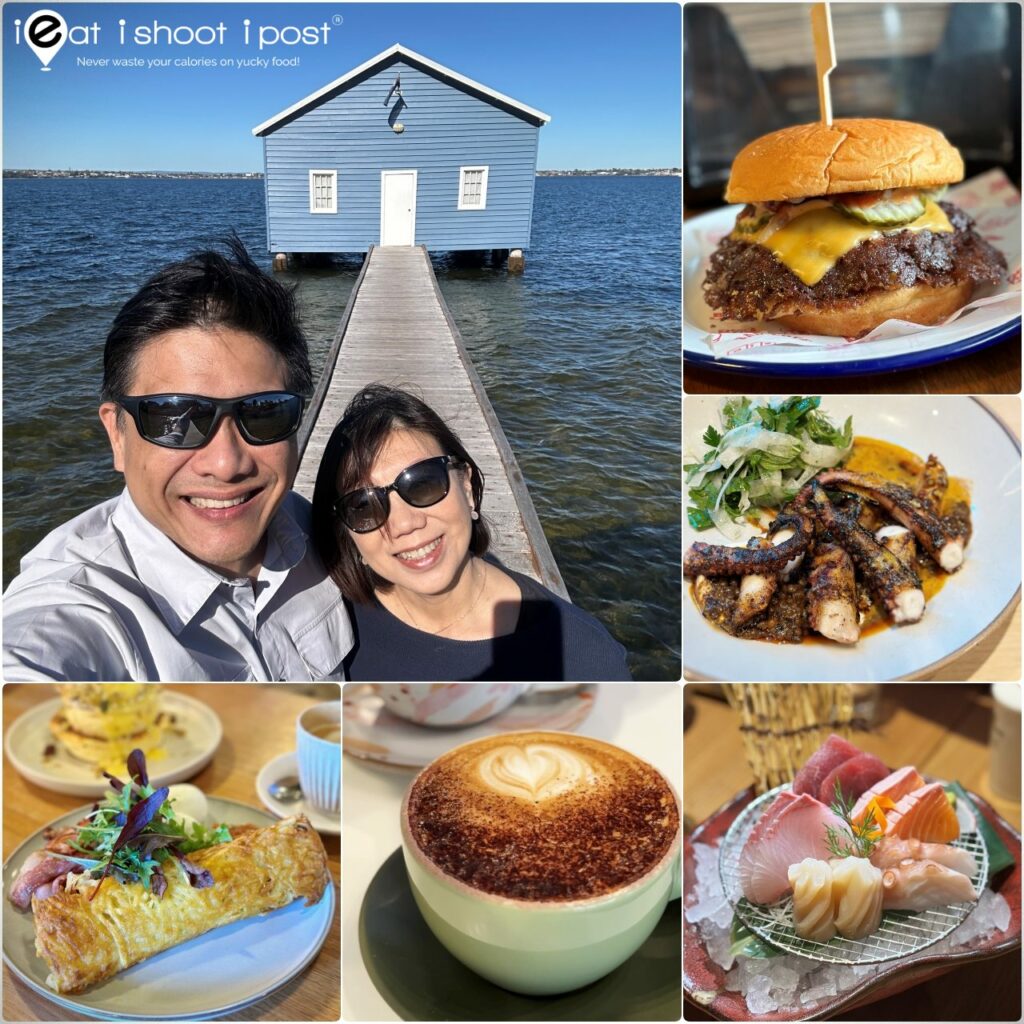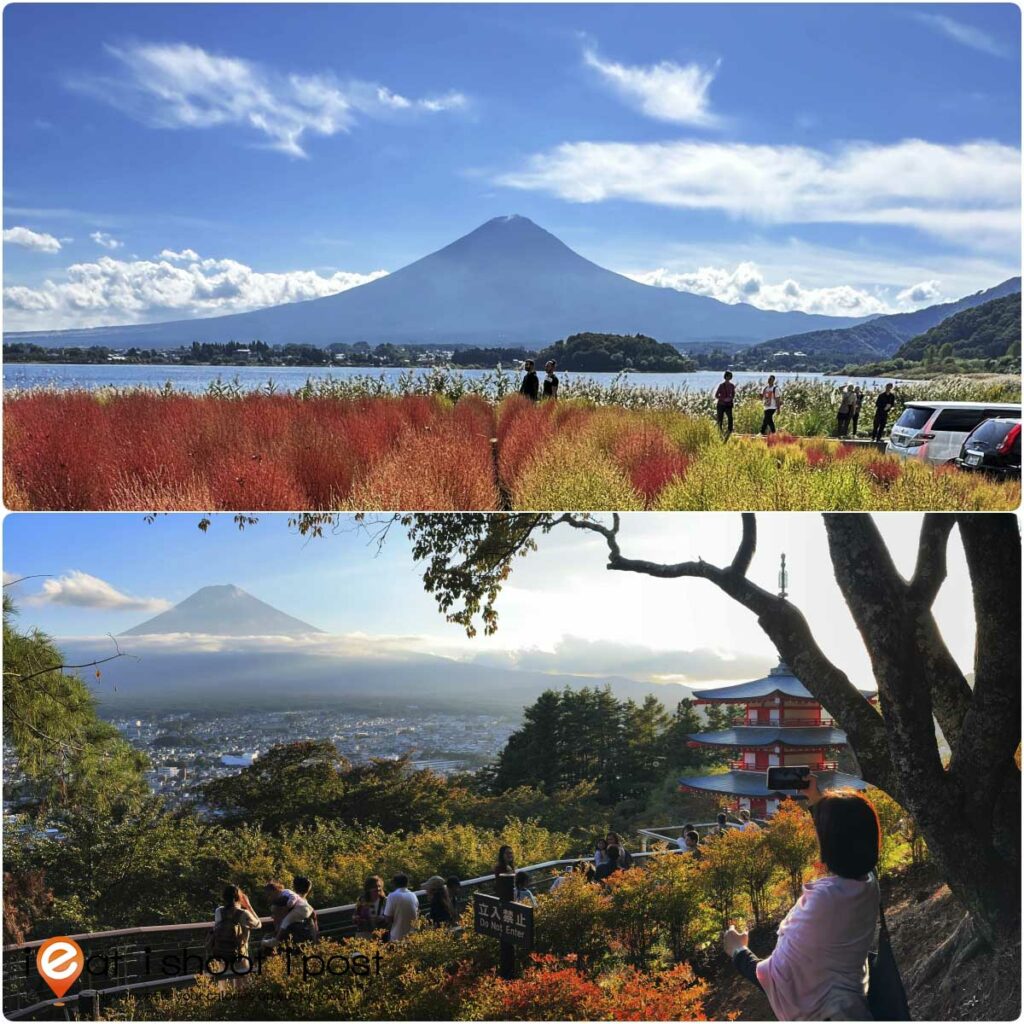

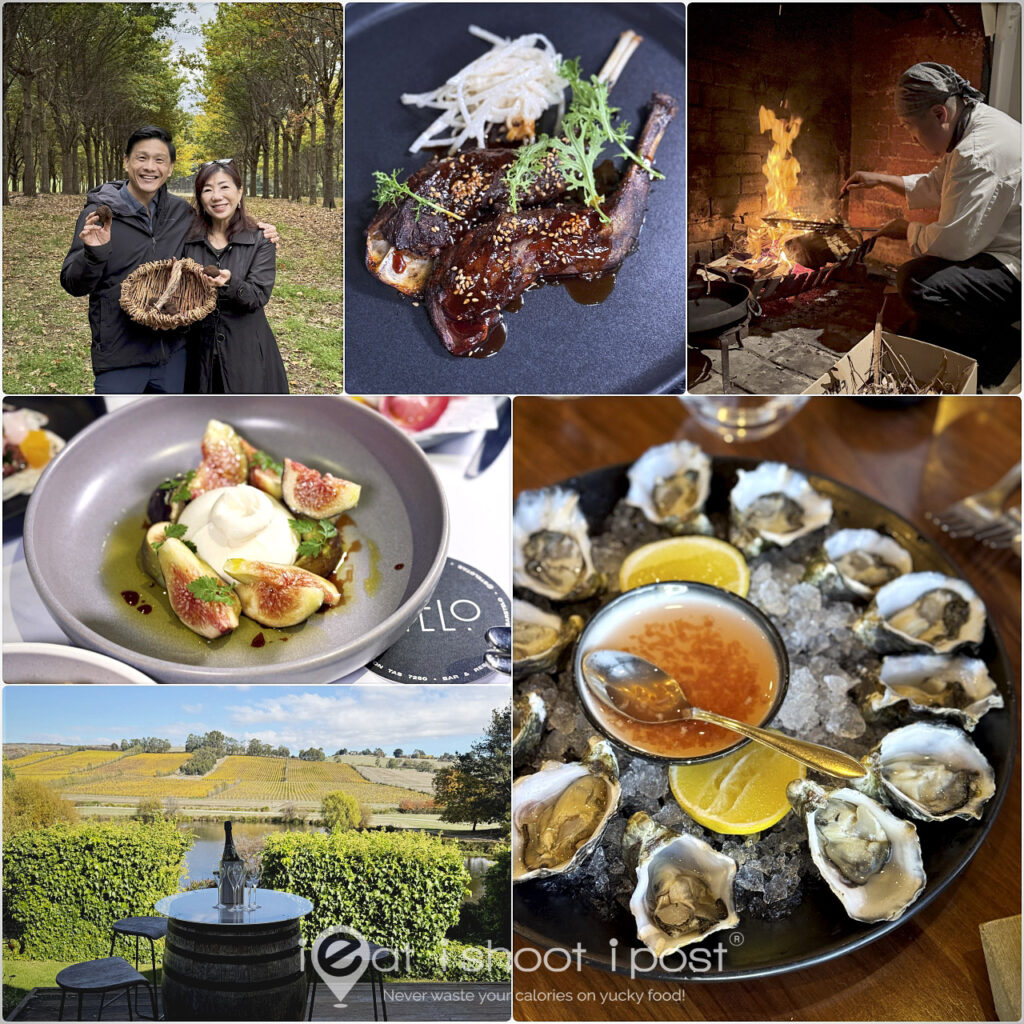
If you have visited Margaret River when you were in Perth and enjoyed the region, then Tasmania should be on your bucket list.
Certain food journeys stay with you long after you’ve come home. For us, Hokkaido, the South Island of New Zealand and the Margaret River region in Western Australia have always been in that category. Places where you drive through greenery to visit vineyards, dairy farms and enjoy fresh produce along the way. Places where the pace of life gives you room to actually taste what you’re eating.
When Tourism Tasmania approached us to join a famil trip, I didn’t need much convincing. The moment I heard the words truffle hunting and forest foraging, I was sold.
What we didn’t expect was just how much Tasmania would exceed those expectations.
A Seat at the Tasmanian Table
Tasmania is like the Margaret River region times ten. The island is quiet in the best possible way. Hobart is a small, unhurried city that wraps itself around a beautiful harbour. The whole experience feels genuinely relaxing – no crowds, no rush, just good food, fresh air and beautiful scenery. The perfect way to detox from city life!
The food is seriously good. Many good restaurants. But what really sets Tasmania apart is the produce. The surrounding seawater is among the cleanest in the world, and the seafood reflects that. Oysters that need nothing but a squeeze of lemon. Salmon, mussels and abalone of exceptional quality. Add to that the cool-climate wines, the artisan cheeses, the world-class truffles and the wild-foraged mushrooms, and you begin to understand what this island is capable of.
One of the biggest surprises of the trip was discovering that Launceston holds UNESCO City of Gastronomy status and from Launceston, you can embark on a tasting trail that spans the northern part of the Island all the way to Cape Grim on the North-Western tip.
You can find our full seven-day itinerary below, covering Hobart, the Huon Valley, the East Coast, Launceston and everything in between.
We will absolutely be back. Next time, to properly explore the tasting trail through the north east and north west of the island, and to hike the Cradle Mountain area. Tasmania rewards slow travel, and one week is nowhere near enough.
Go straight to:
- Day 1 – Frogmore Creek Wine Bar, MACq 01 Hotel, Aloft Restaurant
- Day 2 – Pigeon Whole Bakers, Sirocco South, Wille Smith’s Apple, Cambridge House
- Day 3 – Grandvewe Cheese, Kuuma Nature Sauna, MONA, Faro, The Tasman
- Day 4 – St David’s Cathedral, Farm Gate Market, LARK Distillery, Tolpuddle Vineyard, Piermont Retreat, Waterloo Inn
- Day 5 – Tasman Sea Salt, Freycinet Marine Farm, Devils Corner Cellar Door, Stillwater Seven
- Day 6 – Ashgrove Dairy, Melita Honey, 41 Degrees South, The Truffle Farm, Small Wonder Wines, Stelo by Pierre’s, Peppers Silo Hotel
- Day 7 – Cataract Gorge, Joseph Chromy Wines
Video Travelog – Day 1 to 3
DAY 1
Frogmore Creek Wine Bar – Lunch & Wine Tasting
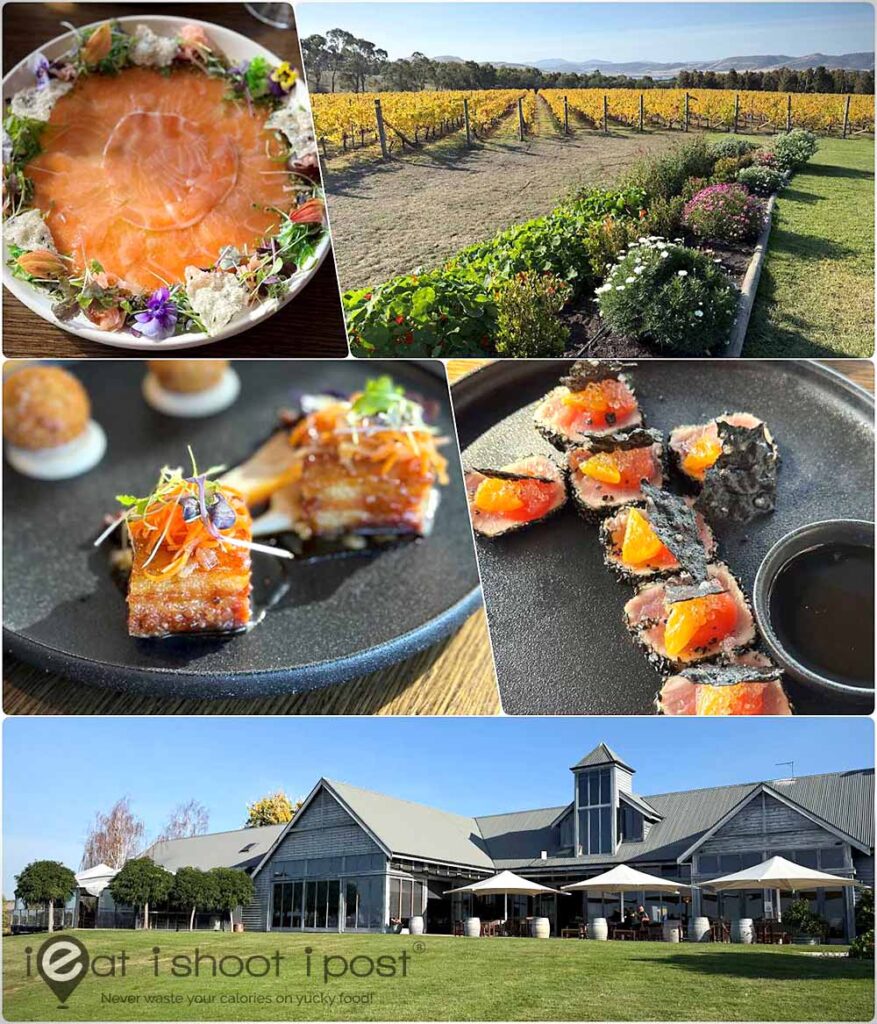
Our first stop after we landed was lunch at Frogmore Creek Wine Bar, just 10 minutes from the airport. A working winery in the Coal River Valley, Frogmore Creek takes in vineyard views over the Coal River Valley in a setting that is relaxed and elegant. It’s a perfect stop before making our way to Hobart.
The menu is modern Australian, built around fresh local produce. We had locally farmed salmon, blue fin tuna tataki and slow cooked pork belly paired with the cool-climate wines of Tasmania. Most notably were the Chardonnay and Pinot Noir. These are varietals that will feature frequently on our tables for the rest of the week! It was a great teaser for what was to come in the following week!
📍Frogmore Creek Wine Bar
699 Richmond Rd, Cambridge, 7170 Tasmania
MACq 01 Hotel — 114 Doors Tour
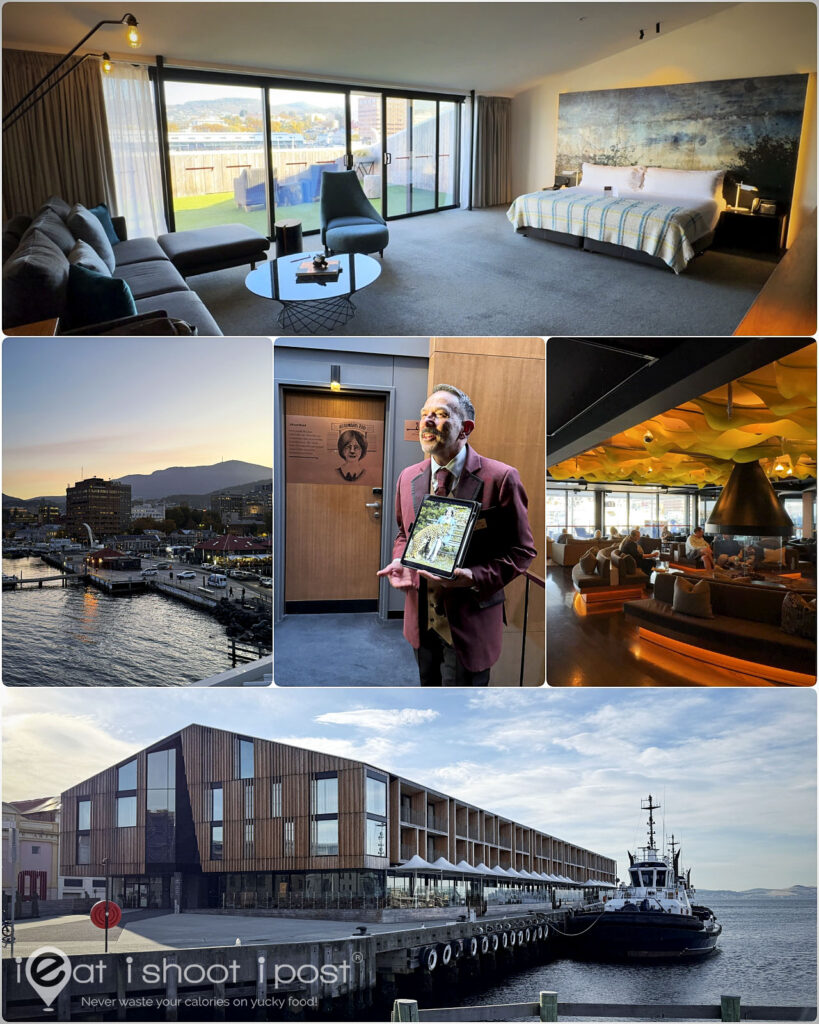
After lunch at Frogmore Creek, we checked into MACq 01, a hotel unlike anything I’ve encountered before. All 114 rooms are named after real Tasmanian historical figures, each with its own story woven into the room design. It’s a hotel that wears its history proudly.
After settling in, we were taken on a one-hour storytelling tour. It was genuinely captivating. The presenter brought Tasmanian history to life through a series of remarkable tales. One that stuck with me was the Tasman Bridge disaster of 1975, when a bulk carrier collided with the bridge and brought two spans crashing down, cars still on it. The bridge connected the two sides of Hobart, and its collapse split the city in two for years.
Story after story, the tour built up a picture of Tasmania as a place shaped by extraordinary events and extraordinary people. By the end of it, you feel you understand Tasmania a little better.
Our room looked out over the waterfront, which in Hobart is always a good thing. If you want a place to stay that gives you more than just a bed, MACq 01 is well worth considering.
MACq 01 Hotel
18 Hunter Street, Hobart, 7000 Tasmania
Book here
Aloft Restaurant – Dinner
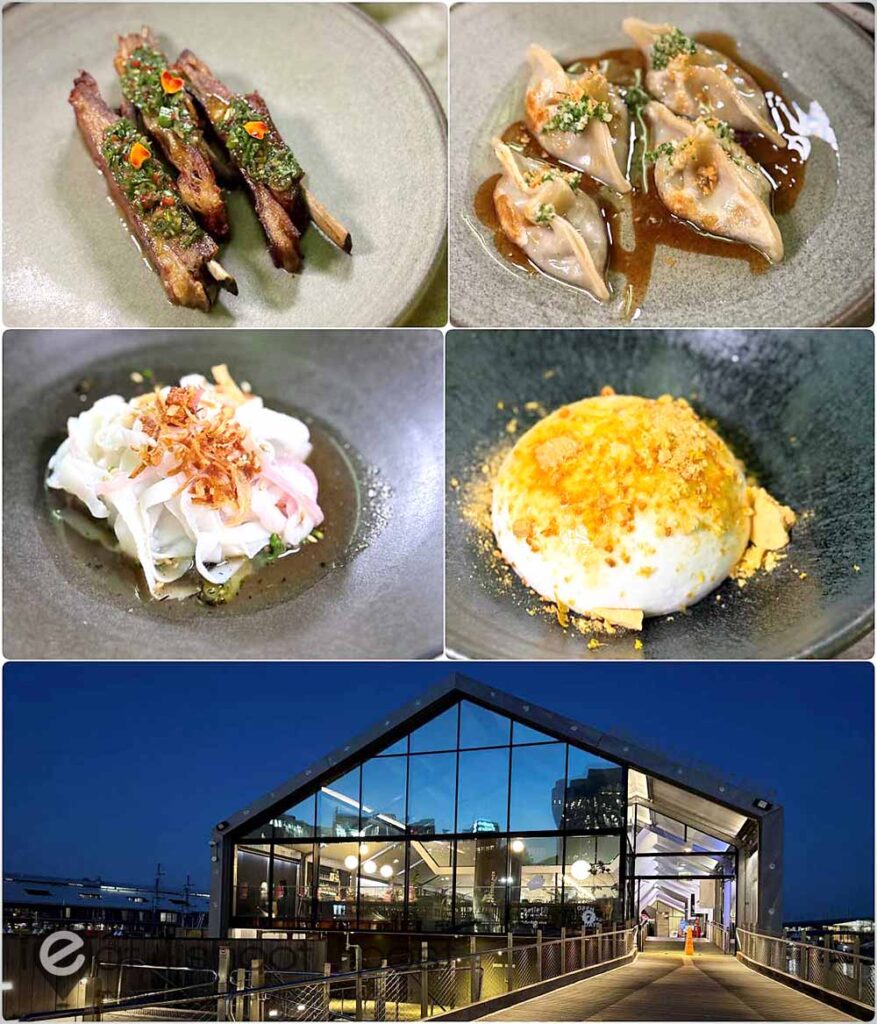
I’ll be honest. Aloft wasn’t on my radar before this trip. It was Tourism Tasmania who brought us here, one of the restaurants they felt strongly we needed to experience. After dinner, I completely understood why.
The location alone is worth the visit. Right on Brooke Street Pier, perched over the water, with the last of the evening light playing off the harbour. A beautiful room to ease into your first Tasmanian dinner.
The format is small plates, built around fresh local ingredients. What makes Aloft interesting is how the kitchen plays with them. Chef Christian Ryan weaves Asian influences and fermentation techniques through Tasmanian produce in ways that feel natural rather than forced. The results were frankly better than I expected.
The lamb ribs was the first dish that wowed us. Fall-off-the-bone tender, fragrant with Asian spice. The kind of dish that makes you reach for another piece before you’ve finished the first. The cuttlefish was equally memorable, sliced thin like Ipoh hor fun, paired with a sauce made from onions slow-roasted overnight until deeply sweet and complex.
The crispy eggplant was reminiscent of a good zi char dish. Battered and fried until super crispy, then slathered with a sweet and punchy chilli sauce. Very familiar, but done with real finesse.
One of the best restaurants we visited on the entire trip. Creative cooking, genuine flavour, great setting. The Chef’s Menu is A$150 per person, with a beverage match at A$100pp. Well worth it if you’re in Hobart.
📍Aloft Restaurant
1 Brooke Street Pier, Hobart, 7000 Tasmania
DAY 2
Pigeon Whole Bakers — Breakfast
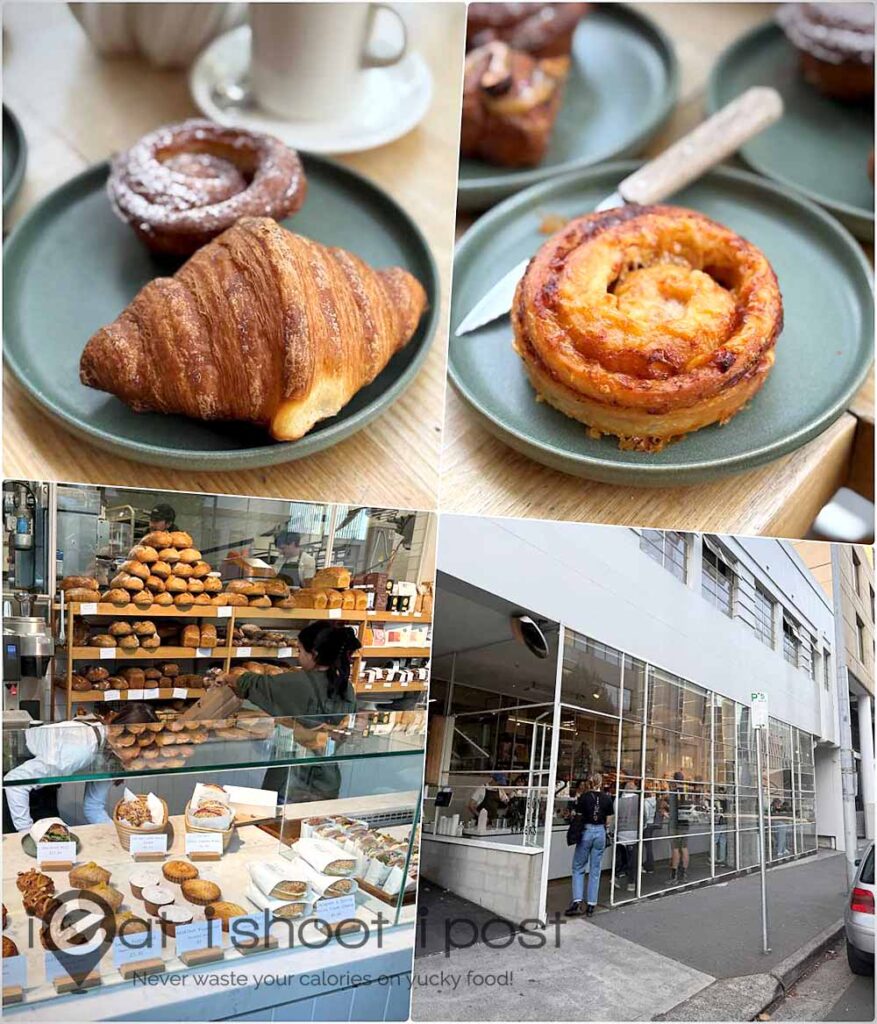
Day two started with breakfast at Pigeon Whole Bakers, something of a Hobart institution. It’s a takeaway-style bakery where the morning crowd queues up, grabs their pastries and coffee, and heads off into the day.
The pastries were good. The croissants and Danish were well made, and the breakfast bun was actually quite special. But if you’ve travelled through Melbourne, Sydney, or any decent European city, you’ll have encountered bakeries at this level before. Pigeon Whole Bakers is solid, but not somewhere you need to go out of your way for. That said, if you’re in Hobart and want a nice croissant to start the day, this is where most locals will point you.
📍Pigeon Whole Bakers
32 Argyle Street, Hobart, 7000 Tasmania
Sirocco South – Forest Forage and Feast in the Forest
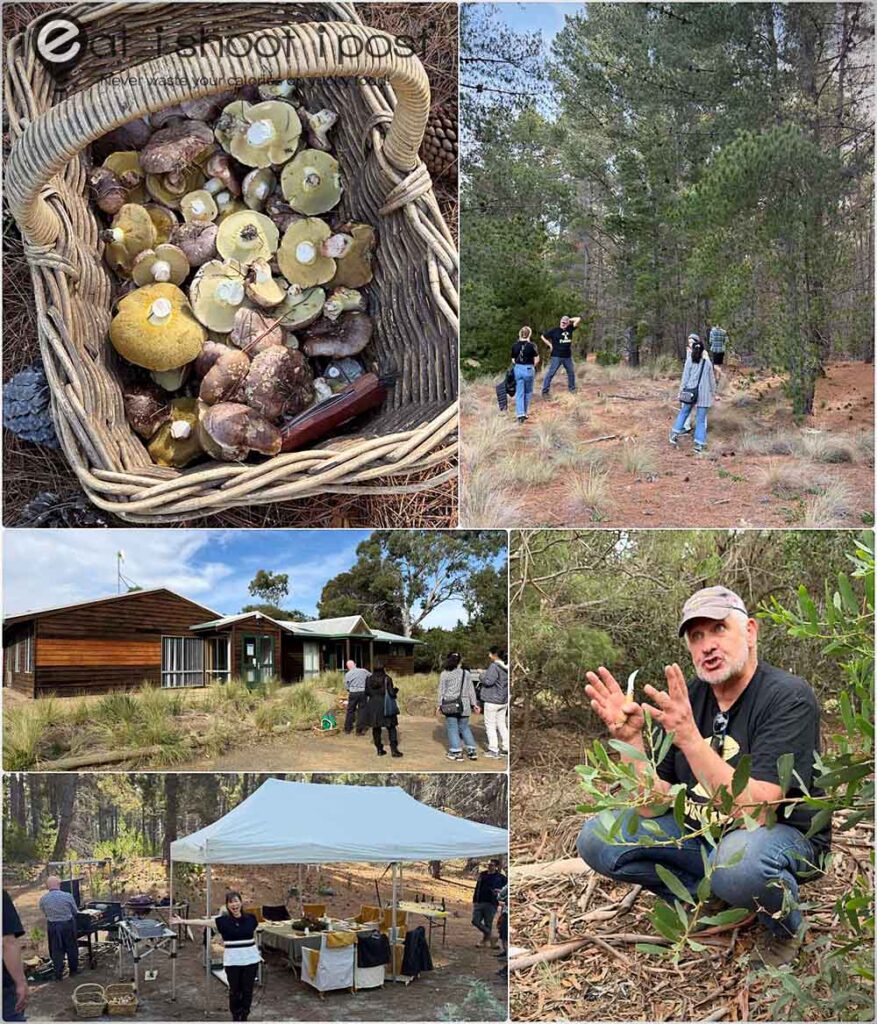
This was the experience I came to Tasmania for.
I’ve always been fascinated by the idea of walking into a forest, picking things growing wild from the ground, and turning them into something you can eat. It sounds almost too romantic to be real, especially if you live in Singapore. But that’s exactly what Sirocco South is all about.
Mic Giuliani started Sirocco South during COVID, turning a lifelong passion for foraging into a proper business. He’s been picking wild food since he was a kid, and it shows. Walking through the pine forest with him was like having a naturalist and a chef rolled into one. Every few steps he’d stop, crouch down, and pull up something edible. Or deadly. (We didn’t find anything too poisonous that day.)
It was prime mushroom season, and we spent a good hour combing through the forest floor. We found grey knights and slippery jacks, the latter a classic pine forest mushroom with a slick, sticky cap that makes them unmistakable once you know what you’re looking for. By the time we were done, we had a satisfying haul between us.
Then Mic led us to a makeshift tent in the middle of the forest. What followed was a six-course lunch that genuinely surprised me.
The mushrooms we’d foraged were combined with others Mic had gathered and prepared beforehand, some preserved, some fermented, and worked into a series of dishes far more refined than the rustic setting suggested. The mushroom cobbler was the highlight. A rich, deeply savoury mushroom stew topped with golden cobbler pastry, baked until just right. Simple idea, but having it cooked in the open made it something special. The mushroom pasta was equally good. Slippery jacks sautéed in butter and tossed through pasta. They had a lovely texture reminiscent of porcini, without quite the same intense aroma, but delicious all the same.
And then there was wallaby. Tasmania is one of the few places where you can eat wallaby safely. The animals here are free from disease and so abundant they’re considered pests. Tender, lean, with a clean gamey flavour. If you come to Tasmania, you really can’t avoid it. And you shouldn’t want to.
The lunch was paired with wines from Bream Creek, a small vineyard on the east coast. The Pinot Gris stood out for us.
Six courses in the forest, foraged mushrooms, wallaby and excellent Tasmanian wine. What ends up on your plate depends entirely on the season. And that’s exactly what makes foraging so interesting.
📍Siroco South
293 Surf Rd, Seven Mile Beach, 7173 Tasmania
[email protected]
Willie Smith’s Apple Shed – Cider Tasting and Orchard Tour
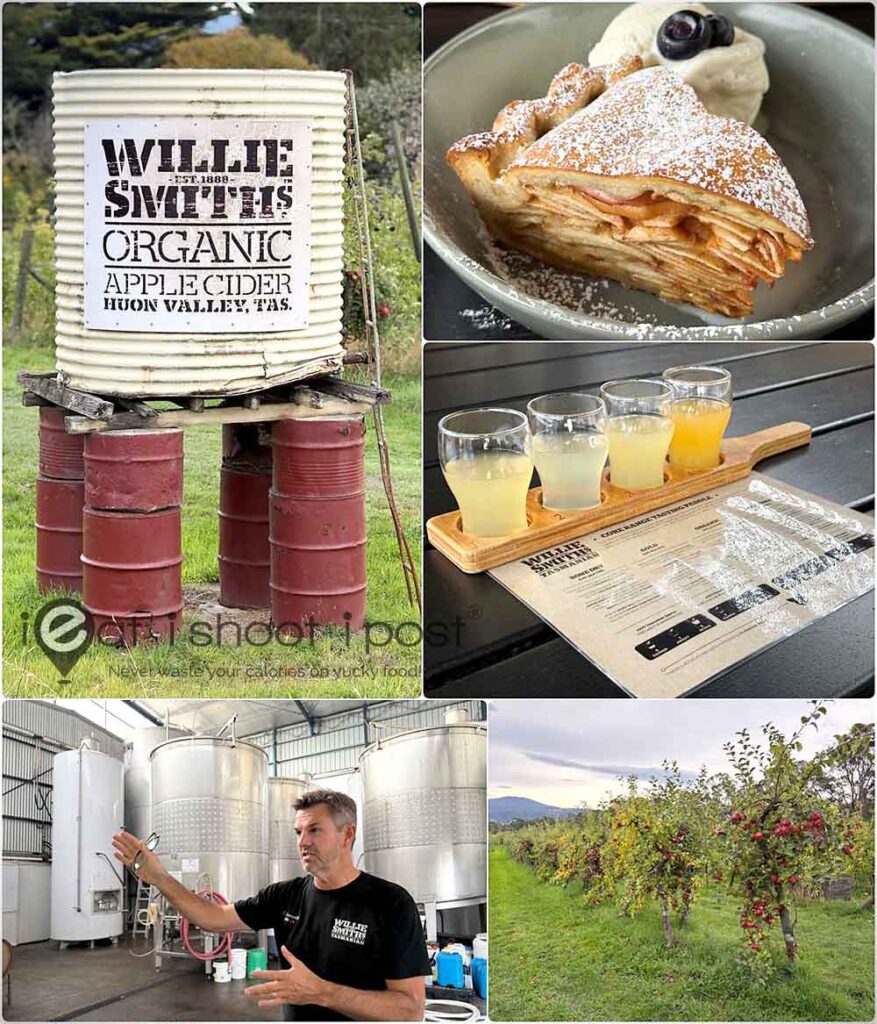
After lunch, we headed to Willie Smith’s Apple Shed for some apple cider tasting.
Willie Smith’s is one of Tasmania’s most established cideries, and the ciders did not disappoint. Refreshing, dry, with that clean apple character that comes from fruit grown in genuinely good conditions. We tasted four different variations, and they even had a non-alcoholic version, which suited me well since I can’t drink.
But the real surprise was the apple pie.
Most apple pies are filled with apples stewed until soft and swimming in thick sweet sauce. Willie Smith’s version was something else entirely. Packed with thinly sliced apples baked just enough to still hold their shape, still with a bite, full of fresh apple flavour rather than the jammy sweetness you usually get. When you grow your own apples, it shows.
We were lucky enough to tour the orchard with Andrew Smith, the third-generation owner, who walked us through the history of apple growing in Tasmania. At its peak, Tasmania had hundreds of apple orchards. Today, only about ten remain, squeezed out by cheaper competition from elsewhere. A sobering story.
But Andrew took a risk about eleven years ago, planting a new variety called Southern Bliss, a sweet, crunchy, fully organic apple that only came to market two years ago. The gamble appears to have paid off. Last season, they sold some to Singapore. If you’re reading this back home, keep an eye out for Southern Bliss apples at the supermarket. They’re worth trying.
📍Willie Smith’s Apple Shed
2064 Huon Highway, Grove, 7109 Tasmania
Cambridge House – Japanese Ryokan in a heritage Victorian House
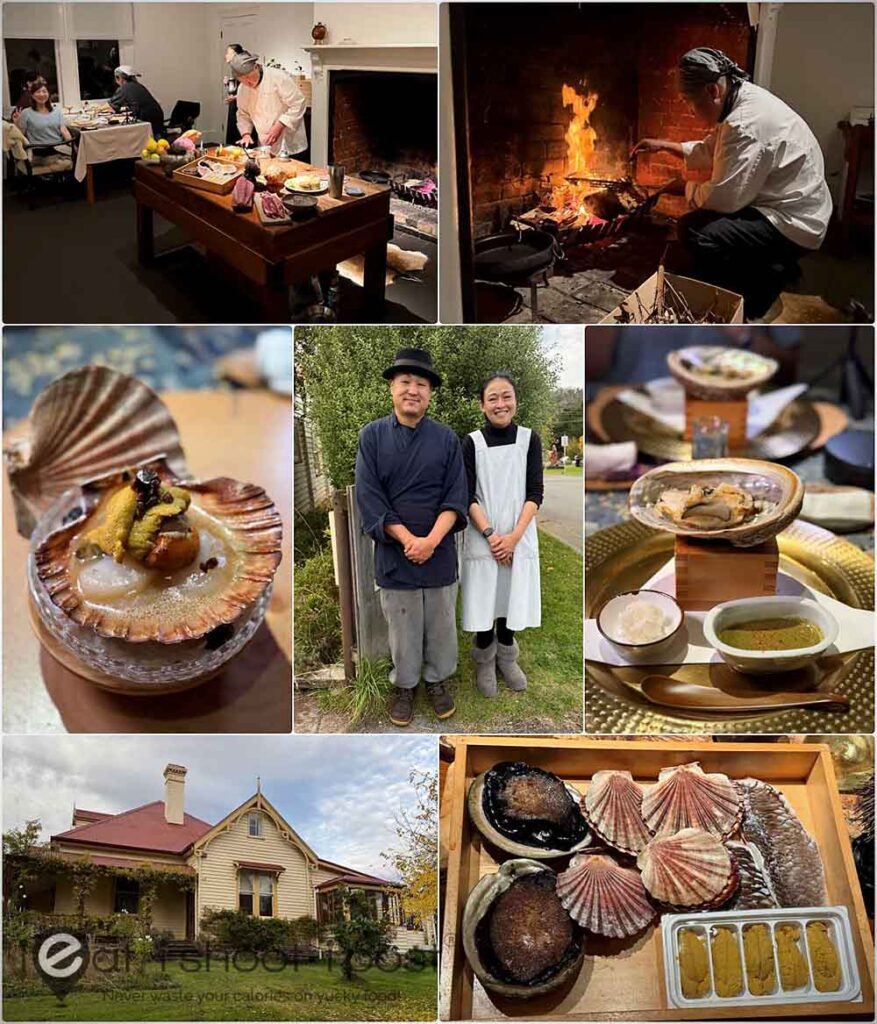
If I were to pick the one most memorable meal of the trip, it would have to be this one.
Not only was it the best meal we had, but what made it even more special was that it caught us completely off guard. Geeveston is off the tourist trail entirely. A bit like visiting Hougang on your first trip to Singapore. When we pulled up, we were genuinely perplexed. Our hosts had brought us to what appeared to be a bed and breakfast when we were expecting a fine dining experience. The beautifully preserved 150-year-old Victorian heritage home looked very much like somebody’s grandma lived there.
But step inside, and you feel as if you’ve entered another world.
The interior is Victorian but carries a distinctly Japanese ryokan vibe. The house was built by John Geeves, the pioneering spirit behind the town of Geeveston itself. That history feels present. You’re not eating in just anybody’s home.
We were welcomed by Thana, a lady of Thai descent whose warmth immediately set the tone for the evening. She told us their story. She and her husband had been living in Jakarta, saw this house online during COVID, and on something of a whim, packed up their lives and moved to the other side of the world to start something entirely new. That kind of leap of faith makes you root for a place before you’ve even sat down.
What followed was one of the most memorable private dining experiences of my life. And we didn’t even see it coming.
Her husband, Chef Kazumasa Yazawa, trained under the legendary Tetsuya Wakuda and Yoshihiro Narisawa, clocking over 20 years in Michelin-starred kitchens across Japan, Singapore and Jakarta. And yet here he is, in this quiet corner of the Huon Valley, cooking for four people in his own home.
The concept is called SHIOmakase. Fourteen to fifteen courses, shaped entirely by what’s in season. Local bluefin tuna, wild-caught venison, produce from the valley. Chef Kaz uses his own koji-fermented sauces and vinegars to build layers of flavour into every dish, always letting the ingredient do the talking. He and his family even forage for bark to smoke meats over the fireplace. Farm to table, foraging, omakase and private dining, all rolled into one. Plus bed and breakfast.
The fire crackling in the background, the intimacy of the space, the genuine hospitality. It felt like being a guest in a friend’s home, except the food was world class. A classical guitarist even came in to play Sakura. After dinner, we crossed the hallway to our room for a hot bath and a good night’s sleep.
Japanese Breakfast Awaits You In The Morning
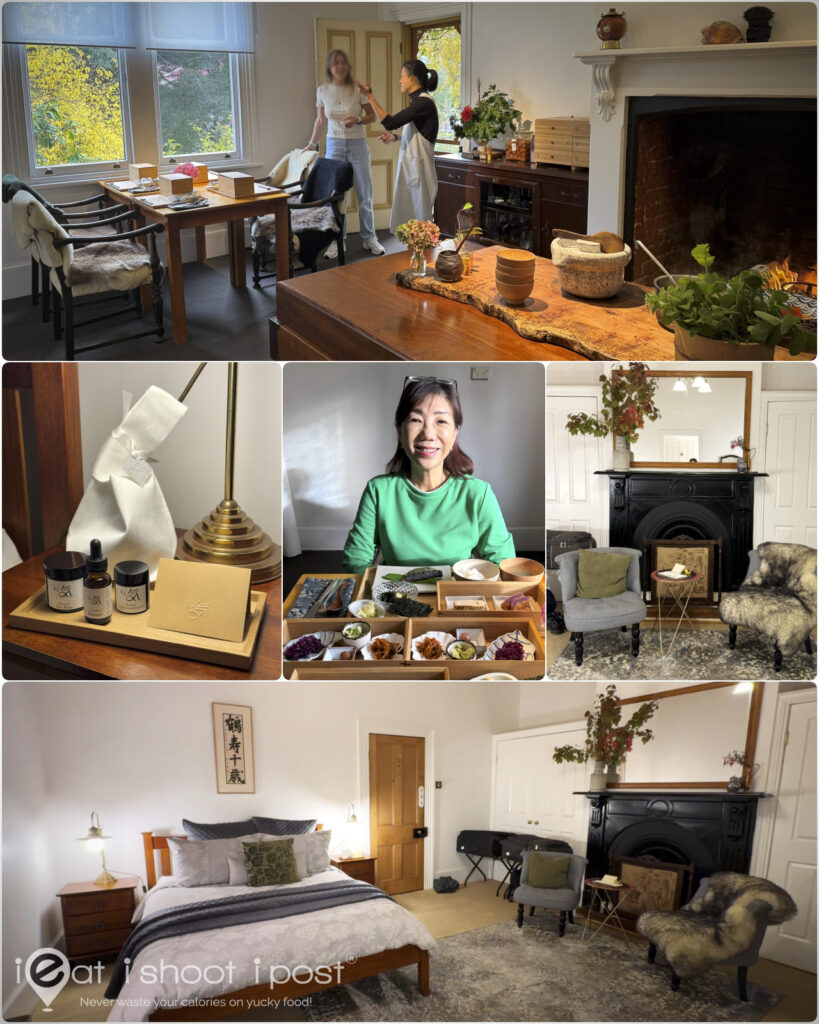
The next morning, we woke up to a lovely Japanese breakfast of ocean trout cured in koji and grilled over the flames. The kind of breakfast that makes you want to cancel the rest of the itinerary and just stay.
They only take around ten reservations a month. This is not somewhere you stumble into. You have to plan for it.
Their SHIOmakase menu is currently listed as A$631pp (Mar – Nov) or A$697 (Dec – Feb). Beverage pairing is A$153. You can check out their IG account for more information or here to book the accomodation.
📍Cambridge House Breakfast and Bed
2 School Rd, Geeveston, Huon Valley, 7116 Tasmania
Book Here
DAY 3 – Butter Making, a Nature Sauna and the MONA Experience
Grandvewe Cheese – Cheese Tasting and Butter Churning Workshop
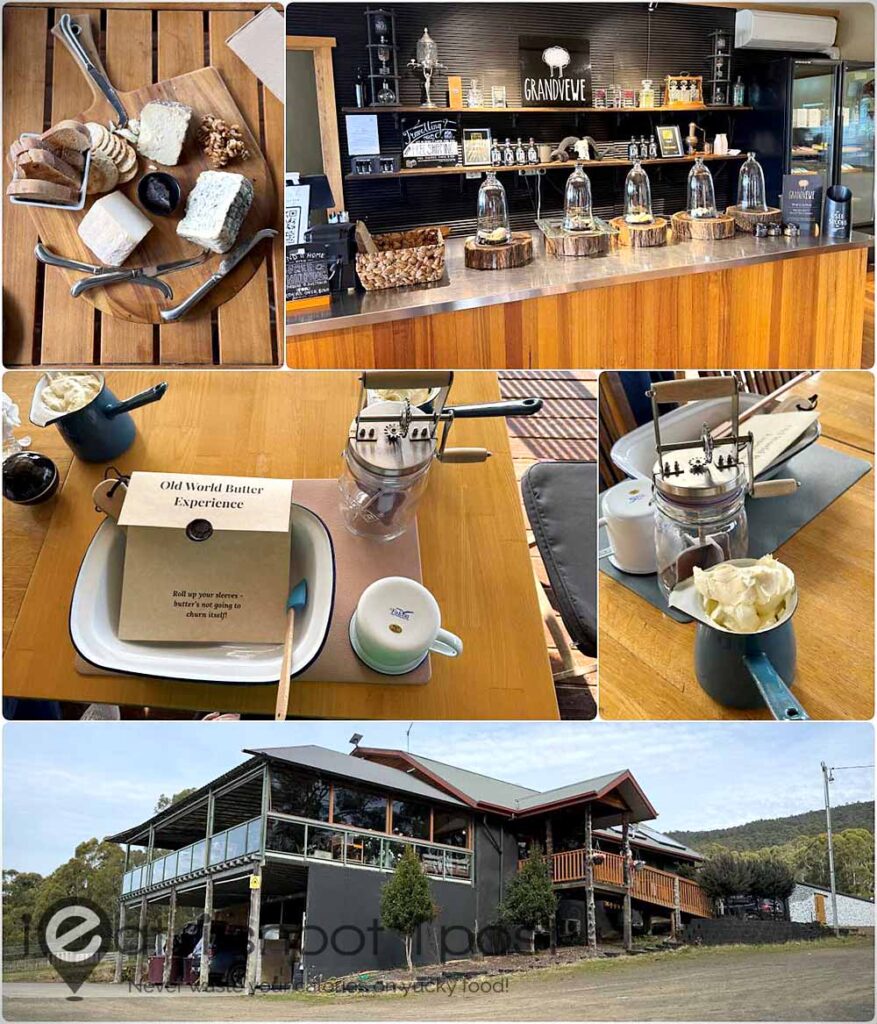
After our surreal Japanese breakfast, we bade goodbye to our lovely hosts at Cambridge House. In true Japanese fashion, they stood and watched as we drove off into the distance.
Our first stop of the day was Grandvewe Cheese, set on a little hillock with a splendid view of the water. It is a sheep dairy farm that has quietly been winning awards on the world stage. Three times world champion for their cheese, and their sheep’s milk vodka took out best vodka of the year too.
Here’s the clever bit. The herbs left over from the vodka distillation don’t go to waste. They use them to coat one of their cheeses, which they’ve named the Gin Herbalist. That cheese went on to win most noble cheese of the year. Waste nothing, win everything.
We also signed up for the Old World Butter Experience, churning butter by hand the old-fashioned way. They run a ricotta workshop too, which I would have loved to attend.
The location is remote, no two ways about it. But the views over the D’Entrecasteaux Channel are lovely. And where else are you going to churn your own butter while tasting a three-times world champion cheese? Worth pencilling into your itinerary if you’re travelling through the Huon Valley.
📍Grandvewe Cheese
59 Devlyns Rd, Birchs Bay, 7116 Tasmania
Kuuma Nature Sauna: Sauna in the Sea!
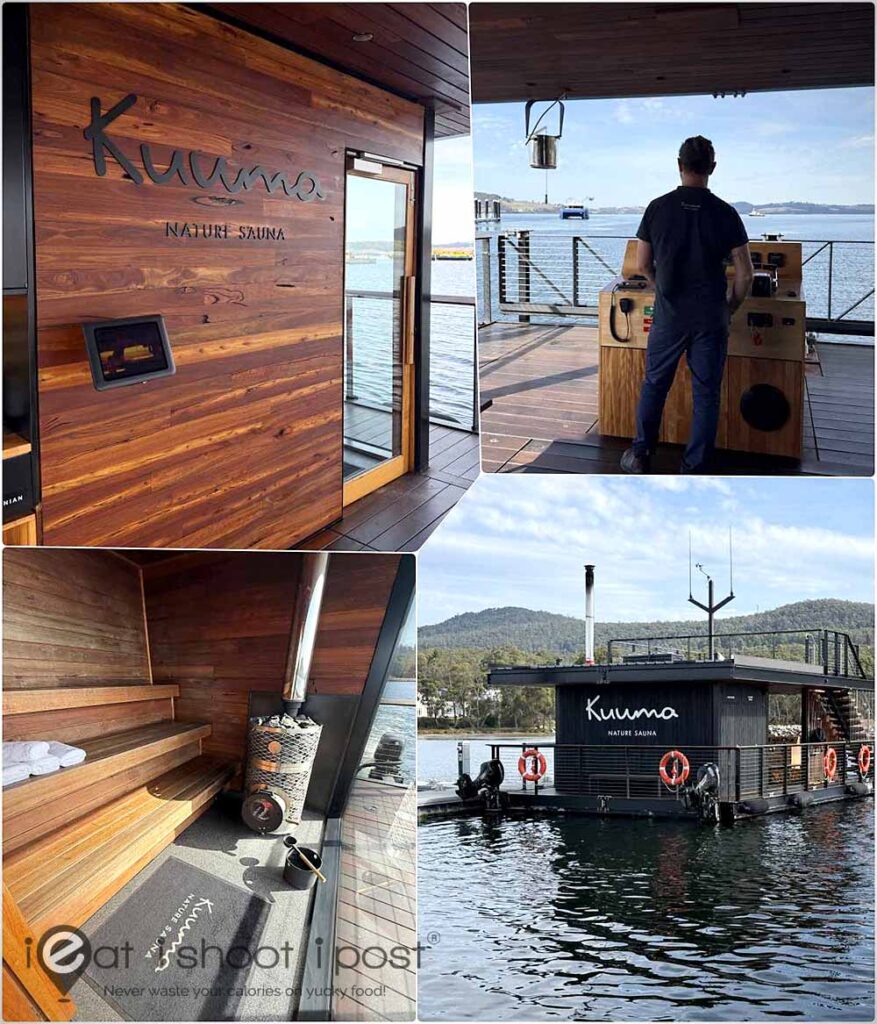
If you like saunas, or as Singaporeans like to say, “swana”, you’re going to enjoy this one. For the record, the correct pronunciation in the Scandinavian tradition is “sao-na”, exactly the way it is spelt. Either way, what Kuuma Nature Sauna offers is unlike any sauna experience we’ve had before.
Imagine getting yourself hot and sweaty in a proper sauna, then jumping straight into the icy cold waters of the Tasmanian sea. Then back into the sauna. Then back into the water. Repeat until you feel relaxed and shiok. That’s the Kuuma experience.
Founder Nathan Gore fell in love with Scandinavian sauna culture during his time in Europe and decided to marry that passion with his love for the sea. The result is a beautifully constructed floating sauna platform moored on the water, heated by hot rocks in the traditional Finnish style. The sauna gets genuinely, seriously hot. The water you plunge into afterwards is genuinely, seriously cold. The contrast is exhilarating.
There is real science behind why this feels so good. Regular sauna use has well-documented health benefits including improved cardiovascular function, reduced inflammation, better sleep and stress relief. Add the cold plunge and you get an additional boost to circulation and mental alertness. As a doctor, I can tell you the evidence is compelling.
Our one wish was that the platform could have been moored a little further out, away from the harbour boats, so you could feel truly immersed in the wild Tasmanian sea. A minor gripe. Kuuma Nature Sauna is a genuinely unique experience, equal parts relaxing and invigorating, and well worth building into your Hobart itinerary.
📍Kuuma Nature Sauna
40 Marina Drive, Barretta, 7054 Tasmania
[email protected]
MONA — Museum of Old and New Art and Faro Restaurant
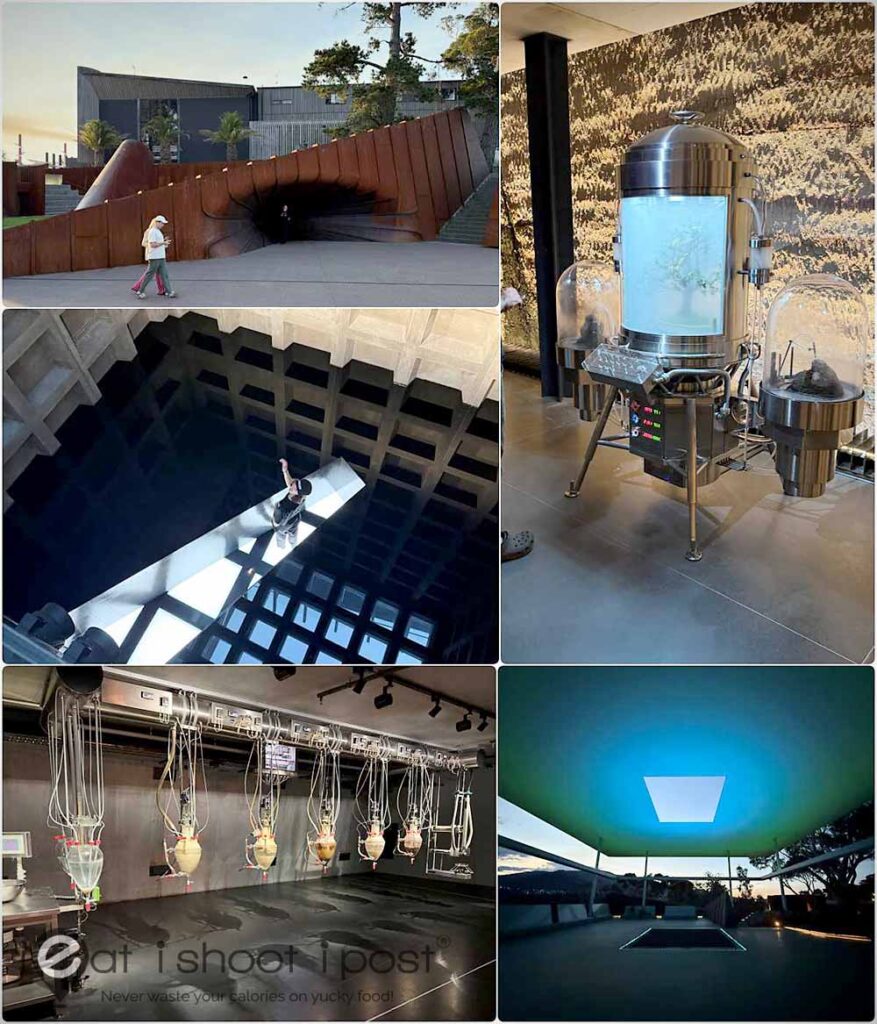
Highlight of Day 3 was MONA, the Museum of Old and New Art in Hobart. The museum was unexpected, to say the least.
We took the MONA Roma ferry from Brooke Street Pier, splurging on the Posh Pit. These are premium seats in the front lower deck where you get unlimited drinks and canapés as you cruise up the Derwent River. Thirty minutes of indulgence before we’d even set foot in the museum. That was just the start.
MONA is a private museum owned by David Walsh, a mathematician and professional gambler who used his winnings to build something that has no right to exist in a city this size. The scale and ambition feels like it belongs in Sydney or Melbourne. But that’s exactly the point. MONA put Tasmania on the map in a way nothing else has.
The museum is built underground into a Hobart sandstone cliff. No wall labels, no hand-holding. Just the art and you. The exhibits are whimsical, quirky and unabashedly irreverent, the kind of art that makes you uncomfortable in the best possible way. Instead of descriptions on the walls, you download the O app, which uses near-field technology to highlight attractions closest to you, letting you read about each artwork at your own pace.
A must-visit when you’re in Hobart.
📍Mona Roma Ferry
Brooke Street Pier, Hobart 7000
📍 Mona – Museum of Old and New Art
655 Main Road, Berriedale, 7011 Tasmania
Wine Tasting and Dinner at Faro Restaurant
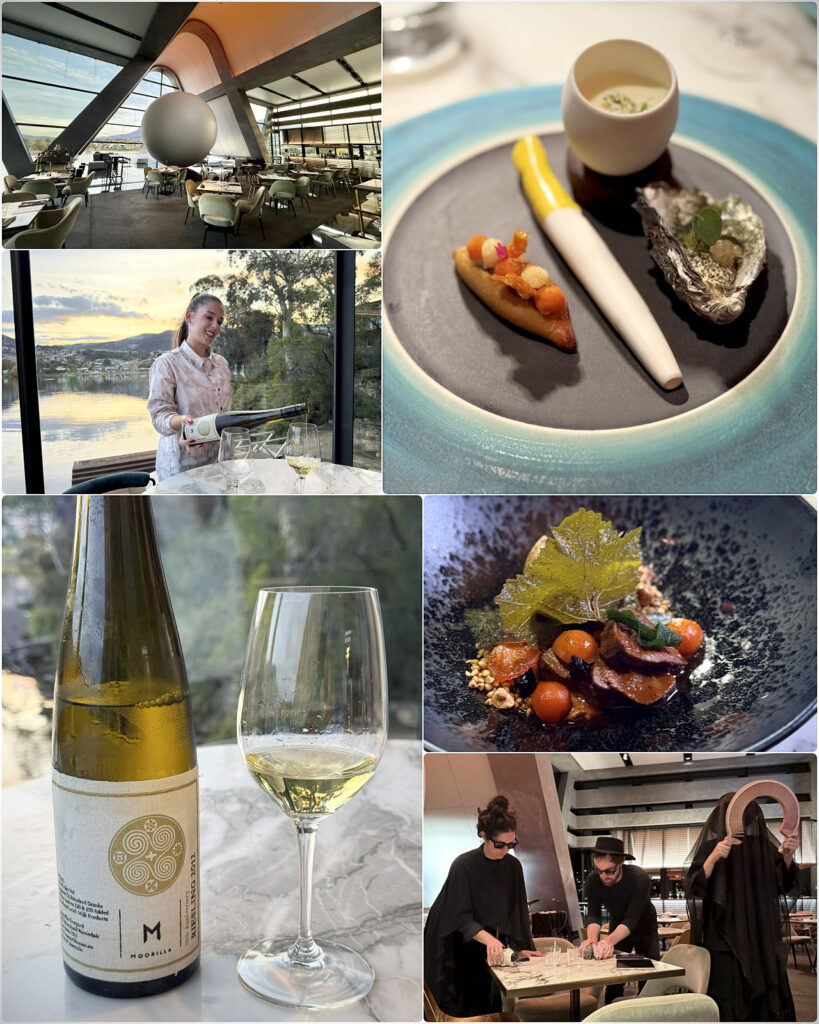
Dinner was at Faro, the restaurant at MONA, and the experience was anything but ordinary.
Our very first dish set the tone perfectly. It was called “Lick Thine Golden, David Walsh’s Finger”. A flavoured gelatine of tomato, lemongrass and saffron, applied to a porcelain mould cast from David Walsh’s actual finger. You were expected to lick it. Shocking? Absolutely. Hilarious? Perhaps. Delicious? I won’t specially order it. But completely consistent with a museum that revels in making you feel delightfully uncomfortable.
The food was artistic and beautifully executed, but Faro is not the kind of fine dining you visit purely for the food. What made the evening truly memorable were the live performers who moved through the dining room while we ate, acting, playing music, blurring the line between dinner and theatre. We genuinely didn’t know what was coming next. Which is perhaps the whole point.
We also got to try the Moorilla Wines, Mona’s on-site winery. It is one of Tasmania’s oldest vineyards, planted by Claudio Alcorso in the late 1950s on the very same site, before selling to David Walsh in 1995. You may book a tasting A$20 or opt for a beverage pairing when you’re there for dinner.
If MONA is an adult Disneyland for the mind, then Faro is its dining room. Irreverent, surprising and utterly unforgettable. A must-visit when you’re in Hobart.
5-Course Tasting Menu A$185 pp
Wine Pairing from A$65pp
15% surcharge on public holidays
📍Faro Bar + Restaurant
655 Main Road, Berriedale, 7011 Tasmania
The Tasman Hotel
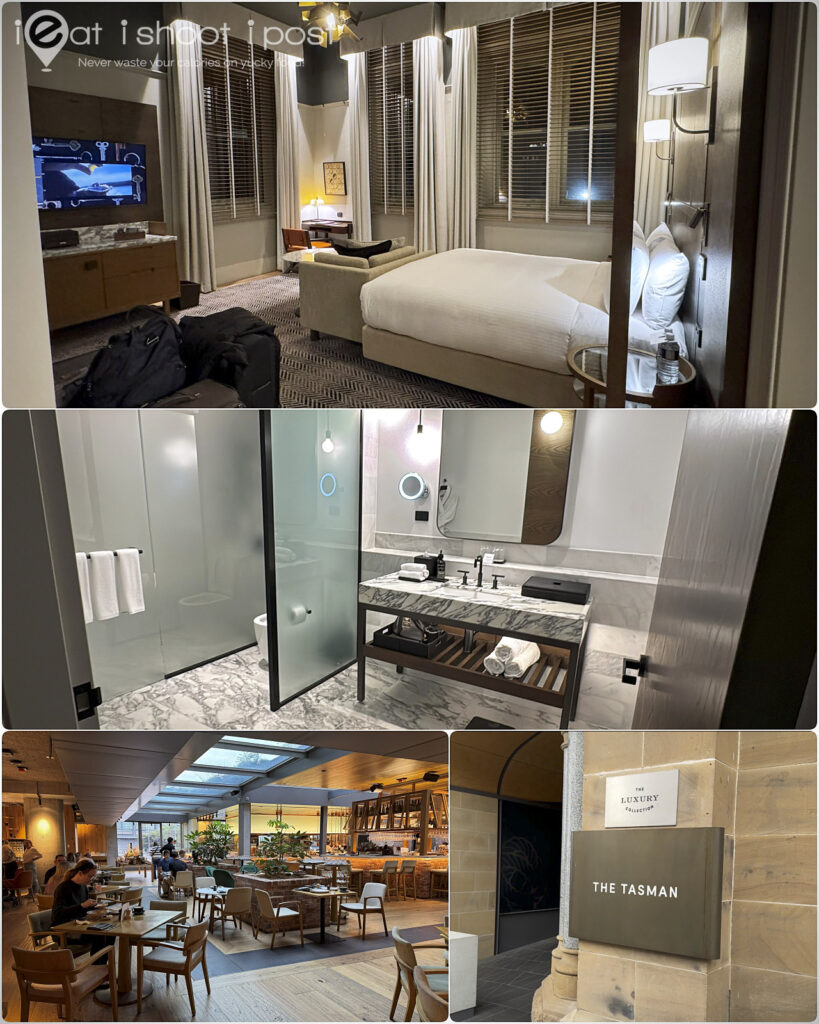
That night we stayed at The Tasman, and the location could not have been more convenient. Right in the heart of Hobart CBD, within walking distance of both the Farm Gate and Salamanca markets, and just steps from the MONA Ferry terminal and the iconic Salamanca Place and Battery Point neighbourhoods.
The hotel itself is a striking piece of architecture. A blend of 1840s Georgian heritage, 1940s Art Deco and a sleek modern extension, all working together in a way that shouldn’t work but absolutely does. Original sandstone contrasts spectacularly with a glass-encased prism of contemporary design. Understated elegance, done very well.
The Tasman is Australia’s first Luxury Collection hotel, and it carries that designation with quiet confidence. If you’re looking for a base in Hobart that puts you close to everything worth seeing, this is it.
The Tasman, A Luxury Collection Hotel
📍12 Murray Street, Hobart, 7000 Tasmania
Book Here
Video Travelog | Day 4 – 7
DAY 4
St David’s Cathedral and Farm Gate Market
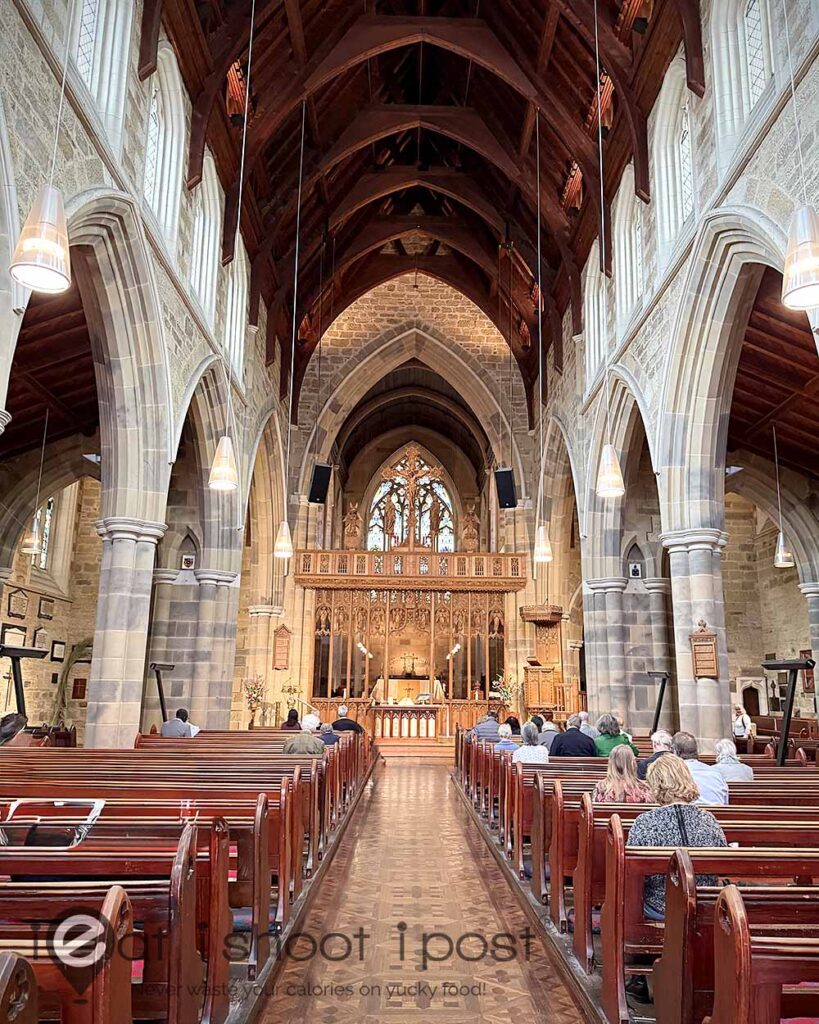
We woke up on Sunday morning in Hobart and decided to start the day the right way. St David’s Cathedral is just a short walk from the hotel, and we slipped into their morning communion service. A quiet, unhurried hour that felt like exactly the right way to begin a Sunday in a city this old and this beautiful. And in a only-in-Hobart moment, the preacher actually mentioned Pigeon Whole Bakers in his sermon, which confirmed once and for all that it really is a Hobart institution.
📍 St David’s Cathedral
Hobart
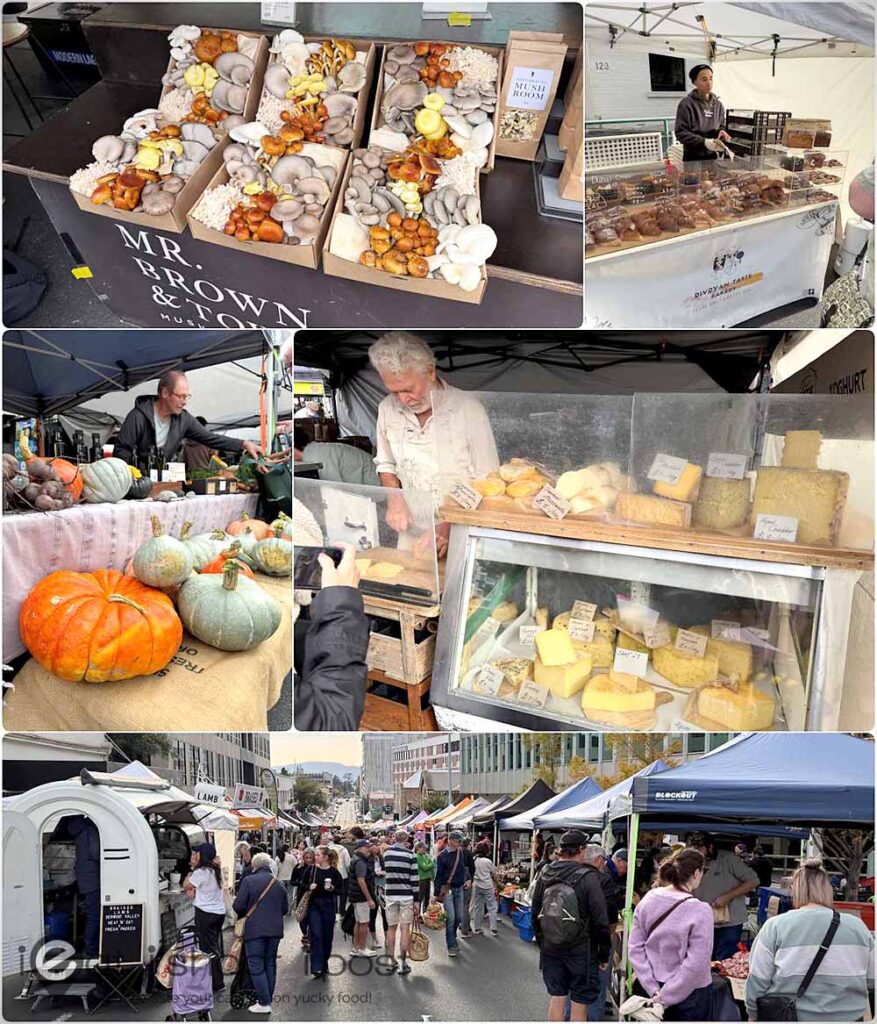
From there we walked up to Farm Gate Market on Bathurst Street, which runs every Sunday morning and is exactly what a farmers market should be. No crafts, no candles, no boliao tourist trinkets. Just food. Local producers, farmers and makers selling what they’ve grown, raised or made themselves. The philosophy is simple: if you can’t eat it, drink it, grow it or meet the producer, it’s not here.
We picked up a croissant from a young couple who supply baked goods to cafes around Hobart. Light, buttery, properly laminated. The kind of croissant that reminds you what a croissant is supposed to taste like. Then we found the cheese. Elgaar Farm, a certified organic dairy from the Tamar Valley, was selling aged cheddar with that sharp, crumbly depth you only get from cheese that’s been given proper time. We bought more than we probably should have.
Beyond that, the market had everything you’d want from a Sunday morning browse. Farm fresh eggs, heritage potatoes, seasonal vegetables, local honey, artisan bread. The kind of abundance that makes you wish you had a kitchen nearby.
There is another market in Hobart at Salamanca, more well-known but also more touristy. We chose Farm Gate deliberately because it’s where you find the producers themselves manning the stalls. If you’re in Hobart on a Sunday, this is the one.
📍Farm Gate Market
104 Bathurst Street, 7000 Hobart
Every Sunday 8:30am–1pm
LARK Distillery, Pontville — Whisky Tasting
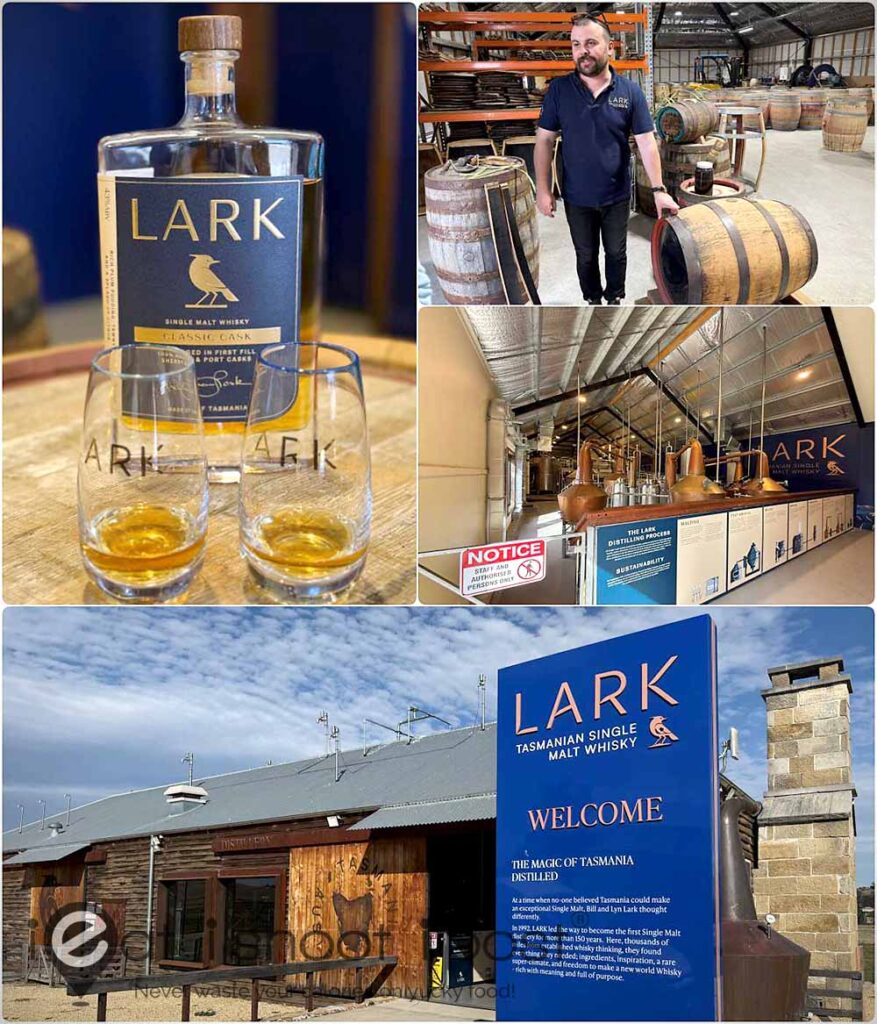
After the markets we made our way to LARK Distillery in Pontville, about 30 minutes north of Hobart. When I saw one and a half hours pencilled in for the visit, I wondered if that was a bit much. It wasn’t. They have quite a story to tell.
LARK holds a distinction that most distilleries can only dream of. Founder Bill Lark was the first person in over 150 years to be granted a small distiller’s licence in Tasmania. There was actually a law on the books prohibiting small-scale distilling, a relic of another era, and it was Bill who fought to have it changed. When the licence finally came through, it marked the beginning of what is now a thriving Tasmanian whisky industry. Without Bill Lark, none of it exists.
Since then, LARK has grown from a pioneering passion project into one of Australia’s most celebrated whisky producers. As a New World distillery, LARK isn’t bound by the strict regulations that govern Scotch or Irish whisky, which means they’re free to innovate. And innovate they have.
The technique that sets LARK apart is their approach to cask maturation. Rather than ageing spirit in used barrels, they produce their own fortified wine and use it to prime the casks before the whisky goes in. The result is a spirit with exceptional depth. Robust, richly textured, with layers of flavour that build slowly on the palate. Bold without being aggressive. Complex without being difficult.
If you love whisky, a visit to LARK is not optional. This is where Tasmanian whisky began.
📍LARK Distillery, Pontville
76 Shene Road, Pontville, 7030 Tasmania
Tolpuddle Vineyard — Wine Pairing Lunch
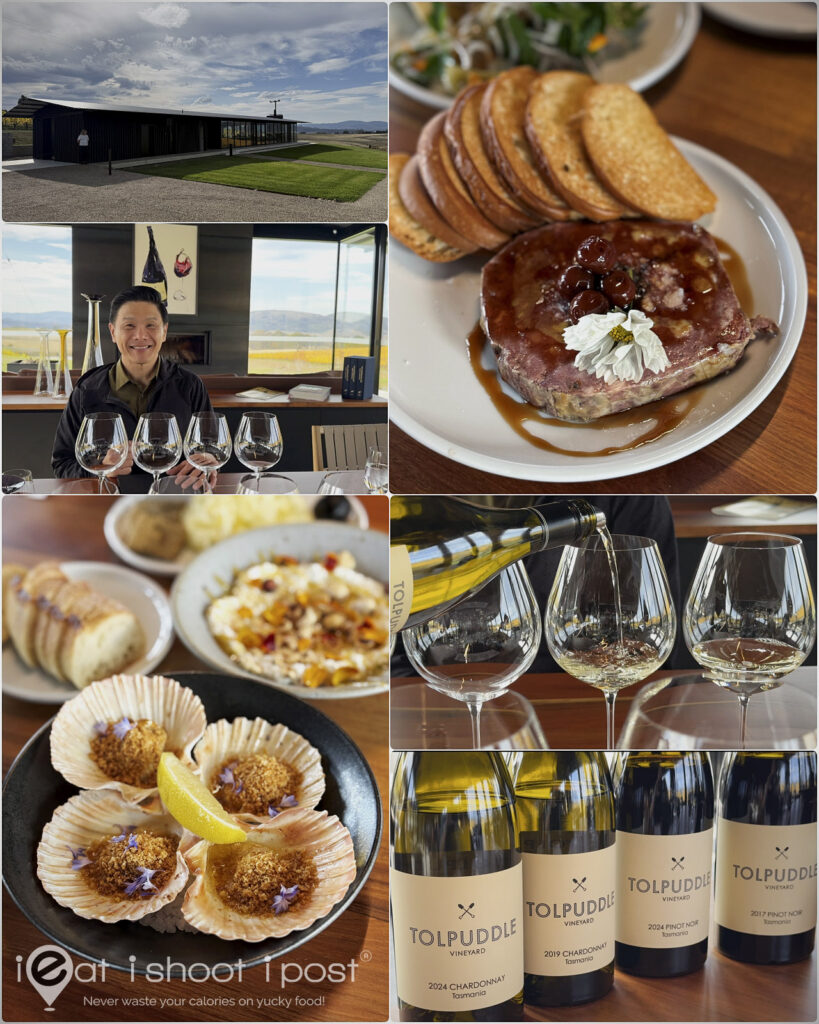
We hadn’t done our research before arriving at Tolpuddle. We didn’t know what we were walking into. By the time we left, we were suitably impressed.
Tolpuddle Vineyard makes only two wines. Chardonnay and Pinot Noir. Nothing else. No hedging, no range extension, no compromise. Just two varietals, pursued with quiet obsession in the Coal River Valley outside Richmond.
The results speak for themselves. In 2023, their Chardonnay won Best White Wine of the Year at the International Wine Challenge, beating wines from 53 countries.Their 2024 Chardonnay was crowned Australian Wine of the Year, 2025! In just fifteen years of production, Tolpuddle has climbed to the very top of the Australian wine world. An extraordinary achievement by any measure.
The vineyard was bought in 2011 by Michael Hill Smith, Australia’s first Master of Wine, and his cousin Martin Shaw, on something of an impulse during a visit to Tasmania. What followed was fifteen years of meticulous focus on the land, the vines and the craft. The Chardonnay is precise and mineral, taut with cool-climate energy. The Pinot Noir is pure and finely structured. The kind of wine that makes you sit quietly for a moment after the first sip.
We had a wine pairing lunch on site, which I would strongly recommend booking in advance. The tastings fill up, and the lunch more so. This is not a cellar door you can just drop into on a whim.
If you are a wine lover visiting Tasmania, Tolpuddle is the one vineyard you cannot miss. Make the booking before you get on the plane.
📍Tolpuddle Vineyard
37 Back Tea Tree Road, Richmond, 7025 Tasmania
Richmond — Australia’s Oldest Bridge and Czegs’ Cafe
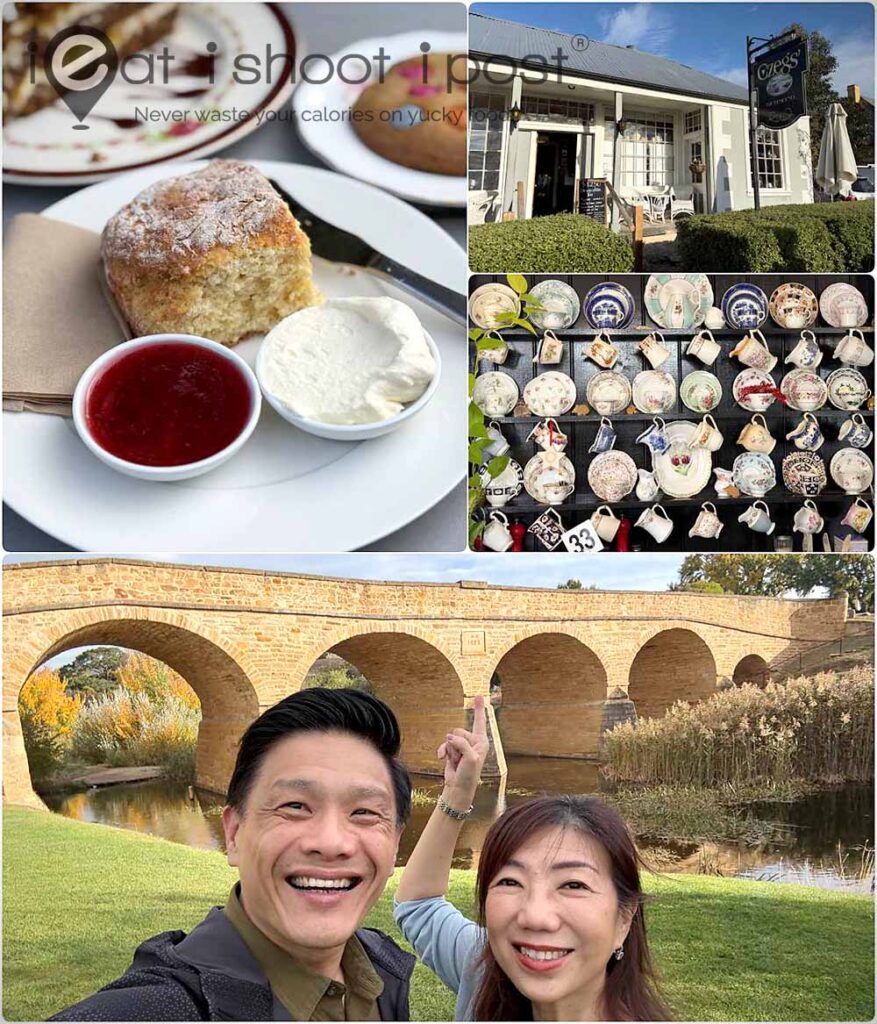
Before heading up the east coast we made an unplanned stop in Richmond, and it turned out to be one of the quiet gems of the whole trip.
Richmond is a town that time forgot, in the best possible way. The main street is lined with nineteenth century sandstone buildings, many still in their original form, housing galleries, antique shops and cafes that feel genuinely unhurried. Hobart was the second place to be colonised in Australia, and Richmond was one of its earliest satellite towns. At one stage, a third of its population were convicts. That history is not hidden here. It is everywhere you look.
The centrepiece is Richmond Bridge, built in 1823 using convict labour and still standing today as Australia’s oldest bridge. A beautiful, solid thing. Arched sandstone spanning the Coal River, completely unmoved by the two centuries that have passed around it. Worth walking across slowly.
Nearby sits Australia’s oldest Catholic church still in continuous operation, another reminder that this small town carries an outsized amount of history within its borders.
We found ourselves drawn into Czegs’ Cafe, a quaint tearoom that evokes old world charm in every detail. Mismatched vintage tea sets, lace tablecloths, the kind of place that makes you instinctively lower your voice. We settled in over pots of Devonshire tea, a slice of carrot cake and a layered red velvet cake that was very good indeed. For a moment it felt like we’d stepped completely out of the twenty-first century.
Richmond is a town trapped in time. If you love history, architecture, or simply the pleasure of slowing down, don’t drive past it.
📍Richmond Bridge
Bridge St, Richmond TAS 7025, Australia
📍Czegs’ Cafe Richmond
46 Bridge St, Richmond TAS 7025, Australia
Piermont Retreat, Swansea
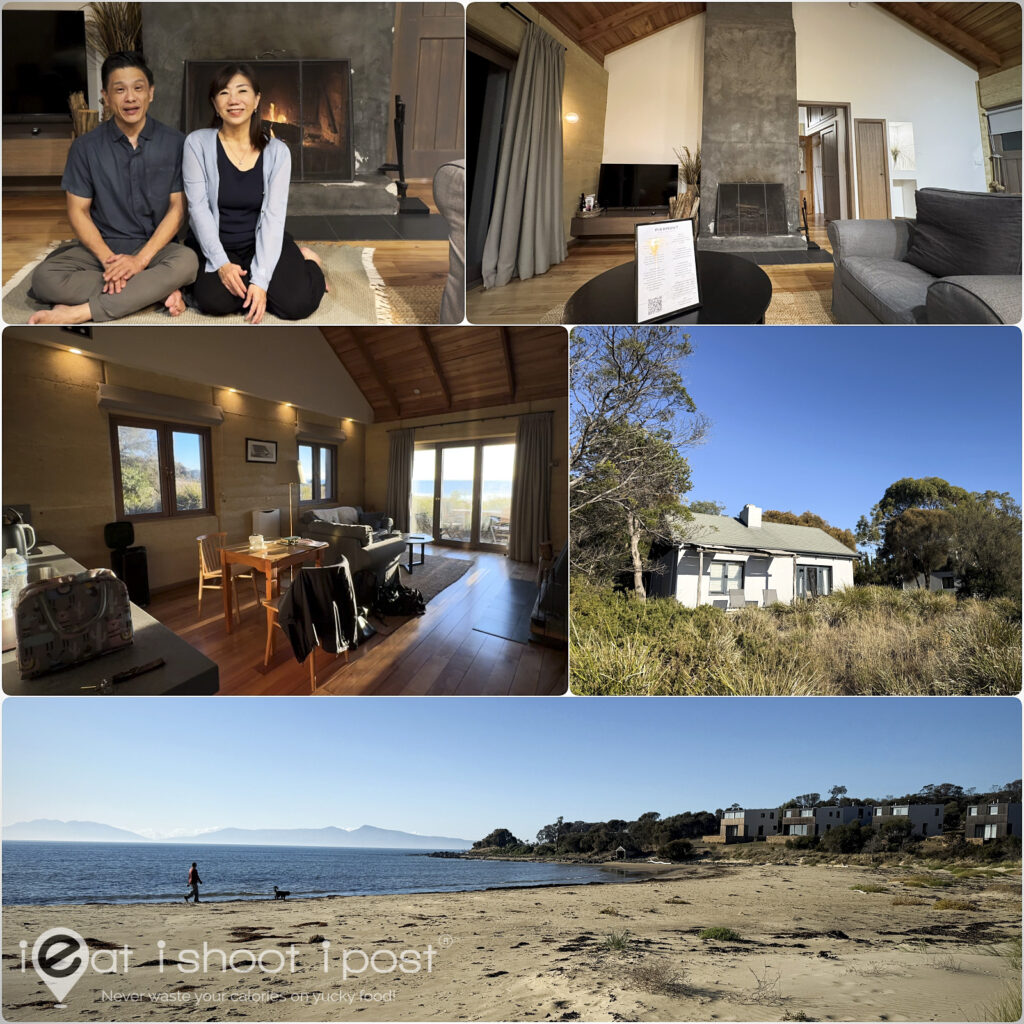
From Richmond we made our way up the east coast to Piermont Retreat in Swansea, arriving in time to watch the last of the afternoon light settle over Great Oyster Bay.
We were housed in individual sandstone cottages, purpose built, solid and beautifully considered, each one facing the water with the Hazards mountain range of Freycinet rising pink and dramatic across the bay. The cottages are simple, warm and beautifully positioned. The kind of place that makes you want to do nothing except sit and stare at the view.
We checked in, freshened up, and headed straight out for dinner. My only regret is that we had just one night here. This is a place that deserves two or three days at minimum. Time to walk the private beach, kayak on the bay, explore the Freycinet Peninsula properly and simply exhale by the seaside. We barely scratched the surface.
If you’re planning an east coast drive through Tasmania, don’t just pass through Swansea. Stop here. Stay longer than you think you need to.
📍 Piermont Retreat
12990 Tasman Highway, Swansea, 7190 Tasmania
Book Here
The Waterloo Inn, Swansea — Dinner
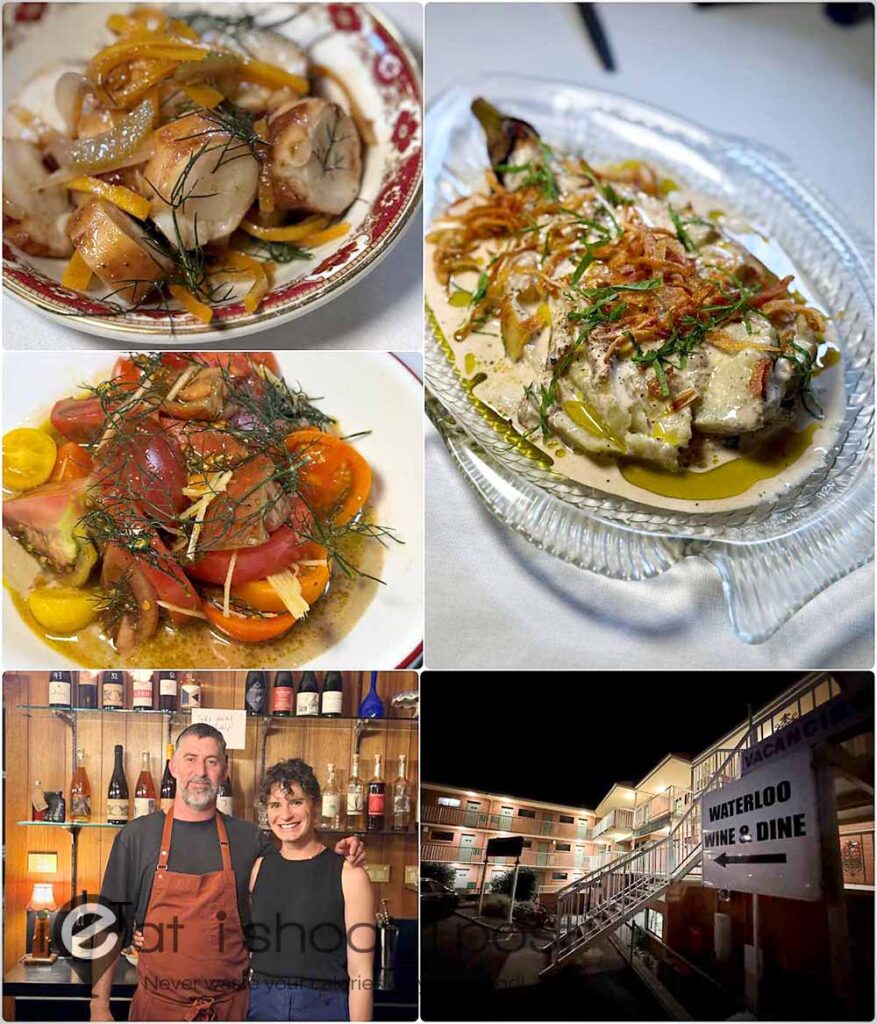
For dinner we headed to The Waterloo Inn, and we were in for a surprise.
From the outside, the Waterloo looks like just another east coast motel. An L-shaped, three-storey red-brick motor inn that seems forever stuck in the 1980s. The kind of place where you’d expect burgers, fish and chips, maybe a lamb chop. So when we walked into the restaurant, what we found was the last thing any of us anticipated.
The kitchen is run by Chef Dave Moyle, a well-known name in the Tasmanian food scene with a reputation for honest, produce-driven cooking. He and his wife Georgie run the place themselves, sourcing whatever is in season from local farms and producers, and cooking it simply and beautifully. Deliberately small, deliberately focused, entirely dependent on what Tasmania has to offer at that exact moment in time.
The menu changes constantly, sometimes weekly, sometimes daily, because that’s what cooking with truly seasonal produce demands. Not fine dining in the white tablecloth sense, but something arguably more interesting. Outstanding produce, expertly handled, expressing the character of Tasmania with honesty and restraint.
We got to meet Dave and his wife Georgie at the end of the evening. Warm, unpretentious, and clearly doing exactly what they love. That warmth comes through in every plate.
One important note. The restaurant is only open on Saturdays and Sundays, from December to May. Build your itinerary around it and book ahead. The Feed Me menu is A$100 per person. (10% surcharge on Sundays)
📍Waterloo Inn
1A Franklin Street, Swansea, 7190 Tasmania
[email protected]
Open Saturdays and Sundays, December to May. Call ahead to book.
DAY 5
Tasman Sea Salt — The Salt Sommelier Experience
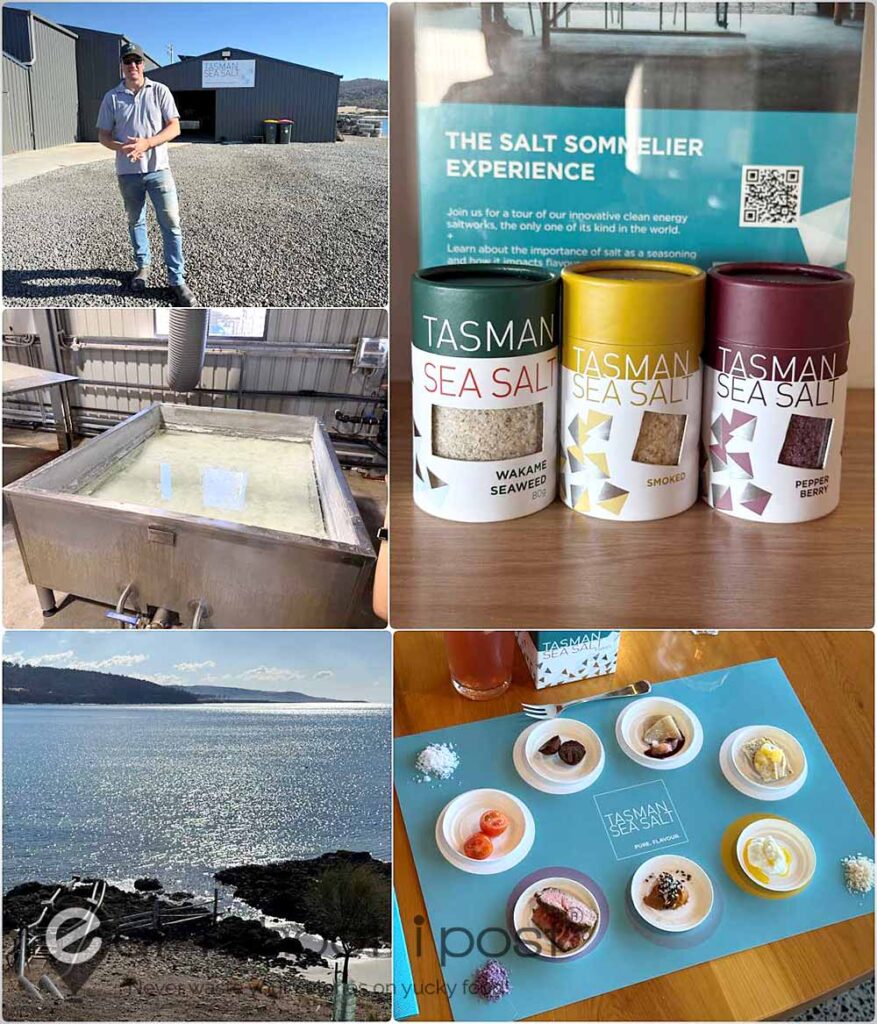
After breakfast we checked out of Piermont Retreat and made our way to Tasman Sea Salt in Little Swanport.
I wasn’t quite sure what to expect from a salt factory visit. It turned out to be one of the most genuinely fascinating experiences of the whole trip.
The story behind Tasman Sea Salt is a good one. Founder Chris Manson noticed his mother was using Maldon sea salt in her kitchen, a premium salt from Essex, England. He couldn’t help wondering why Tasmania, surrounded by some of the cleanest seawater in the world, wasn’t producing its own. That simple observation became a business. Together with his wife Alice Laing, they left careers in finance and founded Tasman Sea Salt.
The water really is extraordinarily clean. Where the Southern Ocean meets the Tasman Sea, you have some of the purest seawater on earth. No heavy industry, no pollution. Just pristine cold ocean. The harvesting process is elegantly simple. Seawater is concentrated using a cooling tower, where dry Tasmanian air evaporates the water naturally. No heat required. Once it reaches the right concentration, the water is filtered and the salt allowed to crystallise slowly before being dried. What comes out is a pristine white crystal as clean as the water it came from.
What surprised me most was the mineral profile. Tasman Sea Salt is lower in sodium and higher in potassium than most commercial salts, which makes it genuinely interesting from a health perspective. The flavour is remarkable too. We tried several varieties and the wakame salt was the one that stopped me. That gentle umami depth from the seaweed lifts everything it touches. I bought a few packets to bring home.
For Singapore readers, Tasman Sea Salt is now available at Little Farms. You can get your hands on it without the flight. But if you’re in Tasmania, the visit itself is well worth it.
📍Tasman Sea Salt
97 Mayfield Jetty Road, Little Swanport, 7190 Tasmania
[email protected]
Freycinet Marine Farm — Oyster and Mussel Lunch
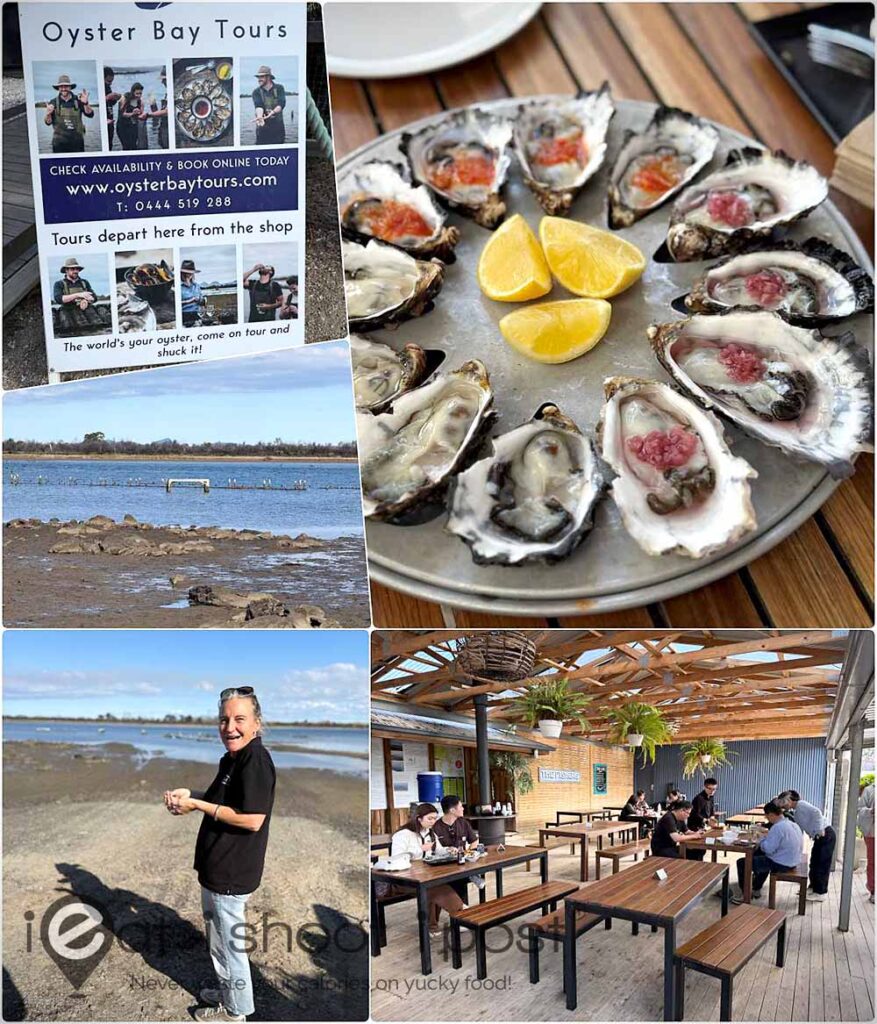
Continuing up the east coast, our next stop was Freycinet Marine Farm for some of the freshest seafood of the entire trip.
We were met by Julia Fisher, the co-owner, who shared the story of how she and her husband Giles ended up here. They had originally tried salmon farming on the west coast before pivoting to oysters and mussels on the east coast. The Great Oyster Bay location, fed by the clean cold waters of the Tasman Sea, is about as ideal as it gets for shellfish farming.
The Pacific oysters were beautifully fresh. Not the fattest oysters you’ll ever eat, but what they lacked in size they more than made up for in clarity of flavour. Clean, bright and briny, with none of the muddiness you sometimes get from farmed oysters.
The real revelation was the Tasmanian blue mussels. Smaller than what we’re used to, but extraordinarily sweet. The chef prepared them two ways. A classic style and a Sri Lankan curry version made with spices ground entirely in house. Both were excellent, but the curry version was something special. Rich, fragrant and deeply satisfying.
You can also pick up dried smoked mussels and mussel soup to take home. Worth grabbing a few packets before you leave.
If you have time, book the farm tour in advance. You get to wade out to the oyster leases, shuck your oysters right there in the water and eat them on the spot. We didn’t make it on this visit, but it’s on the list for next time.
📍Freycinet Marine Farm
1784 Coles Bay Road, Coles Bay, 7215 Tasmania
Devil’s Corner Cellar Door
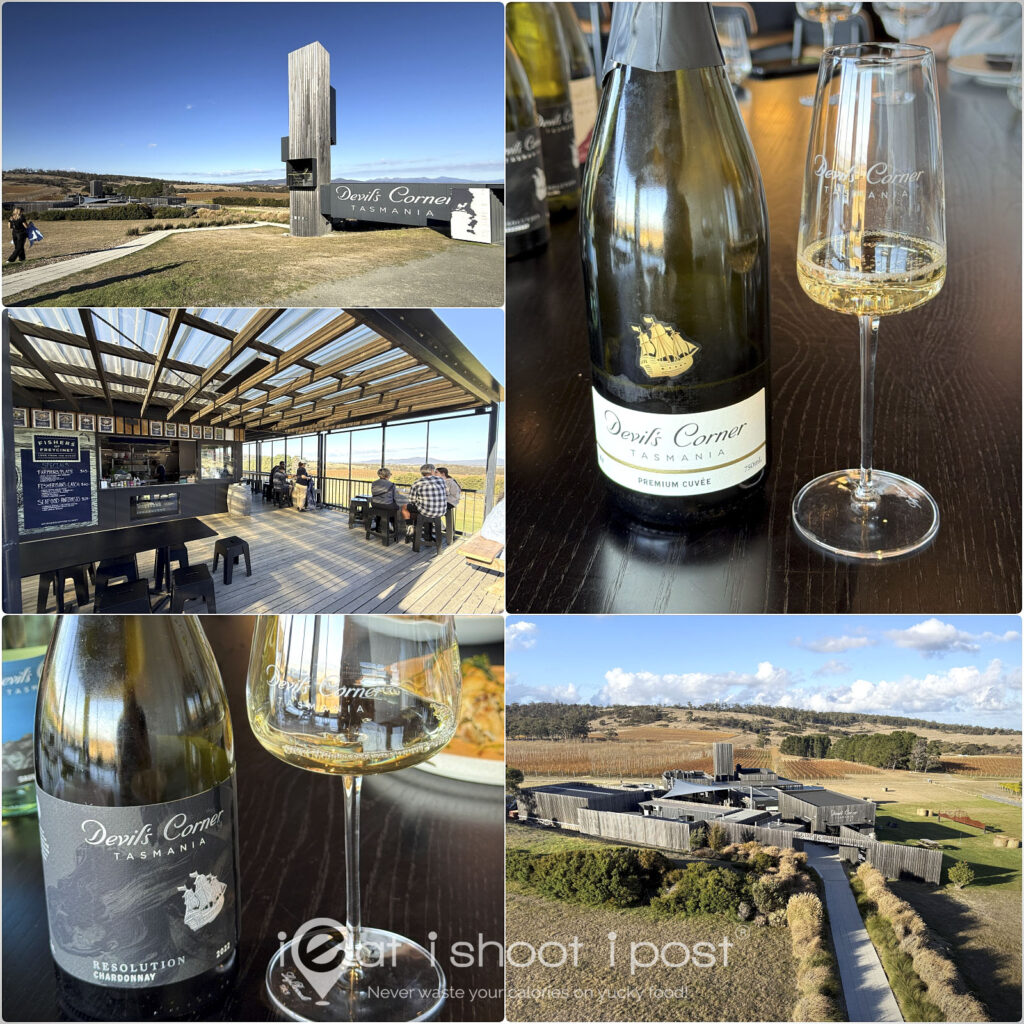
Devil’s Corner Cellar Door is one of those stops where the setting alone is worth the visit.
Perched on the cliffs of Tasmania’s east coast with sweeping views over the Freycinet Peninsula and the iconic pink granite peaks of the Hazards mountain range, the premises have been beautifully designed to welcome visitors. Timber-clad structures sit naturally in the landscape, thoughtfully put together rather than thrown up for tourists.
Devil’s Corner is one of the largest wineries in Tasmania, and the cellar door reflects that scale. Two dining options on site mean you can pair your wine tasting with a proper lunch. Useful tip: if you didn’t make it to Freycinet Marine Farm, Devil’s Corner carries a similar seafood menu. Fresh Tasmanian shellfish, sorted.
The wines cover several varietals and are well worth working through. After your tasting, climb the watchtower for a panoramic 360-degree view over the vineyard, the bay and the Freycinet Peninsula. On a clear autumn day it is genuinely spectacular.
Self-paced tasting of five wines starts from A$20 per person. A hosted session is A$50 per person. Pre-book at their website.
📍Devil’s Corner Cellar Door
1 Sherbourne Road, Apslawn, 7190 Tasmania
Stillwater Restaurant and Stillwater Seven, Launceston
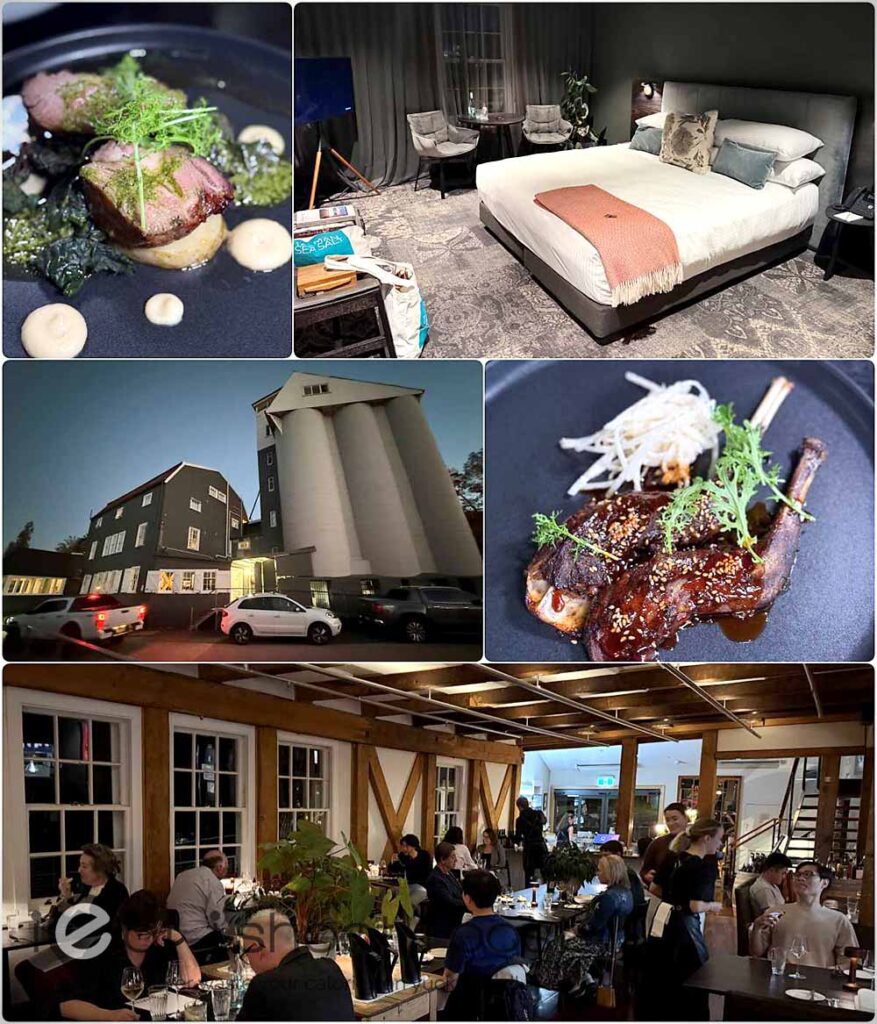
As we approached Launceston, we made an interesting discovery. The city holds UNESCO City of Gastronomy status. Quite a surprise, and even more surprising that Tourism Tasmania hadn’t mentioned it once during the entire trip. It set the tone perfectly for what was to come.
Stillwater is something of an institution in Launceston, arguably one of the restaurants that put the city on the culinary map. Several friends had stayed at Stillwater Seven and highly recommended it, so our expectations were already high when we arrived.
We were greeted by Bianca, one of the co-owners, who showed us around the property. The restaurant is housed in a beautifully restored 1830s flour mill on the banks of the Tamar River, with aged timber beams, warm textures and a sense of history in every corner. Stillwater Seven, the boutique hotel above the restaurant, has only seven rooms, each with its own distinct personality. From the furnishings to the carefully selected tea leaves to the paintings on the wall, real thought has gone into every detail. It has a personal quality that larger hotels simply cannot replicate.
Dinner downstairs was very good. Precise cooking, well-balanced flavours, excellent Tasmanian ingredients. I’ll be honest though. Having had the extraordinary meals at Cambridge House and Aloft earlier in the trip, our expectations were perhaps unfairly high. Stillwater is a very good restaurant. It just didn’t quite deliver that one transcendent dish that makes you pause.
That said, there were highlights. The wallaby wings, the forearms of the wallaby braised low and slow until beautifully tender, served with a rich and flavourful sauce, were unlike anything we’d tried before. And the Cressy lamb shoulder was excellent.
If you are in Launceston, Stillwater should be on your itinerary. One of the best restaurants in the city, in a heritage flour mill by the river.
Dinner menu prices
Main + Dessert | A$99pp
Entree + Main | A$104pp
3 courses | A$130pp
📍Stillwater Seven
2 Bridge Road, Ritchies Mill, Launceston, 7250 Tasmania
Book Here
DAY 6 – Tasting Trail
We checked out of Stillwater Seven, fuelled by a lovely in-room breakfast that had been thoughtfully stocked in our fridge. The highlight was a pair of freshly made croissants delivered to our door! It was warm, buttery and the perfect way to start a very full day. Simple touches like that are what set a good boutique hotel apart from a great one.
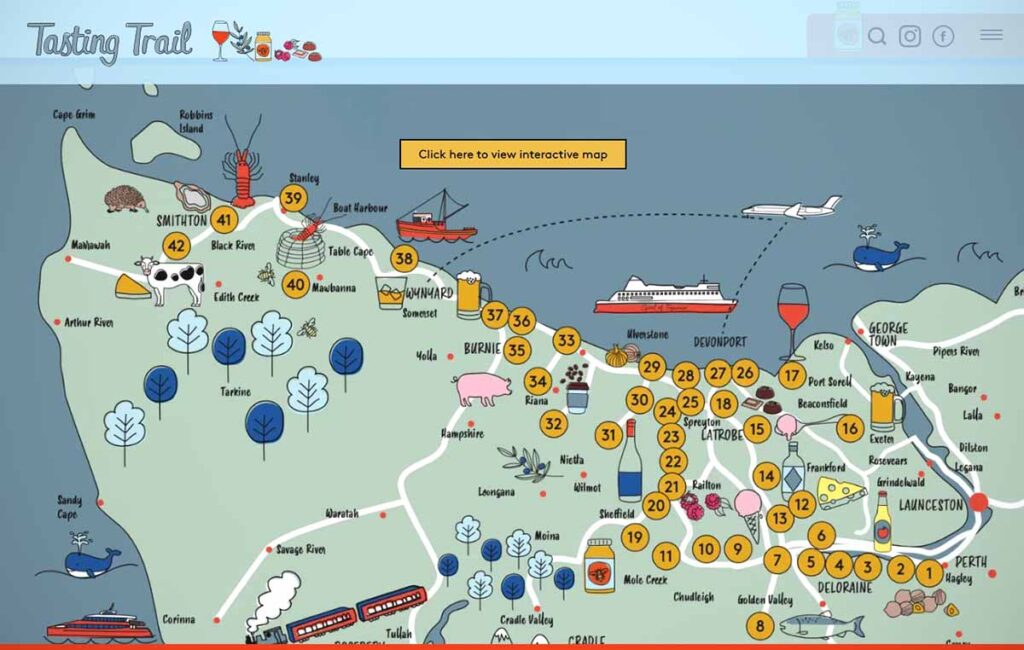
Today we embarked on the Cradle to Coast Tasting Trail, a self-drive food and drink trail stretching across northern Tasmania from Launceston all the way to Smithton, taking in nearly 40 stops at artisanal producers along the way. Cheese makers, honey farms, salmon farms, truffle hunters, cellar doors and everything in between. What makes it unique is the sheer variety of food and drink packed into a relatively small area, all set against rolling green hills and some of the most fertile agricultural land in Australia. If you’re planning a trip to Tasmania’s north, this trail is the perfect framework for your journey.
Ashgrove Cheese, Elizabeth Town
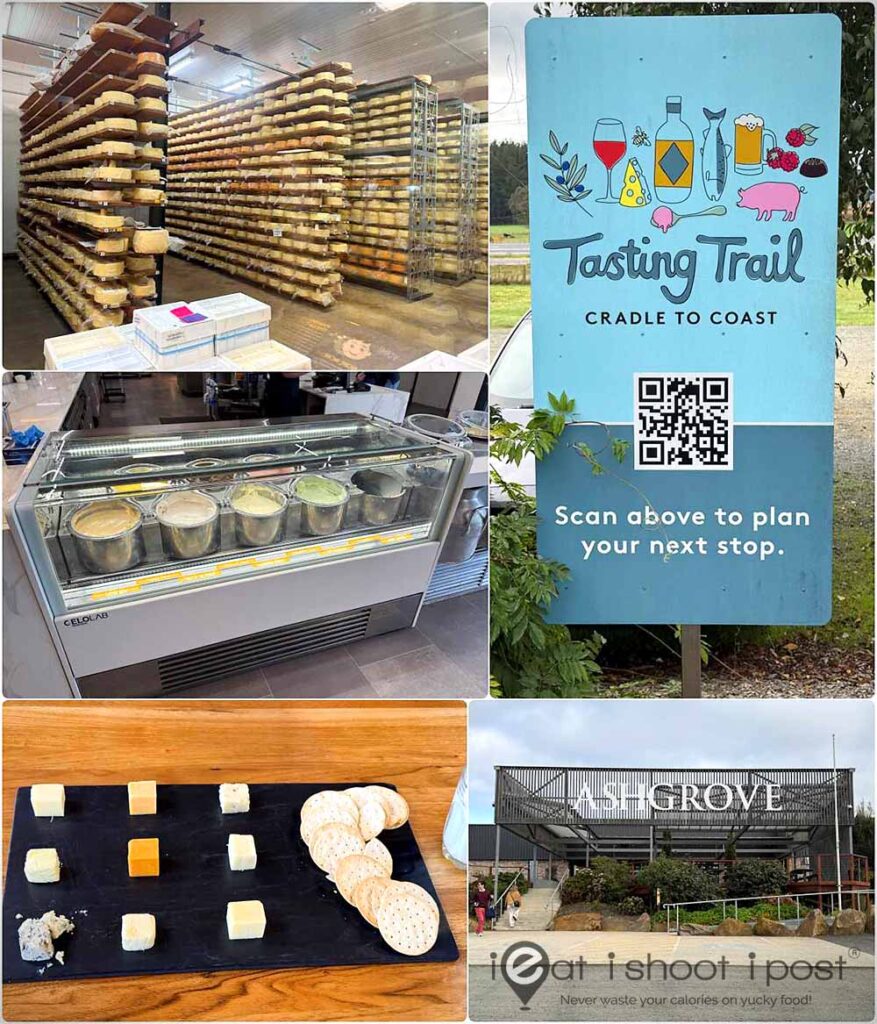
Our first stop on the trail was Ashgrove Cheese in Elizabeth Town, right on the Bass Highway.
Ashgrove is a working dairy farm and cheese factory, and the visit was both delicious and genuinely educational. One detail stood out above everything else. All dairy cattle in Tasmania are grass fed. Not as a premium claim, but simply as a matter of course. Which means any Tasmanian dairy product you buy, the butter, the cheese, the milk, is grass fed by default. Quite different from the mainland, where most dairy cattle are grain fed.
The cheese tasting covered a lovely range, from mild and creamy to sharp and aged, and the quality was consistently excellent.
If you’re driving through northern Tasmania, Ashgrove sits perfectly on the route, especially if you love cheese!
📍Ashgrove Dairy Door & Visitor Centre
6173 Bass Highway, Elizabeth Town, 7304 Tasmania
Melita Honey Farm, Chudleigh
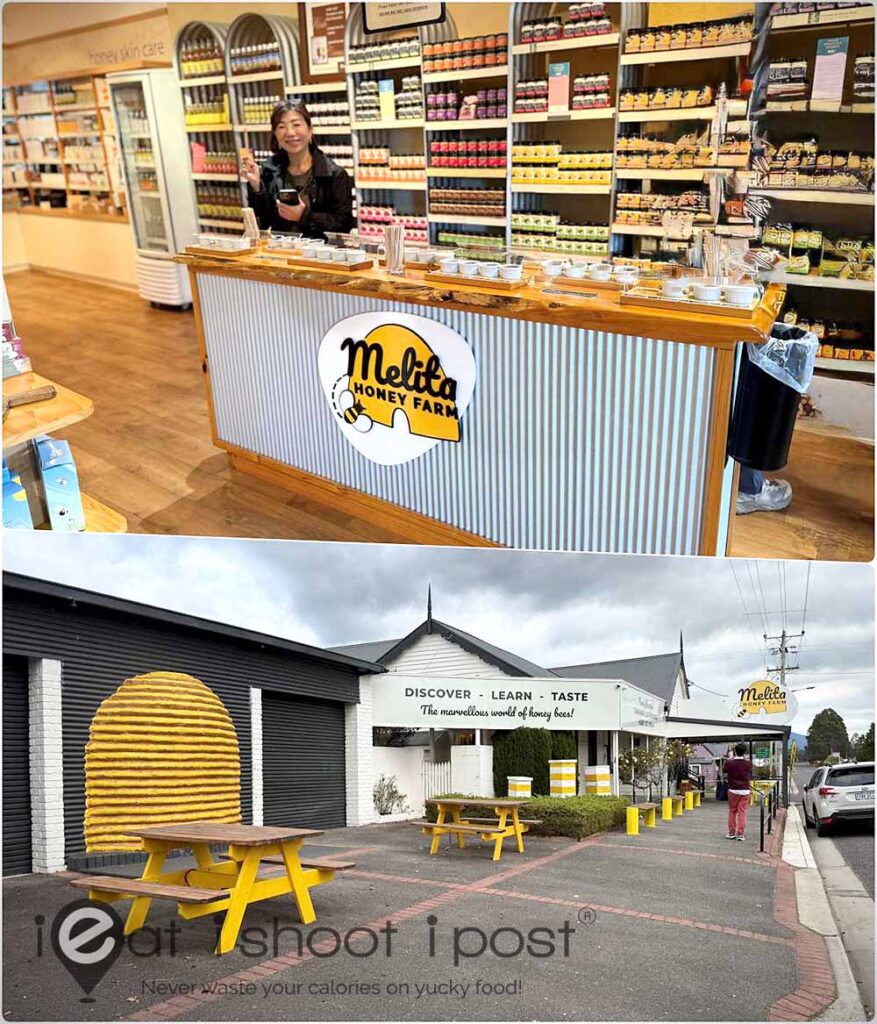
Another stop along the trail was Melita Honey Farm in Chudleigh. A lovely pit stop if you have a sweet tooth or are looking for something uniquely Tasmanian to bring home.
Melita doesn’t keep their own bees or harvest their own honey. Instead, they aggregate honey from producers all across Tasmania, giving you access to an impressive range of varieties under one roof. Honey tasting, health products, body lotions, skin creams and other honey-based goods. A one-stop honey shop for the island.
While you’re here, look out for leatherwood honey. Unique to Tasmania and found nowhere else in the world. The leatherwood tree grows only in Tasmania’s ancient temperate rainforests, and the honey it produces has a distinctive floral, slightly spicy character that sets it apart from anything else you’ve tasted. Makes a wonderful gift and an even better souvenir.
A quick stop rather than a half-day experience, but worth building into your tasting trail itinerary.
📍Melita Honey Farm
39 Sorell Street, Chudleigh, 7304 Tasmania
The Truffle Farm – Hunting for Truffles!
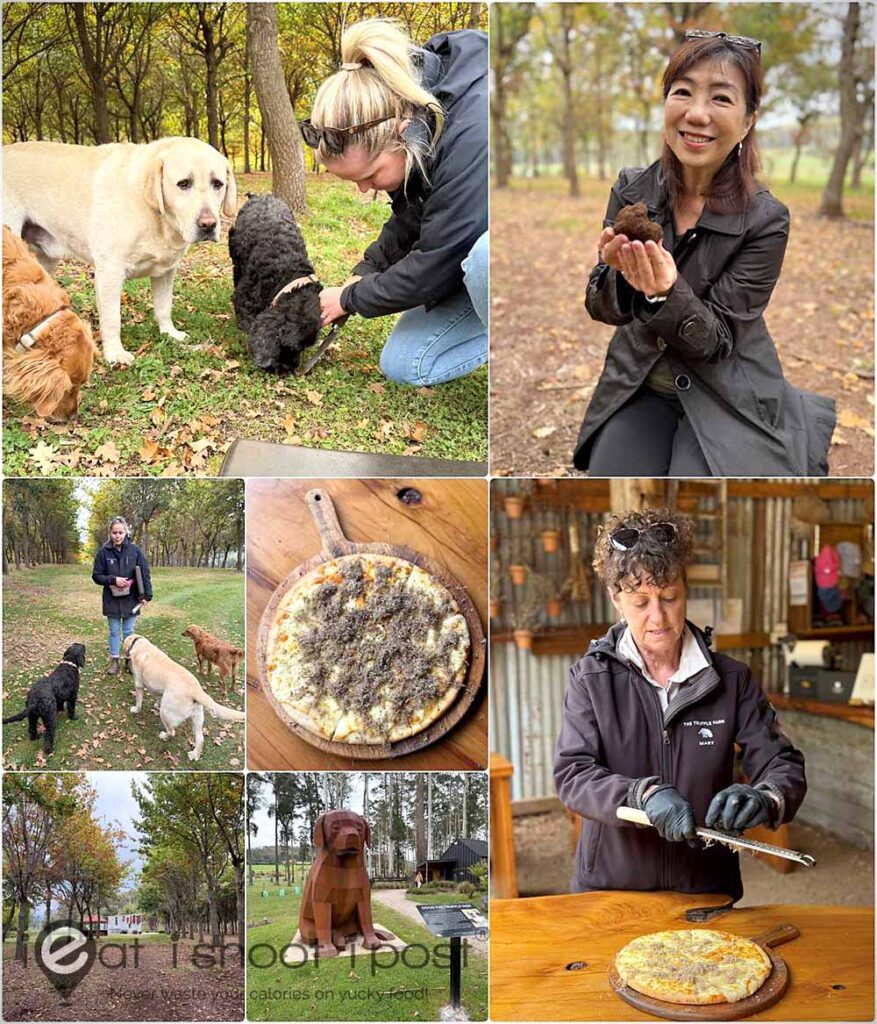
If I had to pick one highlight of the entire Tasmania trip, this would be it.
The Truffle Farm in Deloraine produced Australia’s first black truffle in June 1999. We were met by Anna Terry, the daughter of the founder, who told us the story with obvious pride. Her father was told repeatedly that growing truffles in Australia was impossible. He persisted anyway. When that first truffle came out of the ground, Anna remembers him sitting back, lighting a cigar, looking deeply satisfied.
Truffle cultivation demands extraordinary patience. Oak seedlings must be inoculated with truffle spores before planting, then you wait. At least five to nine years before the first truffles form underground.
Once ready, trained truffle dogs do the hunting. Dogs rather than pigs because pigs, drawn to truffles by instinct, will always try to eat them. Dogs locate the truffle, indicate where it is, and get a treat instead.
At the entrance stands a statue of Doug, the farm’s first truffle dog, a golden retriever who still turns up for the morning hunt. He’s a little slow now, but still very effective.
We followed the dogs through the trufferie and dug up our own truffle. After the hunt, a truffle lunch where the star was pizza topped with freshly shaved truffle. And you get to shave as much as you want.
The whole experience sits perfectly within the broader story of Tasmanian entrepreneurial spirit. We saw it with Tasman Sea Salt, LARK Distillery, and now here. Tasmanians have a habit of taking impossible ideas and making them real.
If you love truffles, this one is non-negotiable.
Truffle Hunt with lunch is A$195 pp, A$90 for ages 5-17
Truffle Hunt alone is A$170 pp, A$80 for ages 5-17
📍The Truffle Farm
844 Mole Creek Road, Deloraine, 7304 Tasmania
[email protected]
41° South Tasmania and George’s Cafe
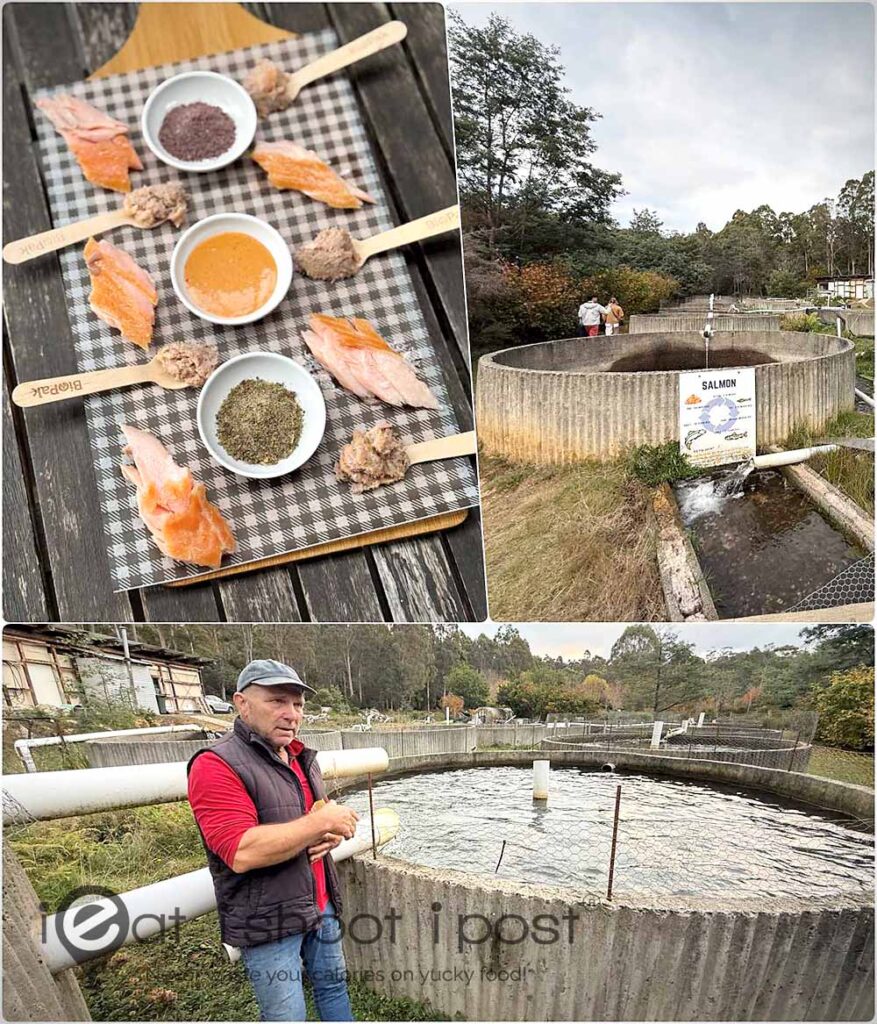
The salmon farm wasn’t quite what I was expecting. I had visited a salmon farm in New Zealand some years back, got to fish for salmon and eat fresh sashimi on the spot. It was memorable, and I was looking forward to something similar.
It was a little different. No fresh sashimi, no fishing. Instead, the farm sells smoked salmon and salmon rillettes, both award-winning and very good.
What made the visit worthwhile was our host, Ziggy Pyka. A real character who came to Tasmania from Germany many years ago, fell in love with the place and never left. He built an inland salmon farm in the hills of Red Hills near Deloraine, and that distinction matters more than it might seem. When a disease outbreak affected sea-farmed salmon in Tasmania, Ziggy’s fish were completely unaffected, isolated as they were from the open water system. A smart and resilient approach to aquaculture.
Ziggy’s personal tour was arranged through Tourism Tasmania, so you’ll generally need to arrive as part of a group booking for that level of access. But even a self-guided visit is worthwhile. Pick up the smoked salmon and salmon rillettes from the farm store before you leave.
📍41° South Tasmania and George’s Cafe
323 Montana Road, Red Hills, 7304 Tasmania
[email protected]
Small Wonder Wines, Kayena
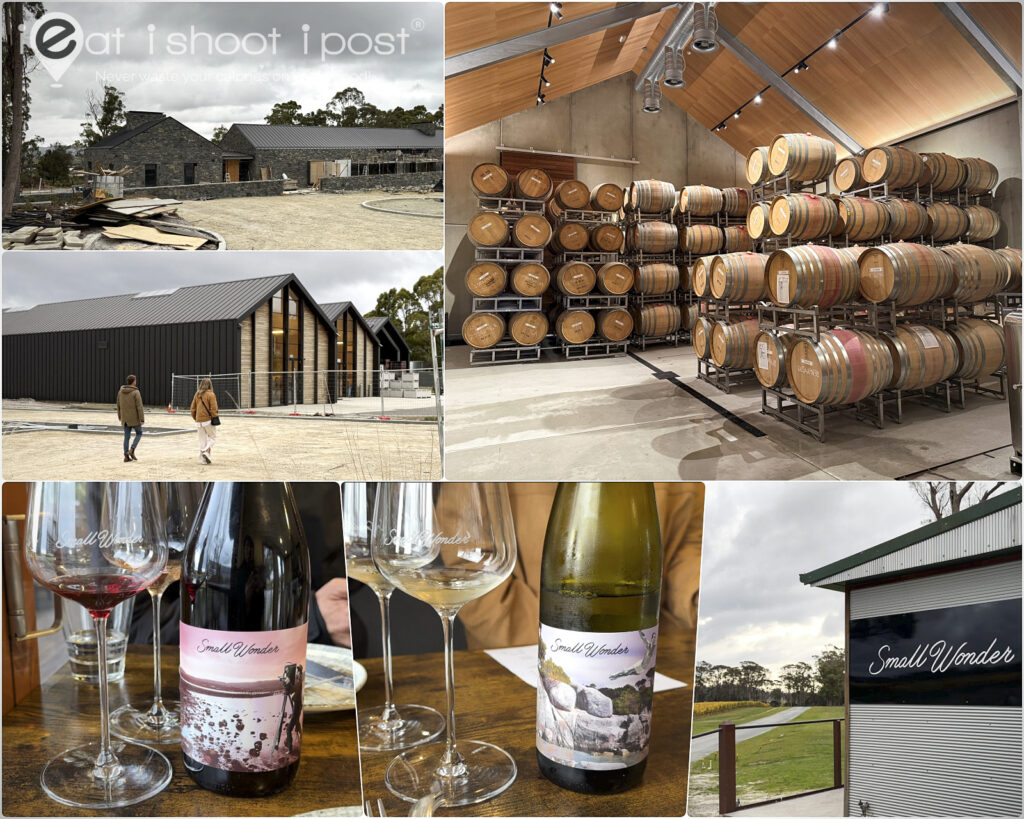
When we pulled up to Small Wonder Wines, my first impression was modest. We were shown to a small hut for the wine tasting. The wines were good, the setting intimate, and we thought that was the whole story.
Then they took us around the back.
An impressive new cellar door and winery is under construction, due to be completed in August 2026. The scale of it was genuinely surprising given where we’d just been sitting. When it opens, visitors can taste the wines alongside a full view of the fermentation and winemaking process in action.
So if you’re planning a trip to Tasmania in the second half of 2026 or beyond, Small Wonder Wines is worth putting on your list. Cool-climate wines, serious ambitions, and a brand new facility to match.
One detail that will resonate with Singapore readers. The owner is Singapore-based and married to a local. A genuine Singaporean connection to this little corner of the Tamar Valley.
Guided tasting for 1 to 6 people is A$15 per person, waived per bottle purchased. Details at their website.
📍 Small Wonder Wines
530 Auburn Road, Kayena,7270 Tasmania
Stelo at Pierre’s, Launceston
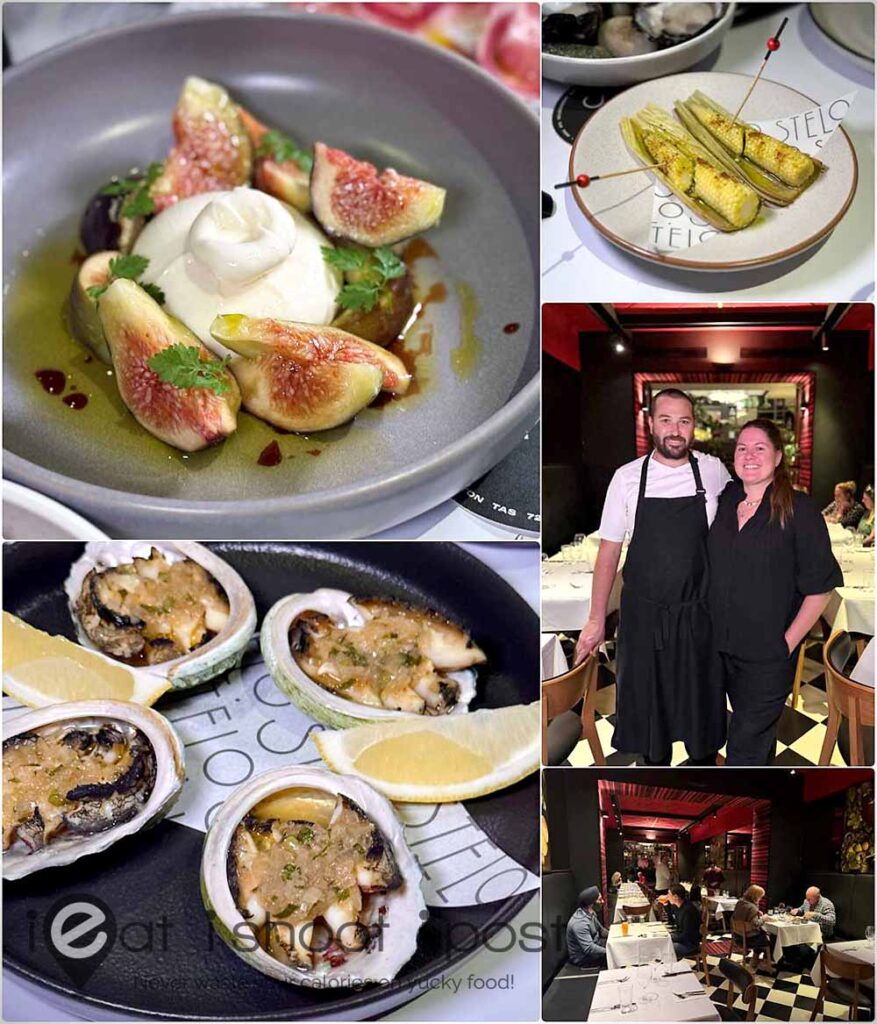
For a great dinner in Launceston, look no further than Stelo at Pierre’s on George Street. One of the top three meals we had in Tasmania, alongside Cambridge House and Aloft in Hobart.
Stelo is run by a husband and wife team who have built something genuinely special in the heart of Launceston. Contemporary Italian, but what sets it apart is the kitchen’s passionate commitment to local Tasmanian ingredients. The chef takes sourcing seriously, and it shows in every plate.
We were on the Feed Me tasting menu, and dish after dish landed beautifully. The grilled baby corn was simple, charred, sweet and completely unexpected. The burrata salad with fresh Tasmanian figs was another highlight, those figs so ripe and honey-sweet they barely needed anything else. Then came the local seafood, Tasmanian beef, and handmade pasta made in-house with Tasmanian flour. Silky, toothsome, the way only fresh pasta can be.
The whole meal had a warmth and generosity that reflected the people behind it. Cooking that comes from genuine passion rather than formula.
The building itself carries 70 years of Launceston history. The original Pierre’s Café was the first place in Australia to install a commercial espresso machine back in 1956. The owners have since bought the premises outright and are already grooming their children to take over one day. Stelo is not going anywhere.
5-Course Degustatione Menu A$110pp
Wine pairing A$70pp
Highly recommended. Book ahead.
📍Stelo at Pierre’s
88 George Street, Launceston, 7250 Tasmania
[email protected]
Peppers Silo Launceston
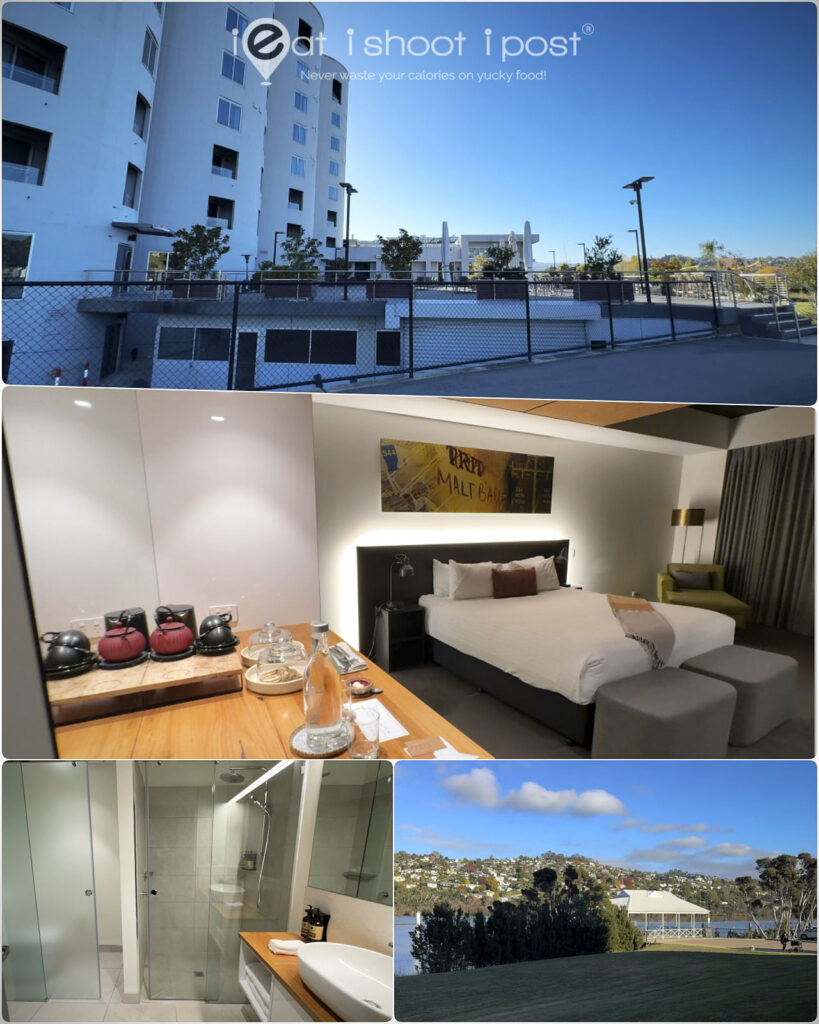
Our last night in Tasmania was at Peppers Silo Launceston, a 108-room hotel perched at the confluence of the Tamar and North Esk Rivers.
As the name suggests, the hotel was converted from the Kings Wharf grain silos, which once stood 35 metres tall back in 1960. Our room was one of 52 rooms built inside the actual silo barrels. You can tell from the gentle curvature of the walls.
The view from our room looked out over the Tamar River basin, and the CBD is less than 1km away via a pedestrian footbridge. In winter, you can even catch a glimpse of snow-capped Mount Barrow from the hotel.
📍Peppers Silo Launceston
89 Lindsay St, Invermay, 7248 Tasmania
Book Here
DAY 7
Cataract Gorge
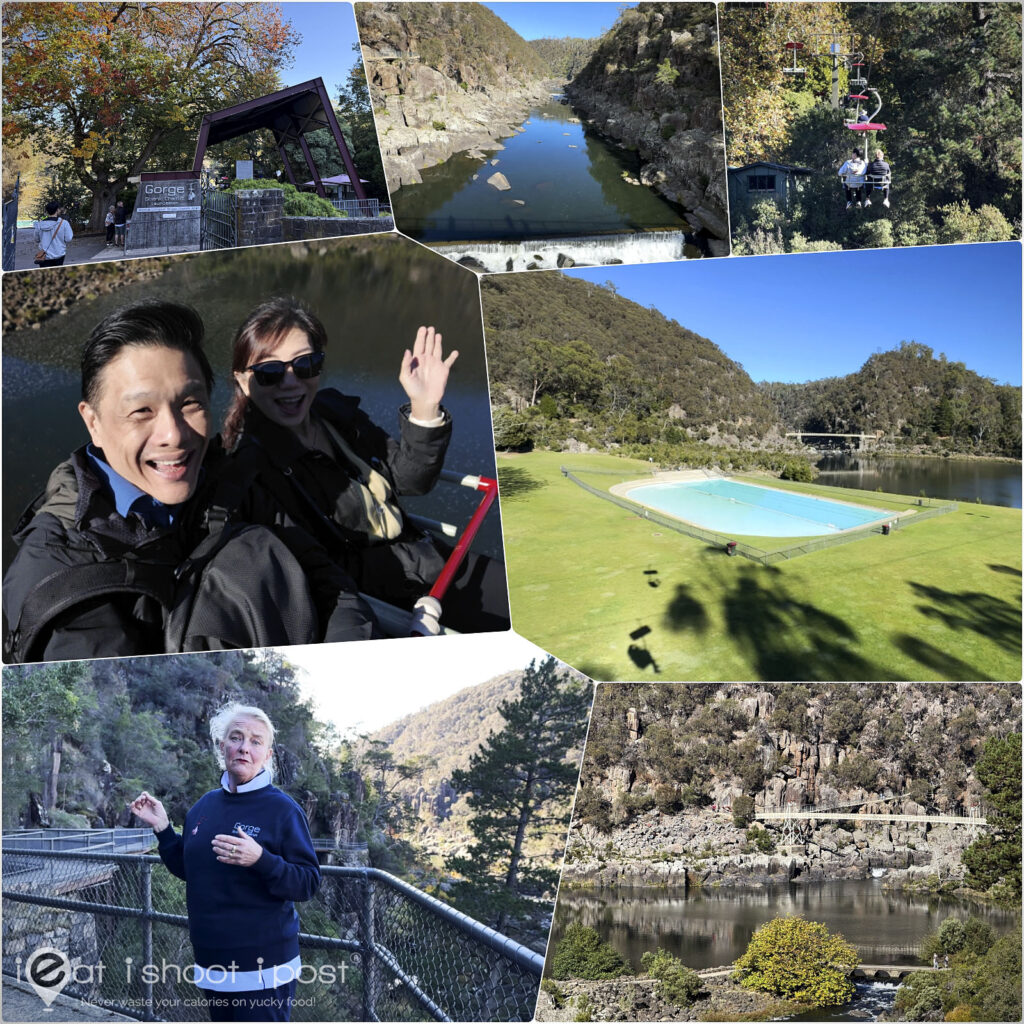
Our final day in Tasmania began with a morning walk around Cataract Gorge. The perfect way to end the trip.
What makes Cataract Gorge so remarkable is how close it is. In Sydney, the Blue Mountains are an hour and a half’s drive from the city. Cataract Gorge is a stunning natural reserve just ten minutes from the centre of Launceston. Close enough to walk from your hotel. Where else in the world can you find a 65-million-year-old gorge, dramatic cliffs, lush vegetation, peacocks wandering freely and wallabies on the slopes, all within easy reach of a city café.
We took the chairlift across the gorge, the longest single-span chairlift in the world at 308 metres, which gives you a spectacular bird’s eye view of the South Esk River cutting through the rock below. Prefer to stay on foot? Walking trails range from a leisurely stroll to a solid half-day hike, with plenty of wildlife along the way.
The gorge also has a swimming pool on the reserve grounds with an interesting story attached. During flood season, the waters rise so dramatically that the pool is completely submerged. When they recede in summer, the team cleans and restores it before it can be used again.
Whether you have an hour or a full day, Cataract Gorge is a must. One of the great natural surprises of the trip, right on the doorstep of Launceston.
📍Cataract Gorge Reserve
69 Basin Road, West Launceston, 7250 Tasmania
Free entry. Chairlift tickets available on site.
Contact Jo Larter at [email protected] for more information about chair lift operations and other tours.
Josef Chromy Wines, Relbia
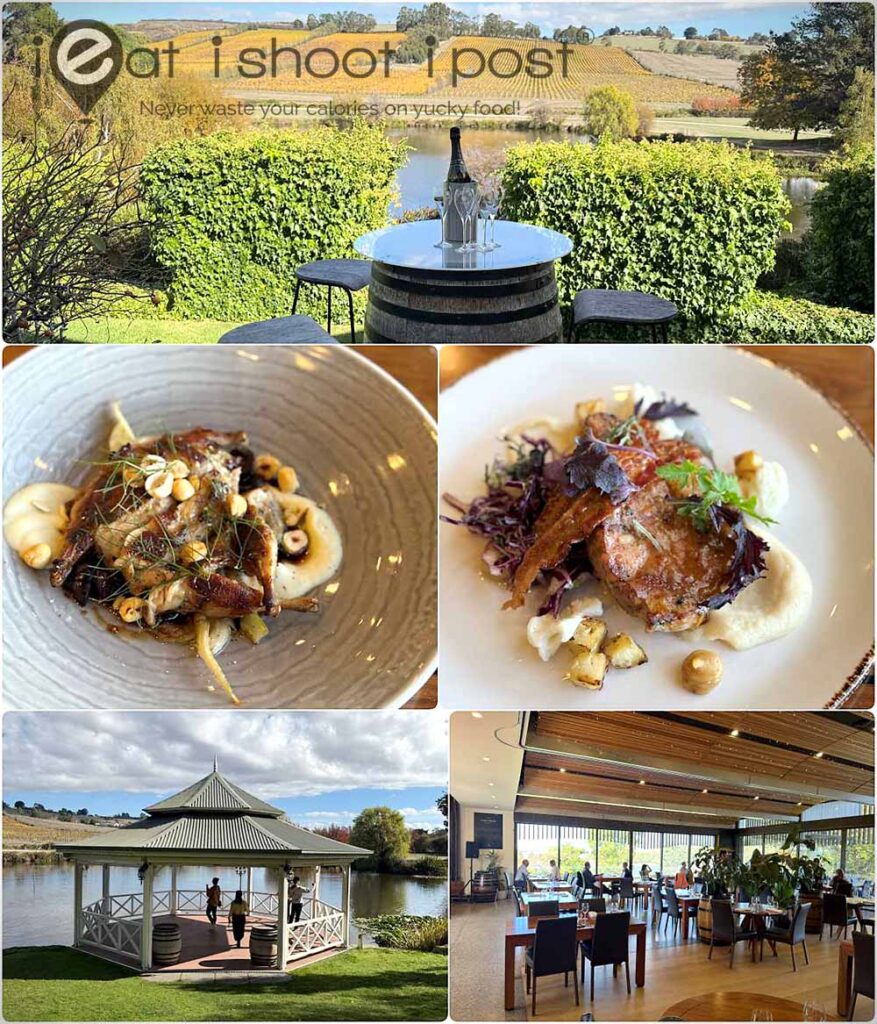
There is no better way to say goodbye to Tasmania than lunch at Josef Chromy Wines.
Situated just ten minutes from Launceston Airport, the estate is perfectly positioned for a long, unhurried farewell lunch before your flight. The grounds are beautiful. A large lake sits at the heart of the property, the vineyard rolling out beyond it and an 1880s homestead framing the view. The kind of place that hosts weddings, and you can immediately see why.
If you have a full morning, spend it walking the vineyard, tasting the wines and settling in for lunch at the hatted restaurant. Beautifully presented, very well executed. Serious cooking in a relaxed, elegant setting. The sparkling, Pinot Noir and Chardonnay are all outstanding examples of what the Tamar Valley does best.
But what gives Josef Chromy its real depth is the story of the man behind it.
Josef Chromy was born in Czechoslovakia and escaped Europe during the German occupation as a penniless young man, crossing borders and braving extraordinary hardship before eventually making his way to Australia. He settled in Tasmania, built a successful meat business from nothing, and became a prosperous and respected businessman.
Not Josef. He only started the winery in his seventies. The wines went on to win international acclaim.
He is now well into his nineties, uses a wheelchair, has sold the wine business and moved on to yet another venture in construction. The man simply does not stop.
Tasmania gave us story after story of extraordinary entrepreneurial spirit on this trip. Josef Chromy is perhaps the most remarkable of all.
📍Josef Chromy Tasmania
370 Relbia Road, Relbia, Launceston, 7258 Tasmania
Disclosure: This media trip was hosted by Tourism Tasmania @tasmania #discovertasmania
Note: this post may contain affiliate marketing links where at no extra charge to you, we may earn a very small commission if you make a successful accommodation booking.