
Just when I thought that artisan muah chee was going to disappear along with the last muah chee man, I caught wind of a next-generation lady. She is taking over the torch and keeping it burning. And by a sheer coincidence, her name happens to be Shiny.
Our protagonist today is Shiny Phua. She began her journey as a home-based business at just 22! She did it as a tribute to her grandmother and a way to preserve traditional Teochew kueh for modern audiences.
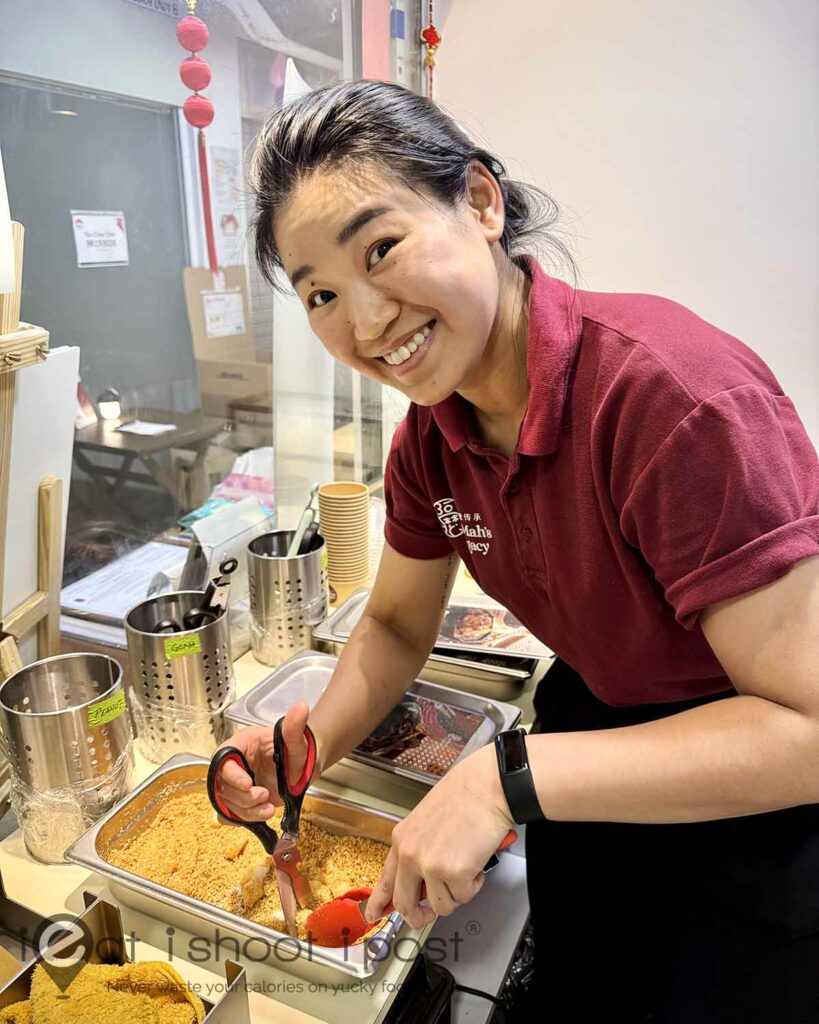
As a LASALLE design communications graduate, she transformed her final-year thesis on the fading appreciation of heritage food into a business concept. She now makes traditional treats like muah chee, ang ku kueh, and orh nee – using natural ingredients while blending age-old techniques with modern innovations.
It’s heartwarming to see how much affection the now 27-year-old has for her grandmother. She even dons her grandma’s old clothes to film a documentary for CNA! Her grandmother, God bless her soul, would surely have been proud when Shiny finally opened her cosy little eatery at Thomson V over a year ago!
Grandma’s Recipe but with Modern Innovation!
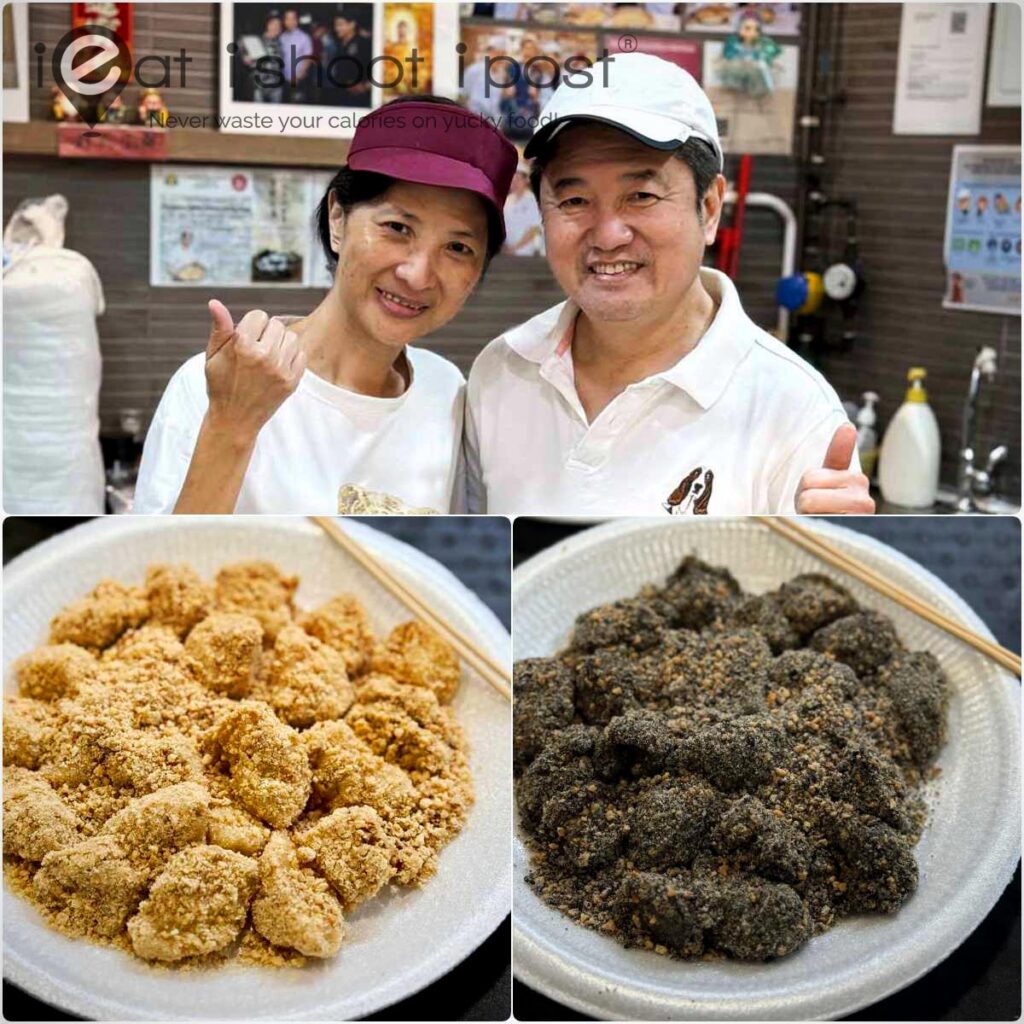
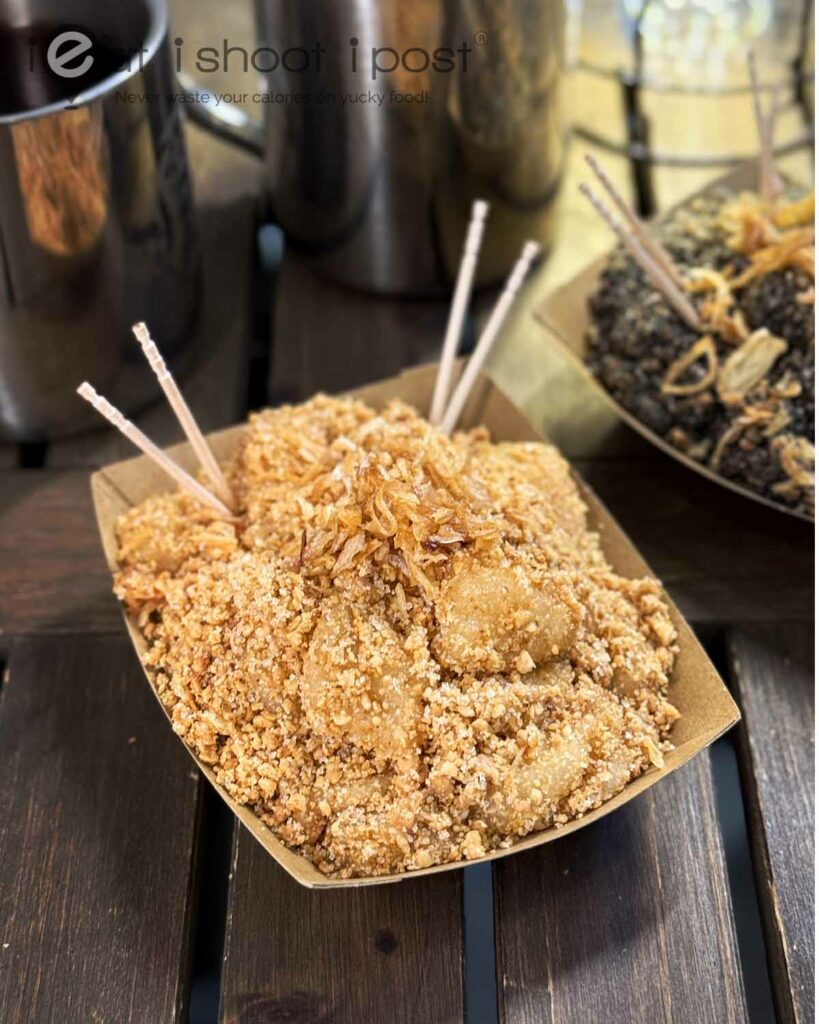
Following her grandma’s recipe, the muah chee is still made the artisan way. First, the glutinous rice flour is steamed, then pounded with a wooden stick until it reaches the perfect chewy consistency. House-made shallot oil is then worked into the rice so that its fragrance is infused into the muah chee.
The peanuts are fried with their skins on before the skins are removed, and the nuts ground in order to add that extra depth of flavour. Overall, this is a very good muah chee, though I feel the shallot oil aroma could be more pronounced. 4.25/5.
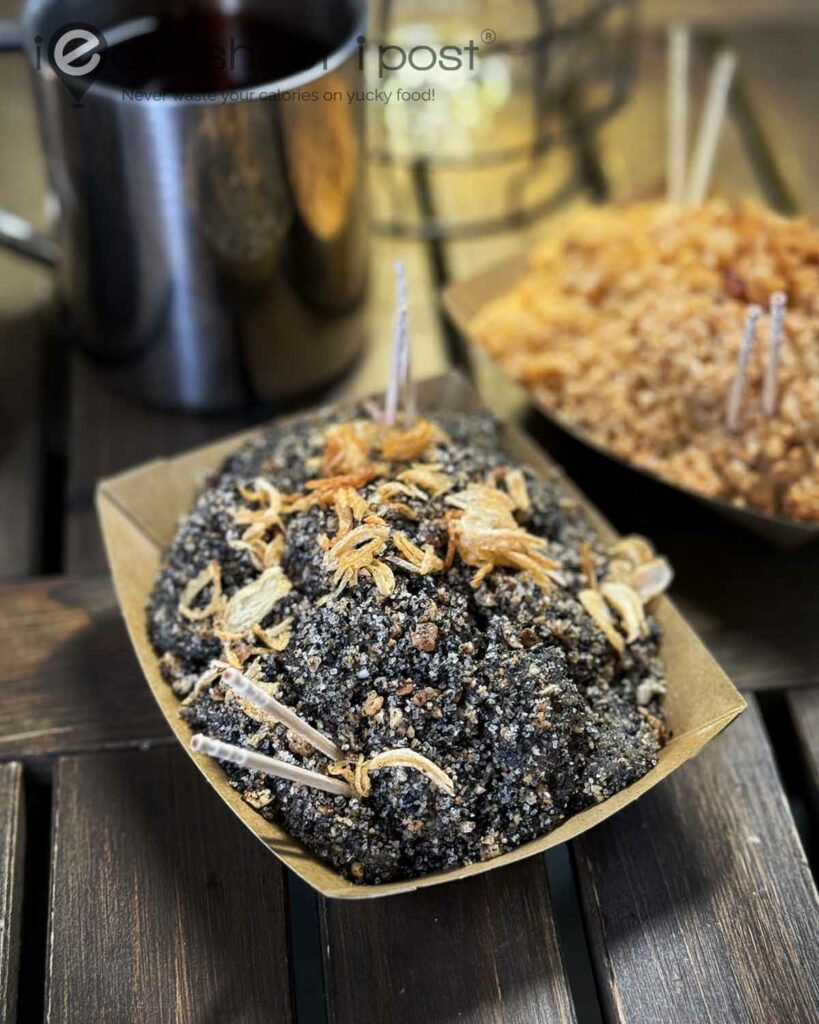
Over at Hougang 6 Mile Muah Chee, the fragrance of the shallot oil is more evident as each piece is coated with it before being rolled in ground peanuts. But working the shallot oil into the muah chee was how grandma used to make it. Shiny is determined to keep to her recipe.
Shiny also offers a black sesame version blended with ground almonds. Her grandmother made it with only black sesame. But after some experimentation, Shiny felt that adding almonds enhanced the flavour.
For a modern twist, there’s even a pistachio version at $9.50! Many have baulked at this price but Shiny explains that the price of pistachios justifies it. We didn’t try it, but can imagine how the ground pistachios will lend a rich, nutty elegance to this traditional treat.
Made using Ah Ma’s old moulds
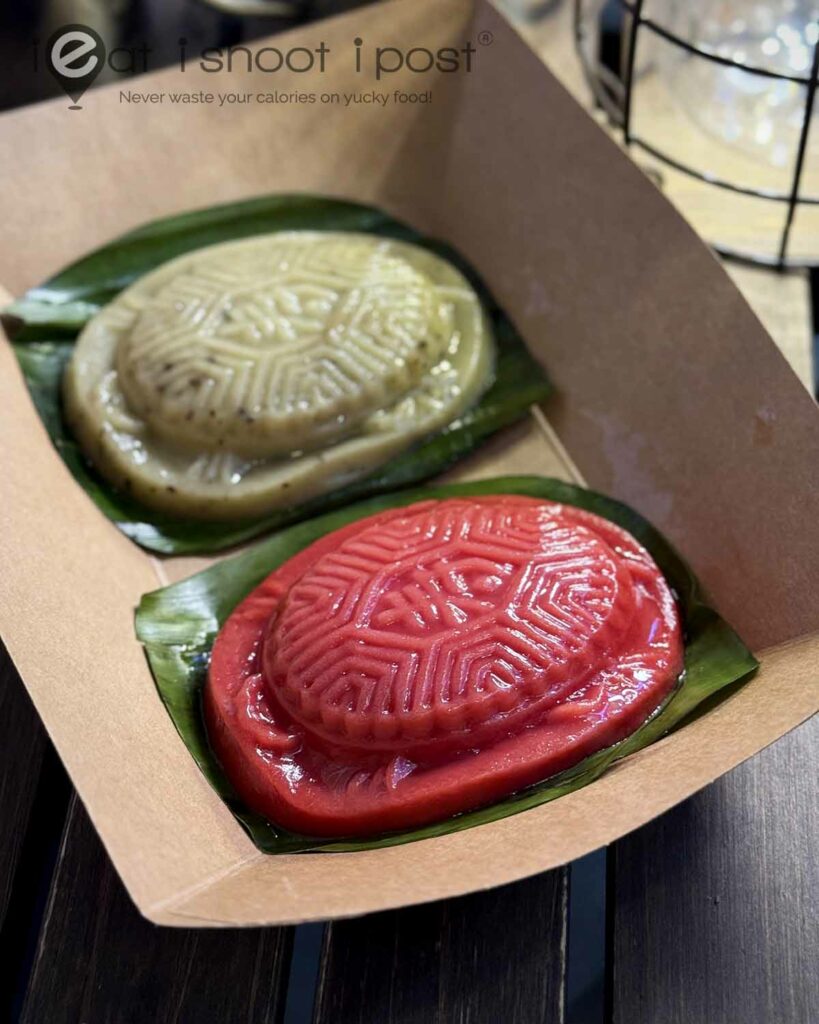
She also makes small batches of Ang Ku Kueh using wooden molds inherited from her grandmother. At $3.80 per piece, they’re more than twice the price of a typical $1.50 ang ku kueh, but there’s a good reason.
The skin is made from steamed orange sweet potatoes rather than just glutinous rice flour. Shiny uses different varieties of sweet potatoes for different kuehs.
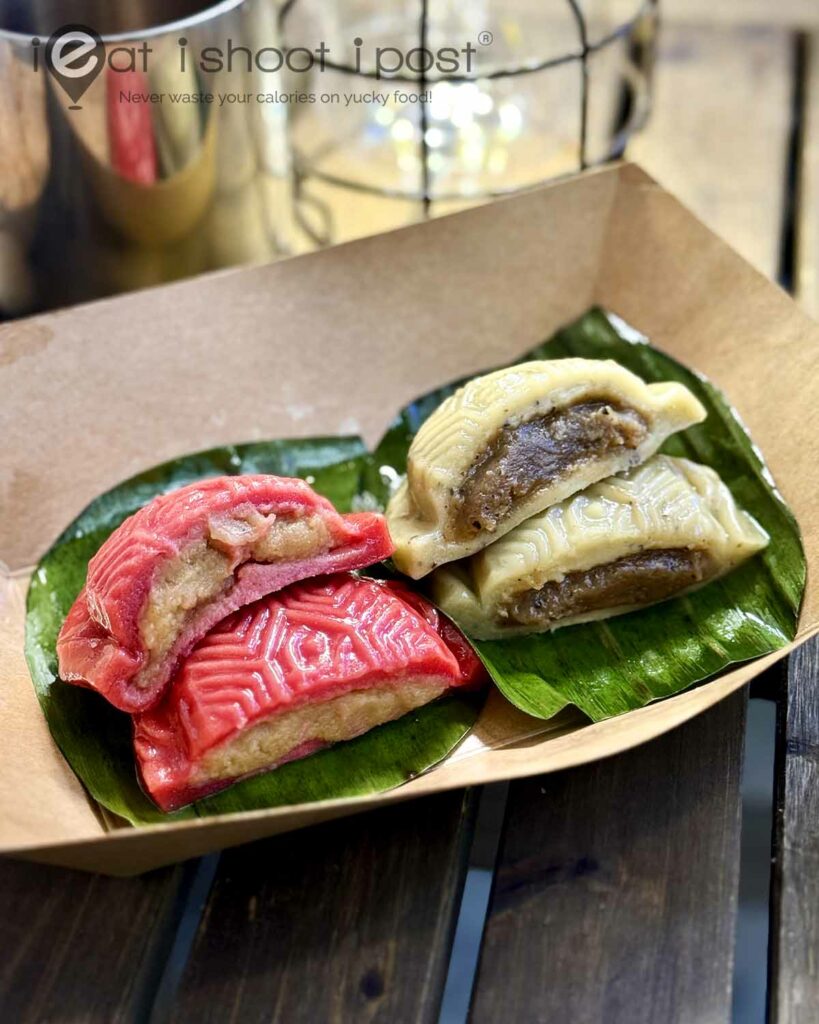
Only natural food colours are used: the red hue comes from beetroot pulp. The filling is a mix of both fried mung bean and steamed mung bean, creating a unique texture and depth of flavour. The result is an Ang Ku Kueh that tastes quite different from the commercially available ones.
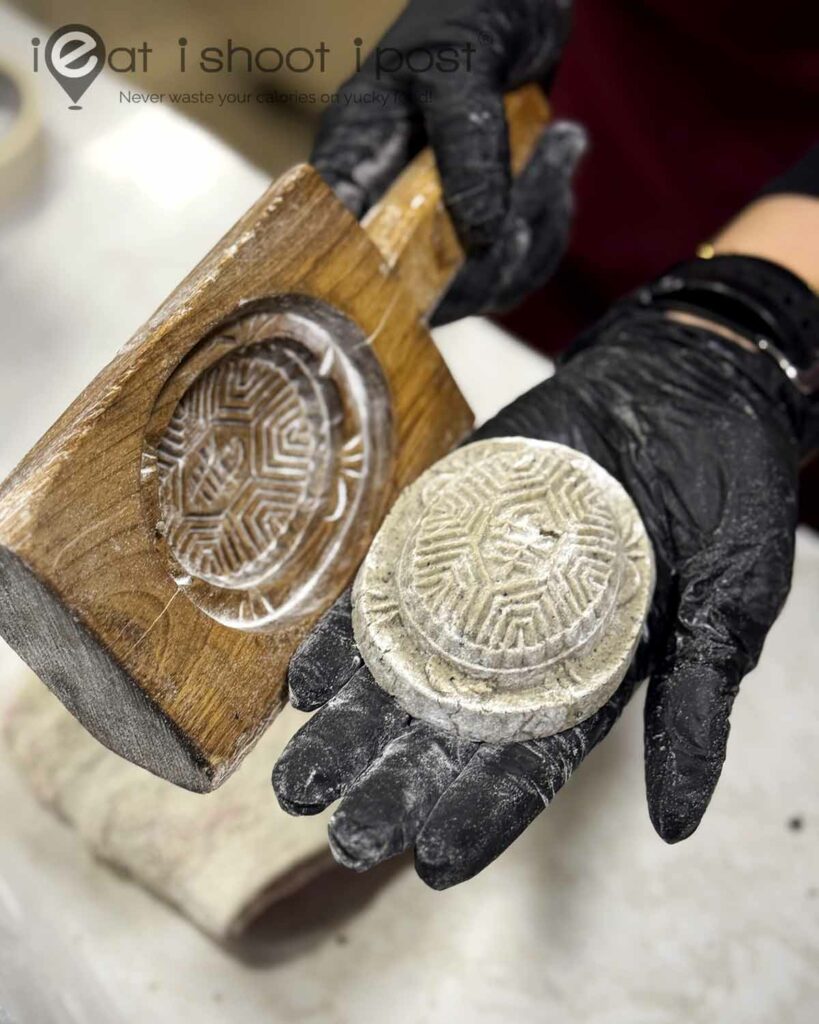
I actually preferred the salted mung bean (green) version. Japanese sweet potatoes are used instead of orange sweet potatoes for the skin, while the filling is seasoned with salt and pepper to give it a refreshing and interesting twist.
The skin’s texture is softer and less chewy compared to those made with pure glutinous rice flour, which makes for a more tender bite. Great for those ah mah and ah gongs still wearing dentures! But Lisa still prefers the chewy version. 4/5
Conclusion
It’s so good to see the next generation taking an interest in preserving our traditional kuehs. Shiny artfully preserves the authentic flavors while adding her own modern touches to bring her grandma’s recipes to a new generation. From the hand-pounded muah chee to the innovative ang ku kueh, each bite reflects her dedication and respect for heritage.
If you’re looking for Teochew kueh with that homemade character, Ah Mah’s Legacy is definitely worth a visit.