
By Lisa
There was a time when most of us only needed to know two words at a sushi counter: salmon and tuna. Maybe tamago, if we were feeling adventurous.
But these days, Singaporeans have become much more serious about Japanese food. We know our chirashi from our omakase, our chutoro from otoro, and some of us can even tell when the chef has served kohada instead of aji.
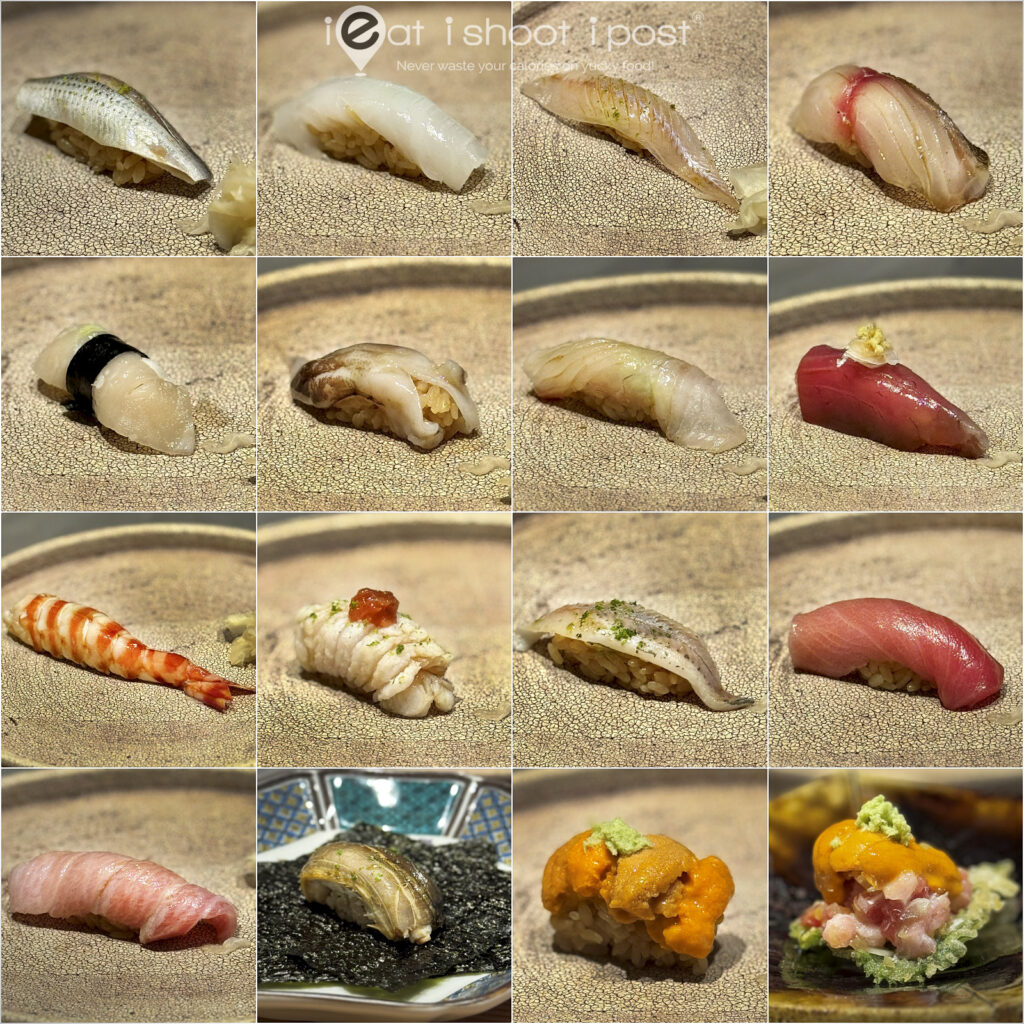
So when we were invited to have some sushi for lunch at Hachi, I thought it would be fun to turn part of the meal into a little test.
How many of the above sushis can you name? Don’t worry. The answer key is coming later.
But before anyone gets too excited and calls Hachi to book a sushi-only omakase, I should say this first: Hachi does not normally serve an omakase sushi lunch or dinner. Their regular omakase is a broader seasonal Japanese meal, with cooked dishes, soup, seasonal ingredients and sushi all woven together.
This lunch was a special invited session, but it gave us a lovely opportunity to appreciate the different seasonal fish Hachi has brought in.
Hachi: One of Singapore’s Omakase Pioneers
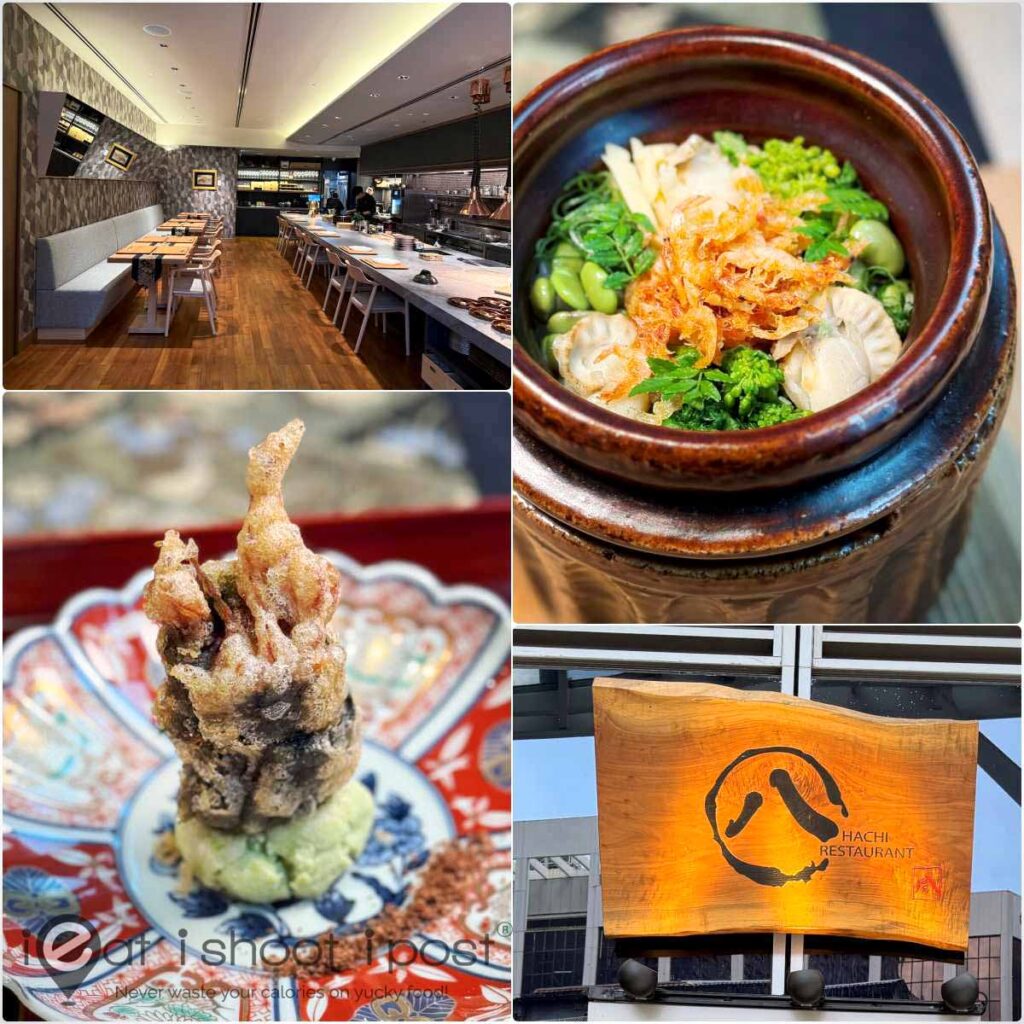
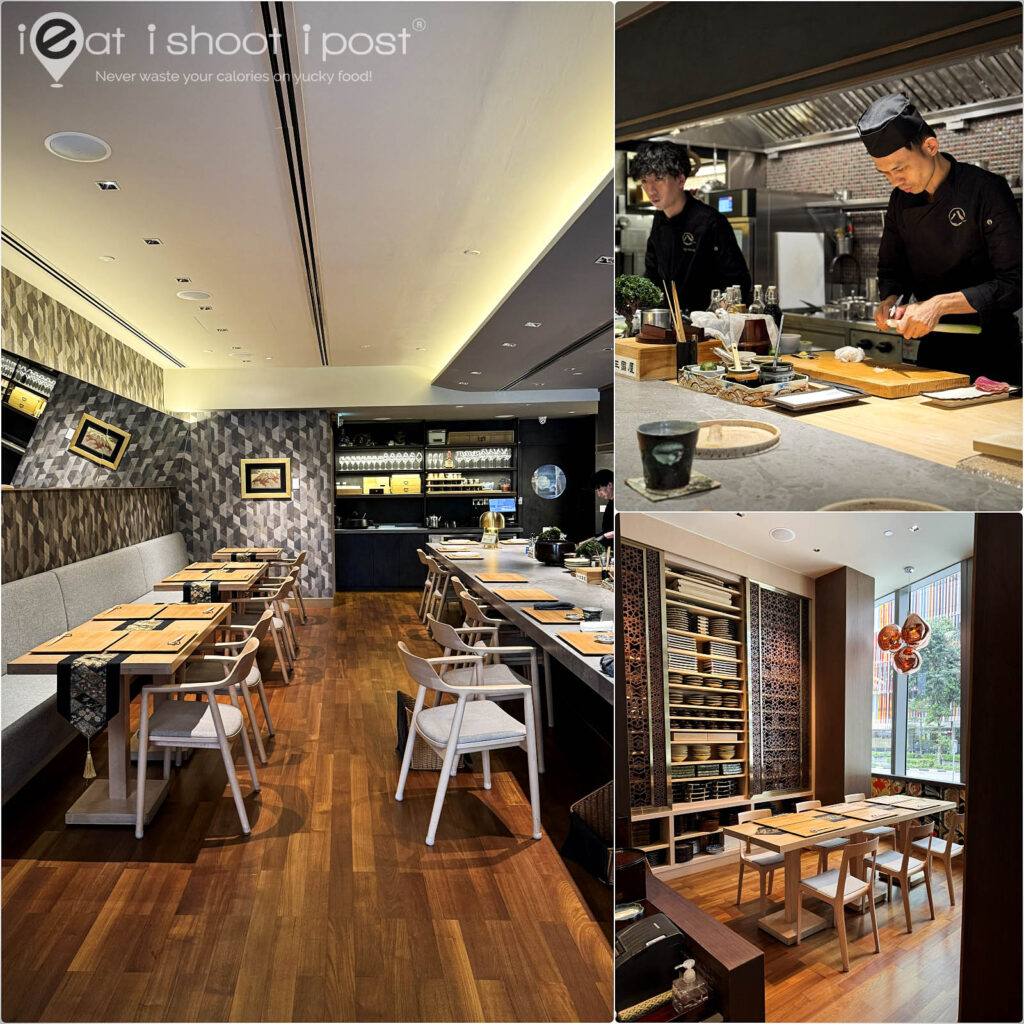
We last wrote about Hachi when they moved into their new home at Keppel South Central. It was a fresh start for the restaurant after leaving the National Gallery, and the new space gave Hachi a slightly more modern and interactive feel.
The counter is now more open, so diners can watch the chefs prepare each course right in front of them. It feels less formal than the old setup, but still calm and polished.
Hachi has been around since 1999, which makes it one of Singapore’s pioneering omakase restaurants. That is quite something in a dining scene where restaurants come and go faster than we can finish writing about them.
Owner Fabian Koh has always been particular about sourcing. He is obsessed with bringing in authentic Japanese ingredients and giving diners here a proper omakase experience. Not just a generic “Japanese set meal” dressed up with premium ingredients.
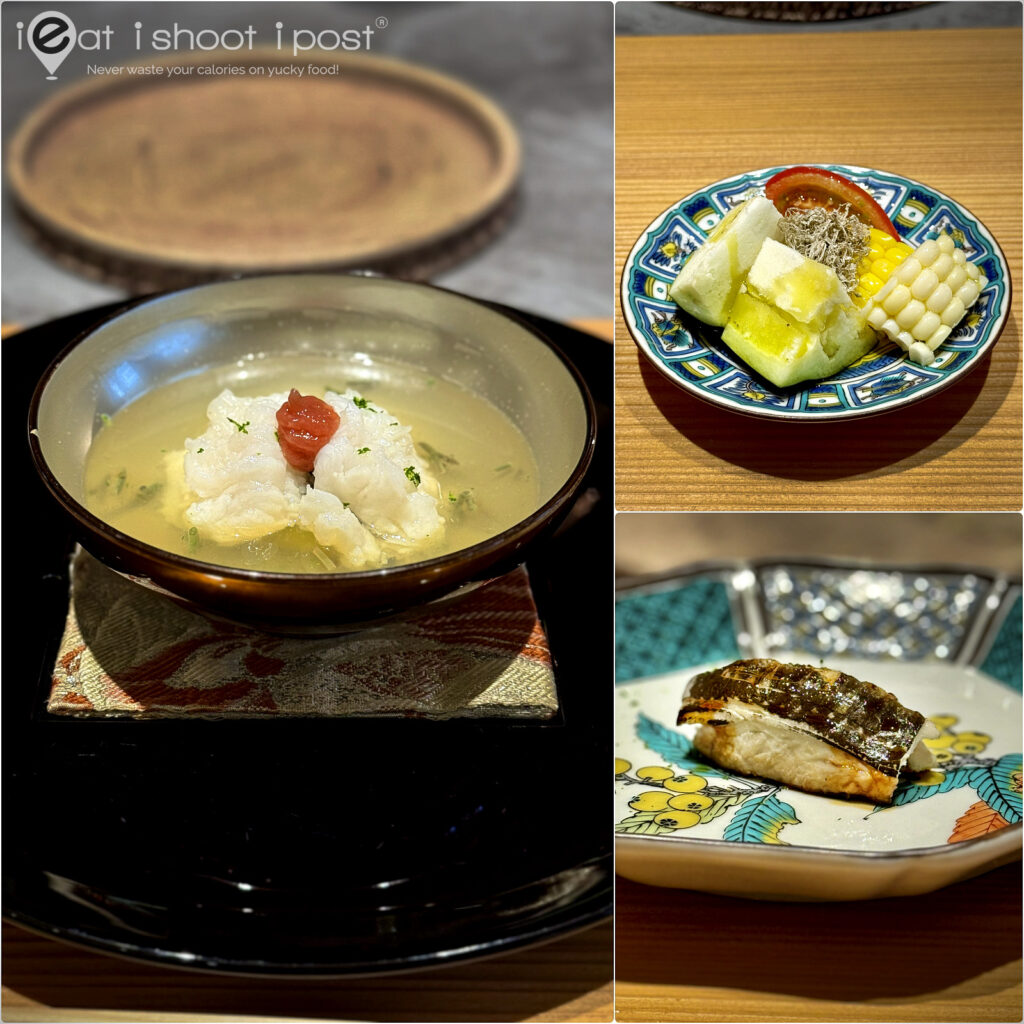
Before the sushi started, we had a lovely summer vegetable starter of raw Japanese eggplant, tomato and sweet corn, dressed simply with olive oil and Modena sea salt. The eggplant was a special variety that can be eaten raw, with the crisp, juicy texture of jambu (rose apple) and a subtle lingering sweetness that was quite unique.
The soup served between sushi courses was equally memorable. A comforting bowl of conger eel balanced with a creamy ume plum sauce, the broth made with kelp from Rishiri. No less!
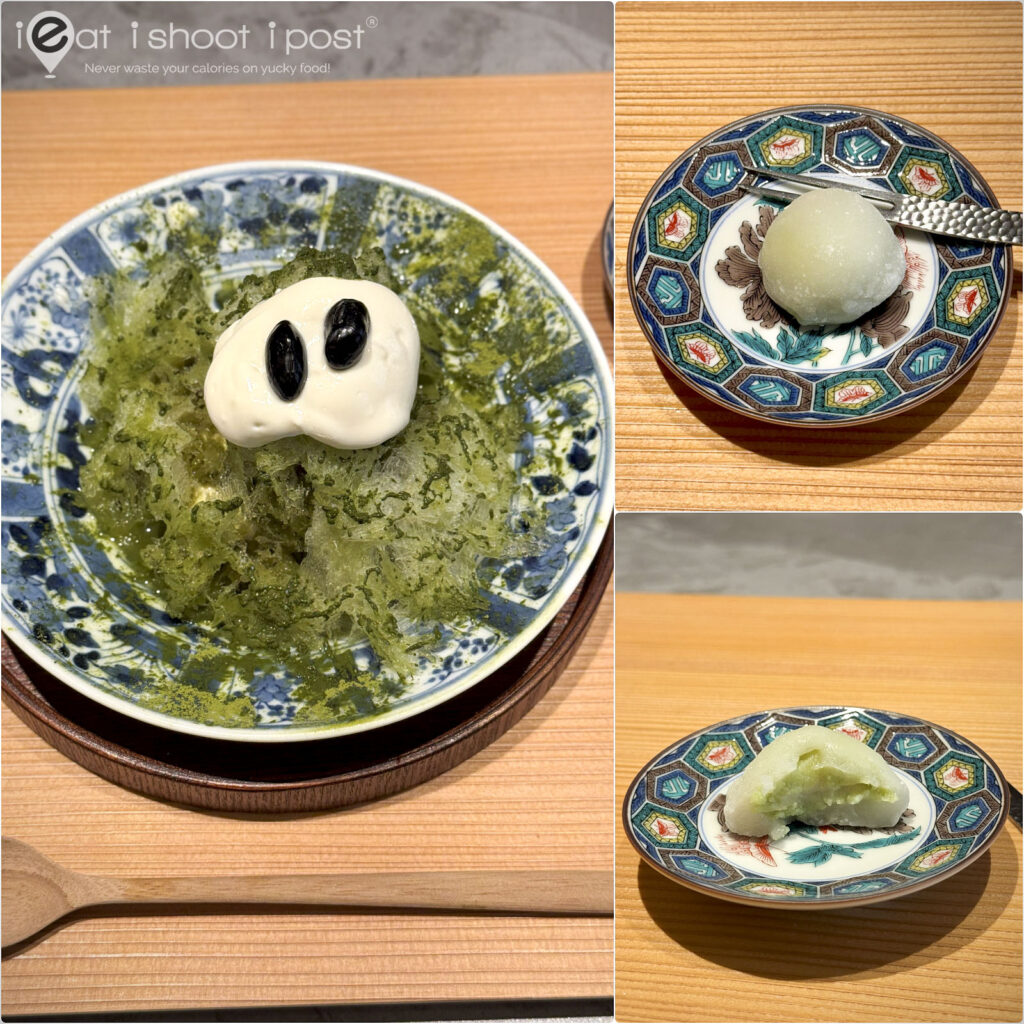
Dessert was a reminder that Hachi keeps an in-house pastry chef. We had lovely daifuku filled with a smooth edamame puree, and a kakigori, which is the Japanese answer to our very own ice kachang. A popular summer dessert of finely shaved ice piled over red bean and cream, with a generous dusting of matcha from Uji. Light, refreshing, and the perfect way to end a long sushi lunch.
The Sushi Test
So how many did you get right?
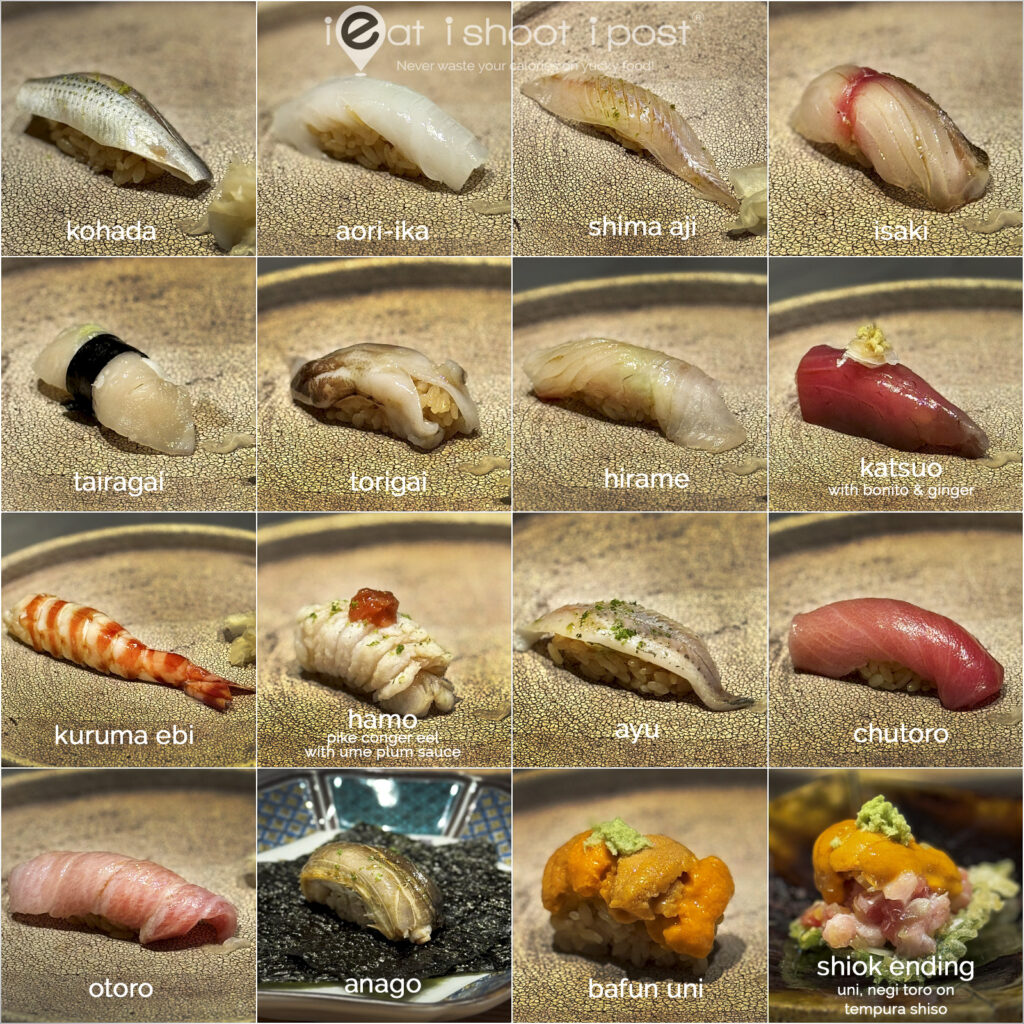
Looking at the line-up, it struck me how much our sushi knowledge has changed over the years. In the past, many diners were happy as long as there was salmon, tuna and maybe unagi. Today, more people are curious about the different tane (toppings), and why one piece tastes so different from another even though they all look so simple.
A proper sushi sequence can include white fish, silver-skinned fish, shellfish, squid, prawn, uni, eel, and tuna. Each has its own season, texture, and personality.
The first few pieces were a good reminder of how subtle white fish can be. Shiromi-dane, or white-fleshed fish, is usually appreciated for its clean flavour and texture rather than richness. Hirame, for example, is a flatfish often served with a little citrus or salt to bring out its natural sweetness. It is not a fish that comes in and makes a big statement. It is more like the quiet student in class who actually knows all the answers.
Shima aji is another one that serious sushi lovers look out for. Although the name includes “aji”, it is quite different from horse mackerel. Good shima aji has a clean, bright taste and a gentle sweetness at the end. It is one of the most sought-after shiro-dane because of its higher fat content.
Then came the shellfish. Tairagai and torigai both have that satisfying chew, but they are quite different. Torigai, with its darker purplish colour, is a seasonal clam that needs to be very fresh. It has a supple bite and a sweet finish that grows as you chew. Tairagai has a texture like a firmer hotate (scallop), with a deeper, more complex flavour.
The highlight for me was the kuruma ebi. It wasn’t just the sweet, meaty prawn that impressed, but how the sushi chef shaped it. It looked like a koi fish still swimming in a pond.
I would admit that I (Lisa) only got 6 right initially. I guess I just never really tried to remember the Japanese names. It’s especially since there is a living, walking encyclopedia nearby most of the time. (ie Dr Leslie).
Why Sushi Has Become More Interesting to Singaporeans
Japanese food has long been one of Singaporeans’ favourite cuisines. It is easy to understand why. It can be casual or luxurious, comforting or refined. One day you are eating tendon at the mall; another day you are sitting at the counter for a multi-courese omakase.
But our knowledge has also grown.
Sushi is no longer just about “fresh fish”. More diners are beginning to appreciate seasonality, sourcing, rice temperature, vinegar balance, ageing, curing, and knife work.
The more you know, the more interesting each bite becomes. And you’d know what to order at a sushi-ya.
But it should never feel like homework. The best sushi still comes down to trust. You trust the chef, you trust the ingredients, and you allow yourself to be surprised.
Conclusion
If this sushi line-up made you realise that your sushi knowledge has gone well beyond tuna and salmon, then perhaps it is time to start exploring more sushi-yas and omakase restaurants in Singapore. There has never been a better time to go deeper. Happy Eating!
Note: We were invited to this special sushi-focused omakase lunch. Hachi does not normally serve a sushi-only omakase lunch or dinner. Their regular offering is a broader seasonal Japanese omakase.
Become a Sushi Nerd!
Deepen your Sushi Knowledge by checking out our Sushi Files where you can get more information about the common tane available in Singapore!