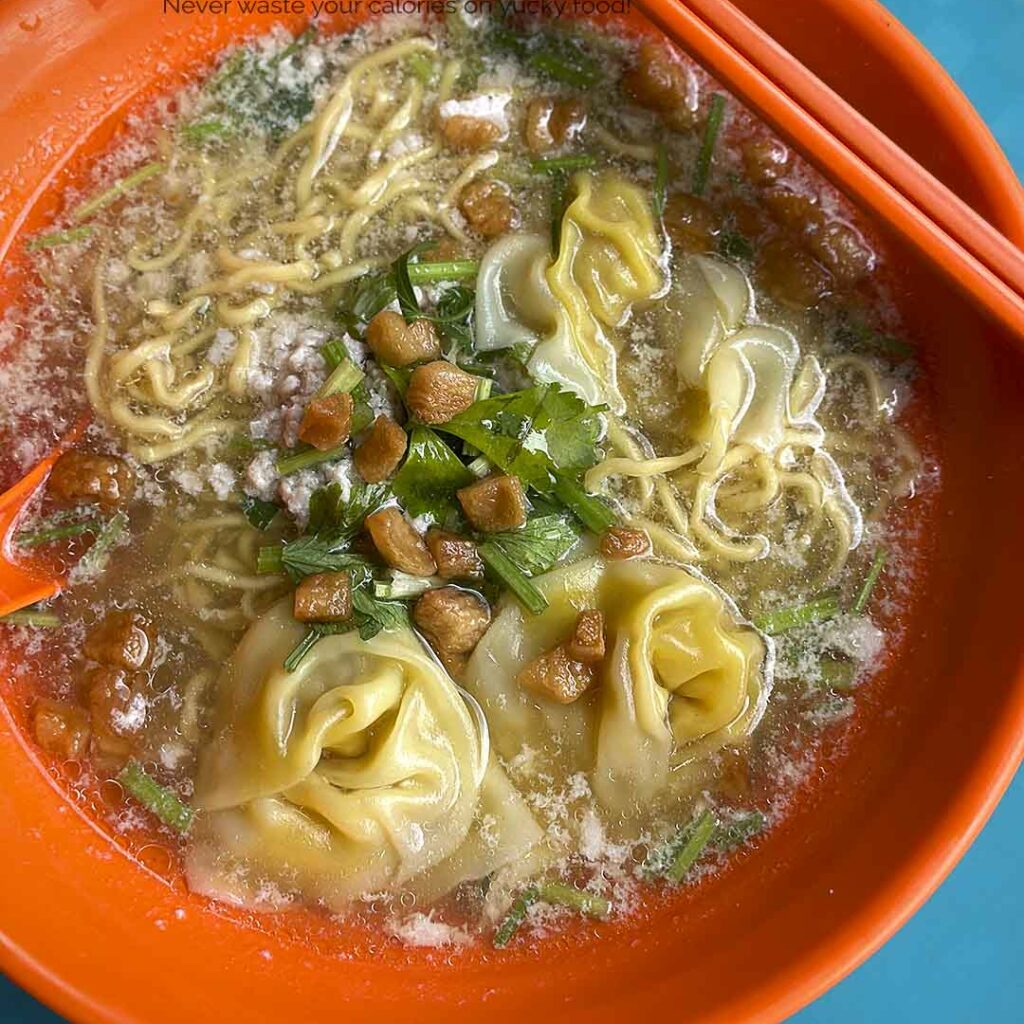

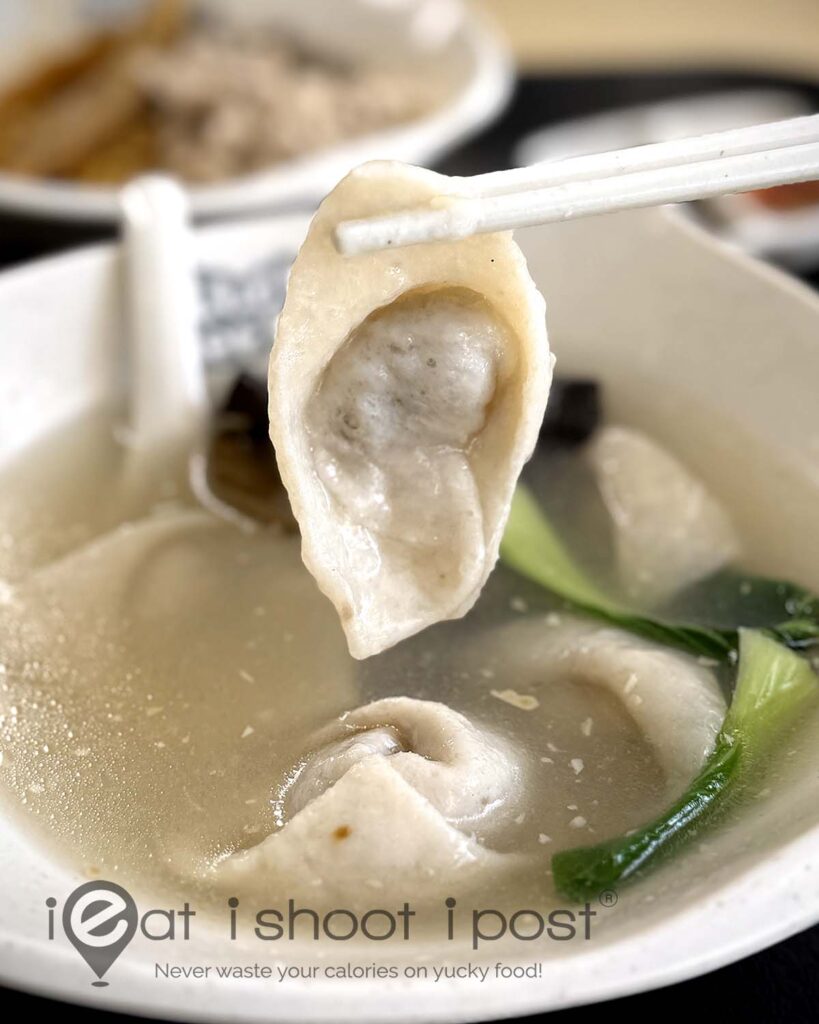
There are very few people left who still know how to make her giao – delicate Teochew fish dumplings. And even fewer who prepare them commercially. Rarer still is someone willing to devote his life to mastering and perfecting this single craft.
There was a time when our hawker culture thrived on such singular devotion. The char kway teow uncle would stand behind his wok day after day, year after year, refining his technique until it became second nature. Until he becomes, quite simply, a master. Today, that spirit is increasingly uncommon. Many younger hawkers are understandably drawn to the promise of scaling up, franchising, and building something bigger. It is hard to fault them; making a living from a single hawker stall is no easy pursuit in modern Singapore.
But when I come across someone like James Chua, who spends most of his days shaping each piece of her giao by hand, quietly perfecting a tradition that few still practice, I am reminded of what made our hawker culture special in the first place. It is such dedication that deserves to be celebrated.
From Takeaway to a Full Fledged Eatery
The last time I wrote about James was in 2021. That was when he finally took the bold step of setting up his own modest shop to sell handmade her giao. Having grown up in the family behind Song Kee Fish Ball Noodles in Toa Payoh, he was immersed in the craft from a young age. He learnt the nuances of fish paste and dumpling-making long before most of us were thinking about careers. (You can read more of his story here.)
That small shop was focused mainly on takeaway. They were freshly made her giao and other handmade fish paste items, prized ingredients for steamboat gatherings and home-cooked meals.
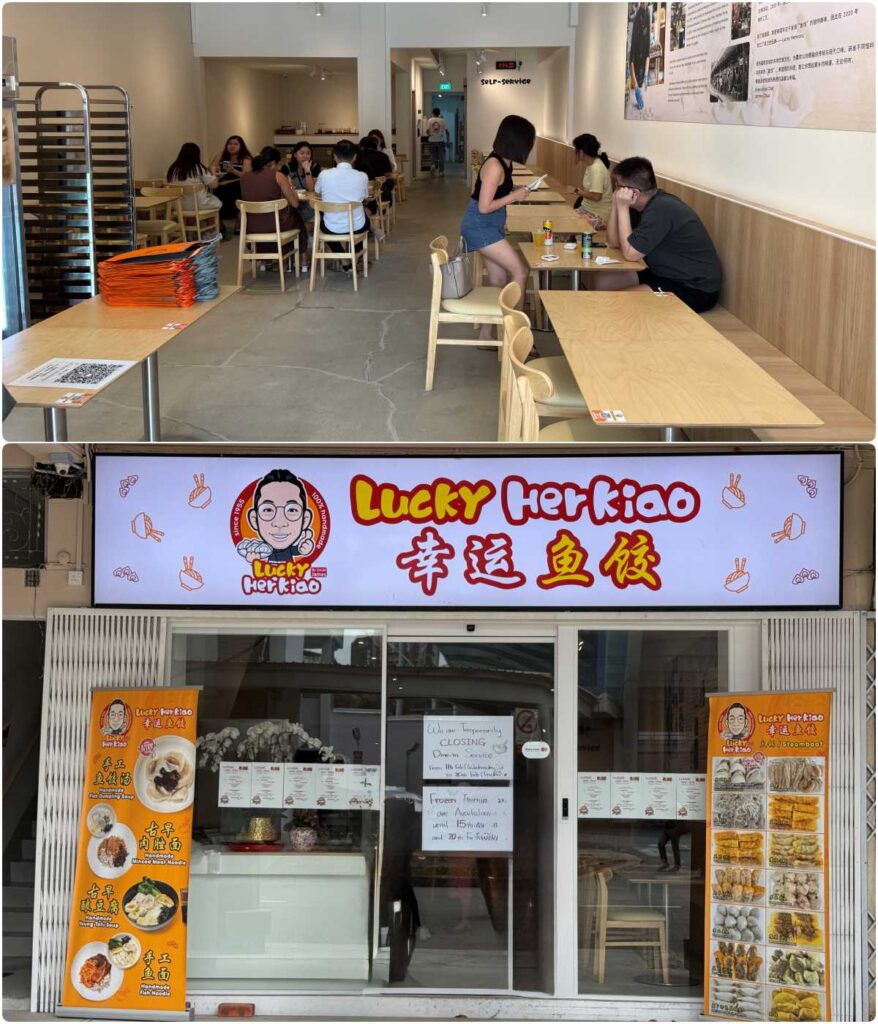
The good news is that James has now relocated to Jalan Besar, where he has opened a full-fledged restaurant. For the first time, you can enjoy his meticulously handcrafted her giao freshly cooked and served on the premises!
Fully Hand Made
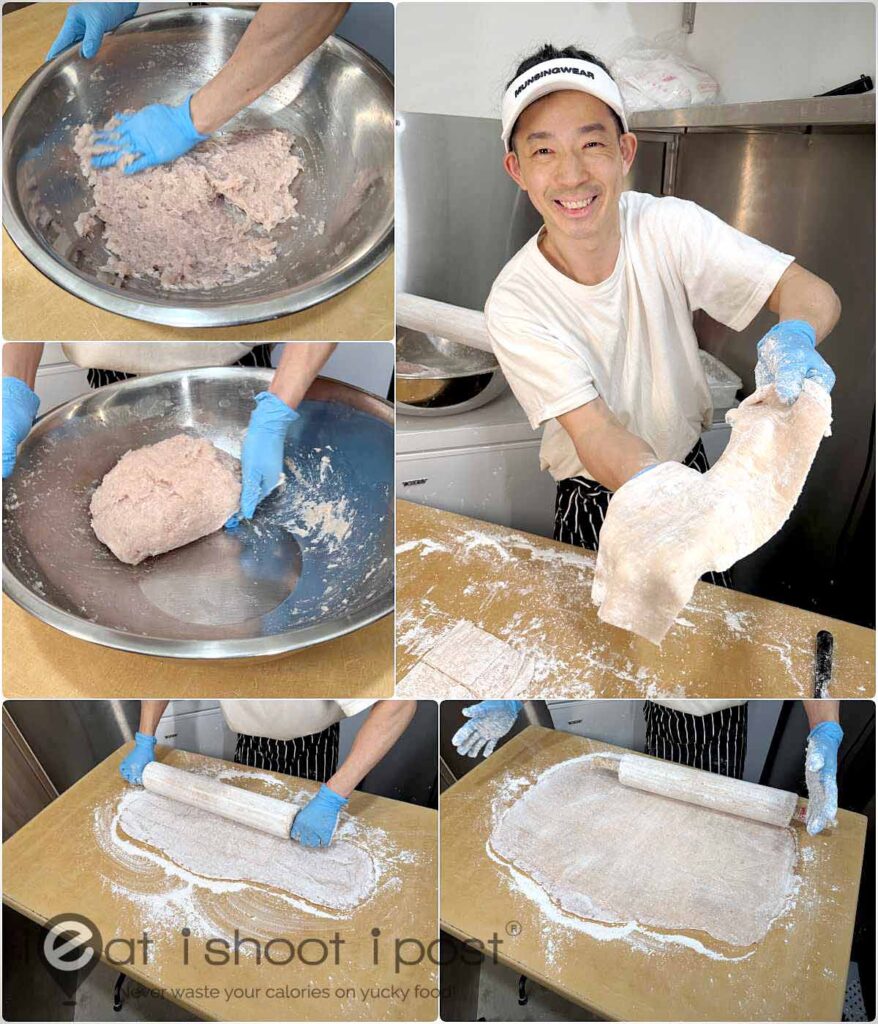
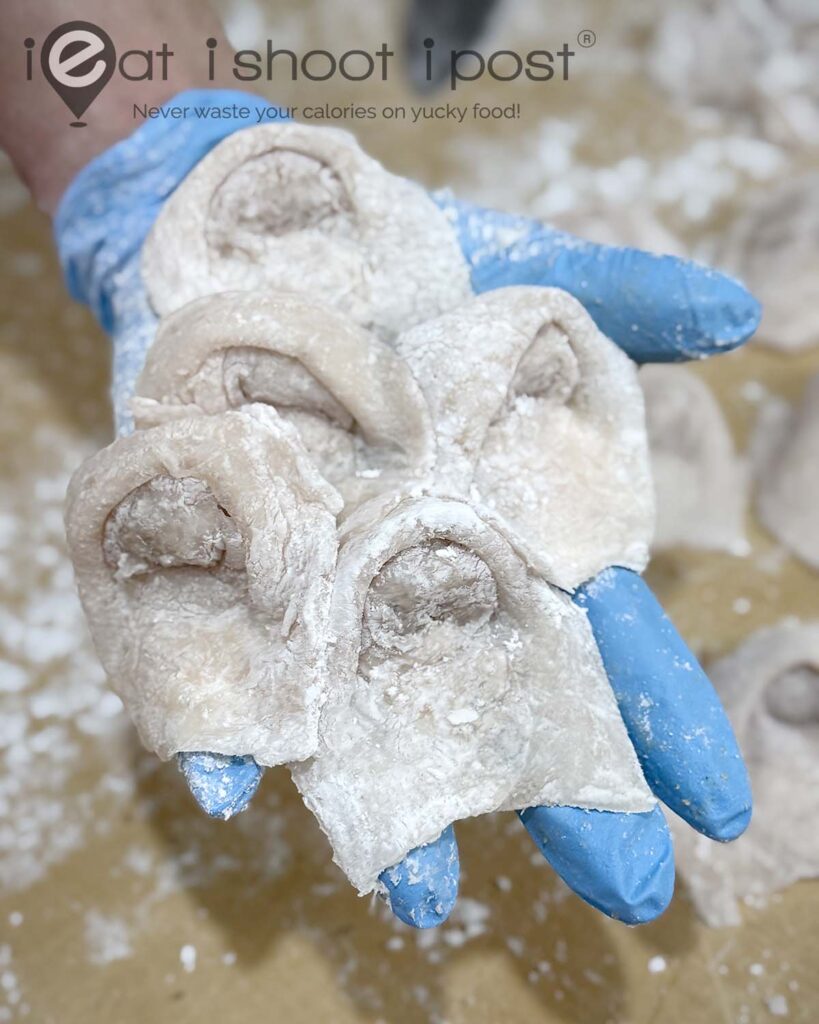
However, even at the new premises, his her giao are still made entirely by hand. James has not invested in new machinery to speed up the process, nor has he modernised his workflow for efficiency’s sake. Even the old foldable table – the very one on which he shapes each dumpling – remains in service. It is a quiet testament to his belief that some things are best left unchanged.
The process of making the fish skin sheets is, in principle, straightforward. Fresh yellowtail fillets are sourced from a supplier and passed through a mincer to form a smooth paste. Salt is then added, and the mixture is kneaded patiently until it becomes elastic and malleable. The paste is rolled out into thin sheets and lightly dusted with tapioca starch to prevent sticking.
There are no shortcuts, no industrial binders, no chemical additives – just fish, salt, and starch. It is as old-school as it gets. Perhaps that is precisely why it tastes the way it does. The filling is also kept very traditional, with minced meat and a generous amount of ground ti poh (fried solefish). 4.5/5
Yong Tau Foo is also available
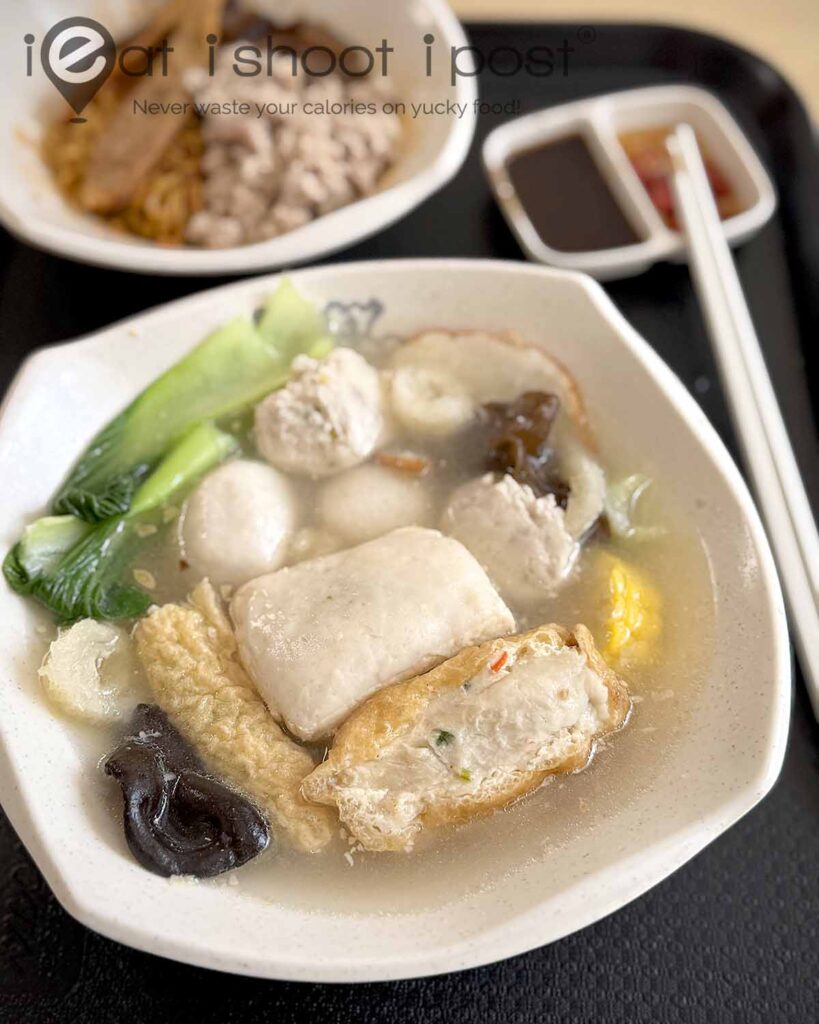
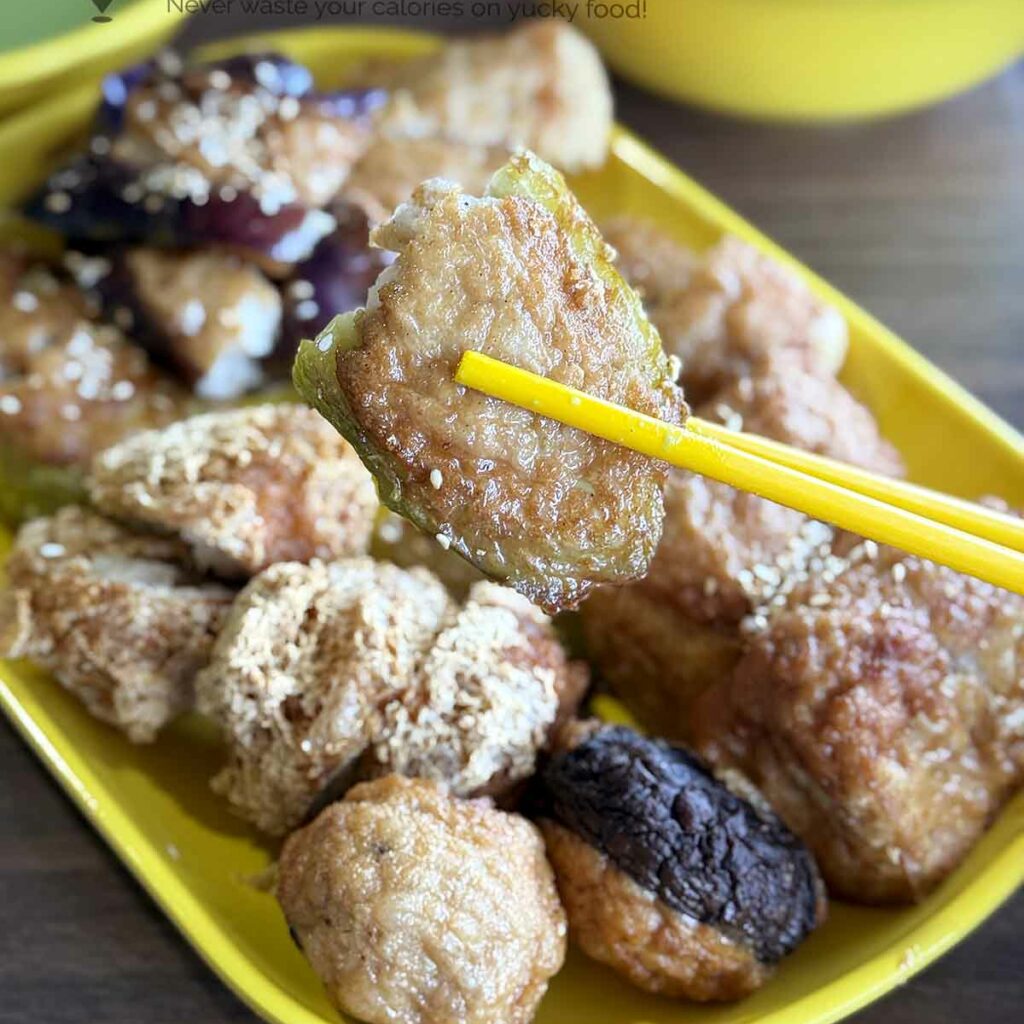
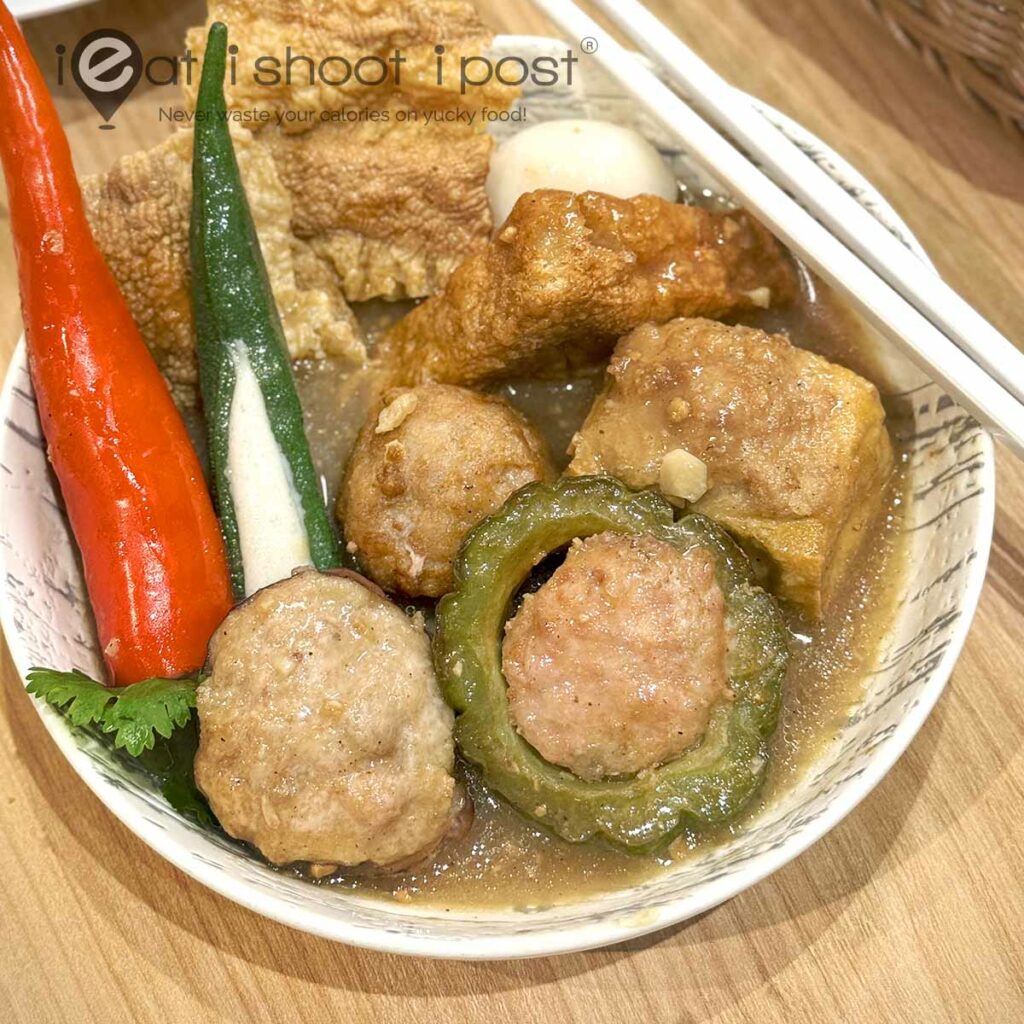
Aside from the her giao, they also offer a variety of yong tau foo. They are stuffed with either pure fish paste or a blend of fish and minced meat. The quality is excellent, making them ideal for takeaway – especially for hotpot at home.
We tried the yong tau foo at the restaurant and, while the fish paste itself was commendable, the dish as a whole didn’t quite come together harmoniously. The broth was essentially the soaking liquid used for the fish balls.
While it works perfectly well when served as a simple fish ball soup, it lacked the depth and balance needed for yong tau foo. Without a more robust soup base and a well-crafted dipping sauce, the dish never quite delivered the full yong tau foo experience. 3.5/5
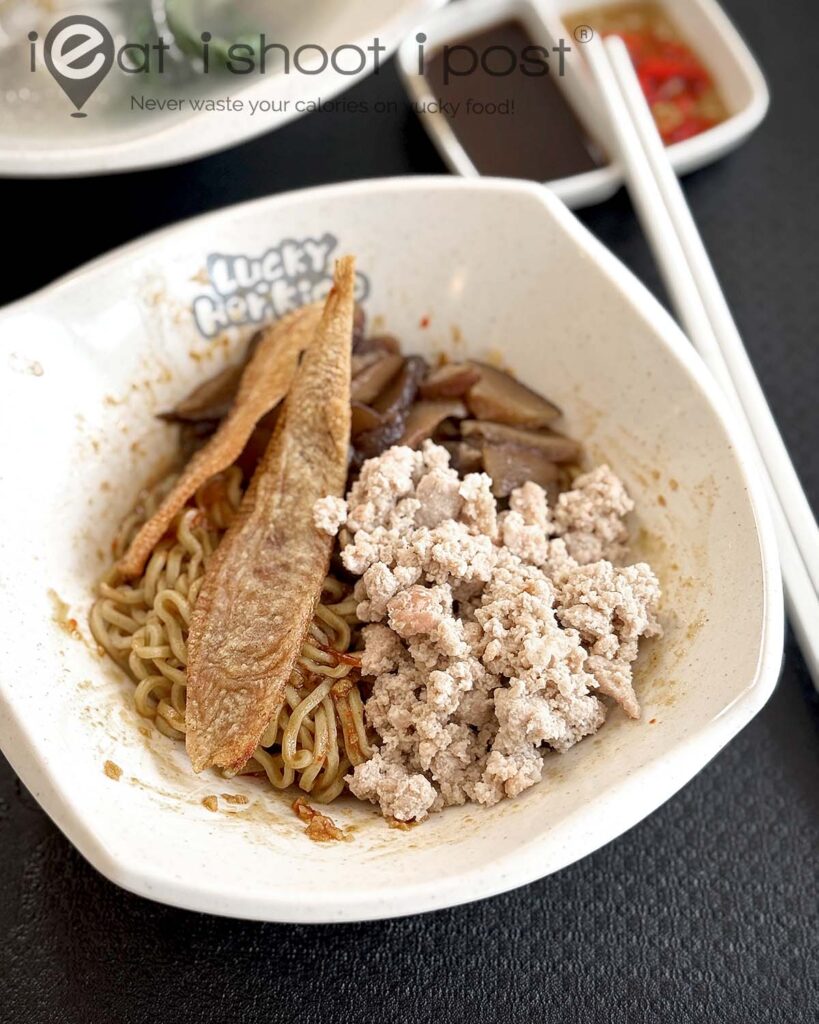
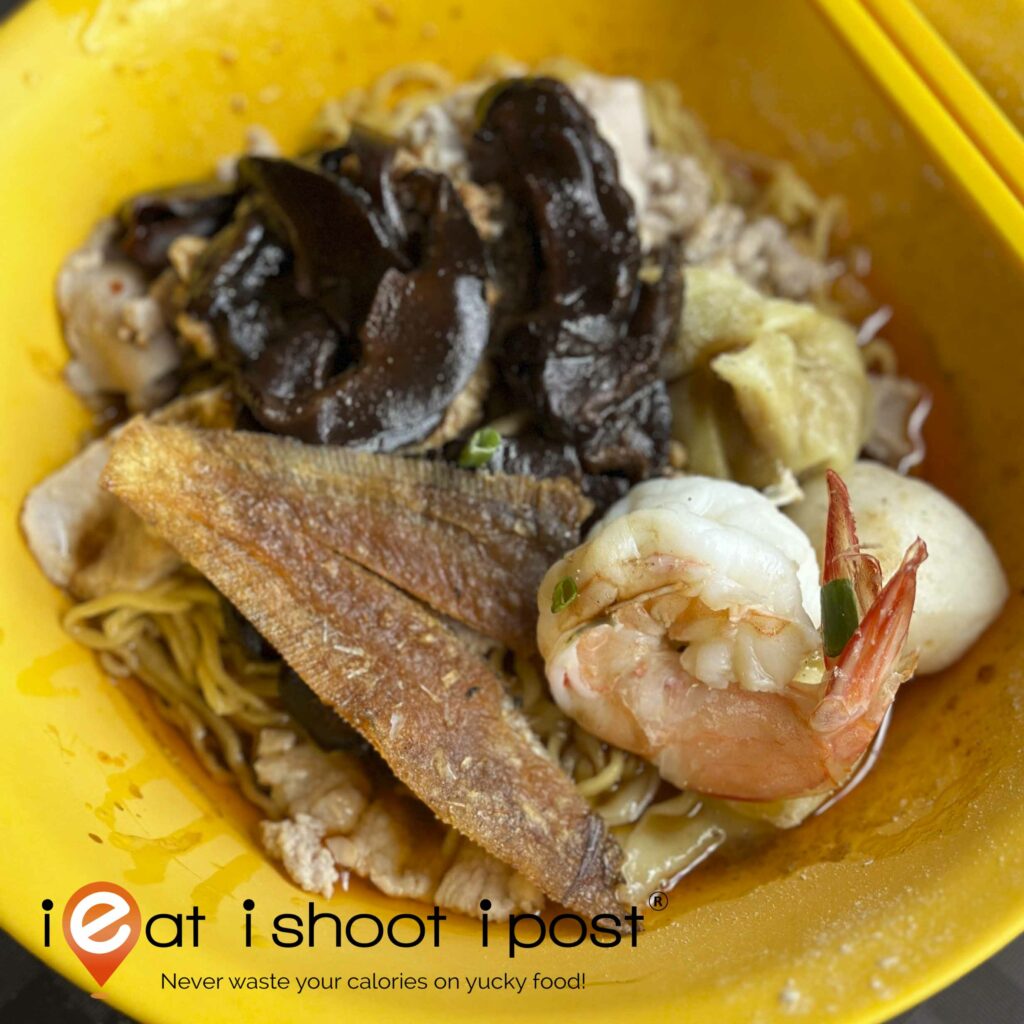
They also offer a bowl of minced meat noodles to accompany the her giao. Instead of the usual mee pok, they use a thicker kolo-style noodle. While springy and well-cooked, it didn’t quite deliver the same bite and textural satisfaction that a flatter, firmer mee pok would have provided.
The sauce, too, could have used a little more punch to elevate the dish and give it that familiar savoury kick.
Conclusion
In all, Lucky Her Giao shines brightest where it matters most – its excellent, traditional handmade Teochew fish dumplings. Crafted the old-fashioned way, they are fresh, springy and deeply satisfying. They are perfect for takeaway, especially for a comforting steamboat at home.
While it is great that you can now enjoy minced meat noodles and yong tau foo alongside the her giao, both dishes still require a little more refinement. For now, I wouldn’t recommend the restaurant if you are specifically seeking those items. But if it is authentic, well-made her giao you are after, this is certainly the place to head to.