
New Spring Menu, New Beginning
The last time we visited Hachi Restaurant was in December, when we experienced their Winter Menu. At the time, it felt like it might have been their final chapter, as they were preparing to move out of the National Gallery. The restaurant was still uncertain about finding a suitable new home then.
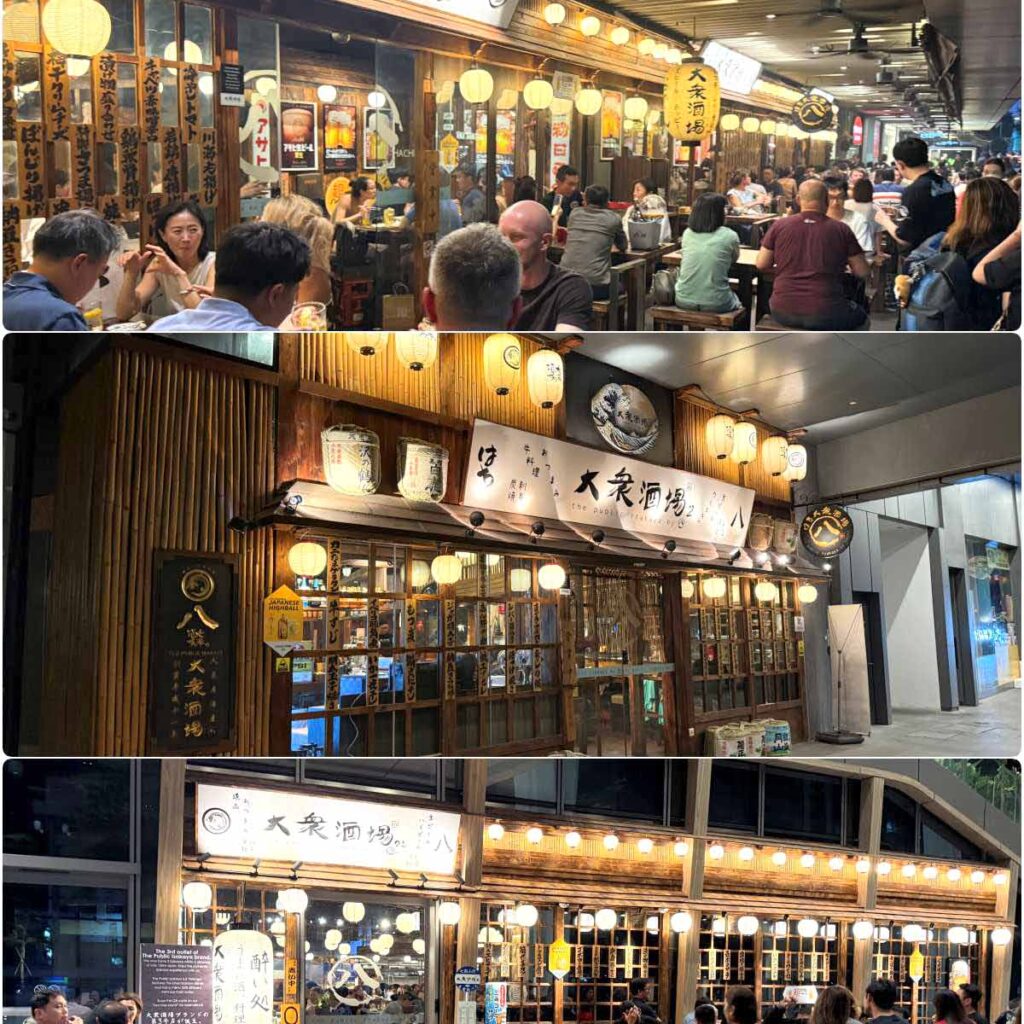
Thankfully, things have worked out. Hachi Restaurant has since relocated to Keppel South Central, where it now sits next door to its sister concept, The Public Izakaya 2.5, which we recently featured.
Modern, Progressive Japanese
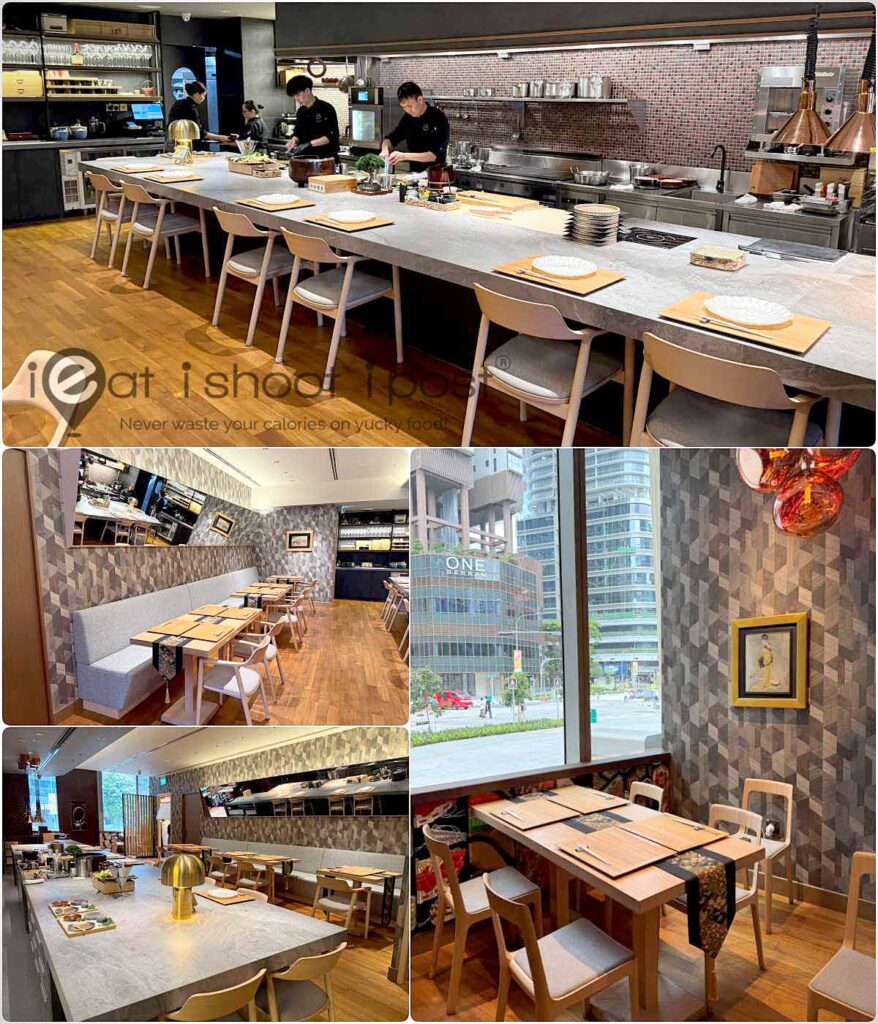
The newly relocated Hachi Restaurant comes across as modern and progressive, while still retaining the elegance of its previous incarnation. Regular patrons will recognize familiar touches, such as the stretch of mirror along the wall. It cleverly reflects the open kitchen that allows diners to follow the action even when seated with their backs to it.
The most striking change, however, is the removal of the barrier between chefs and guests.
In its place is a wide, communal-style counter where chefs prepare each course right before you, creating a more interactive and immersive dining experience. According to owner Fabian Koh – who has been making monthly trips to Japan over the past two decades, this shift reflects the evolving, more engaging dining trends in Japan today.
Sansai: The Taste of Spring
Spring vegetables are a hallmark of the season, heralding the arrival of spring with their fresh, slightly bitter flavours.
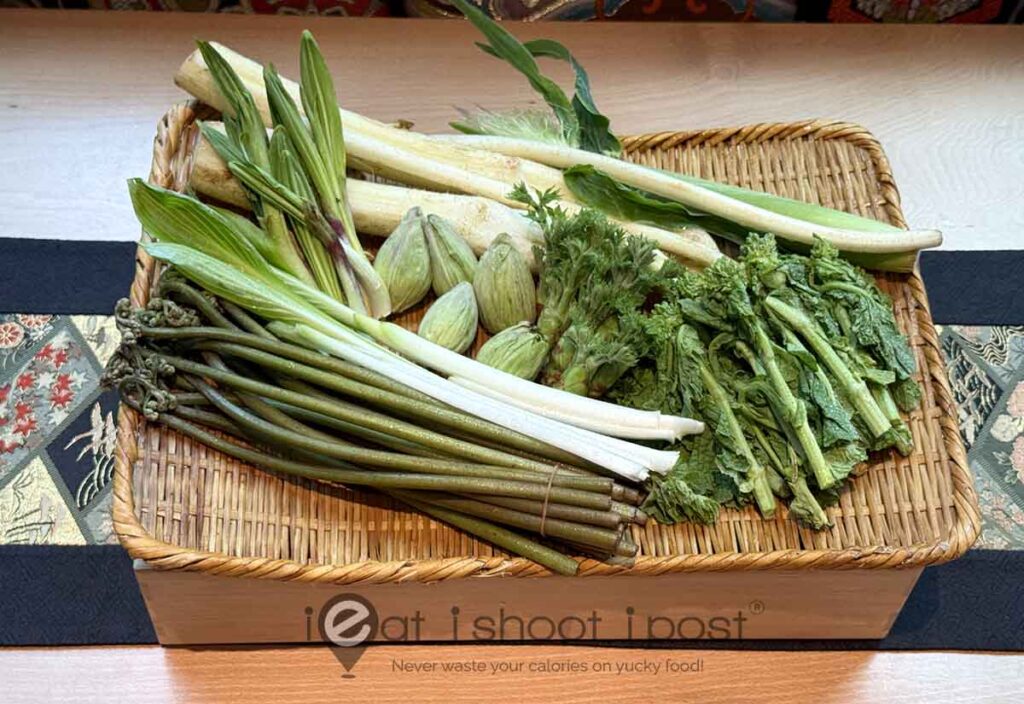
At Hachi Restaurant, this is beautifully expressed through an assortment of sansai. They are mountain vegetables such as taranome (angelica bud), kogomi (ostrich fern), fukinoto (butterbur), Tokyo udo, nanohana (rapeseed) and warabi (bracken fern).
These wild-harvested ingredients are prized for their fleeting season. They are said to awaken the palate after winter, capturing the essence of renewal and the quiet energy of spring.
Hassun
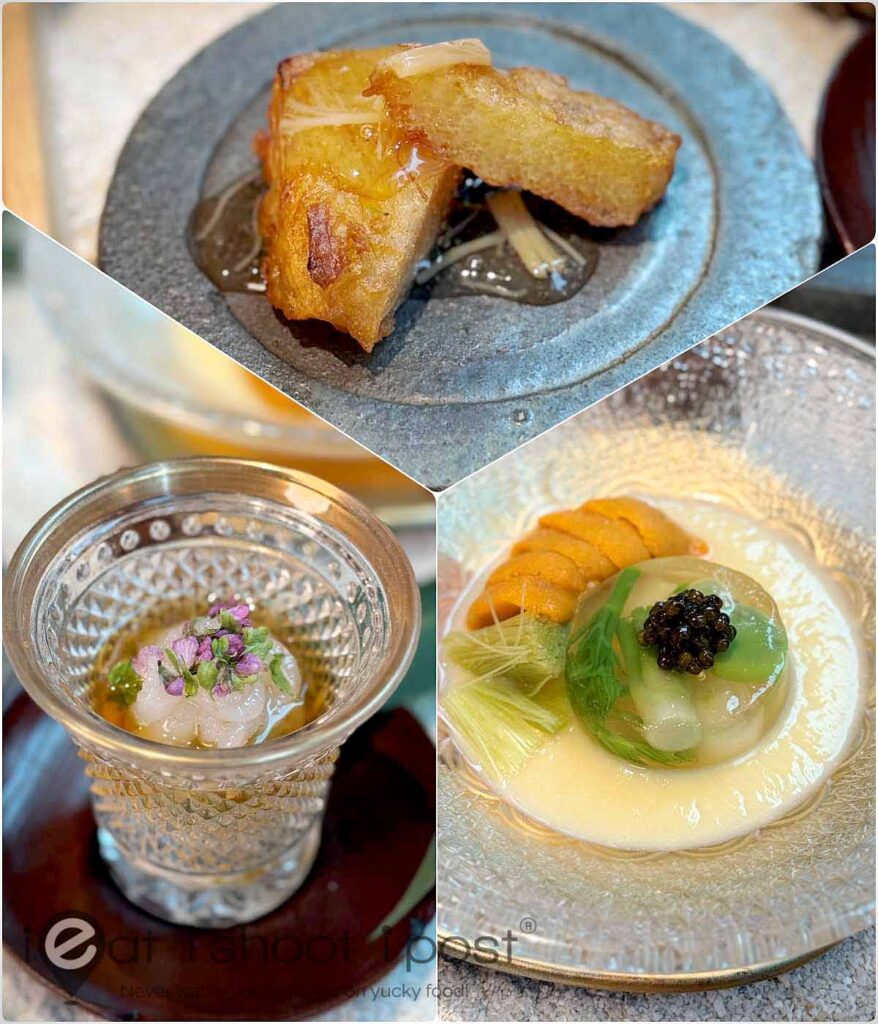
Our meal began with the Hassun, where we were presented with three items that set the stage for the rest of the Spring omakase.
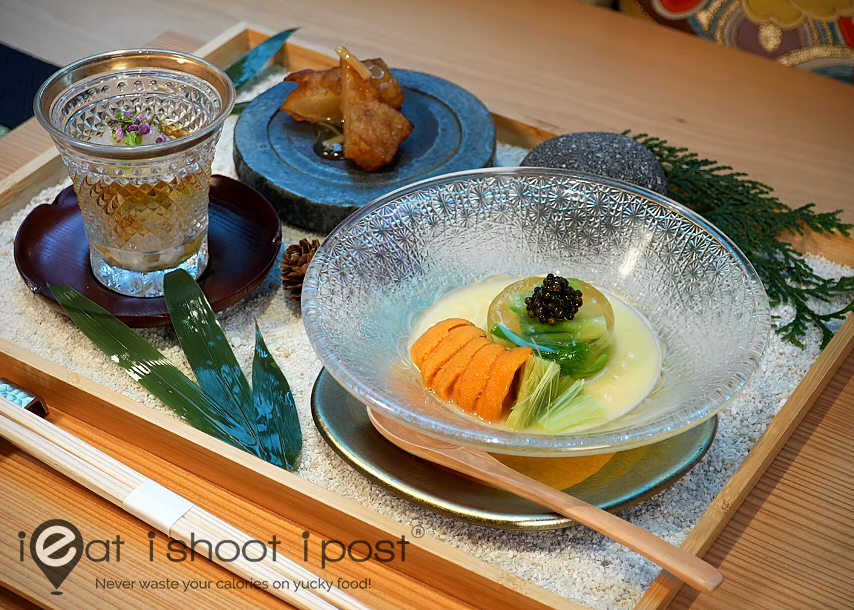
We started with fukahire – fresh shark’s fin that had been deep-fried and served with a savoury scallop sauce. The texture was unexpectedly crisp, offering a refreshing contrast to the usual gelatinous form seen in Chinese cuisine.
Next came our first taste of the season’s produce. It was a medley of spring vegetables set in a delicate aspic. This was accompanied by uni, caviar and a white asparagus velouté. The surprise element was the corn silk! It is something one would typically discard! Yet here it contributed a gentle, sweet freshness that was both refined and memorable.
Finally, we had mountain yam “somen” of finely sliced strands of nagaimo that mimicked somen noodles. This truly showcases the chef’s knife skills. Paired with sweet white shrimp, it was a light and elegant finish that highlighted both texture and seasonality.
Agemono
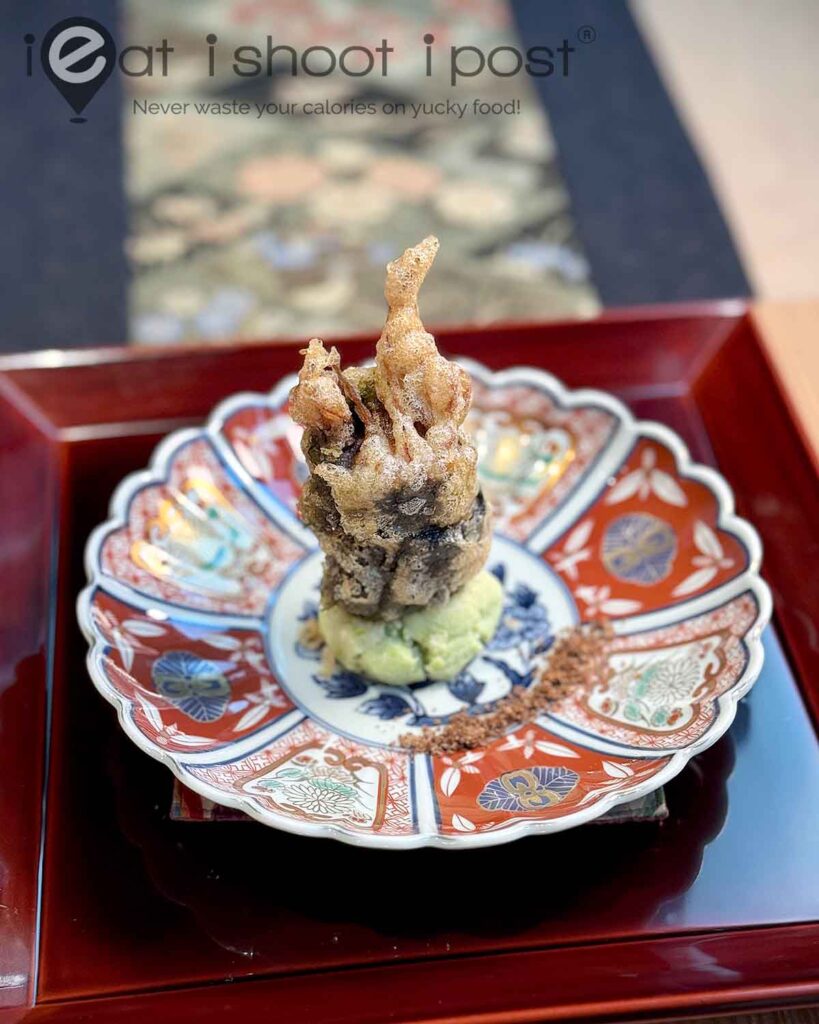
After the Hassun, we were presented with the agemono – a beautifully executed Hotaruika (firefly squid) isobe-age.
This highly anticipated spring ingredient is named for its ability to emit a faint bioluminescent glow in the waters off Toyama Bay. It was first wrapped in seaweed and shiso leaf then encased in a delicate, crisp batter. What a lovely contrast of textures with its tender, briny interior.
It was served atop a smooth edamame purée, whose gentle sweetness balanced the oceanic intensity of the squid. And a dusting of roasted negi onion powder added savoury depth and a hint of smokiness. It was a refined dish that captures the fleeting essence of spring, both in flavour and form.
Sushi
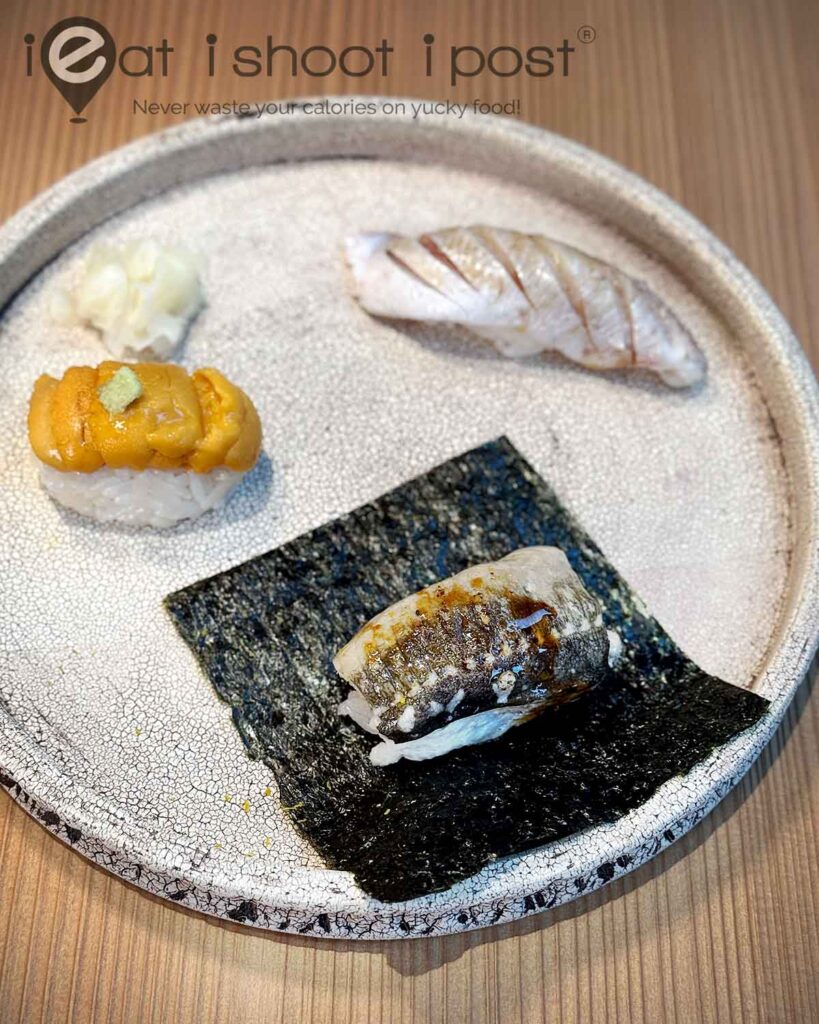
The highlight of our sushi course was undoubtedly the anago, which was thick, unctuous and meltingly tender.
Hachi only uses large eels of around 1 kg, as the bigger specimens carry more fat and are considered far more premium than their smaller counterparts.
The result is a fillet with a rich, buttery texture that almost dissolves on the tongue. Yet it retains just enough structure to remind you of its quality. Lightly brushed with a sweet-savoury tare and gently torched, the anago achieved a beautiful balance of caramelisation and umami. It was a deeply satisfying and memorable course.
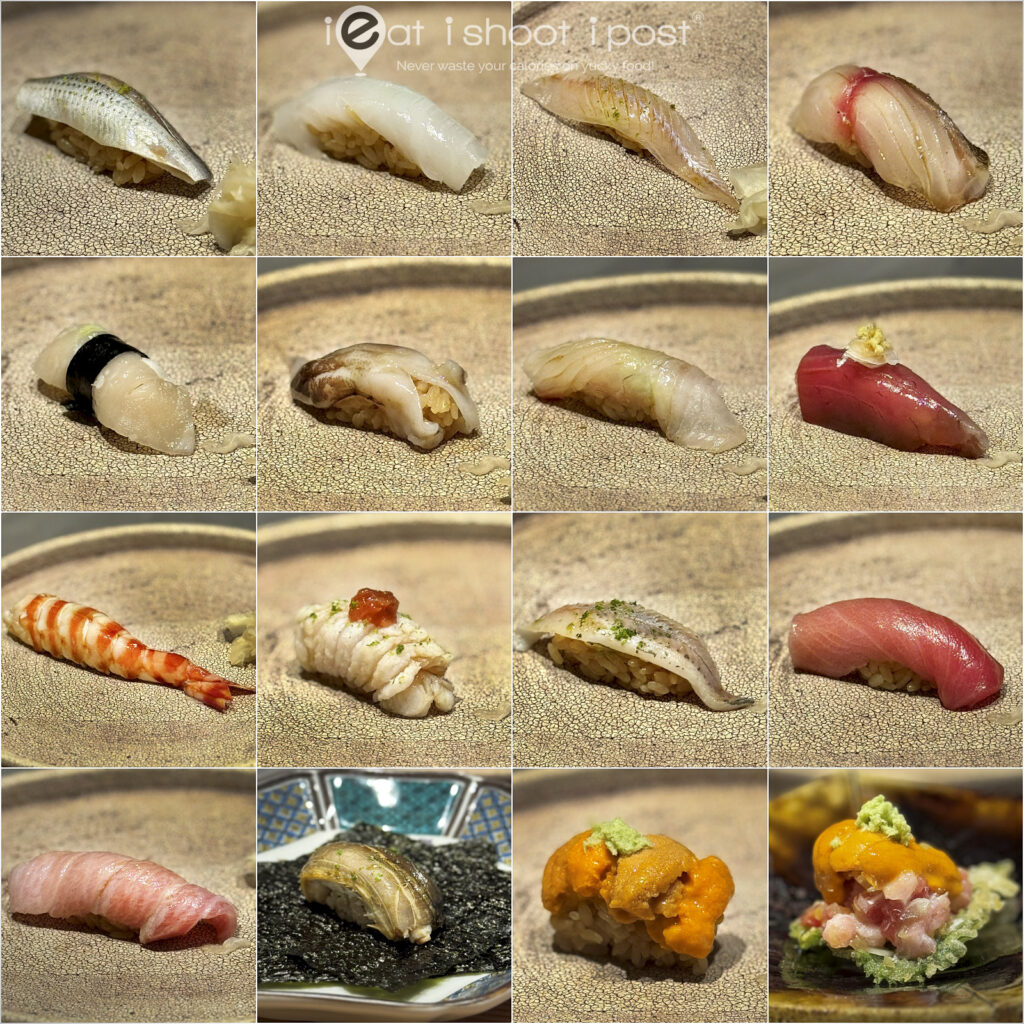
Postscript: We were back in June 2026 at Hachi for a sushi omakase. See how many types of sushi can you recognise in this post.
Chutoro
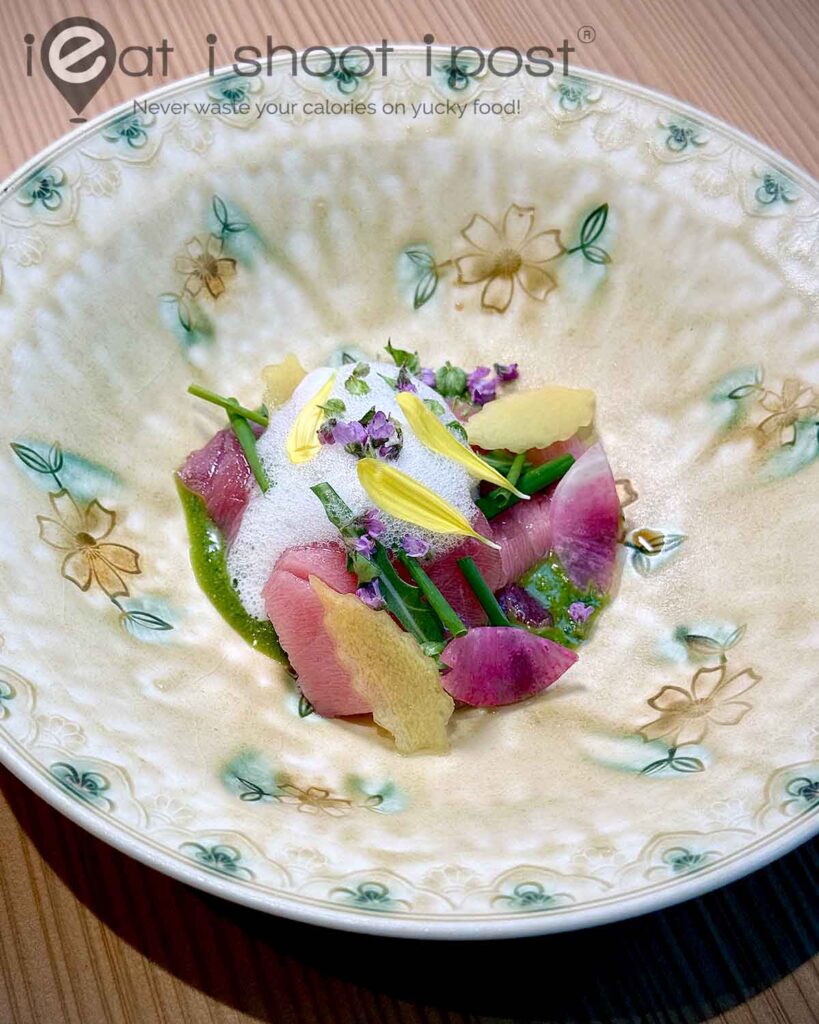
Our next dish of chutoro was a fusion of Japanese and Western techniques. It’s a style that has become increasingly popular in Japan.
The buttery chutoro was paired with an arugula, shungiku, wasabina, pine nut and anchovy dressing. It brought peppery freshness, nutty depth and gentle umami salinity, lifting the fish without overwhelming it. Accents of koshin daikon and yellow ninjin added crunch and a touch of sweetness, providing a refreshing contrast to the richness of the tuna.
Special mention must be made of the elegant Kyo-yaki ceramic plate on which it was served, adding a refined visual dimension to the dish. We are always impressed with the tableware at Hachi Restaurant, which reflects the owner’s deep appreciation for Japanese culture.
Suimono
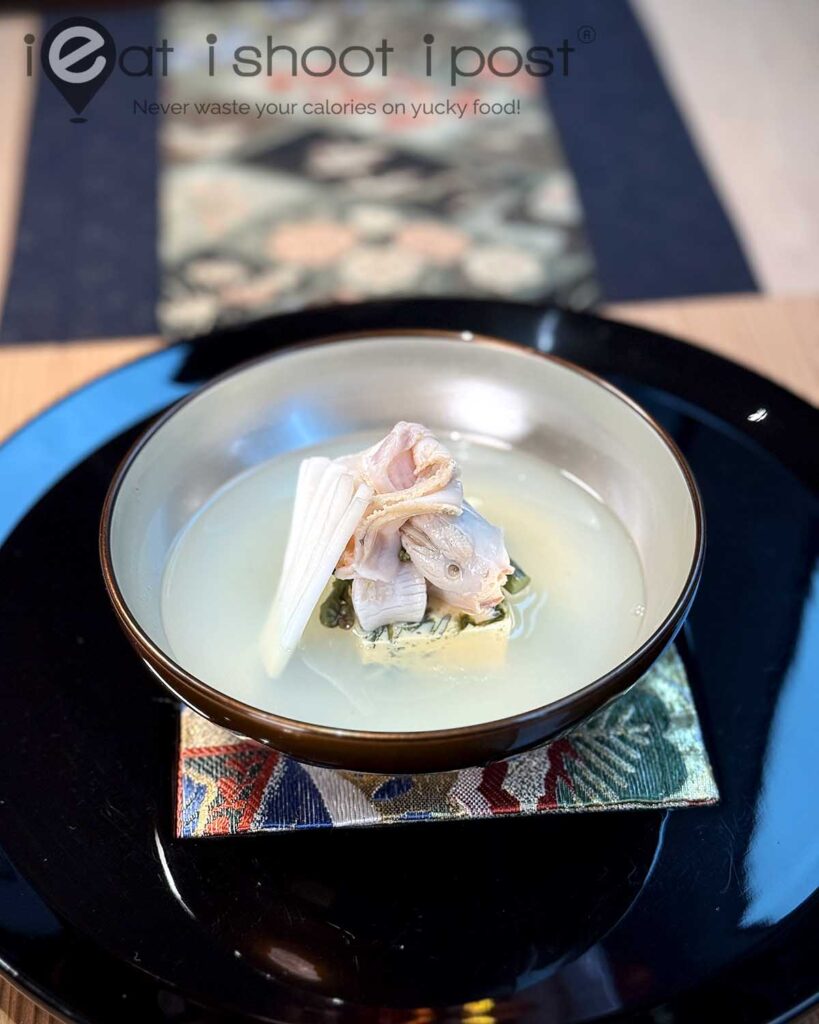
The Suimono course showcased the elegance and restraint of the season. It was centred around hamaguri clams, a prized spring ingredient in Japan. These clams are often associated with renewal and auspicious occasions.
The clam was poached lightly to retain its natural sweetness and tender texture. Its delicate brininess forming the backbone of the clear, refined usui mame pea–clam jus, added a subtle vegetal sweetness to the broth.
Accompanying the clam was Tokyo udo, sometimes referred to as “mountain asparagus”. It is a unique shoot cultivated in darkness to preserve its pale colour and mild, slightly herbaceous flavour without bitterness.
Paired with warabi bracken fern and a silky tarabagani king crab tamago tofu, the dish brought together mountain and sea in perfect harmony. Light yet deeply flavourful, it was a beautifully composed bowl that captured the quiet sophistication of spring.
Seasonal Sashimi
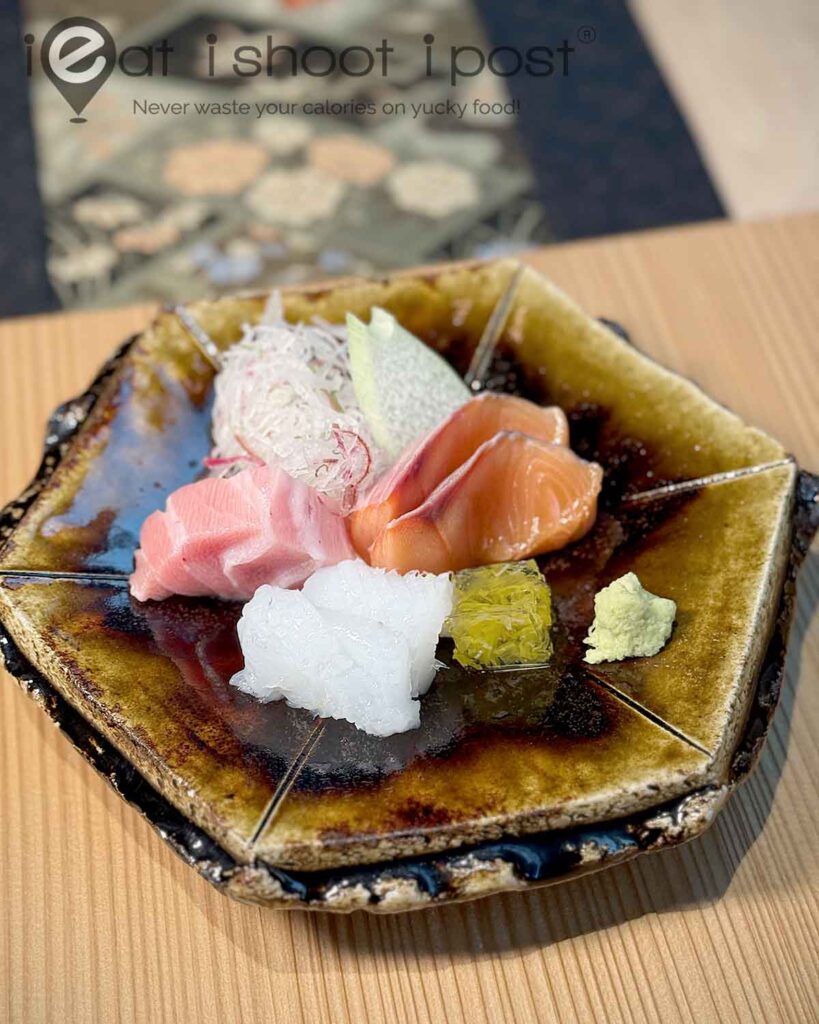
For the sashimi course, we were initially taken aback to see slices of what appeared to be salmon laid out on the plate.
Given the owner’s well-known stance against serving farmed salmon, (there is even a sign at The Public Izakaya declaring that they have not served salmon since day one), we were naturally curious about what this vibrant orange fish could be.
It turned out to be a Sakura Masu (cherry trout), wild-caught from Hokkaido. It offers a flavour that was both refined and distinctly different from what one might expect.
While the otoro was, as expected, excellent, the true highlight for us was the Aori Ika (bigfin reef squid). It possessed a remarkable texture that was gently chewy without being tough. Its delicate, natural sweetness lingered on the palate. It is easy to understand why this particular squid is so highly prized for sashimi.
Yakimono
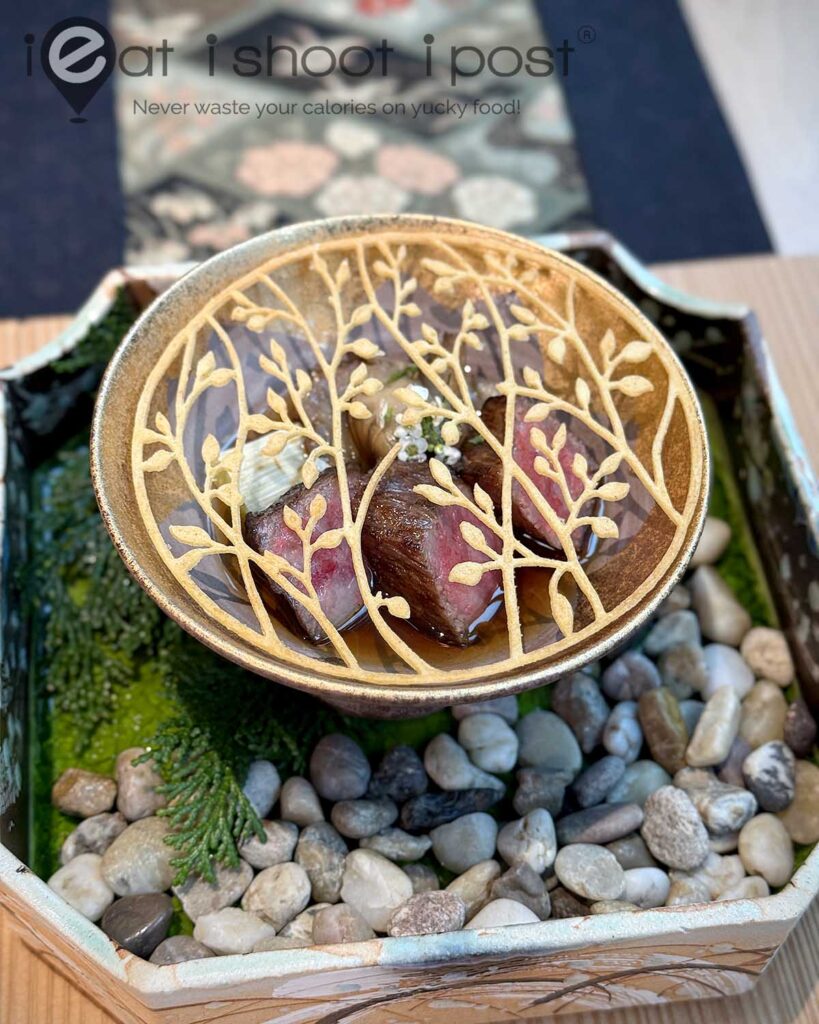
It is hard to go wrong with charcoal-grilled A5 Ohmi Wagyu. The sheer quality of the intensely marbled beef means that as long as it is not overcooked, it will already be exceptional. The real question then is how a high-end omakase restaurant makes such a dish stand out.
The answer lay in both presentation and finesse. The wagyu was concealed beneath a beautifully crafted jagaimo potato crust, which diners gently broke apart to reveal the beef beneath. The meat was paired with a delicate yet deeply flavourful wagyu dashi broth that enhanced its richness without overwhelming its natural sweetness.
It was a thoughtful composition that elevated an already luxurious ingredient into something truly memorable.
Gohan
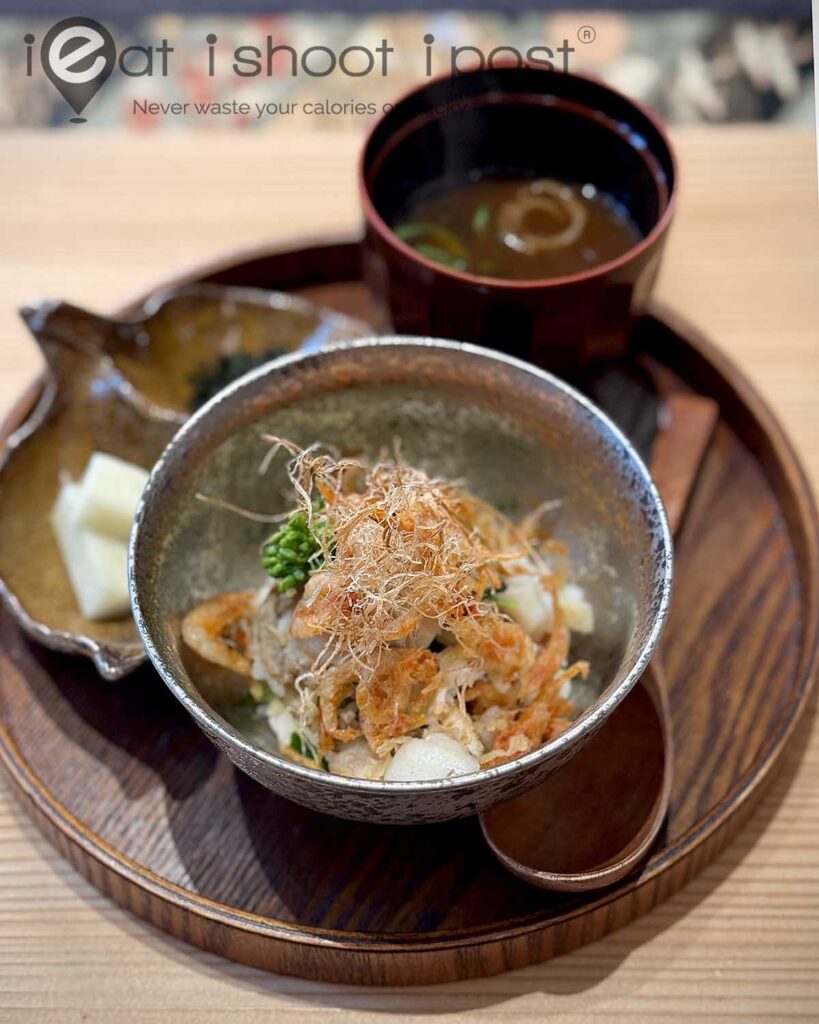
For the rice course, we were served a bowl of perfectly cooked rice topped with sakura ebi that had been deep fried together with a selection of vegetables, including seasonal sansai such as nanohana (rapeseed). The combination brought together fragrant, crispy sweetness with a gentle bitterness that tied everything together beautifully.
A little tip to share is that you can ask for a second helping of rice if you are still feeling that you could eat a bit more. On the next round, they will generously top it with ikura, adding bursts of briny richness that make it a satisfying encore.
Dessert
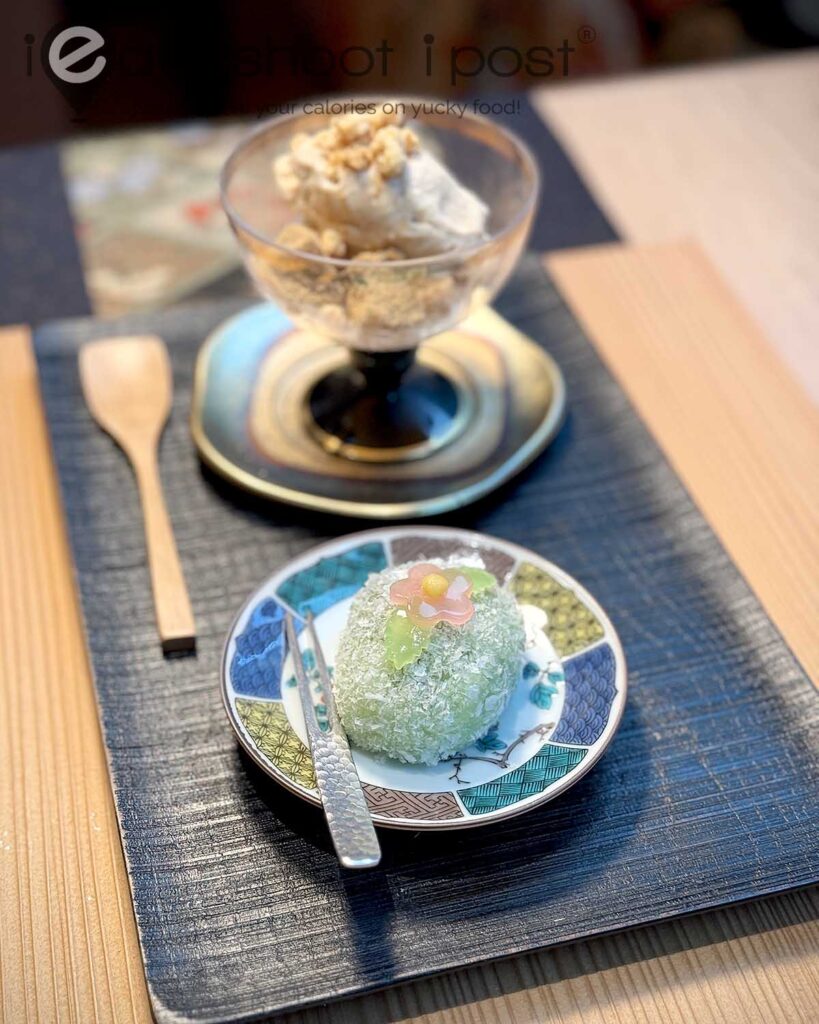
Hachi is one of the few omakase restaurants that employs an in–house Japanese wagashi/dessert chef, so you can expect the dessert course to go beyond simply fruits or a scoop of ice cream. For dessert, we were presented with wagashi alongside a house made kinoko ice cream, bringing the omakase experience to a satisfying conclusion.
If you are celebrating a birthday or anniversary, be sure to inform them when making your reservation. They may just prepare a complimentary pastry to mark the special occasion.
Omakase Courses
We had the Hachi Dinner Omakase course $318++ per pax.
Lunch Omakase starts at $168++ per pax for 7 to 8 courses.
Dinner Omakase starts at $238++ pers pax for 8 to 9 courses.
Check out their latest menu for more details.
Conclusion
Founded in 1999, Hachi continues to evolve as one of Singapore’s pioneering Japanese omakase restaurants. Its latest iteration reflects a trend seen in Japan, where diners are more closely connected to the chefs, while continuing to showcase meticulously sourced seasonal ingredients that incorporate subtle Western techniques, to give patrons an authentic taste of Japan.
Disclosure: this post is written in partnership with Hachi Restaurant. Opinions expressed are those of our own.