


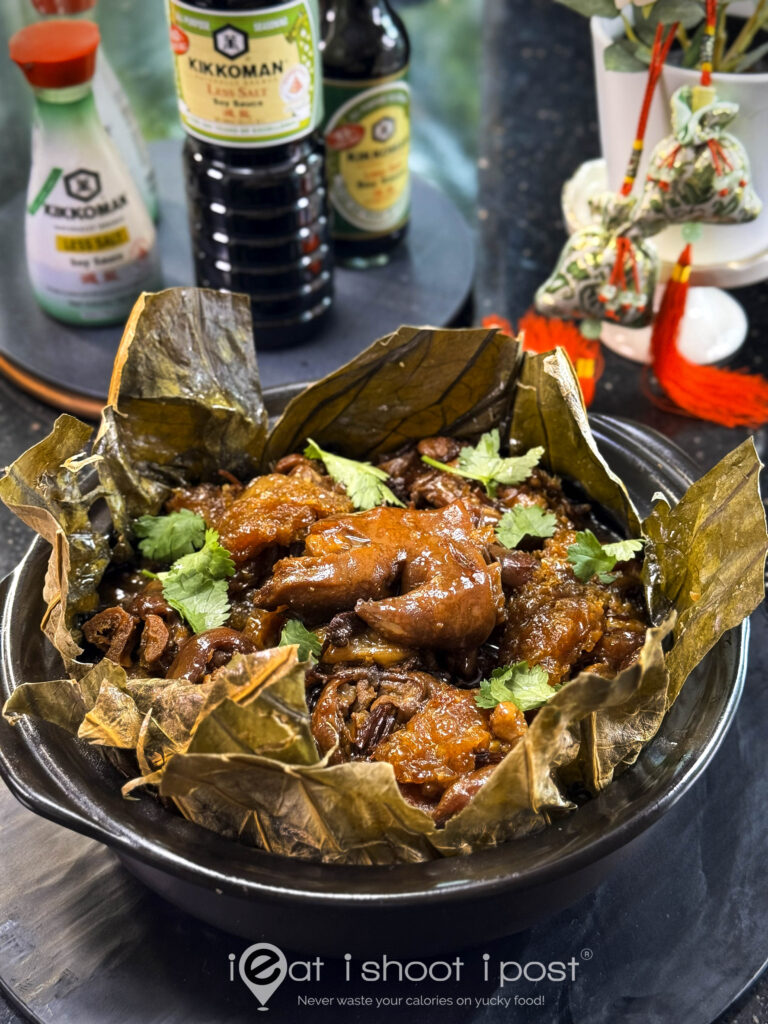
A Comforting, Collagen-Rich Dish for the New Year!
When you think of Chinese New Year dishes, what comes to mind? Pen cai, sea cucumber, fish maw. What do all these festive delicacies have in common? They are all rich in collagen.
Collagen-rich foods play an important role during Chinese New Year for several reasons. In Chinese cuisine, a soft, gelatinous texture is associated with luxury and indulgence. Symbolically, dishes that are rich, smooth, and abundant represent prosperity and good fortune for the year ahead. From a wellness perspective, collagen is also believed to nourish the skin and joints, and is especially valued for elders and postpartum mothers.
Today, we’ll be preparing pork trotters, one of the most collagen-rich ingredients you can find. And because it’s Chinese New Year, we’ll be elevating the dish by adding fish maw for an extra boost of collagen, then wrapping everything in lotus leaf for a more refined aroma and a beautiful, festive presentation.
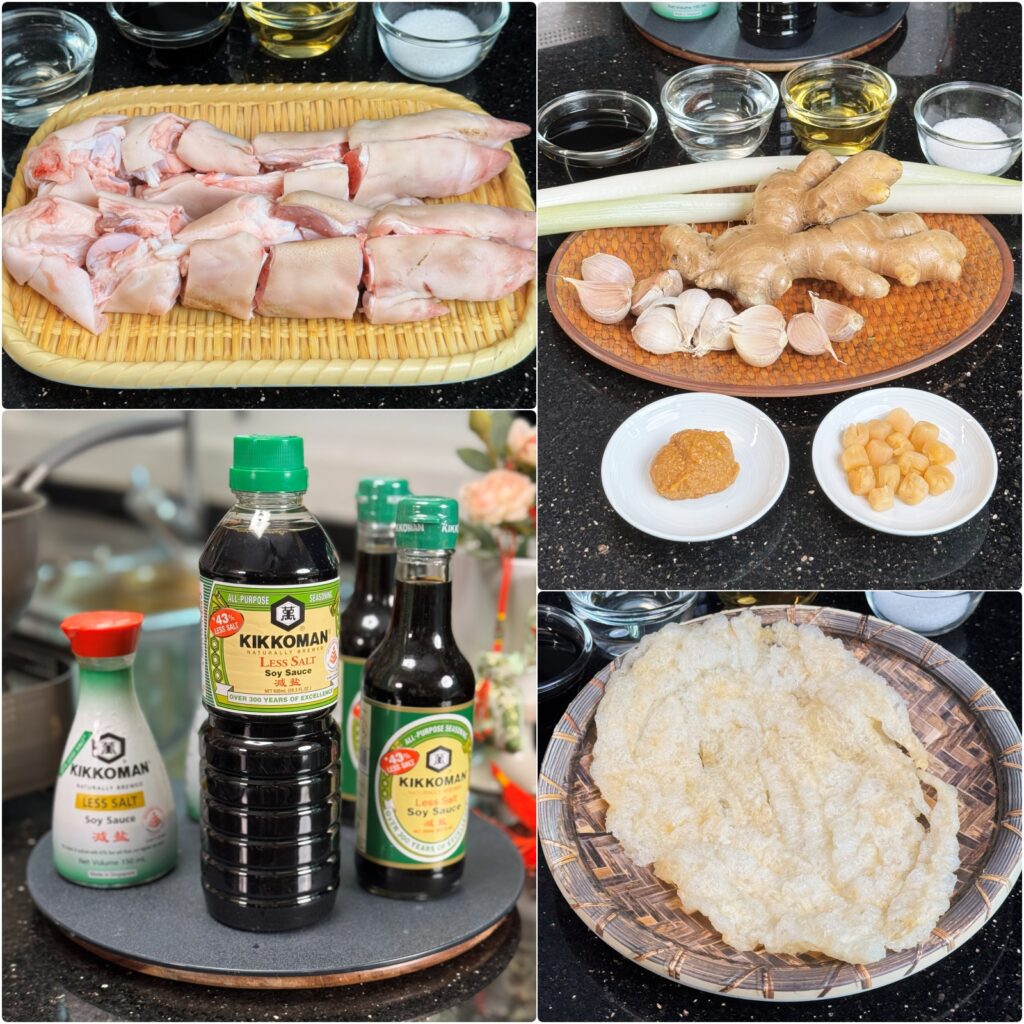
To make the dish even healthier, we’ll be using Kikkoman Less Salt Soy Sauce, a naturally brewed soy sauce made with just soybeans, salt, wheat and water. After the brewing process, part of the salt is removed, allowing it to retain 100% of its umami while containing 43% less salt.
This gives us all the depth and savouriness we want, while lowering the amount of sodium in the dish!
Healthier Braising Sauce with less Salt and Sugar!
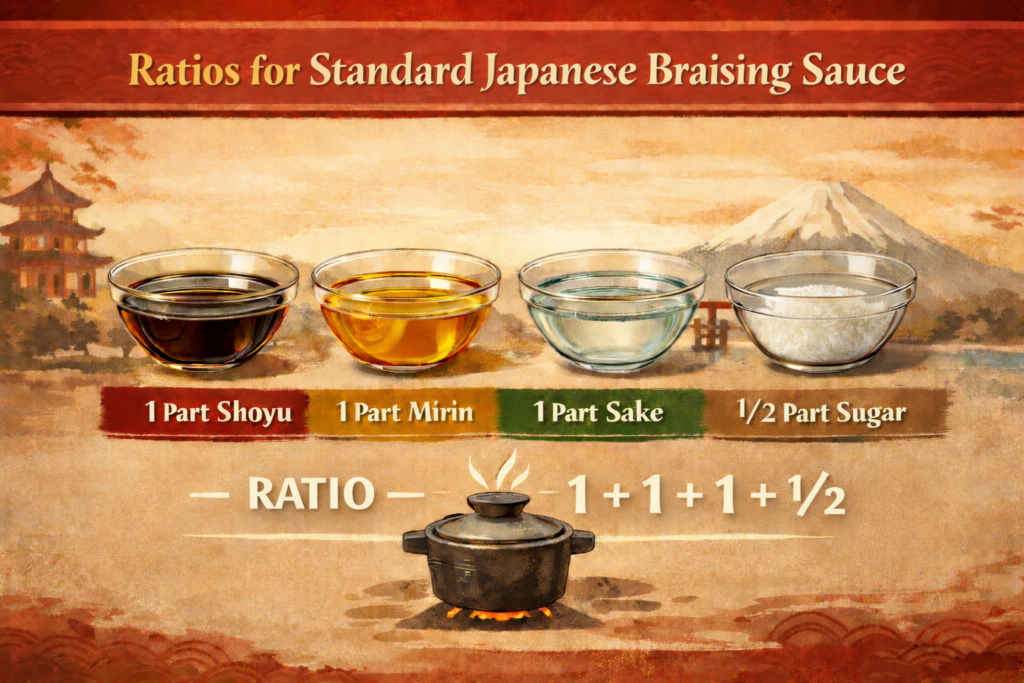
The standard Japanese braising sauce calls for equal parts of shoyu, mirin, sake and half part sugar.
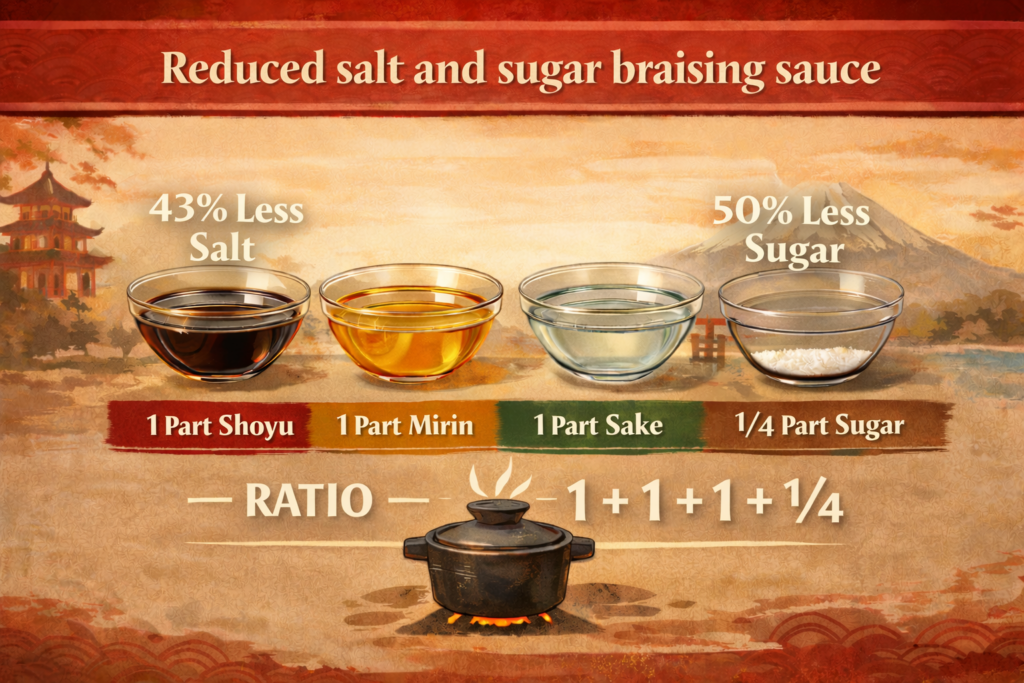
By using Kikkoman less salt soy sauce, we reduce the salt by 43% and because it is less salty, we can also reduce the sugar by 50%. The resulting braising sauce is still very balanced. It will taste less salty and sweet but will still have the same amount of umam!
Recipe Card
Serves 3-4 pax
Preparation Time: 2 hours (including soaking fish maw)
Cooking Time: 3 – 4 hours
Ingredients
Pork Trotters × 2
Fish Maw – 1–2 pieces
Kikkoman Less Salt Soy Sauce – 125 ml (½ cup)
Sake – 125 ml (½ cup)
Mirin – 125 ml (½ cup)
Sugar – 2 Tbsp
Miso – 1 Tbsp
Dried Scallops – 8–10 small pieces
Ginger – 1 thumb-sized piece, sliced
Leeks × 2 (white parts only)
Shaoxing Wine – 1.5 Tbsp
Optional
Lotus Leaf
Method
- Soak Fish Maw
Soak fish maw in water for 2 hours, until soft and expanded. - Prepare Pork Trotters
Place pork trotters in cold (room temperature) water, bring to a simmer and cook for 5 minutes.
Drain, rinse under tepid water, scrub clean, and set aside. - Saute leeks and ginger till the surface is caramelised. Remove and set aside.
- Build Braising Sauce
In a pot, add sugar and 2 Tbsp water. Heat until dissolved and lightly caramelised. - Add sake, mirin, miso, and soy sauce, stirring until smooth.
- Braise pork trotters
Add pork trotters, leeks, ginger, miso and dried scallops.
Bring to a boil, then simmer for 2 hours.- Alternative methods:
- Oven: 140°C, 2 hours (oven-proof pot)
- Pressure cooker: 30 minutes
- Alternative methods:
- Prepare Fish Maw
Boil fish maw with a splash of Shaoxing wine, ginger slices and spring onions for 5 minutes.
Drain, rinse under cold water, and squeeze dry. - Finish Braising
Add sliced fish maw to pork trotters (after cooking for 2hrs) and cook for a further 40 minutes, until tender. - Drain braising sauce and thicken.
- Rest
Cool and refrigerate overnight to deepen flavour and firm up the sauce. - When ready to serve
Soften lotus leaves in hot water. Wrap pork trotters and fish maw.
Steam for 30 minutes and serve.
Cooking Notes and Tips
Prepping the Fish Maw
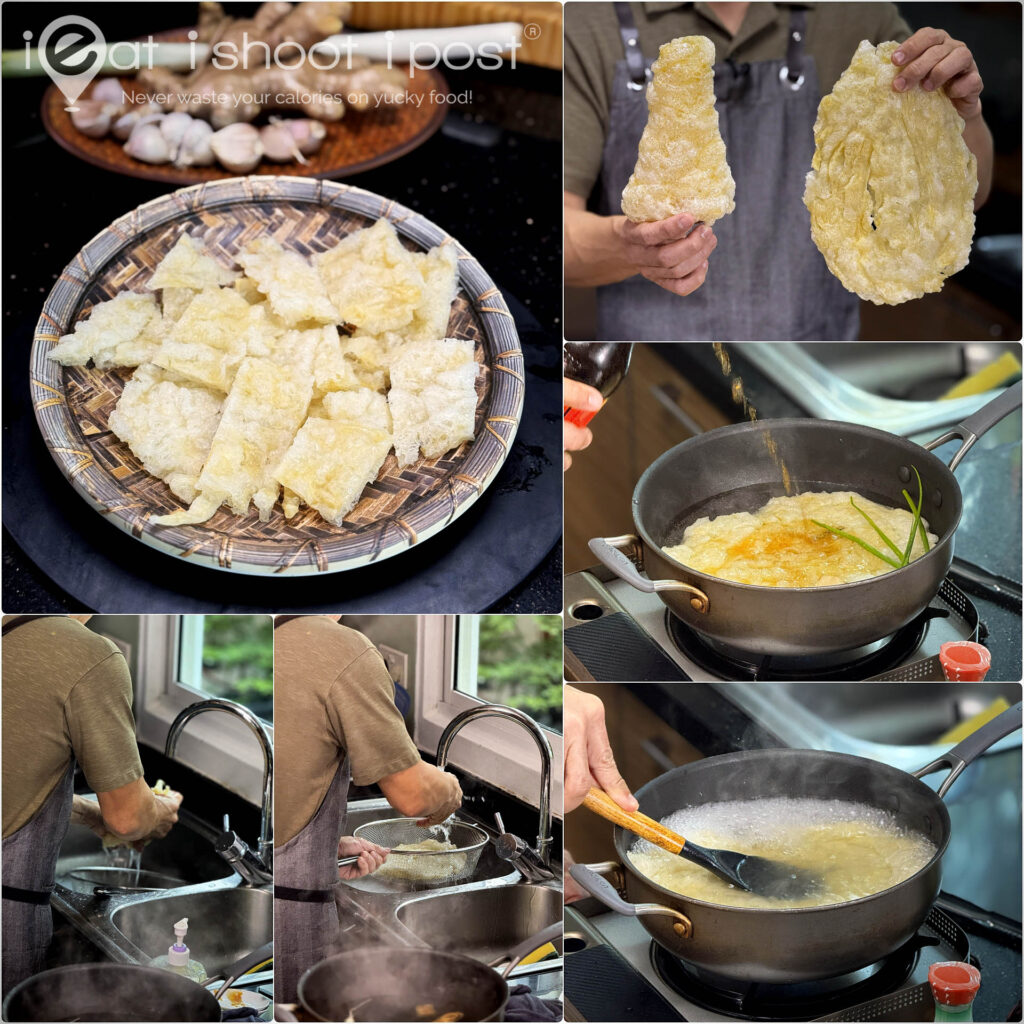
Dried fish maw is readily available at dried goods stalls at the wet market, supermarkets and online. For this recipe I am using threadfin fish maw, but you can use any fish maw that is available.
To prepare it, simply soak the dried fish maw in water for about 2 hours, or until fully softened and expanded. Rather than using it straight away, I like to take an extra step to remove any residual stale oil aroma. To do this we blanch the fish maw in water with a generous splash of Chinese cooking wine, ginger and the greens of the leeks. Simmer for 5 minutes, gently pressing the fish maw to flush out the oil.
Drain and rinse under running water, and squeeze out the excess liquid. Finally, cut the fish maw into roughly 5cm pieces and its ready to be added to the pork trotters.
Prepping the Pork Trotters
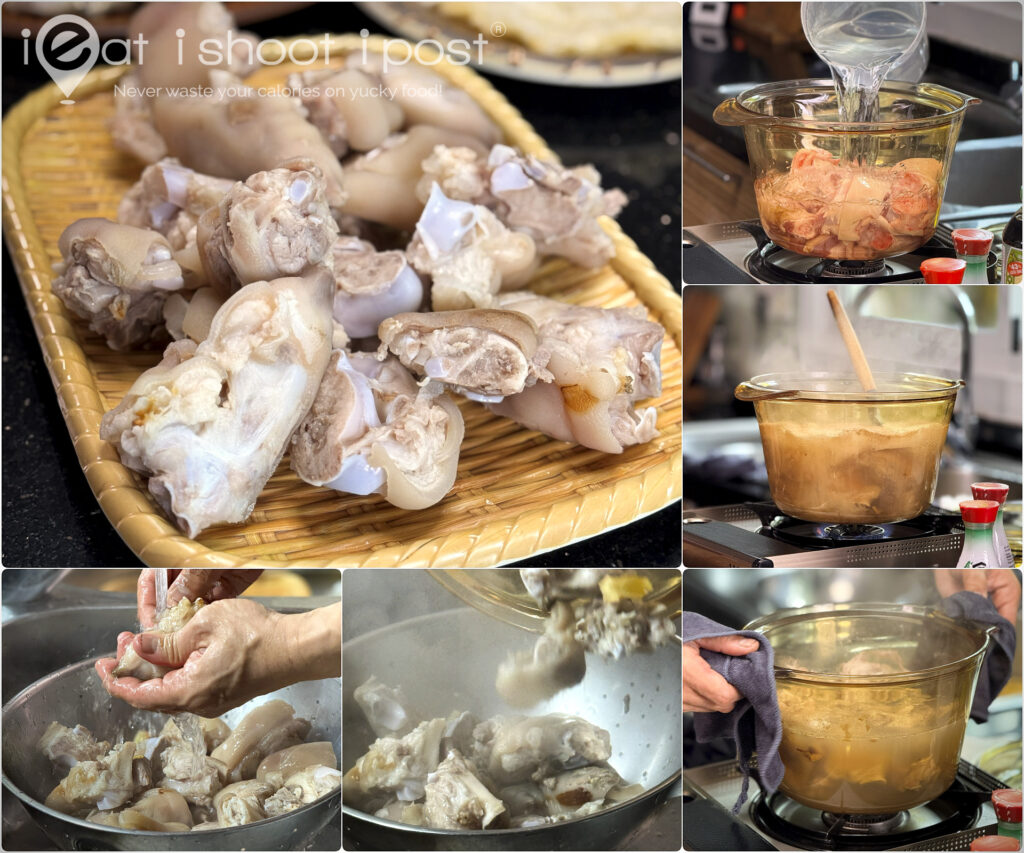
It is important to clean the pork trotters properly to remove any unpleasant odour that can develop from surface oxidation on the meat.
To do this, place the pork trotters into a large pot of cold water and bring it to a boil. Let it cook for about 5 minutes. During which, you will see impurities and scum rising to the surface. Drain the trotters, then rinse each piece thoroughly under running water, scrubbing away any loose bone fragments and excess myoglobin.
Once this step is done, the pork trotters will be ready to soak up all the flavour from the braising sauce.
Preparing the Sauce
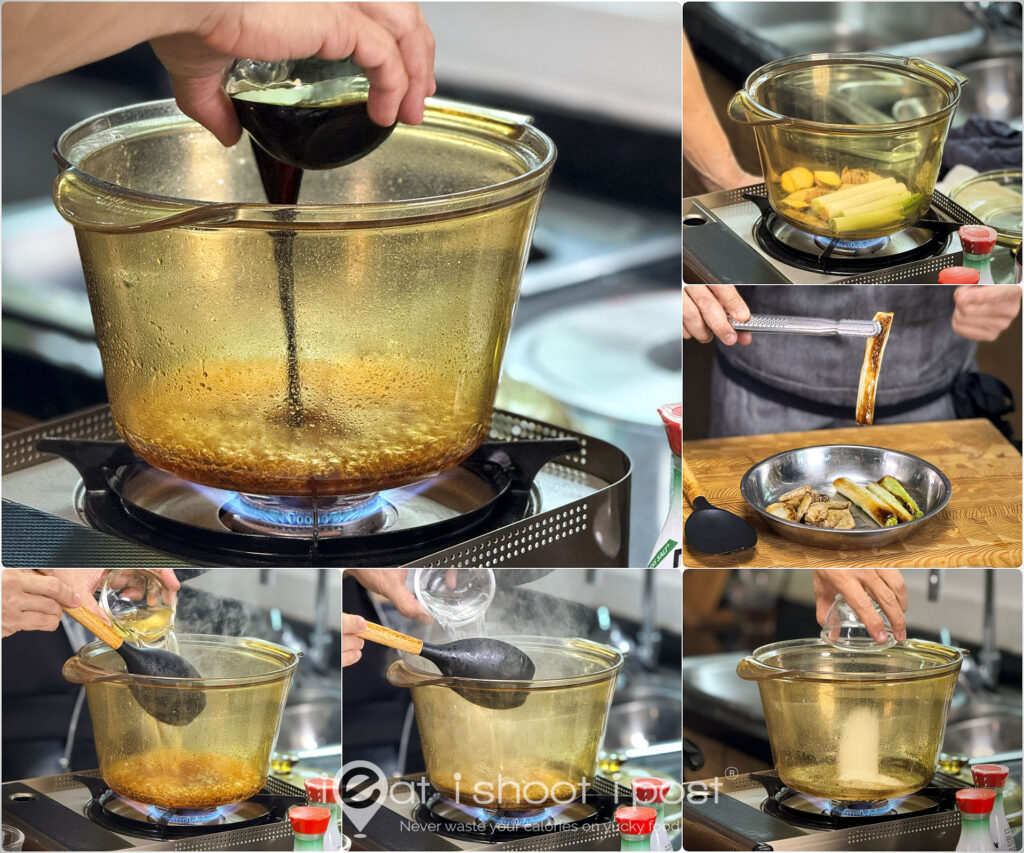
Start by preparing the aromatics. Toast the sliced ginger (skin on) and the greens of the leeks (or green onions) until lightly browned, then set aside. This step builds depth and brings out the natural sweetness of the aromatics.
Next we caramelise sugar in a saucepan or pot. What we are essentially making here is a Japanese-style braising sauce with a touch of Chinese influence.
As we are using Kikkoman Less Salt Soy Sauce, I have also reduced the amount of sugar typically used in a classic Japanese braise. Once the sugar is caramelized, add the mirin, sake, and soy sauce. Stir to combine, then add the miso, dried scallops, ginger and leeks.
Cooking the Pork Trotters and Fish Maw
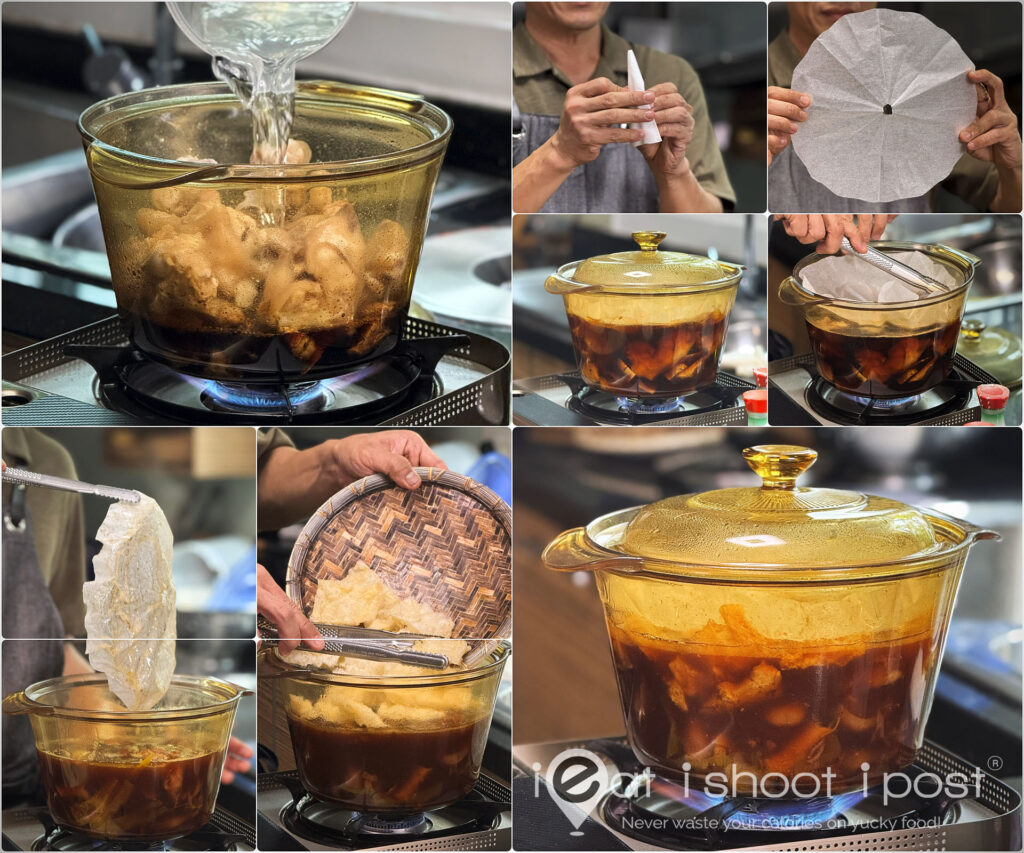
Add the pork trotters to the pot, along with enough water to fully submerge them.
As this is a long, gentle braise, it is important to prevent the sauce from evaporating too quickly. You can do this by placing a wooden lid (otoshibuta) directly on top of the ingredients.
Alternatively, make a cartouche using parchment paper. Simply cut a round piece of baking paper with a small hole in the centre to allow steam to escape. Lay it directly over the surface and simmer for about 2 hours. This helps reduce evaporation and keeps everything evenly submerged in the sauce.
If you prefer not to cook on the stovetop, you can transfer everything to a Dutch oven. Place it in the oven, set at 150°C and braise for 2 hours. Or, you can also use a pressure cooker and cook for 40 minutes.
Once the pork trotters are about 70% tender, add the fish maw. Replace the cartouche and continue simmering for another 40 minutes, or until the fish maw is soft and fully infused with the braising sauce.
Storing Overnight
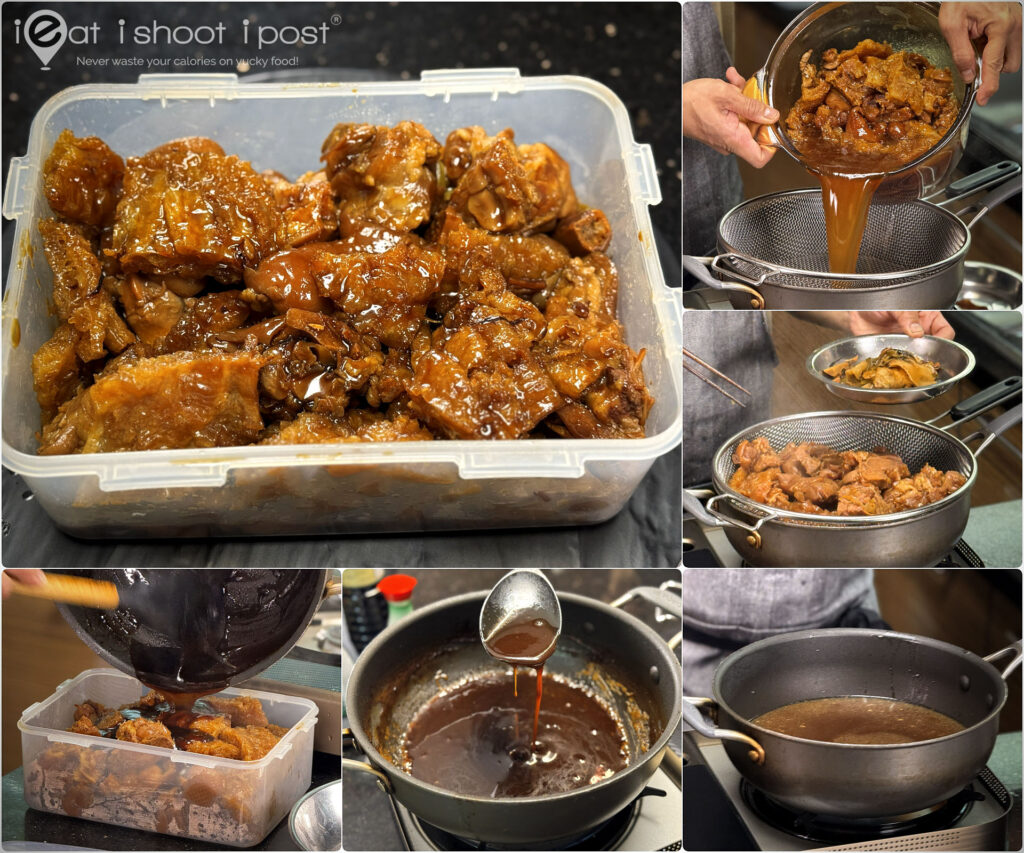
Once the pork trotters and fish maw are tender, remove the leeks and ginger. Strain the braising sauce and reduce it in a saucepan until thick and sticky.
At this point, the trotters are already ready to be served. However, to make the dish more festive, we wrap it in lotus leaf. This can be done once the trotters have cooled.
But even better is to refrigerate them overnight. As the dish chills, the gravy sets into a light jelly, making it much easier to wrap, while allowing the flavours to deepen and meld beautifully.
Wrapping in Lotus Leaf
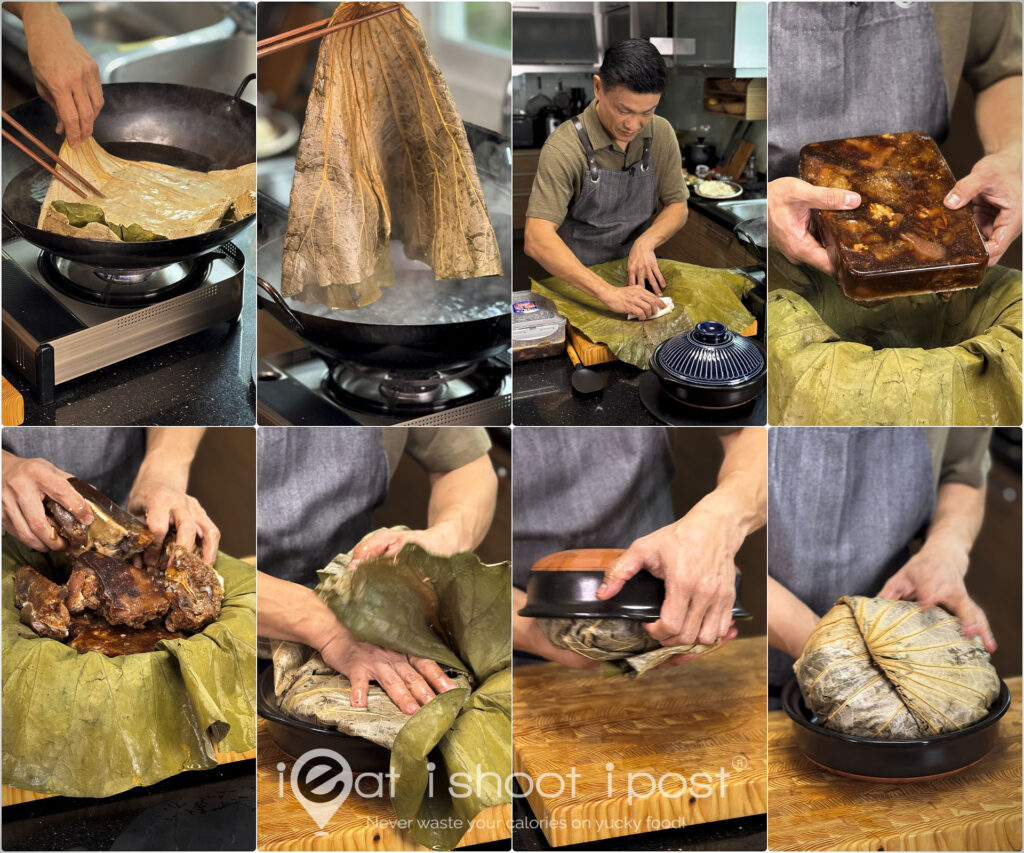
Presenting the dish in a lotus leaf not only elevates its visual appeal but also enhances the flavour, as the gentle herbal aroma infuses the braise during steaming.
Before using the lotus leaf, blanch it briefly in hot water, then wipe it clean. This will help to soften the lotus leaf and rid of any potential bugs.
Line the leaf in a claypot, then break up the chilled pork trotters and fish maw and place them onto the leaf. Wrap everything up neatly, then flip it over so that the folded leaves faces down. Now you can keep it in the fridge or freeze it until ready to serve.
To serve, simply steam the thawed trotters for 30mins and serve!
Conclusion
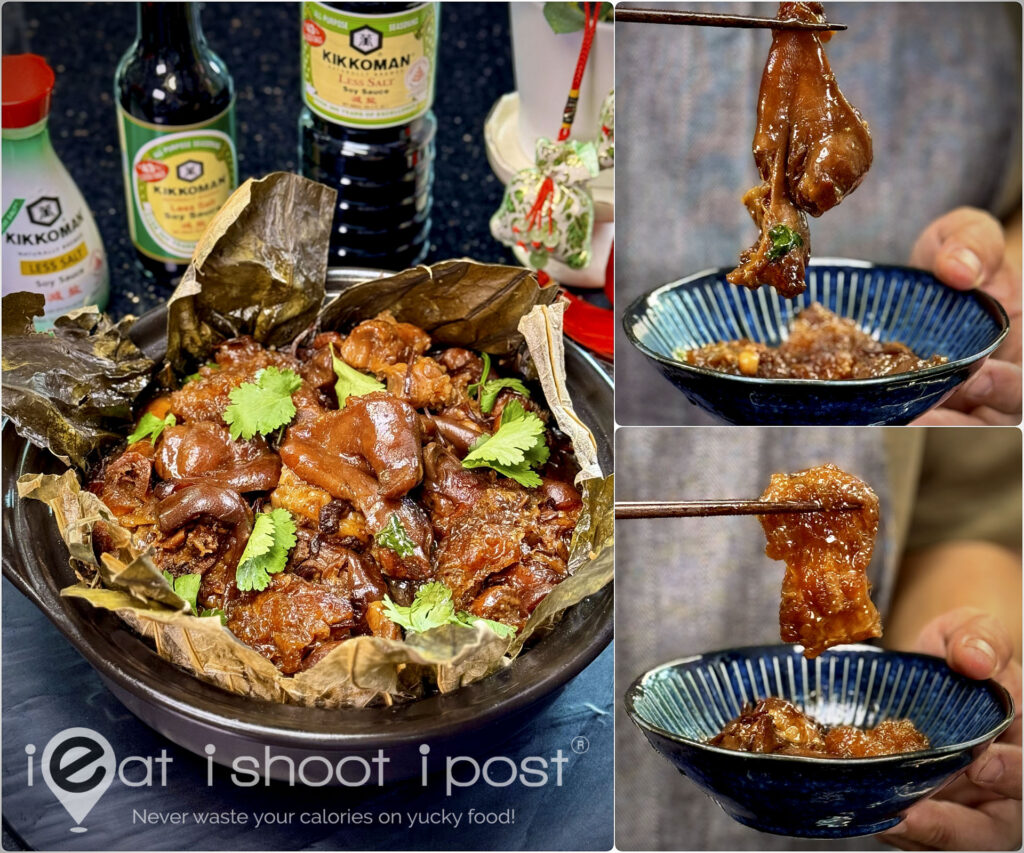
This is one recipe I am particularly proud of. My wife especially loves how the fish maw becomes heavy and luscious, soaked through with the rich braising sauce and pork collagen. The pork trotters are meltingly tender, and every bite delivers that unmistakable collagenous goodness.
It is a dish we can happily enjoy all year round, yet it feels just as special when served on a festive occasion like Chinese New Year. I hope you’ll give it a try!
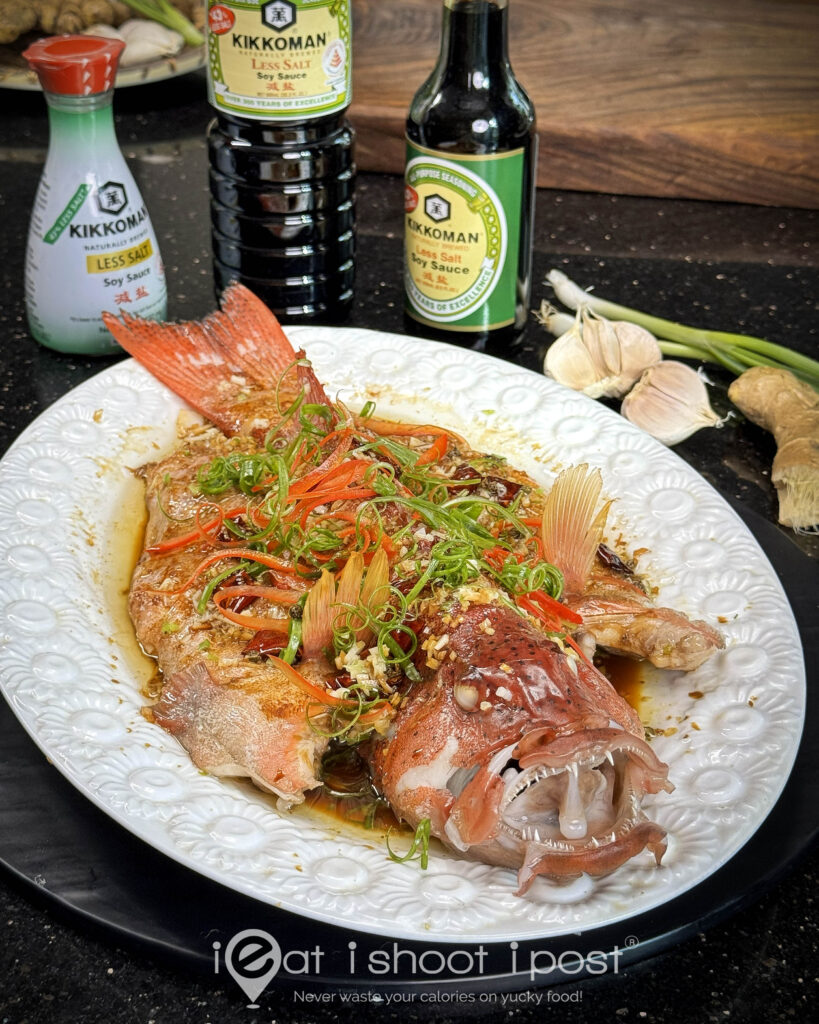
Other recipes using Kikkoman Less Salt Soy Sauce:
Disclosure: this recipe is produced in partnership with Kikkoman.


Thank you Dr Tay and Mrs Tay for your time this morning.
Dr Tay, I will try this recepie, the gooey goodness is jaw dropping.
Blessed New Year to you both and your families.
Thanks! Hope you like it!
Hi Dr Leslie! Gong Xi Fa Cai!! Lovely recipe! 👍👍
Why do you recommend steaming the clay pot again instead of heating it directly on the stove with a small amount of water in the clay pot in the space between the pot and lotus leaf?
It’s not easy to find a pot large enough to steam a large clay pot after assembly
Oh you can do that too. But with a claypot, you have to be careful not to burn the bottom. Steaming is more gentle and warms up the whole thing evenly.