
Spanish Tapas, Singapore Style
We have always had a soft spot for Spanish food, ever since we were introduced to jamón ibérico back in 2011. That was when it first landed in Singapore at the now defunct Santi restaurant in MBS. What we love just as much about the cuisine is the concept of tapas, small plates of yumminess meant to be shared around the table.

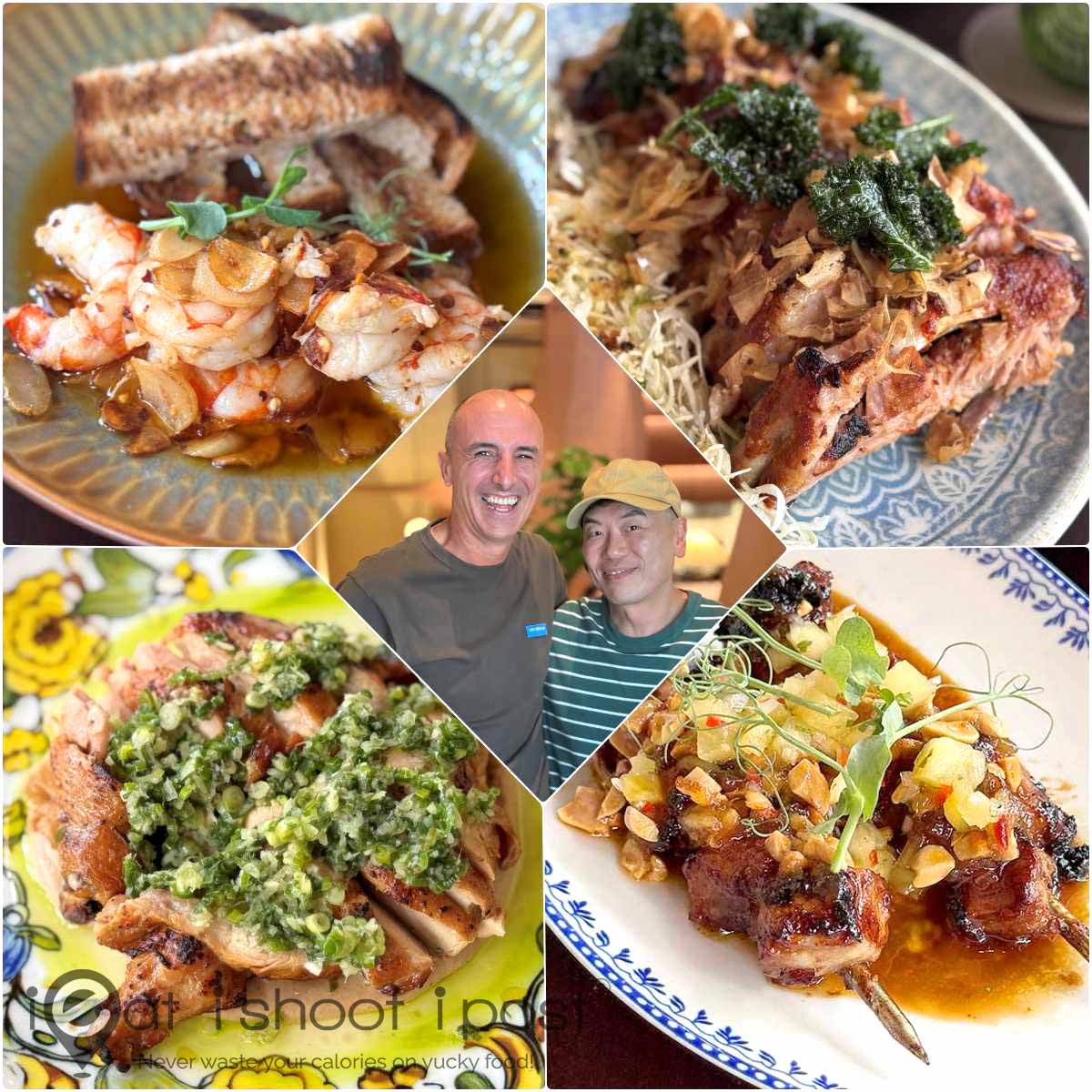
So when my friend, Chef Willin Low, told me he was partnering with Spanish chef José Alonso of Kulto to offer Spanish cuisine with an Asian twist, I had to check it out.
House in the Forest
Casa means “house” in Spanish, while Mori is Japanese for “forest.” The concept marries Spanish and Asian influences, set amongst the lush greenery of Dempsey. The menu features familiar Spanish dishes given a modern Asian twist, which reflects a growing global trend.
Chef Willin is best known as one of the pioneers of Mod Sin cuisine, but the Asian flavours he brings to Casa Mori goes beyond Singaporean into Japanese and Sichuan territory as well. If you think about it, it is quite a Singaporean trait, as we are always adapting new flavours into our local culinary canon.
A Spanish Courtyard with Tembusu Trees
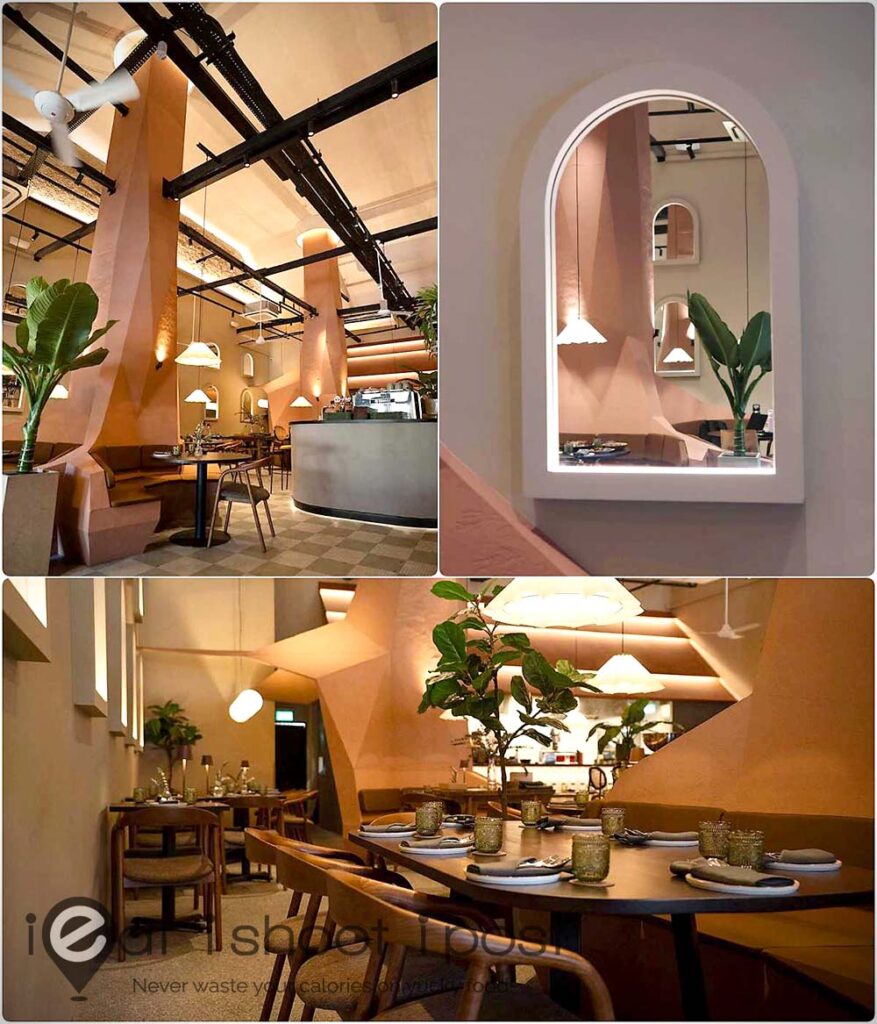
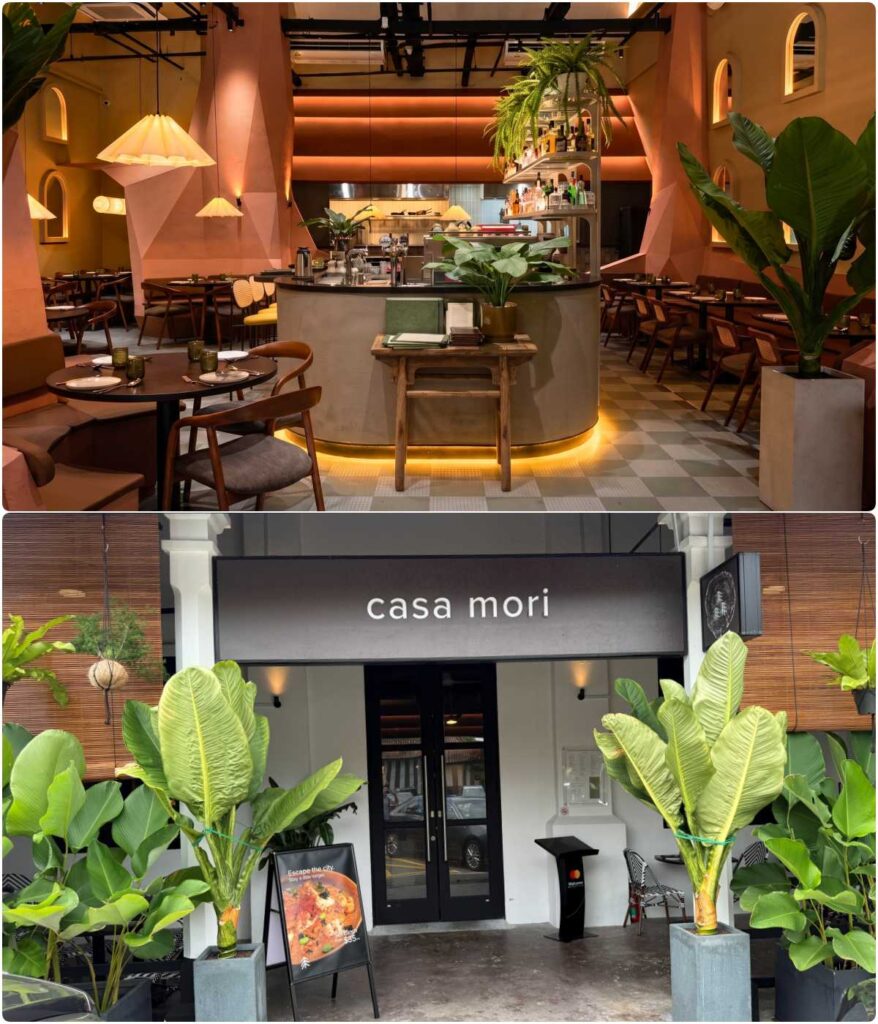
Walking into Casa Mori, the first thing that hits you are the pillars, sculpted to look like the trunks of Angsana trees, with warm terracotta tones that give the whole room an earthy, Mediterranean vibe.
Windows arranged along the side walls give the impression that you are dining in an open courtyard, even though you are very much indoors. It is a clever bit of design that ties the whole “house in the forest” idea together, and makes for a cosy place to relax and enjoy your meal.
The Menu – small plates
Garlic Huajiao Prawns
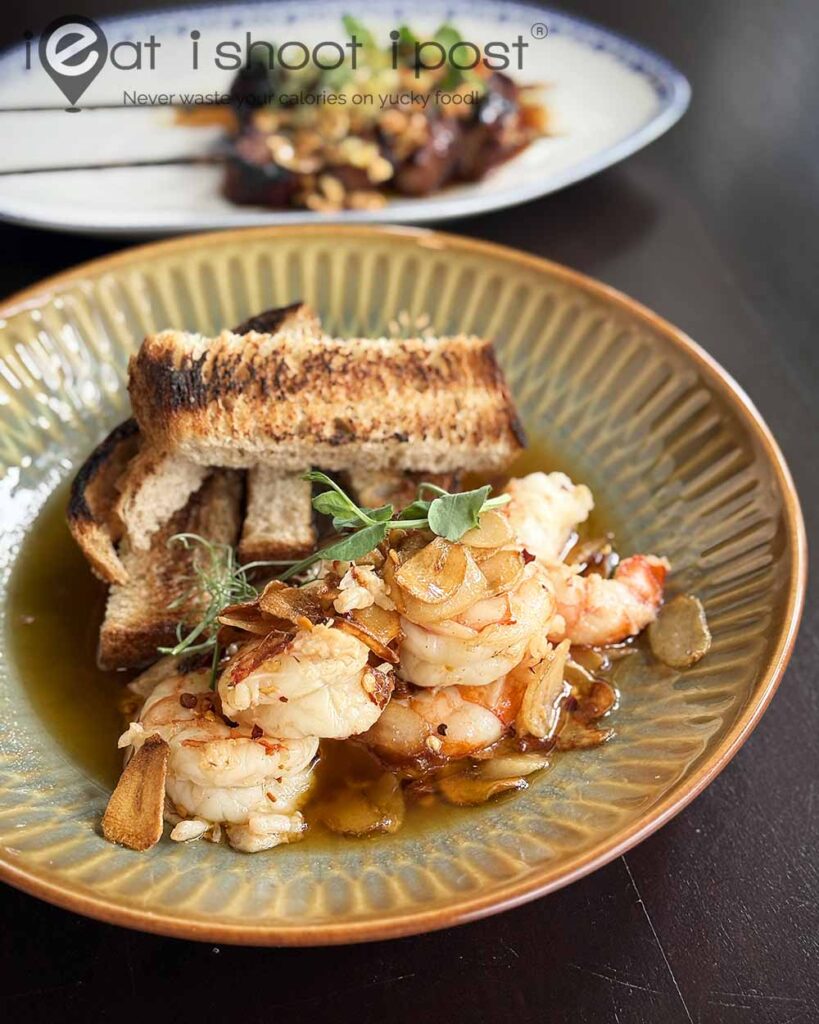
We started with the Garlic Huajiao Prawns, and this was one of my favourite dishes of the night. Argentinian red prawns sit on a bed of cauliflower mash, dressed with garlic, olive oil and Sichuan peppercorn, or huajiao as it is known in Chinese.
By substituting the traditional pimentón with huajiao, the chefs have swapped out the smokiness you would normally expect for a numbing sensation instead. The novel twist on this classic dish that actually worked quite well. 4.25/5
IBERICO SECRETO SATAY
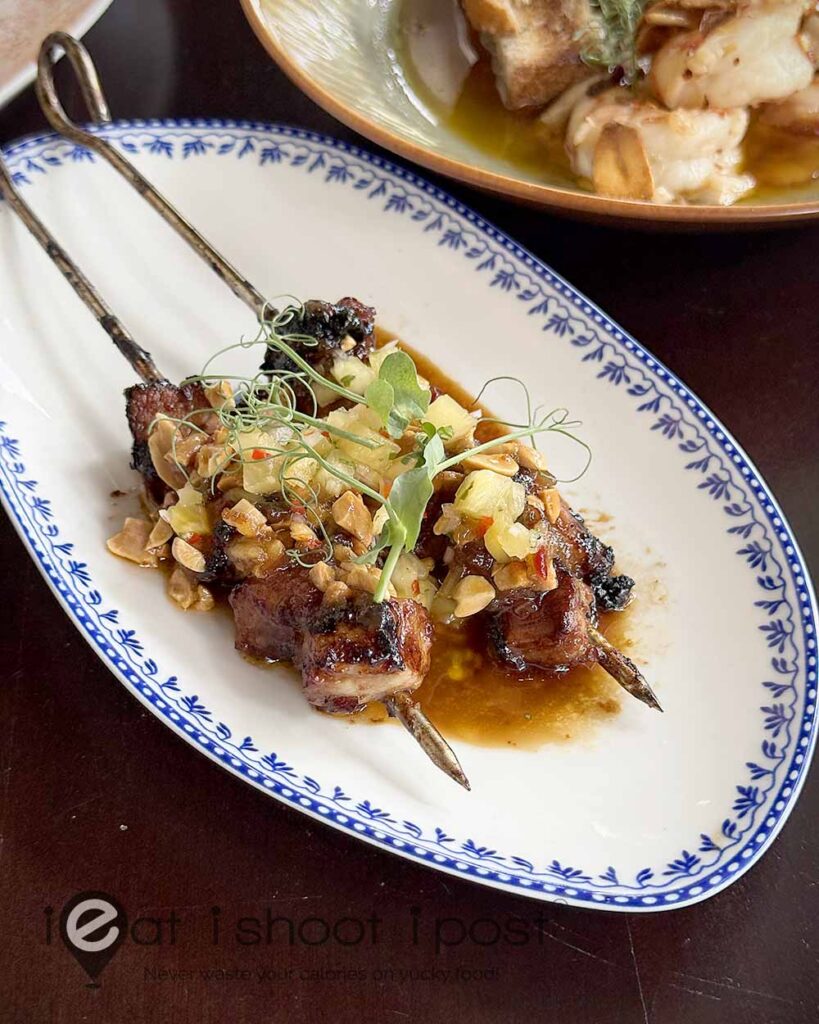
Next was the Iberico Pork Satay. I had skewers of toothy iberico pork secreto, marinated and glazed Indonesian style with a sweet savoury kicap manis sauce. Iberico pork secreto is possibly my favourite cut of pork. It comes from the black Iberian pig, a breed that forages freely on acorns in Spain’s oak forests. That acorn diet is exactly what gives the meat its incredible flavour and marbling.
The cut has real character, and the juices are slowly released as you chew on each tasty little morsel. The glaze could have been toned down a bit, to let the natural sweetness of the pork come through on its own. But I won’t complain if you offer me another skewer or two! 4.25/5
BROCCOLINI & BRUSSELS SPROUTS
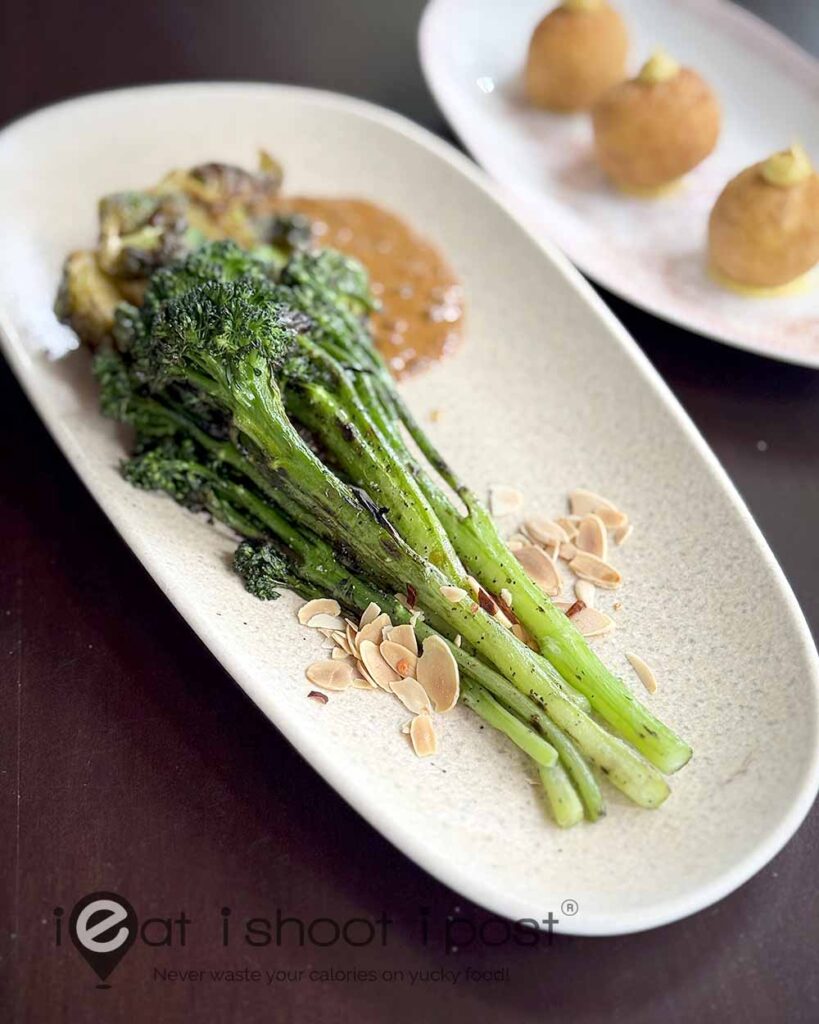
Kalipoquetas | chicken, curry, potato, curry aioli 4 PC $16 (background)
We also had the grilled broccolini and Brussels sprouts, served with a sauce built on lao gan ma chilli crisp and tahini. The vegetables themselves were nicely charred, with a good bit of smokiness to them, but I am ambivalent about the sauce, which did not really have a distinct flavour . 4/5
The Curry Croquetas, cheekily named Kalipoquetas, is probably the most Singaporean dish on the menu, even though it wears a Spanish costume. Kalipok is our local slang for curry puff, and marrying it together with the Spanish croqueta seems like the most logical thing to do. But I don’t think it did much to elevate either the kalipok or the croquetas! 3.5/5
The Mains
SPRING CHICKEN
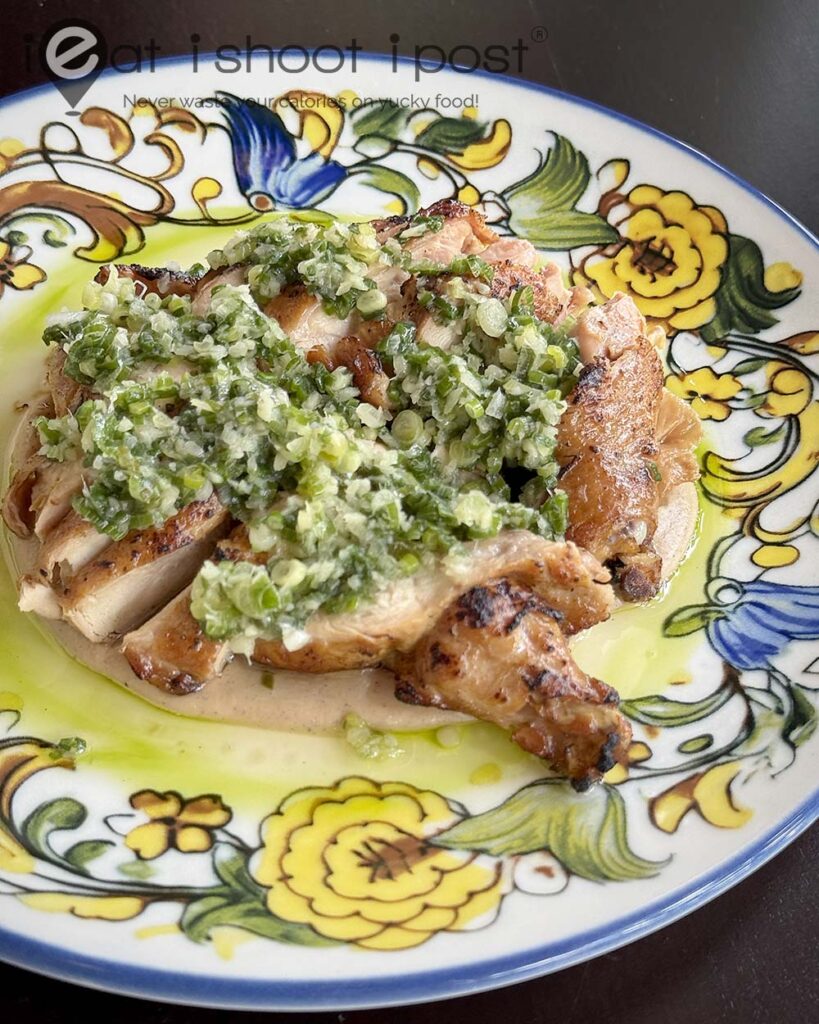
The Josper Grilled Spring Chicken was a bit of a pleasant surprise for me. I seldom order a chicken dish at a Spanish restaurant, but I was told this was one of the most popular dishes on the menu. You get half a spring chicken, first cooked sous vide before it is roasted in a Josper oven to give it a smoky char.
It sits atop a bed of cauliflower mash, and is served with a ginger and scallion relish, reminiscent of Cantonese style chicken rice. I was skeptical at first, but the dish actually worked. The cauliflower mash gave the relish a bit of creaminess that combined with the chicken beautifully. 4.5/5
IBERICO PORK RIBS
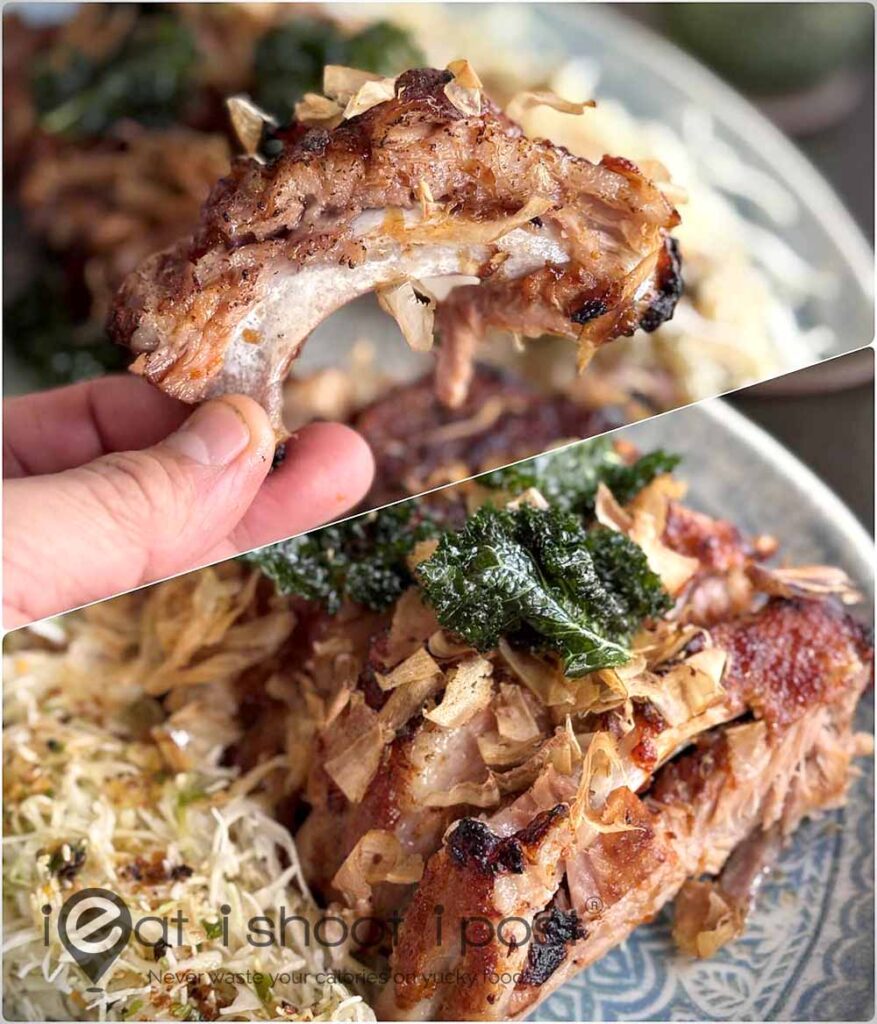
The Iberico Pork Ribs came glazed in a sweet miso sauce, and the pork itself was fall off the bone tender, exactly what you want from a good rib.
I felt the glaze could have been thicker and stickier, so you could really taste it on each bite. The crispy kale and katsuobushi on top did not add much to the dish either, beyond a bit of colour. But as far as pork ribs go, the texture and flavour was excellent. 4/5
SQUID INK FRIED RICE
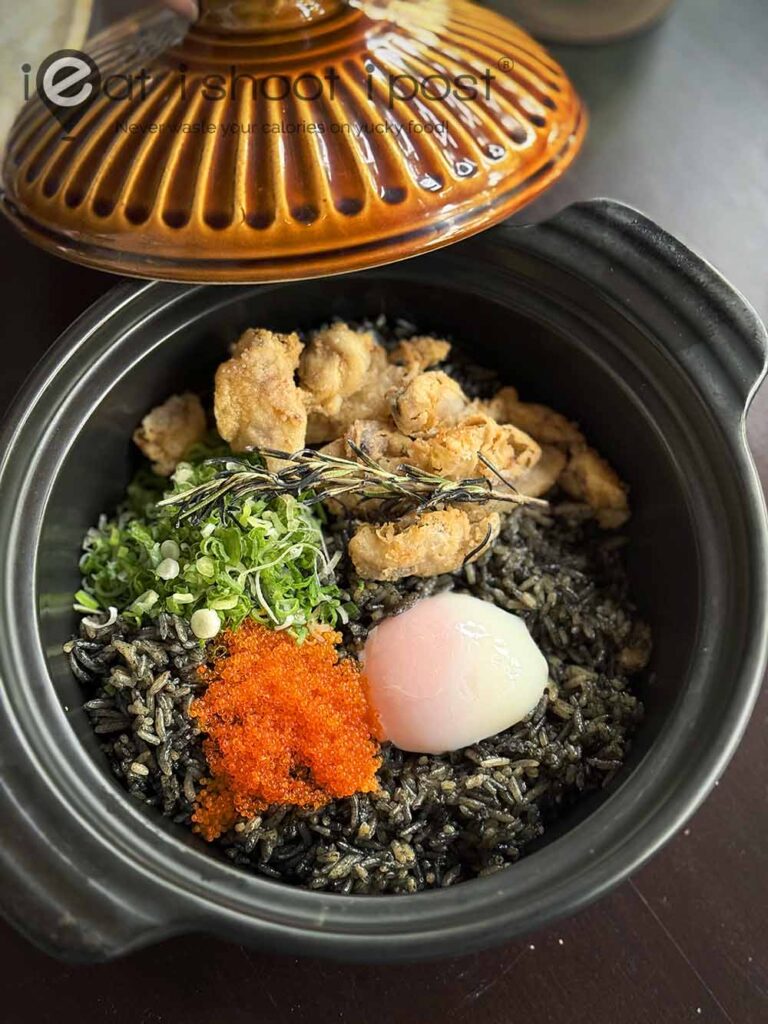
For the carbs, I was torn between the Hokkien Mee Fideua and the Squid Ink Claypot Rice. I eventually chose the rice, as it was the more popular of the two. Instead of a paella pan, the rice was served in a claypot, topped with tempura squid, spring onion, a soft boiled egg and a generous spoon of tobiko.
This dish sits right at the intersection of two culinary rice traditions. Squid ink rice, or arroz negro, comes from the Valencia and Catalonia regions of Spain, whereas the claypot rice we know is Cantonese. But both cultures knew the magic of the crispy rice crust that forms at the bottom of the pan.
The Spanish call it socarrat, and in Cantonese it is 饭焦 (fàn jiāo). Unfortunately, the claypot rice here was missing this. So in reality, what I got was a fried rice served in a claypot, rather than a true claypot rice. The rice itself was tasty enough, and I probably would not have complained too much had it simply been served on a plate. Next time, I am going for the Hokkien Mee Fideua instead. 3.5/5
Dessert
Mochi Churros
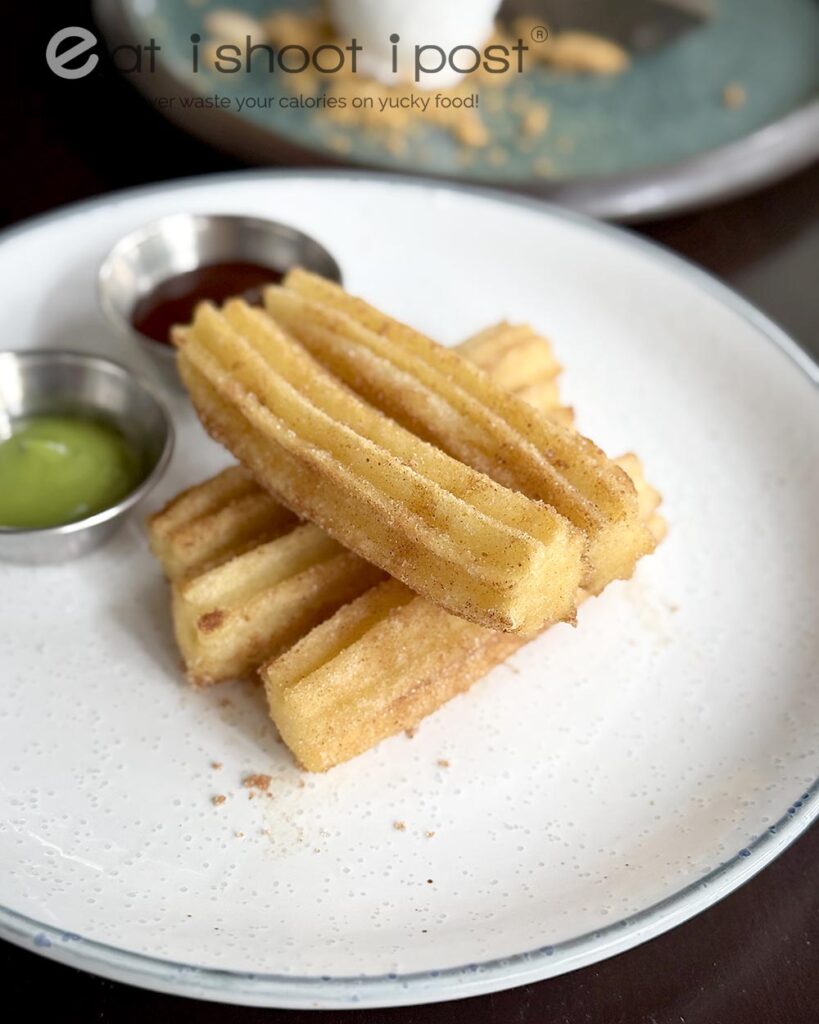
We ended our meal with the Churros, served with chocolate sauce and homemade kaya. Aside from the kaya, which was the obvious Asian touch, the texture of the churros itself had been reworked to have the chewiness of mochi.
An interesting twist on the typical churro which caught me off guard in a good way! 4/5
Conclusion
Casa Mori is a genuinely thoughtful attempt at bringing Spanish and Asian flavours together, and more often than not, it succeeds. It is a bold experiment, testing how far the two culinary traditions can go before finding a perfect match.
Some dishes, like the huajiao garlic prawns and the satay, nailed it. While others showed real potential but needed a bit more tweaking. Whatever the case, if you are like us, a lover of Spanish cuisine, this is still a place worth checking out. If only to see how your favourite Spanish dishes can be given a novel new spin.