
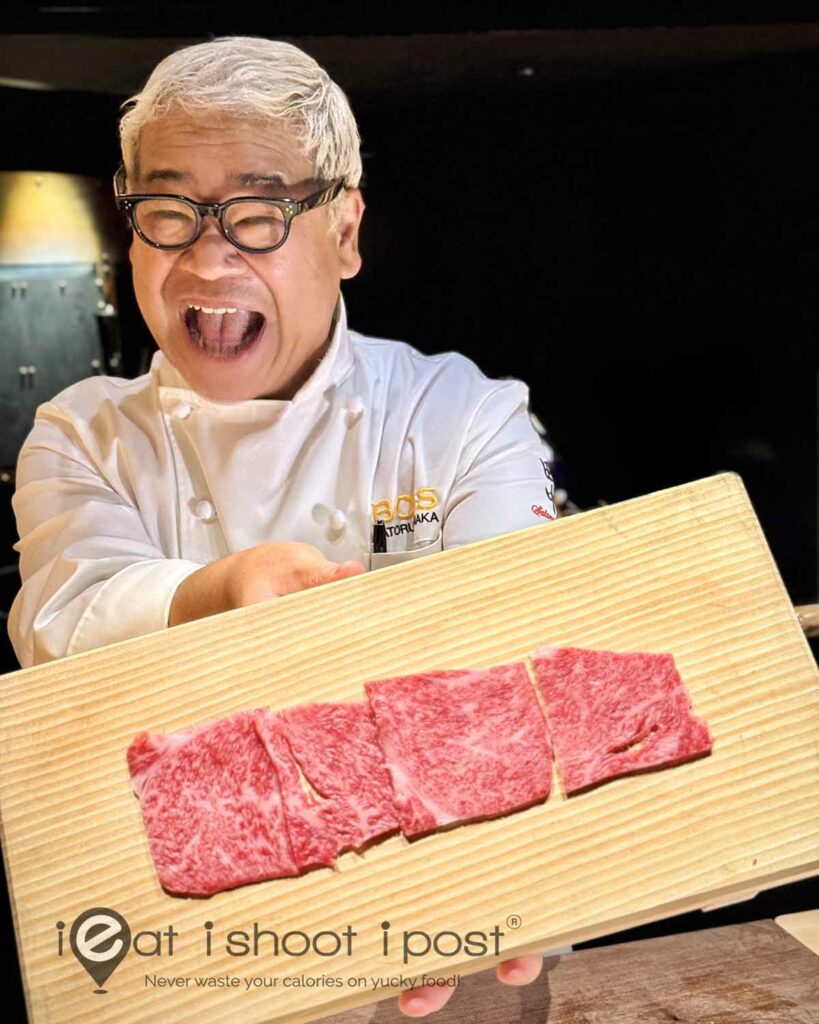
The Wagyu Boss is in Town!
Nikuya Tanaka, Japan’s No. 1 steakhouse*, has finally made its way to Singapore, and if you a beef lover like me, then this has to be on your bucket list! Ranked top in Japan by The World’s 101 Best Steak Restaurants and No. 27 in the world, the restaurant is helmed by Chef Satoru Tanaka, affectionately known as “Boss.” You’d think the nickname came from running a successful group of restaurants, but it actually started when he was a kid walking his family’s pack of bulldogs — the neighbours thought he looked like the boss bulldog, and the name just stuck!
A third-generation meat master, Nikuya Tanaka represents over 80 years of the Tanaka family’s devotion to Japanese wagyu. From his grandfather, a cowherd, to his father, a butcher, and now himself, Tanaka-san carries forward a rare heritage of expertise and craftsmanship that few can match. His flagship in Ginza is one of Tokyo’s most coveted reservations, celebrated for its kappo-style dining rooted deeply in Japan’s culinary traditions.
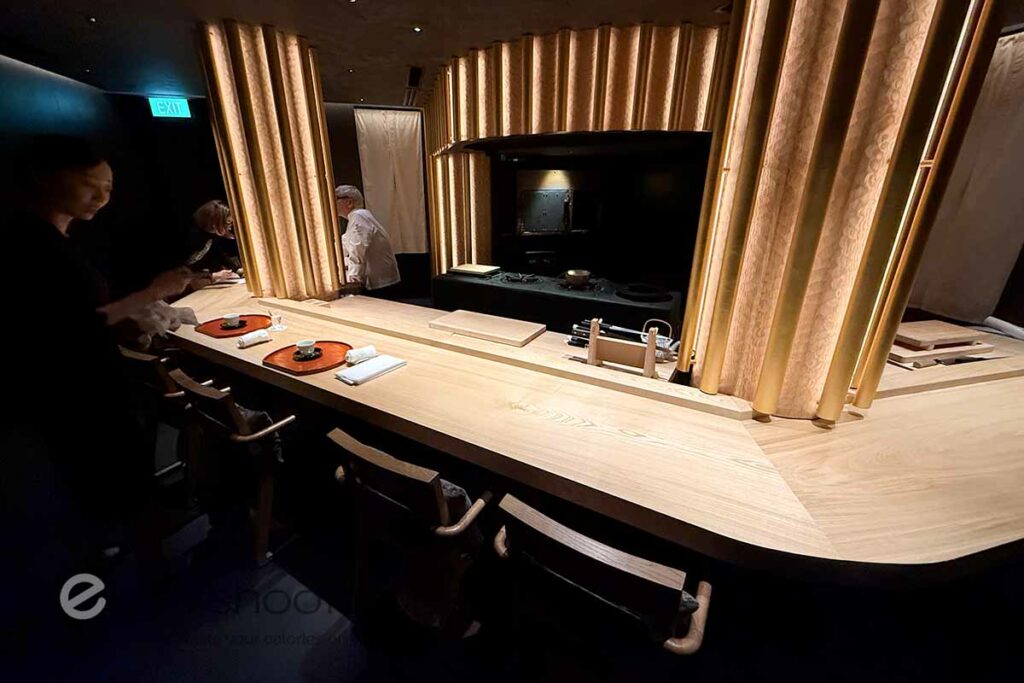
Transported to Ginza!
The Singapore outpost is Nikuya Tanaka’s first restaurant outside Japan, and it captures the same intimate, kappo-style vibe as the Ginza flagship. There’s a 10-seat counter where you can watch the chefs grill, slice, and plate each wagyu course right in front of you, plus a tiny private room for five if you want a bit more privacy.
The space might look simple, but the cedar wood adds a subtle, comforting aroma, and the soft lighting and handcrafted touches make it feel warm, calm, and classy. It is like stepping straight into the heart of Japan. The attention to authenticity even extends to the Japanese-style toilet which should put a smile on your face when you step in!
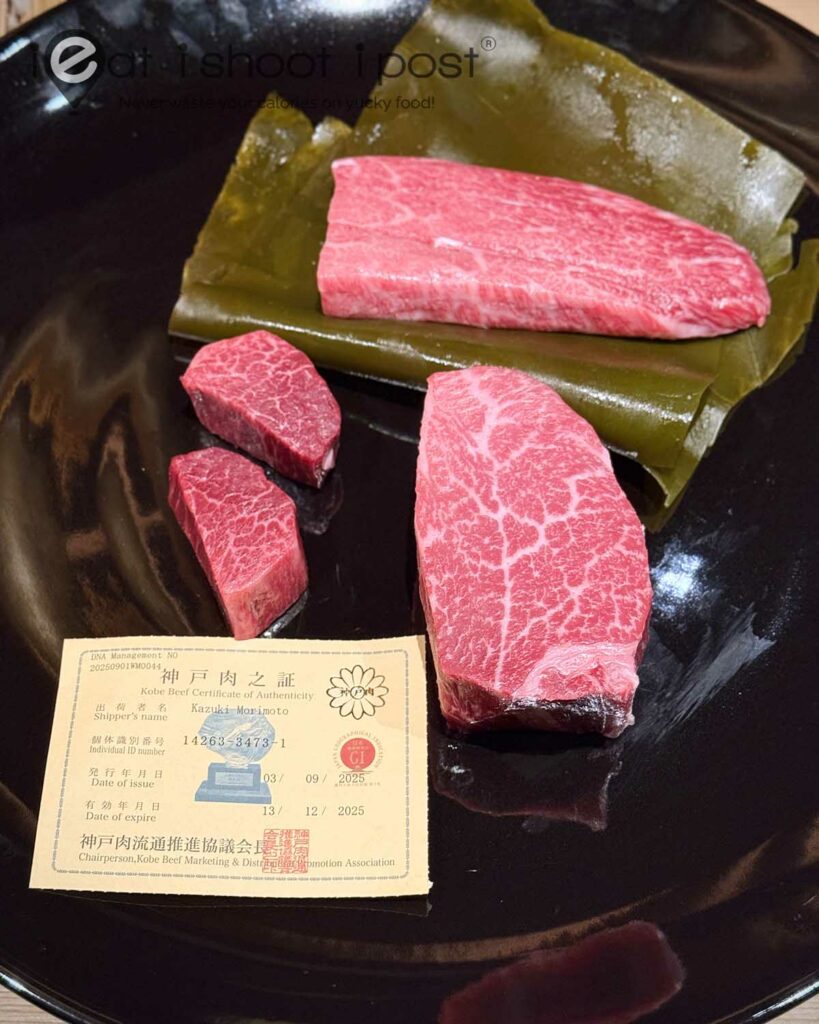
Beyond A5 Wagyu
When asked if all his wagyu are graded A5, Chef Tanaka just waved it off. According to him, his beef has surpassed any grading system. He sources only the finest cuts from Kobe and Matsuzaka, using exclusively virgin female cattle that are raised for 36 months.
While Matsuzaka beef is famous for this, Chef Tanaka also works with Kobe farmers who specifically raise virgin females for his use. The result? Meat that’s sweeter and more delicate. For our meal, we were treated to a selection of Kobe beef tri-tip, tenderloin, and chateaubriand cuts which were prepared in a variety of ways to showcase the natural flavours of the meat.
The Omakase Course
They are currently offering the following omakase courses
- Lunch $350++ (9-course) | $420++ (10-course)
- Dinner $420++ (10-course) | $550++ (12-course)
Below is the $420++ 10-course menu.
Fig Shira-Ae
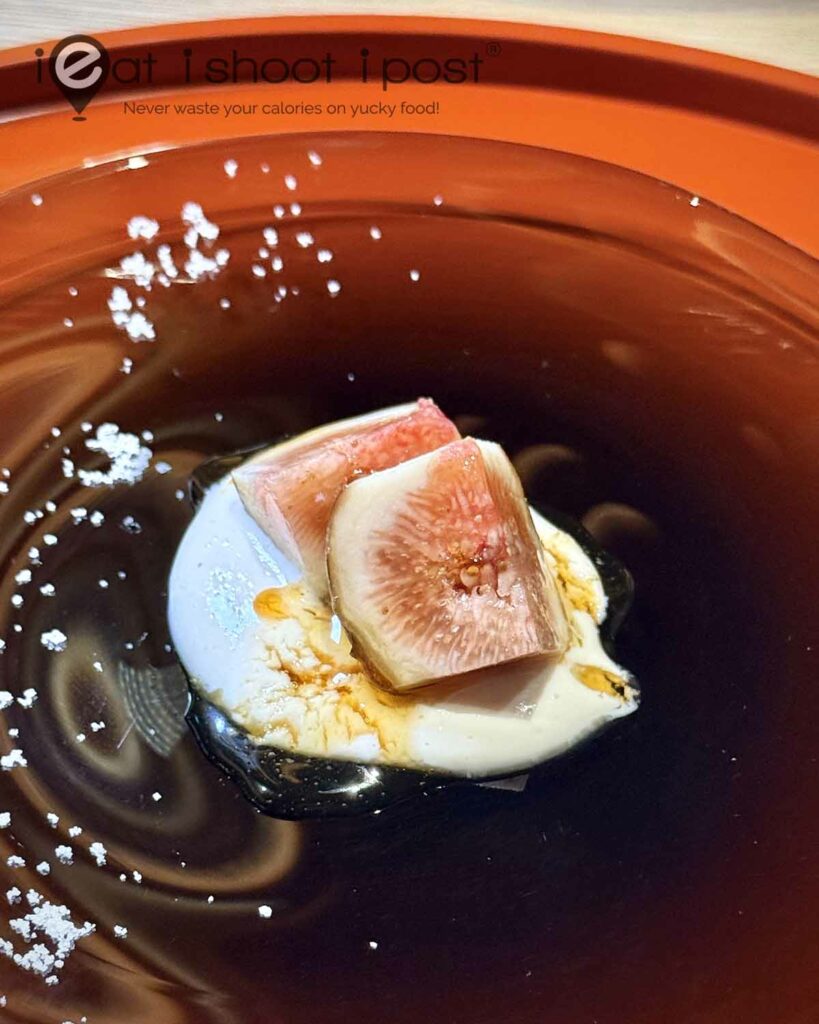
The meal kicked off with Fig Shira-ae (いちじくの白和え). Fresh fig dressed in a creamy tofu sauce. It’s simple, but the combination worked really well. The ripe Japanese fig was sweet and juicy and the tofu dressing added a light and creamy mouthfeel which balanced the sweetness perfectly.
White Fish and Kobe Beef Lean Meat, Rolled with Seaweed
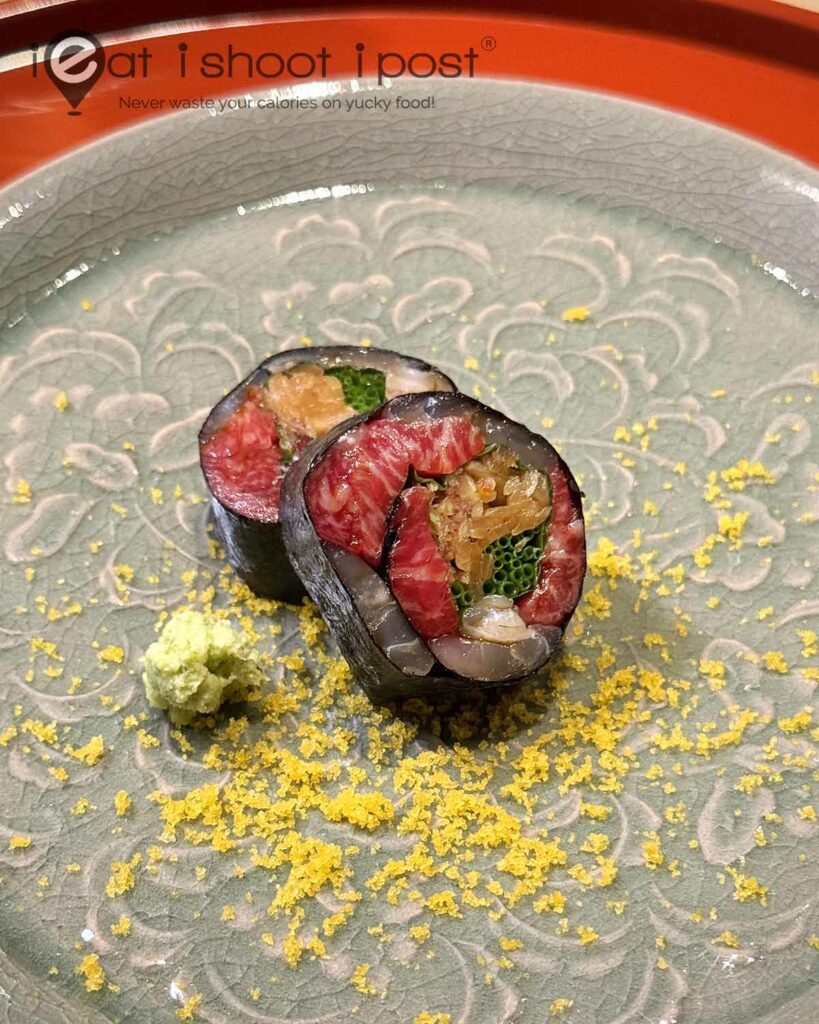
Next, Chef served what looked like a sushi roll at first, but it turned out to be his signature White Fish and Kobe Beef Lean Meat, rolled with seaweed. The white fish was hirame, fresh and pleasantly chewy. The Kobe beef added a gentle richness that contrasted nicely with the fish. Rolled up with chives and pickles, and wrapped in seaweed, each bite had a subtle umami hit and a satisfying mix of textures.
Abalone Somen
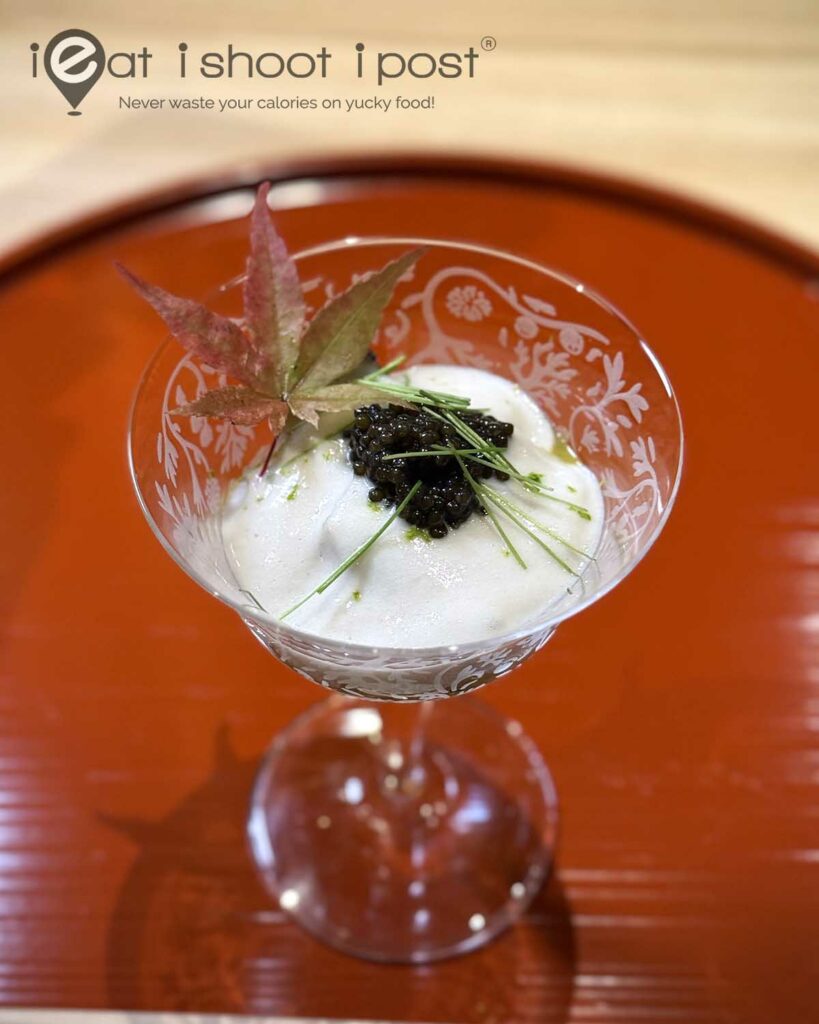
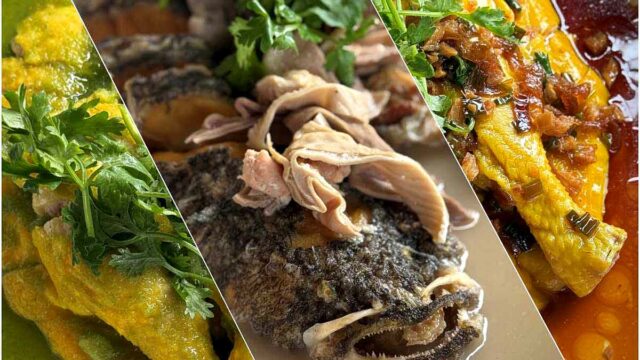
Next, we were treated to a slow-braised fresh Hokkaido abalone. It was cooked until tender and served with somen noodles and a sauce made from abalone guts, topped with caviar. The briny, oceanic flavor really came through, making each bite rich, delicate, and memorable.
Kobe Beef Tataki
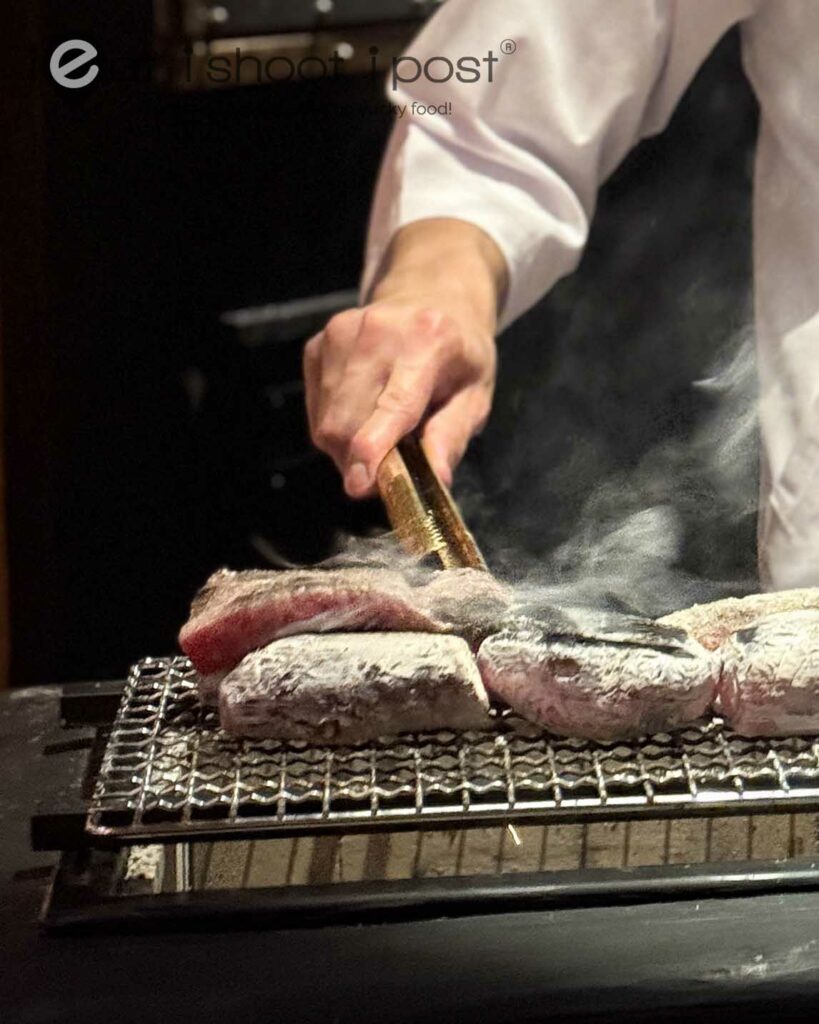
After our initial starters, the meal started heating up with the Wagyu tataki. The theatrics began as Chef seared the Kobe tri-tip steak directly over binchotan charcoal, filling the air with bated anticipation.
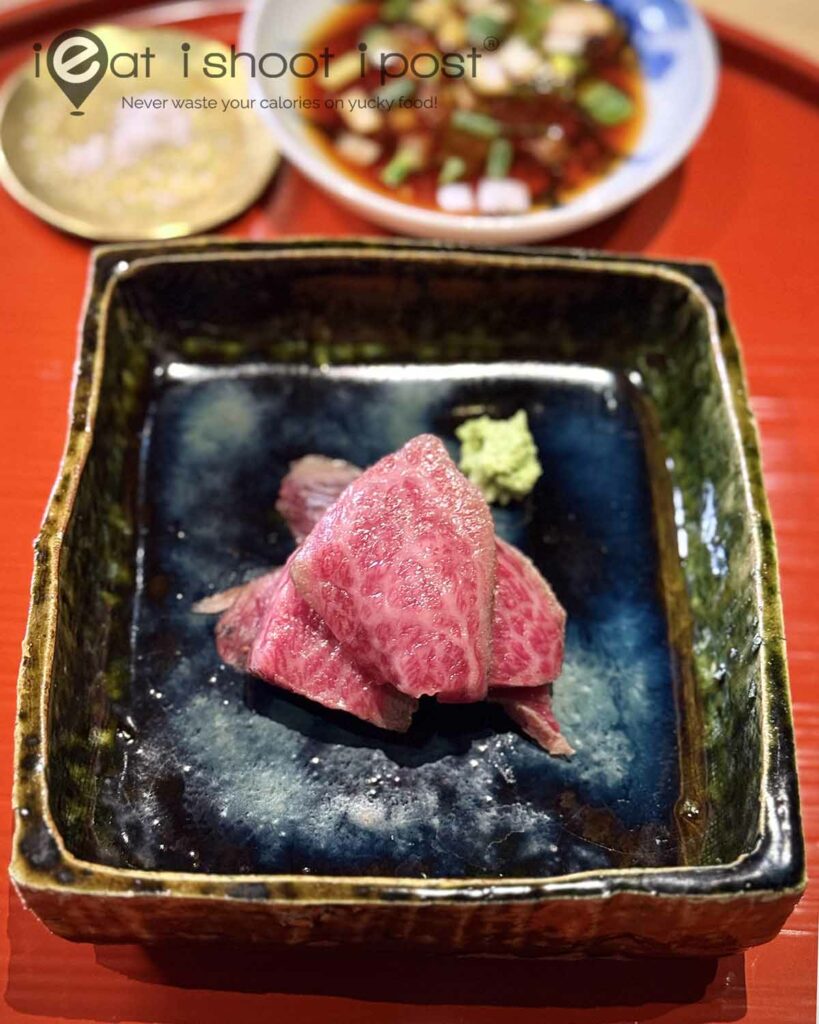
The steak was then sliced thin, still raw in the center, with that subtle smoky aroma and a melt-in-your-mouth texture that was rich but not overpowering. Each bite had the perfect balance of smoky char and sweet, delicate beefy flavor while still having a nice chew.
Owan-Clear Soup with Kyoto Chestnut
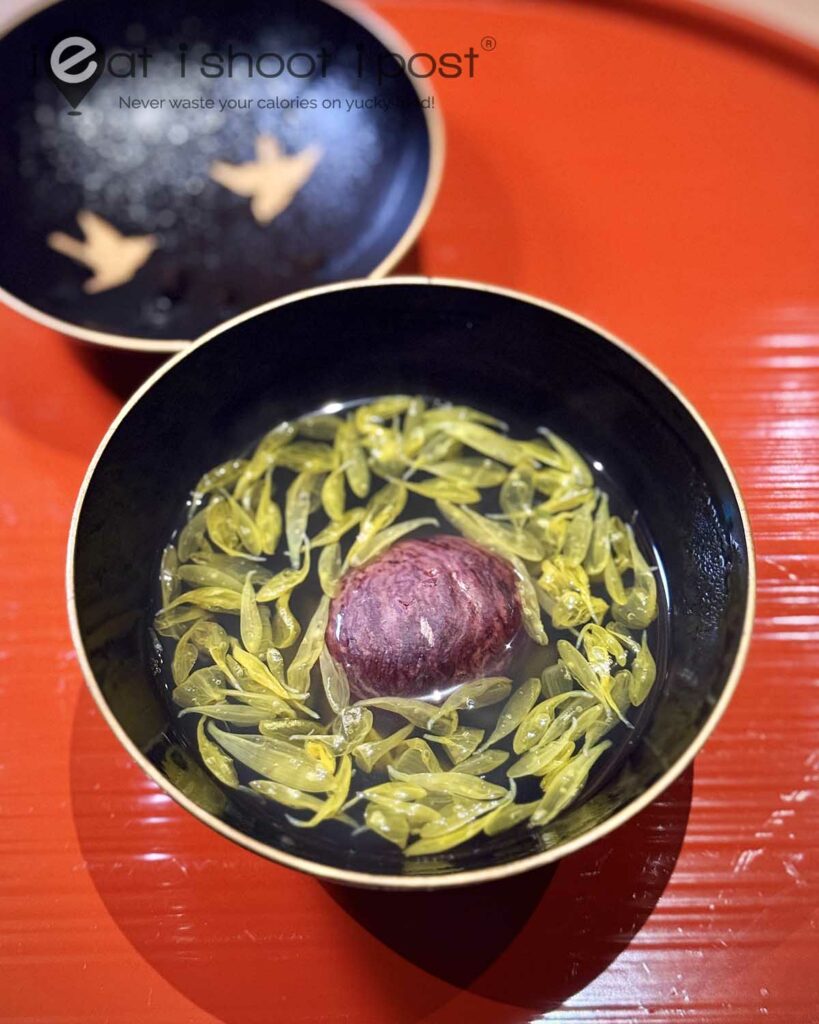
Next came the Owan – a clear soup with Kyoto chestnut. The chestnut had been slowly simmered and cooled repeatedly — up to 20 times a day over three days!
This is a traditional Kyoto technique that draws out its natural sweetness and creates a perfectly creamy texture. It’s painstaking work, but the result is a chestnut that melts in the mouth, leaving the palate coated with a gentle, nutty sweetness.
Kobe Beef Tenderloin Tempura
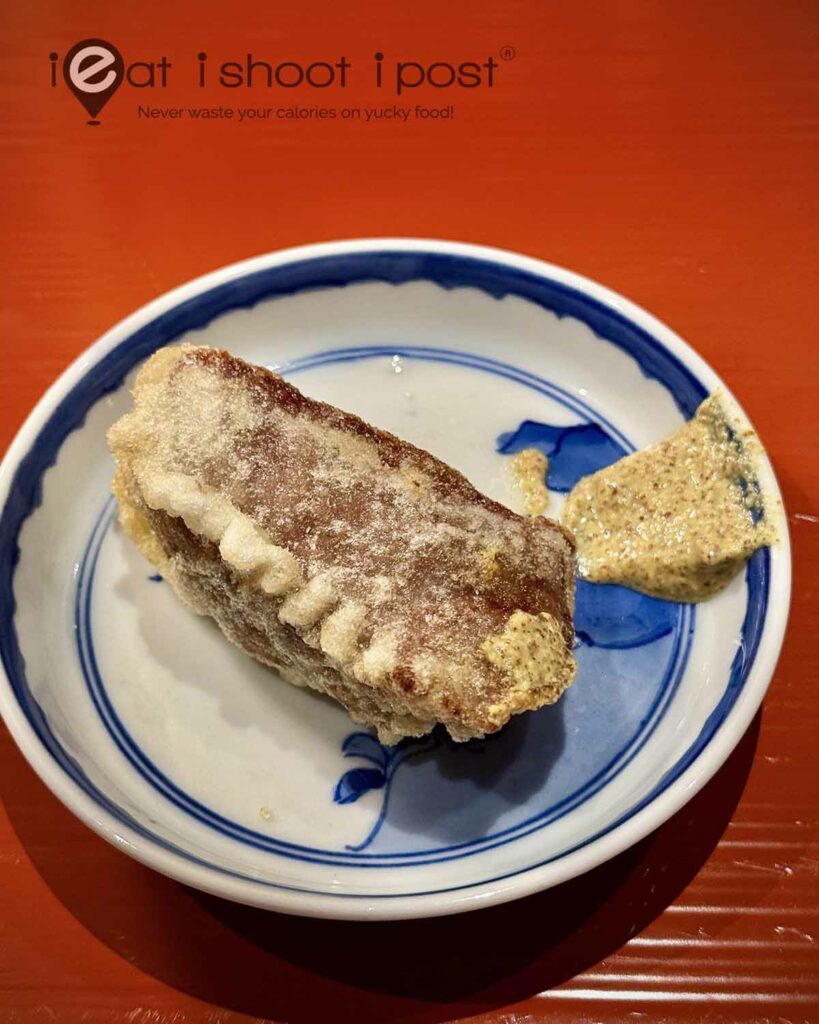
I never thought beef could be made into tempura. I’ve had Wagyu katsu before, but Wagyu tempura was something completely new.
For it to work, the beef has to be incredibly tender — which is exactly what the Kobe tenderloin was. The natural sweetness of the beef really came through. The tempura was even presented with a paper wrapper, so you could eat it with your hands. It was one of those paradigm-shifting moments, where I suddenly realized, “Wow, it can actually be done!”
Kobe Beef “Shabu Shabu”
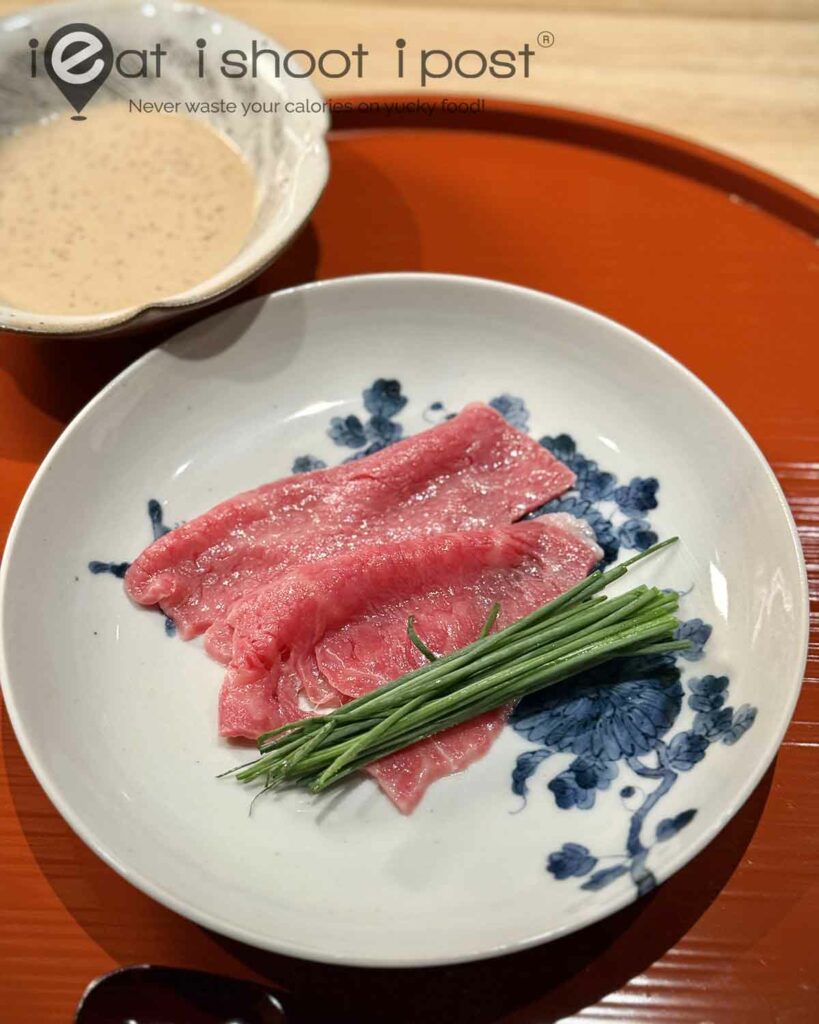
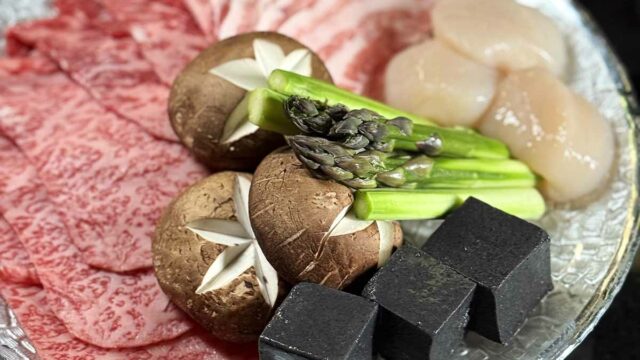
One of the best ways to savour the natural flavour of Wagyu is to have it lightly poached in dashi, wrapped over chives, and dipped in goma sauce. Chef put on quite a show with the exquisite Kobe striploin, carefully trimming off the excess fat and presenting only the middle portion of the striploin (see top photo).
The beef was undoubtedly tender, sweet, and melt-in-your-mouth — a true highlight of the meal.
Kudzu Somen Served in Ice Vessel
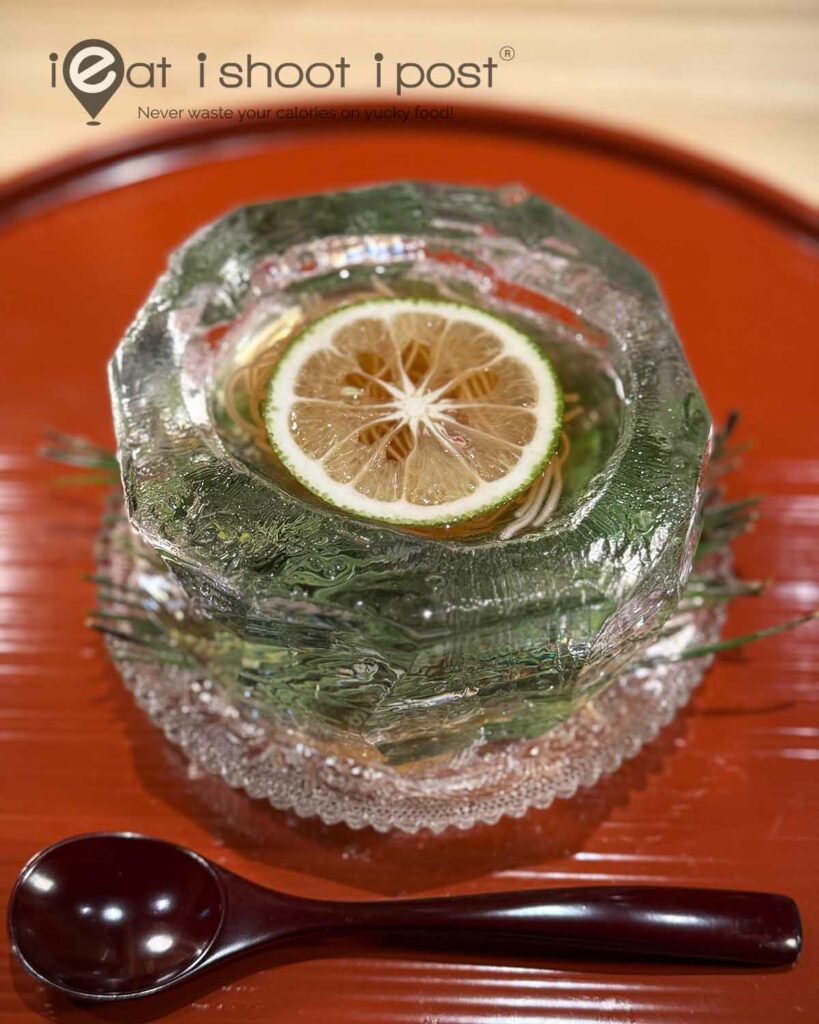
Just before presenting the star dish of the omakase, we had a brief interlude.
One of the assistants fashioned a bowl out of ice to hold the palate cleanser — a chilled somen in sudachi dashi broth. It was refreshing, elegant, and really set the stage for what would be the highlight of the omakase.
The Climax: Beef Tenderloin Steak!
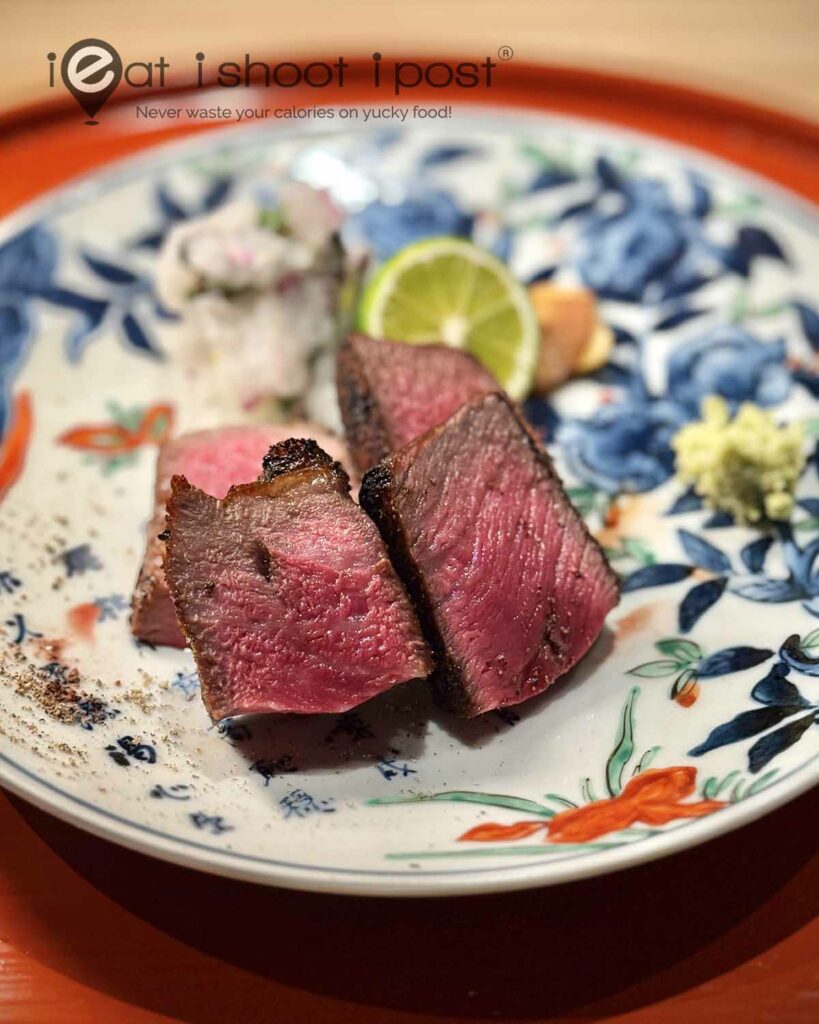
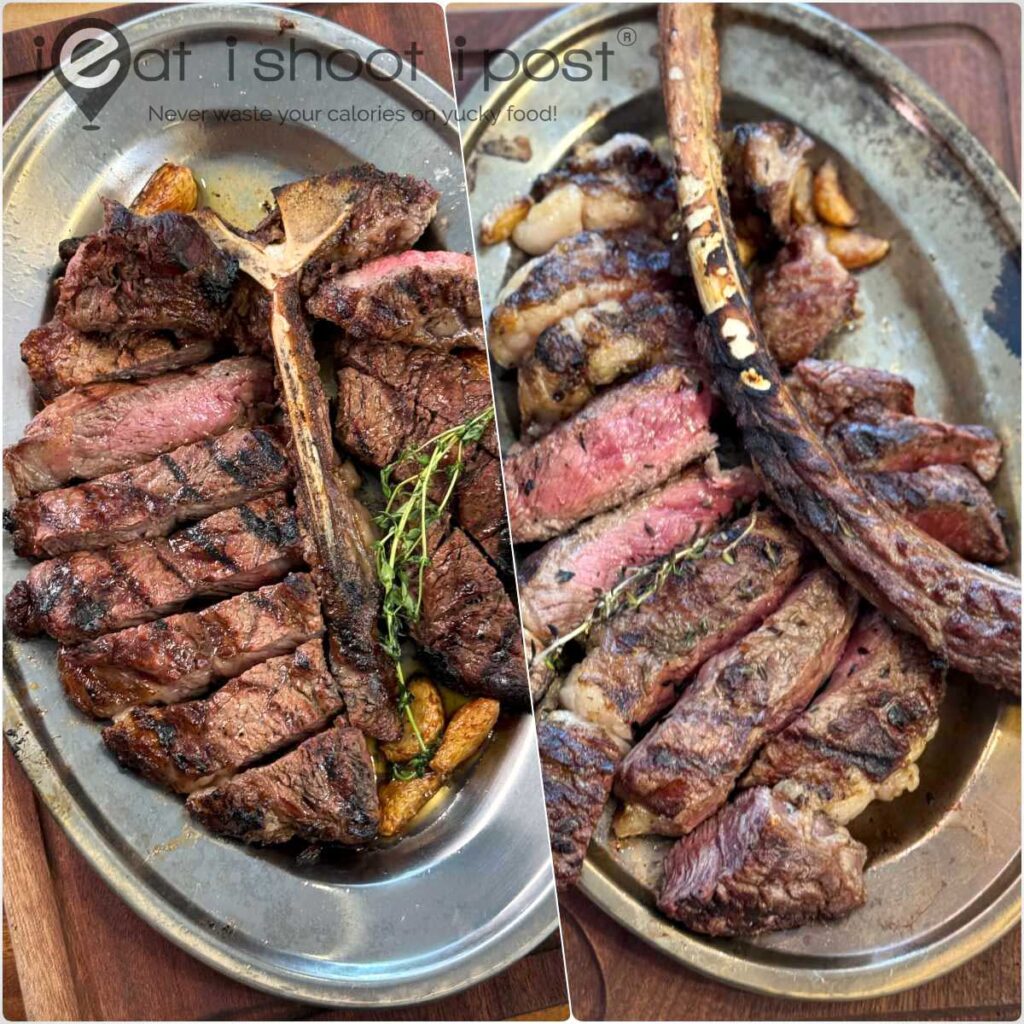
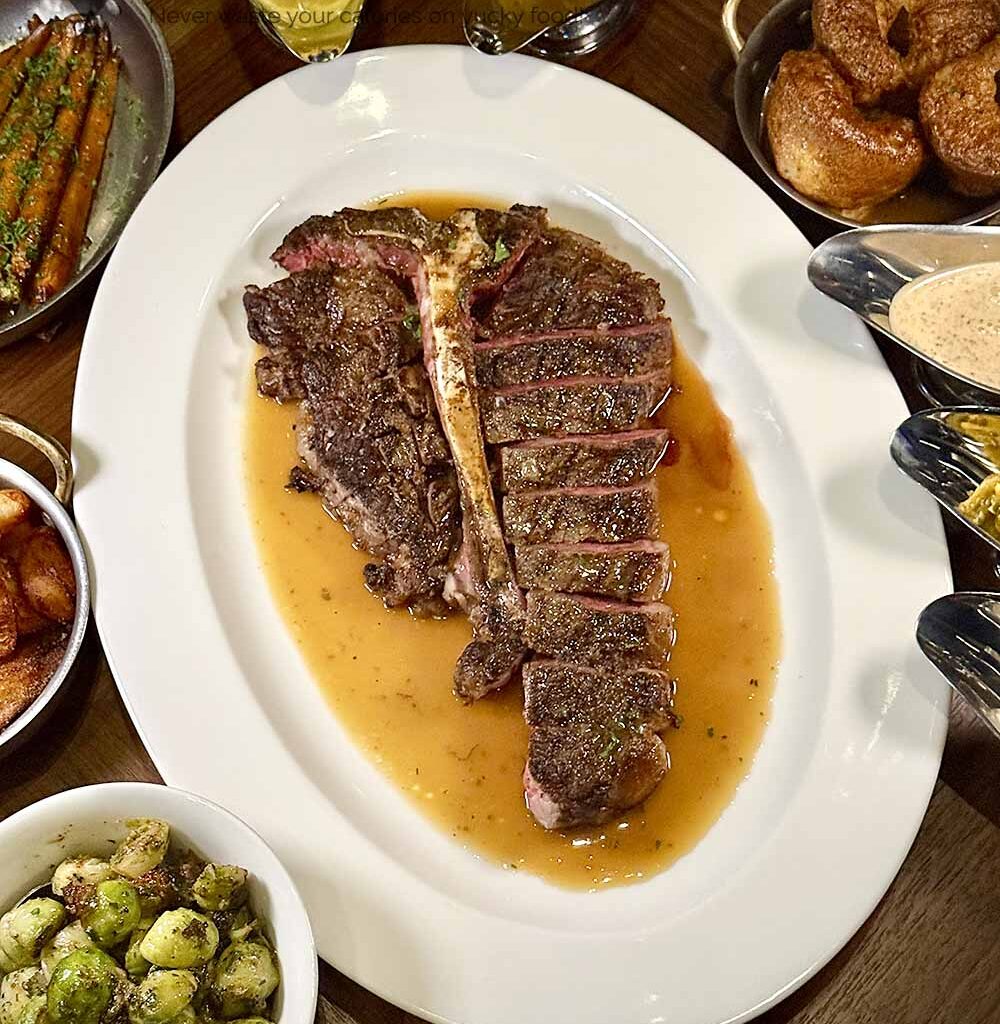
After all the preamble, we finally arrived at the main event — the steak! This being a Japanese steakhouse, everything naturally built up to this moment.
Chef Tanaka presented generous cubes of Kobe beef tenderloin, freshly roasted in his special oven and rested to a perfect medium rare. Each bite was tender, deeply beefy, yet never overly rich. It’s worth noting that these cuts weren’t the heavily marbled A5 wagyu one might expect, but that was entirely intentional.
As Chef explained, he focuses exclusively on female Kobe cattle, prized for their refined flavour rather than excessive fat. The result? A steak that embodies elegance, depth, and pure beef satisfaction — as good as a Japanese steakhouse experience gets.
Steamed Rice with Kobe Beef Shigure-Ni
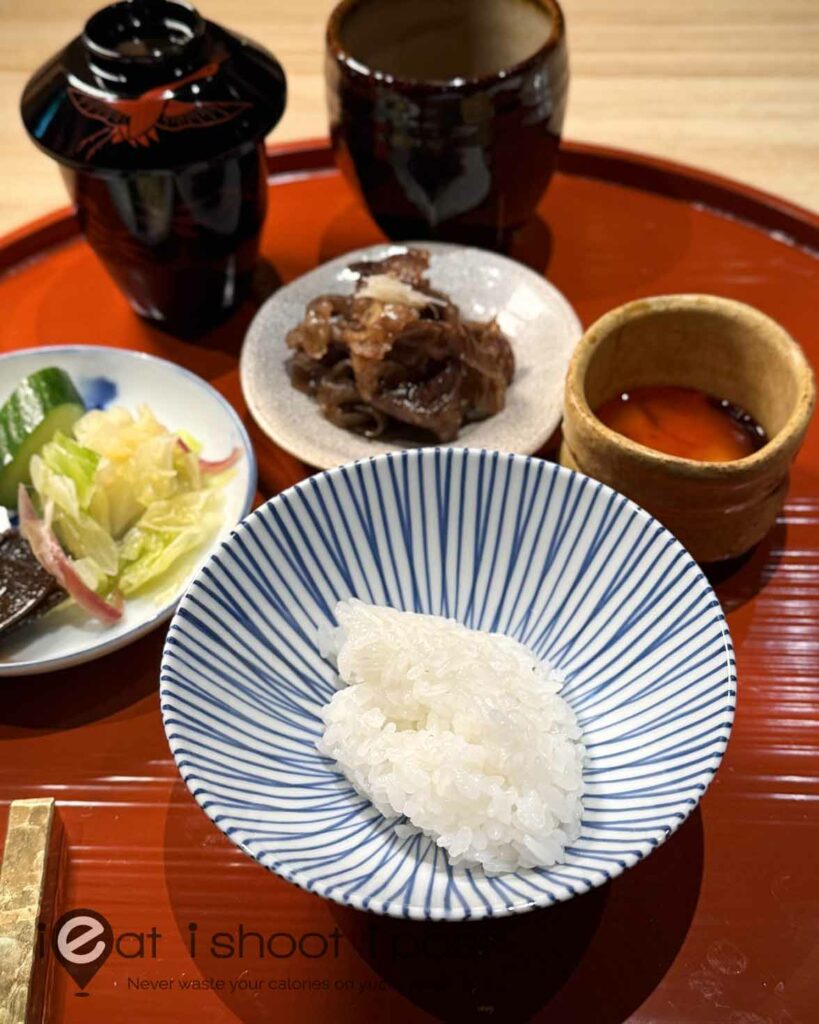
After that satisfying climax, the meal wound down in true Japanese fashion — with a comforting bowl of steamed rice, a side of pickles, and sautéed beef kiriotoshi, accompanied by a miso soup. Simple, hearty, and soul-warming, it was the perfect way to close our wagyu omakase!
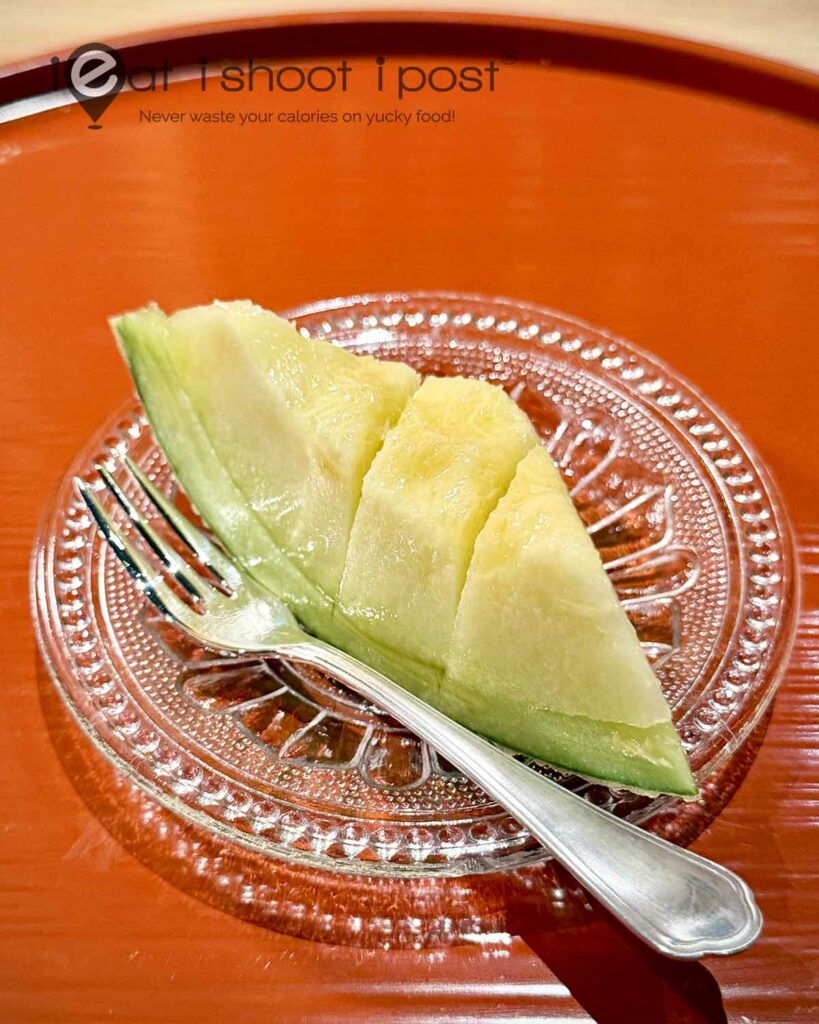
Seasonal Fruit
Conclusion
Nikuya Tanaka is for those already familiar with A5 wagyu and looking for something beyond. Chef Tanaka’s reputation for sourcing Japan’s finest beef precedes him. His focus on virgin female Kobe cattle is what makes this place special.
But does it really taste that different from regular wagyu? Unless you eat wagyu often, the difference is subtle — a bit more refined, slightly sweeter, and cleaner on the palate. Without a side-by-side comparison, it’s hard to tell.
Dining at Japan’s No. 1 steakhouse doesn’t come cheap at its Singapore outpost. The omakase courses start from $350++ for a 9-course lunch and go up to $550++ for a 12-course dinner. Still, if you like to experience what dining at Japan’s top steakhouse is like, this is the place to do it.
Disclosure: This was a media invite. Opinions expressed are those of our own.