


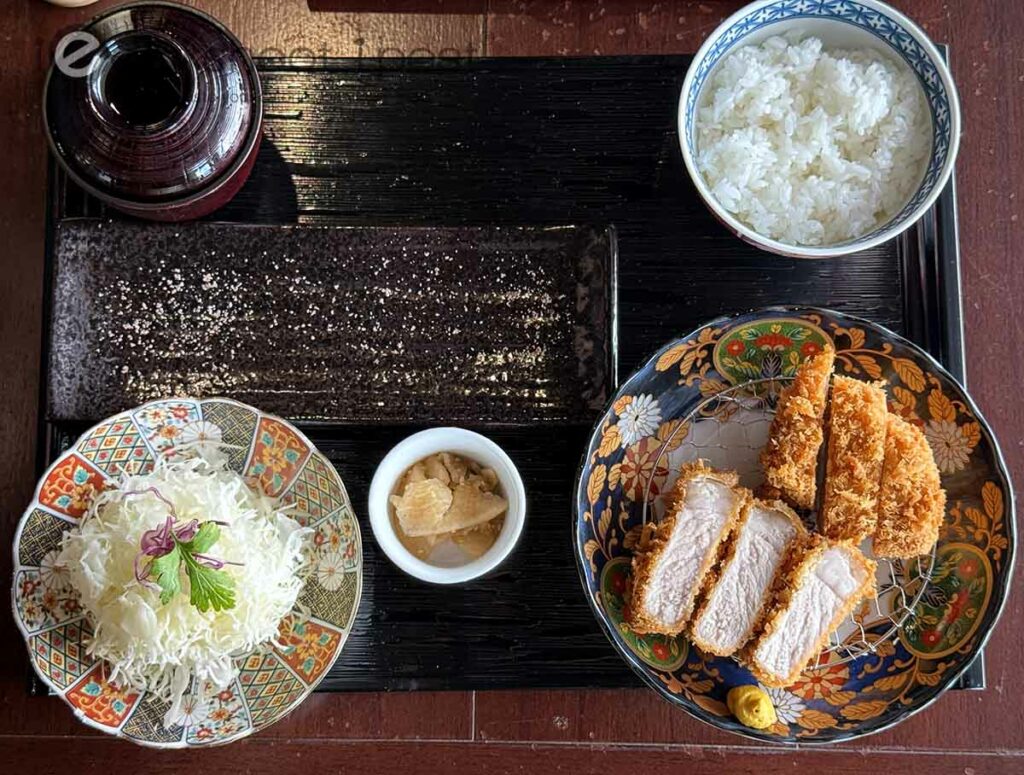
The first speciality Tonkatsu restaurant, Tonkichi, opened in Singapore in 1992 — that’s 33 years ago! Even though it’s been around so long, anyone who’s been to Japan will tell you that somehow our Tonkatsu here still isn’t quite as good. For me, the key thing is the quality of the pork, which, for many years, has been pretty disappointing.
The main problem is that we don’t even raise our own pigs here. So for many years the only fresh pork chefs could get came from Indonesia. Over the last decade or so, this has expanded to include pork from Australia and Sabah. But, really good pork from Spain and Japan still comes frozen (mostly). That’s why the quality of our Tonkatsu will never reach the same level as in Japan where the top tonkatsu restaurants have access to specially raised pork from artisan farmers!
Another issue is how the pork is cut. Usually it’s a bit too thin and there isn’t enough fat. You can’t really blame the restaurants, though. They cut it thin to keep prices down. And they trim off fat because many customers are afraid of eating it. But any serious Tonkatsu fan will tell you that the piece of fat on the pointy end of the cutlet is the best bit! If you like the long gu (prime rib) in Bak Kut Teh, that is the same well-marbled, layered meat that you are eating!
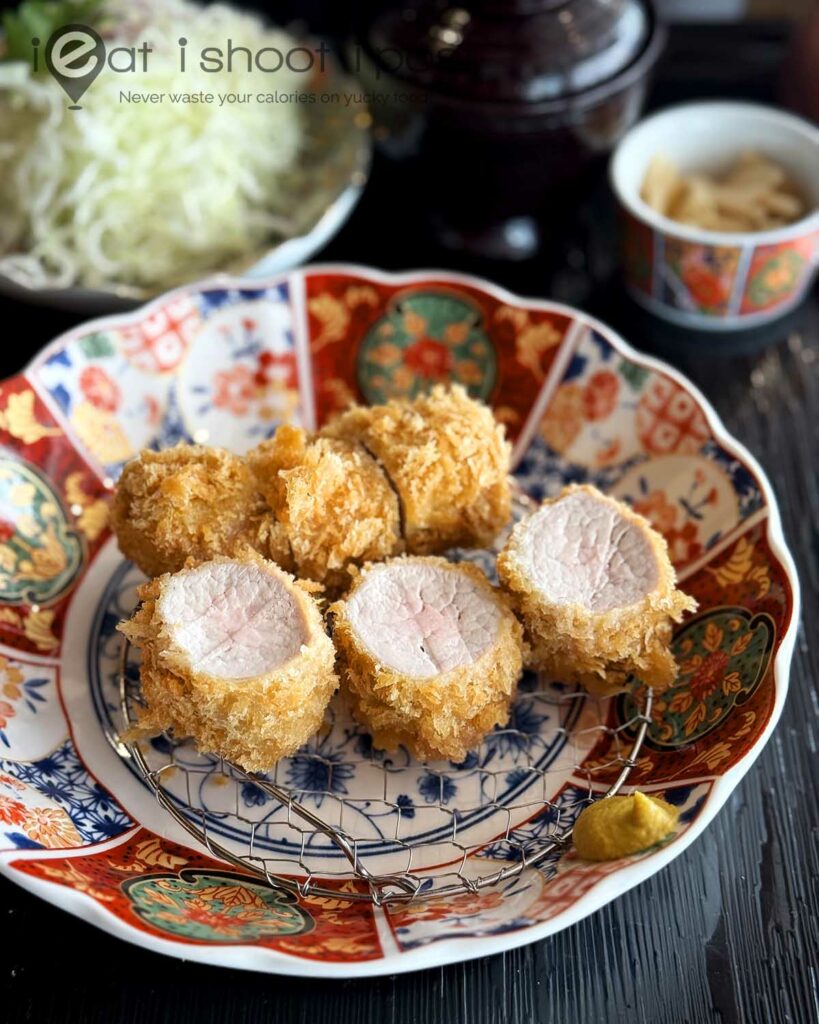
Pork does not need to be well done
On top of that, many Tonkatsu places here tend to overcook their pork. Overcooked pork loin is dry and unappetizing, so in Japan they always cook it just slightly pink. Most Singaporeans still think pork has to be well done. That idea is outdated.
The USDA revised the recommended cooking temperature for pork from 71°C to 63°C way back in 2011. But somehow that knowledge hasn’t trickled down to the public yet. So it’s actually quite safe to eat slightly pink pork!
The good news is that things are slowly changing, especially in the past year. Recently, I checked out Tonshou and Katsuya, both of which serve thick-cutlets made with Japanese pork. It’s certainly progress, but there were still some things I thought could be improved. With Tonshou, the crust was a little thin, and over at Katsuya, the ambience could be more cosy.
When I heard that the newly opened ShinKatsu was offering Mangalica pork, I I knew I had to see if we finally had a Tonkatsu restaurant that ticks all the boxes.
Veteran Tonkatsu Chef Masato Matsubayashi
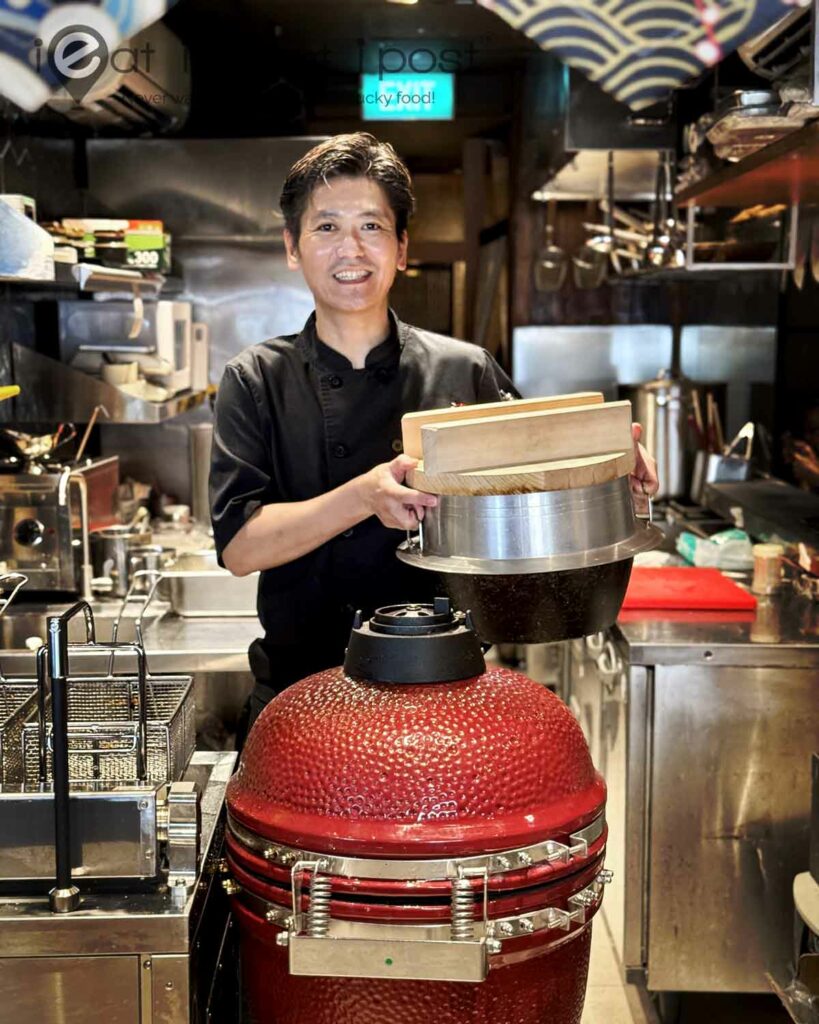
The chef behind ShinKatsu is Chef Masato Matsubayashi, a veteran in the world of Tonkatsu.
He spent 15 years as the head chef at Ma Maison Tonkatsu before finally deciding to strike out on his own. He wants to bring Tonkatsu to the next level. I spent some time chatting with him about his concept. It is clear that he is very focused on creating the best Tonkatsu experience in Singapore.
Cooking Rice in a Kamodo Joe
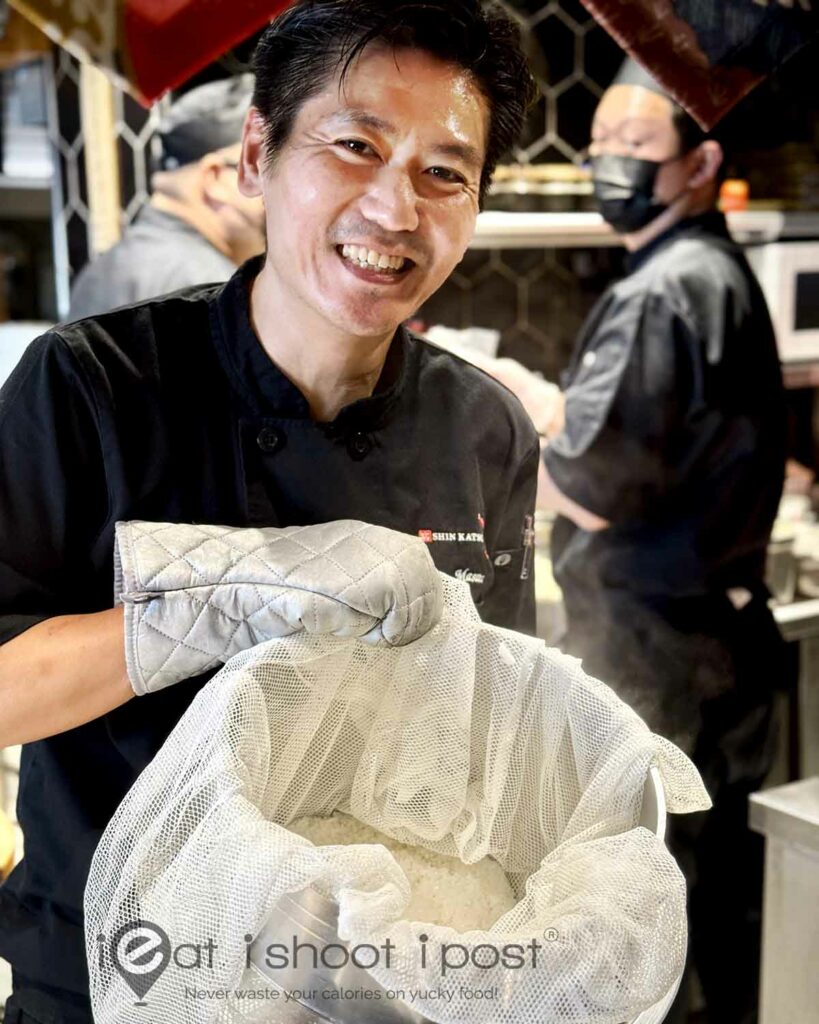
Before we talk about the pork cutlets, I would like to highlight something that exemplifies this singular focus – the rice. At ShinKatsu, the rice is cooked in a Kamado Joe. Now, if you search online, you might get the impression that it’s done this way to give the rice a smoky, charcoal flavour. But that’s not accurate.
Chef Masato explained that the real reason is to recreate the traditional Japanese method of cooking rice over a wood fire in a kamado stove. Because of the thick insulated walls, the Kamado Joe provides the rice pot with intense heat from all directions which cooks the rice in just 9 minutes.
After cooking, it’s left to rest before serving. The rice doesn’t pick up any smokiness, since the pot is fully covered throughout the cooking process. What you do get is rice with beautifully distinct grains that are just a little more springy and resilient to the bite — a texture that’s hard to achieve in regular rice cookers.
It might seem like a small detail, but once you taste it, you’ll understand why the rice is such an important part of the Tonkatsu experience here. It’s a reflection of the same meticulous care that goes into everything else on the plate.
Premium Cuts of Pork
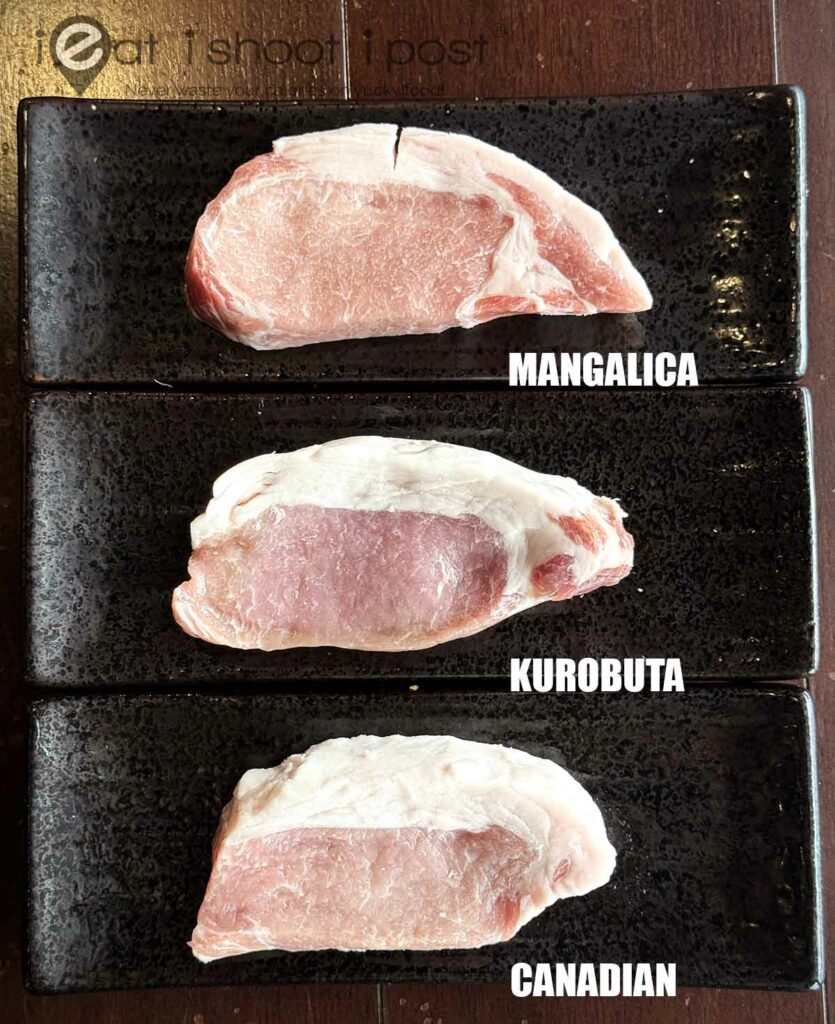
Shinkatsu offers Rosu Katsu (pork loin) from three different countries, and their top-of-the-line option is the Mangalica pork. It is a rare Hungarian breed known for its thick, woolly coat and exceptionally high marbling.
Having tasted Mangalica before, I had tried to persuade other tonkatsu restaurants to serve it, but to no avail. So I’m really happy that Shinkatsu now has it on the menu. It made a brief appearance at Ma Maison a few years ago before disappearing from the Singapore market. Thankfully, it’s made a comeback.
The other two pork choices are American Kurobuta and Canadian Duroc. They are also very good, but as you can see from the photo above, the Mangalica has slightly more marbling. And that translates to extra juiciness and flavour in the tonkatsu.
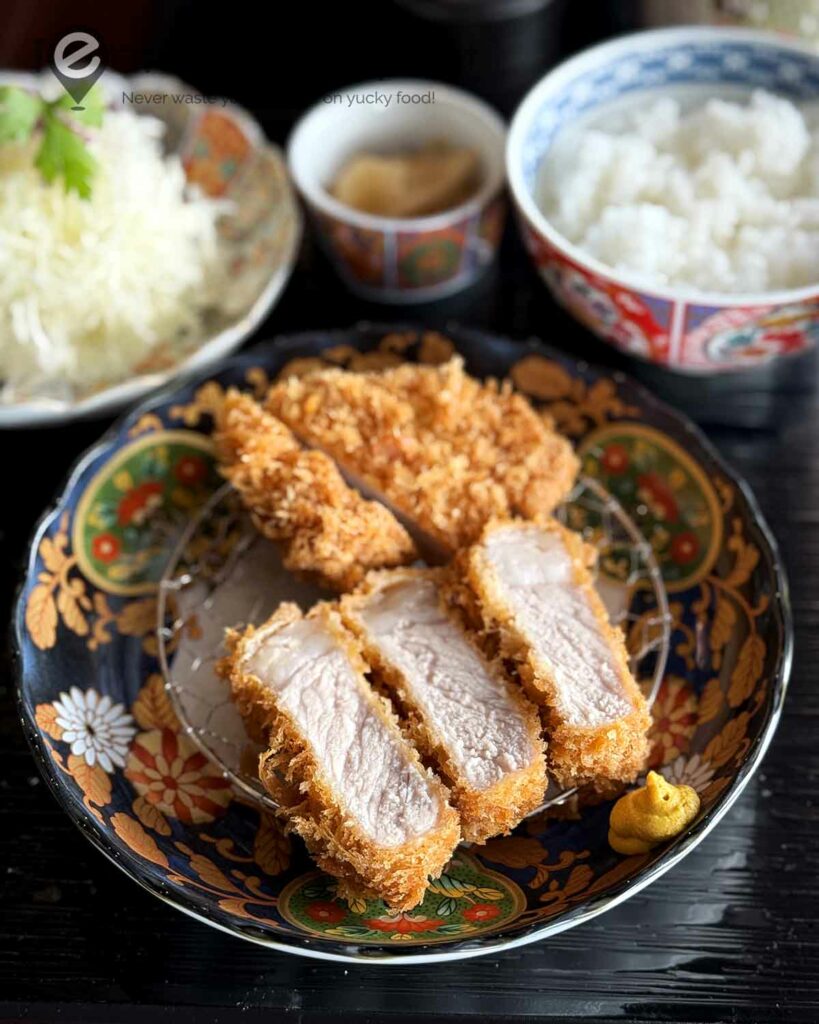
Another thing you’ll notice is just how thick the layer of fat is. Now, you might baulk at that, but the most enjoyable part of tonkatsu is the marriage of tender, juicy fat with the savoury, crunchy crust.
So, my advise is to enjoy it in moderation, and savour every bite. For all you tonkatsu hunters out there, I think the photo alone is enough to make you head straight to Shinkatsu!
The Secret to an Excellent Crust is….
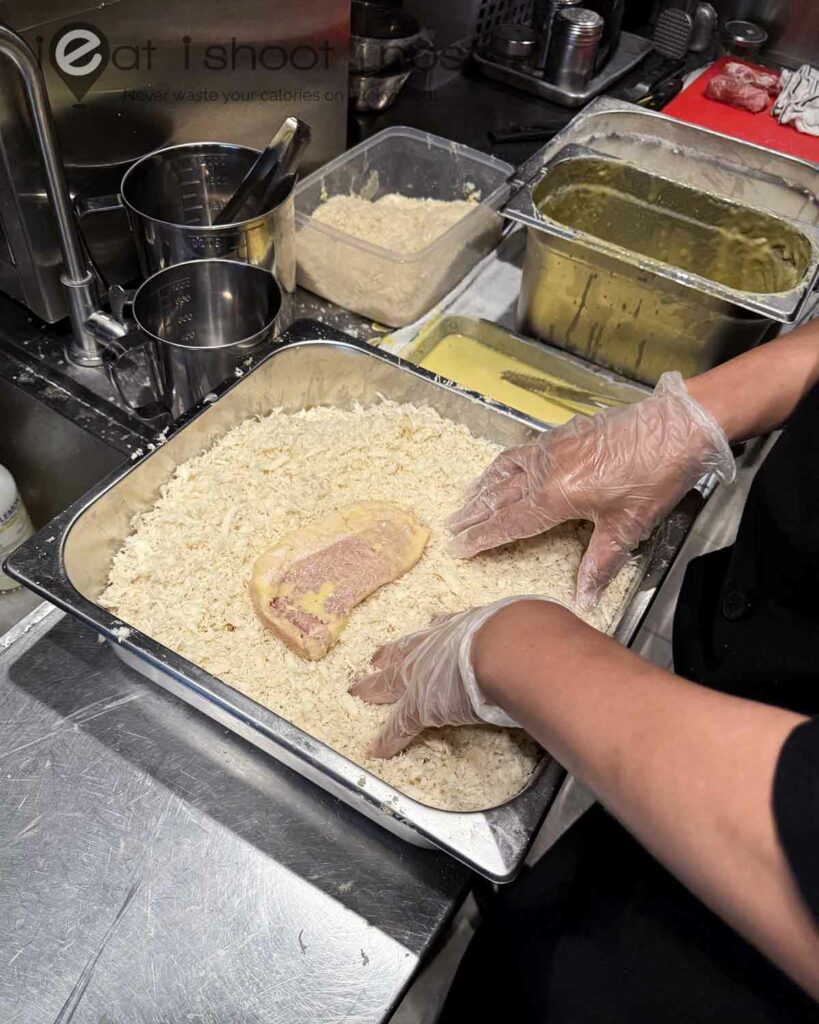
The crust at Shinkatsu is easily one of the best I’ve come across — thick, crunchy, and full of flavour. The secret, as Chef happily shared, lies in his carefully chosen panko. It is meticulously sourced from Japan, and he uses canola oil to deep fry the cutlets.
He tested many combinations before settling on this perfect pairing which he feels is the tastiest. There are a few other tricks that Chef Masato has employed to make the crust flavourful. But he just smiled when I asked him for the details! I am guessing there is something special about the batter and the dusting flour!
Details Matter!
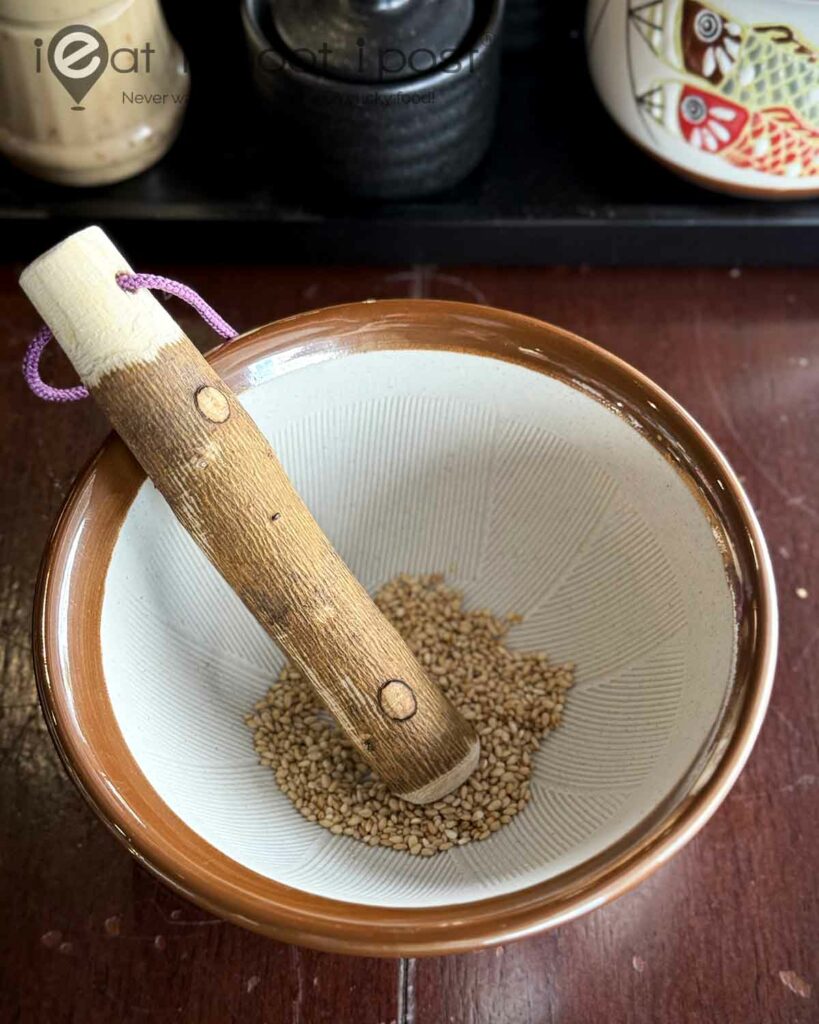
If you’ve been enjoying tonkatsu for a while, you might have noticed that some restaurants have quietly removed one of the small but memorable rituals. That is the grinding sesame seeds in a suribachi (すり鉢).
For me, eating tonkatsu isn’t just about the pork cutlet; it’s also about that mound of crisp shredded cabbage and the satisfying act of grinding the sesame seeds before the tonkatsu arrives. It’s like having your Caesar salad before a prime rib of beef. It’s a prelude that sets the tone for the meal.
This was always part of the experience, until more recently when some places began to dispense with it. That’s why I’m so glad Shinkatsu has kept the tradition alive. The fragrance of freshly crushed sesame seeds, mingling with the warm atmosphere of a Japanese setting, truly evokes a sense of authenticity.
Pink Pork is Safe!
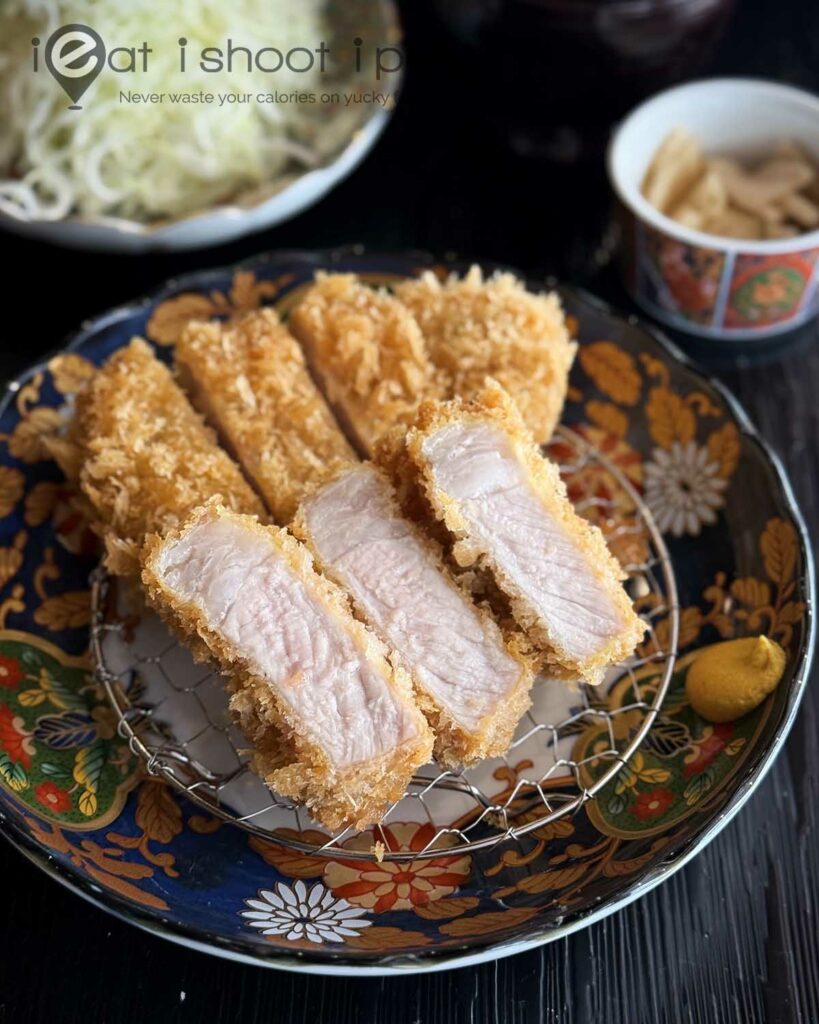
With all that going for it, I was expecting to be blown away by the tonkatsu. So I was a little taken aback when the pork arrived cooked all the way through.
Thanks to the excellent marbling of the Mangalica, it was still juicy. But I couldn’t help thinking it could have been even better with a hint of pink. That said, the fat cap around the loin was outstanding. It was meltingly tender, bursting with flavour. When paired with the shattering crunch of the breaded crust, it’s the very essence of tonkatsu’s allure!
When I asked why he didn’t serve it pink, Chef explained that when the restaurant first opened, he did. But he received too many complaints from customers who thought the pork wasn’t cooked. So now, he plays it safe and serves it well-done.
Unsatisfied, I ordered a second tonkatsu, this time cooked pink, and it was noticeably juicier. This, I believe, is the way tonkatsu should be enjoyed, and it’s perfectly safe to eat. Just as you’d never ask for your ribeye to be well done, pork cooked to that point, especially the loin, turns dry and papery. While rare pork still carries some risk, medium well is perfectly safe and far more succulent.* 4.25/5
Why Pink Pork is Safe
For decades, pork was cooked until completely gray to prevent trichinosis, a parasite once common in pigs. Thanks to modern farming—indoor raising, clean feed, and strict inspections—trichinosis in commercial pork has virtually disappeared. In 2011, the USDA lowered the safe cooking temperature for whole cuts of pork to 145 °F (63 °C) with a three-minute rest. At this point, harmful bacteria are destroyed, yet the meat stays juicy with a delicate blush. The pink in pork today is myoglobin, not undercooking—proof that safety and succulence can coexist.
Other Items On the Menu
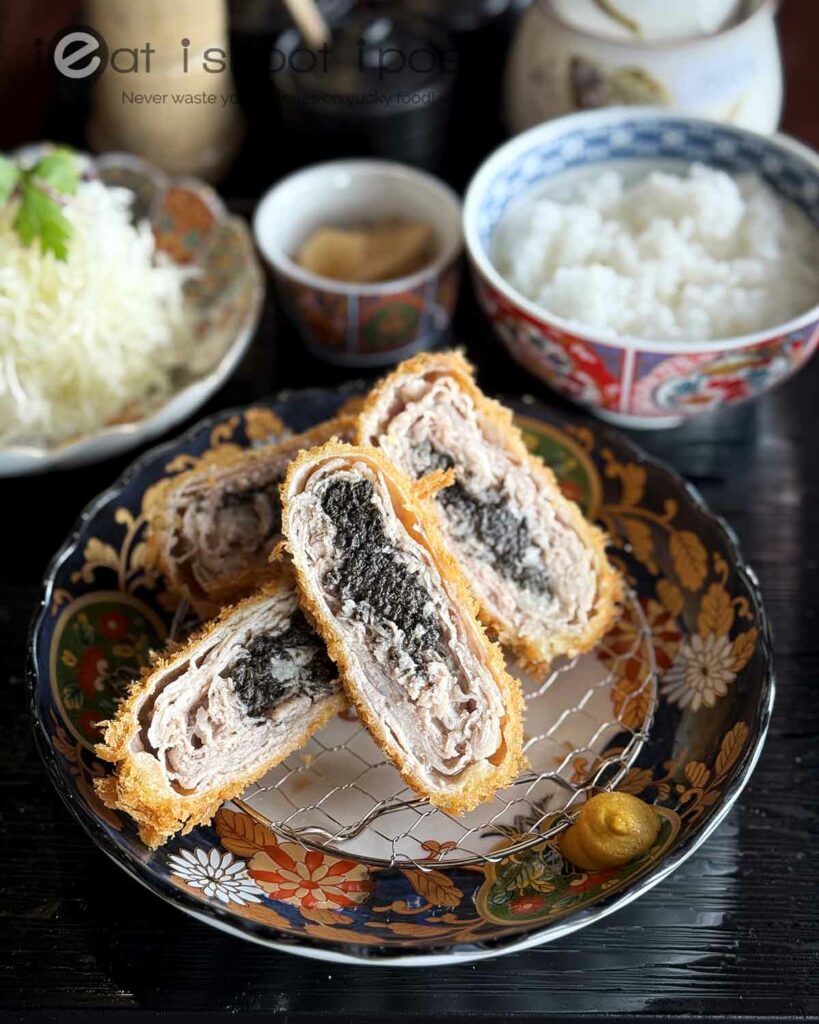
Aside from the classic Rosu Katsu (loin) and Hire Katsu (pork tenderloin), Shinkatsu also offers more creative breaded items.
There is the Truffle Mille-Feuille — where black truffle paste is layered between thin slices of Canadian pork, then coated in breadcrumbs and fried to a golden crisp. It’s actually very good. With this layered style of cooking, the entire cutlet stays moist and juicy. So, you don’t have to worry about overcooking. The earthy aroma of truffle also marries beautifully with the sweetness of the pork. 4/5
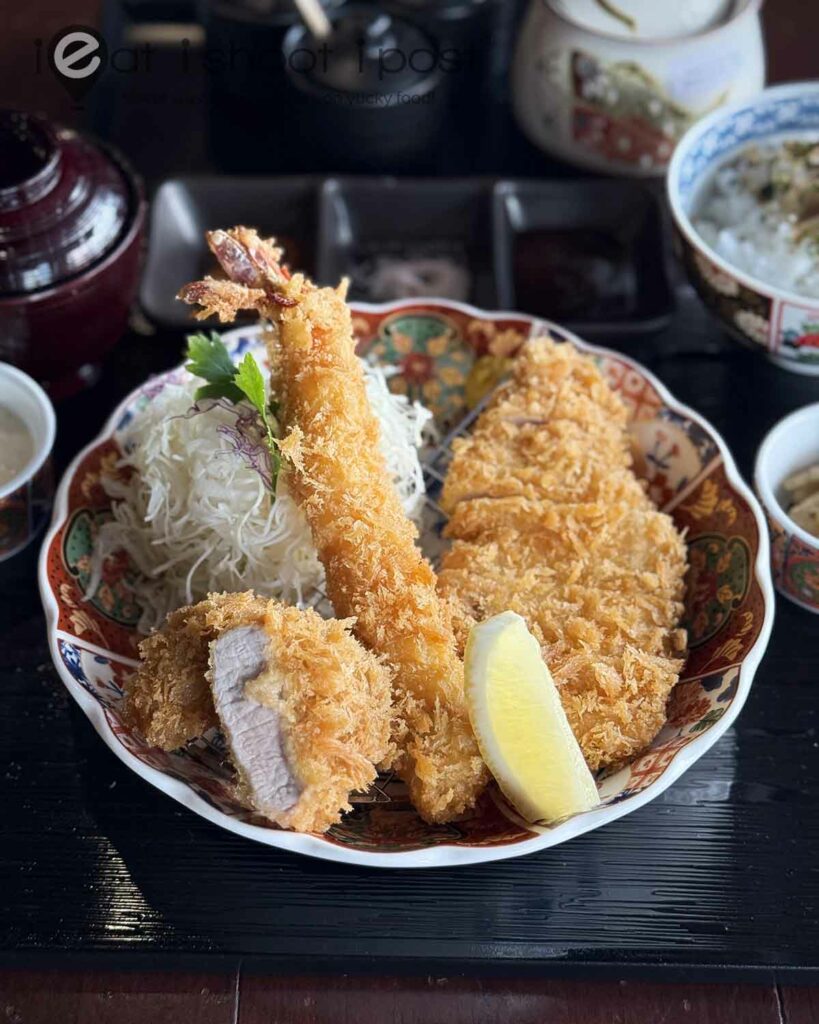
If you’re after more variety, you can opt for their Combo Set. It comes with breaded prawn, rosu katsu, and hire katsu. The prawn, however, isn’t as meaty or sweet as I would have liked. I wouldn’t recommend it unless you really have a craving for prawns.
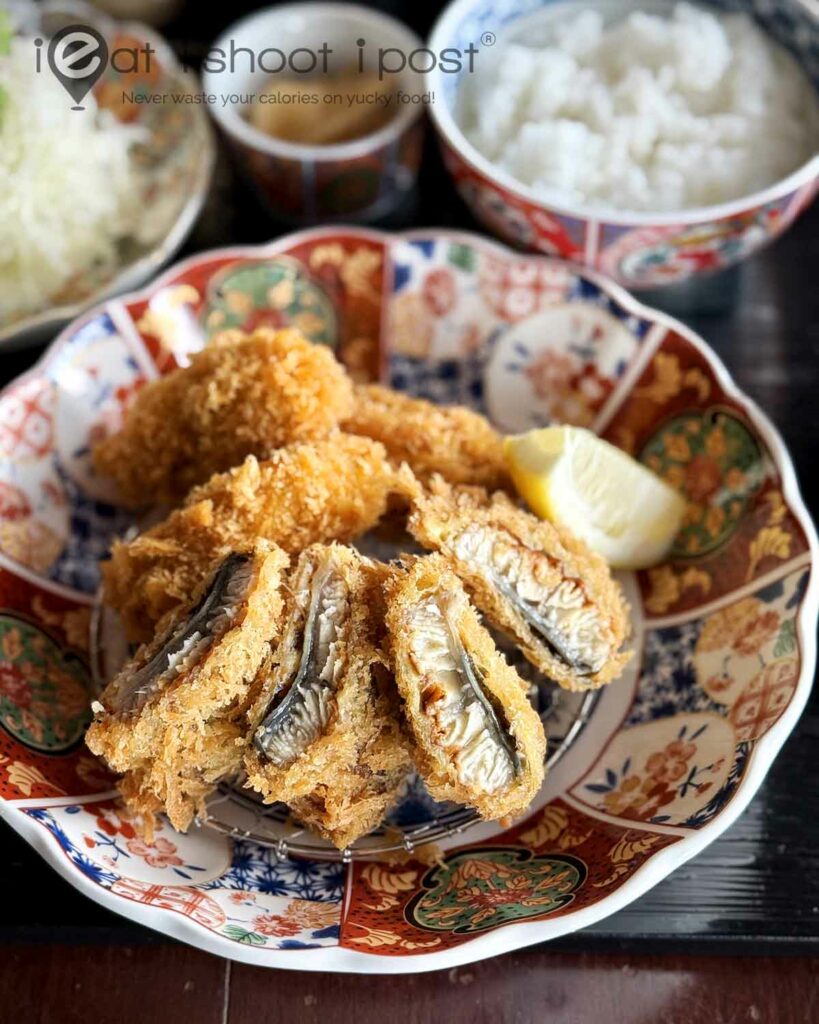
If you’re really after seafood, Shinkatsu also offers breaded unagi and oysters. To me, these are more like options for those who don’t eat pork, or perhaps something to include on a shared platter. I can’t imagine going to a tonkatsu restaurant just to eat these.
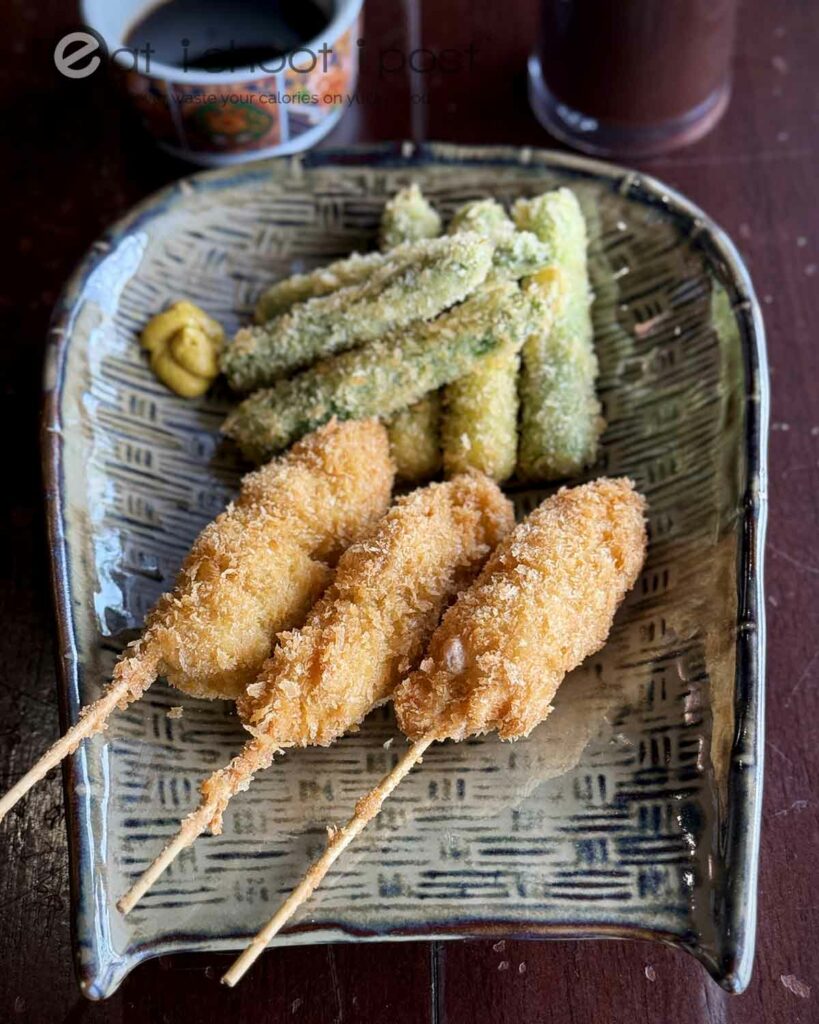
They also serve a variety of kushi katsu — skewered, breaded bites made with dried breadcrumbs instead of fresh panko. It is perfect if you’re after something to nibble on with drinks or as a light starter.
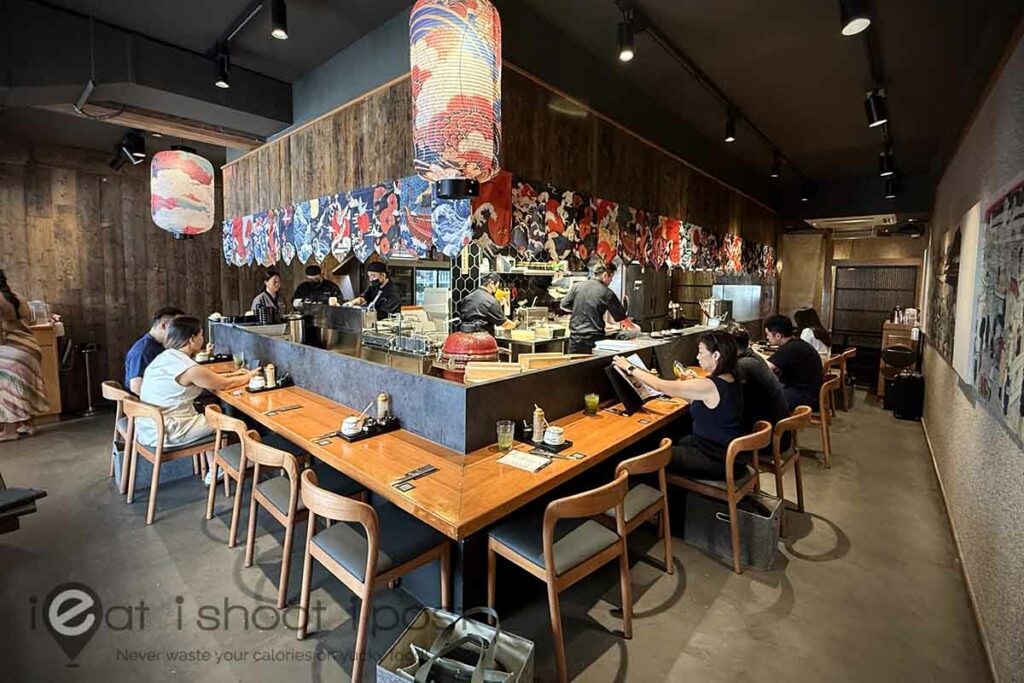
Conclusion
All in all, Shinkatsu delivers a tonkatsu experience true to tradition. From the sesame-grinding ritual to rice cooked over charcoal, and thick, juicy cutlets made with premium cuts. It’s about as close as you’ll get in Singapore to what you’d find in Japan. Well, short of the very top establishments there that source their pork directly from artisan pig farmers.
So, until the authorities allow the importation of fresh pork from such farms, this is probably the best tonkatsu experience we can get here.
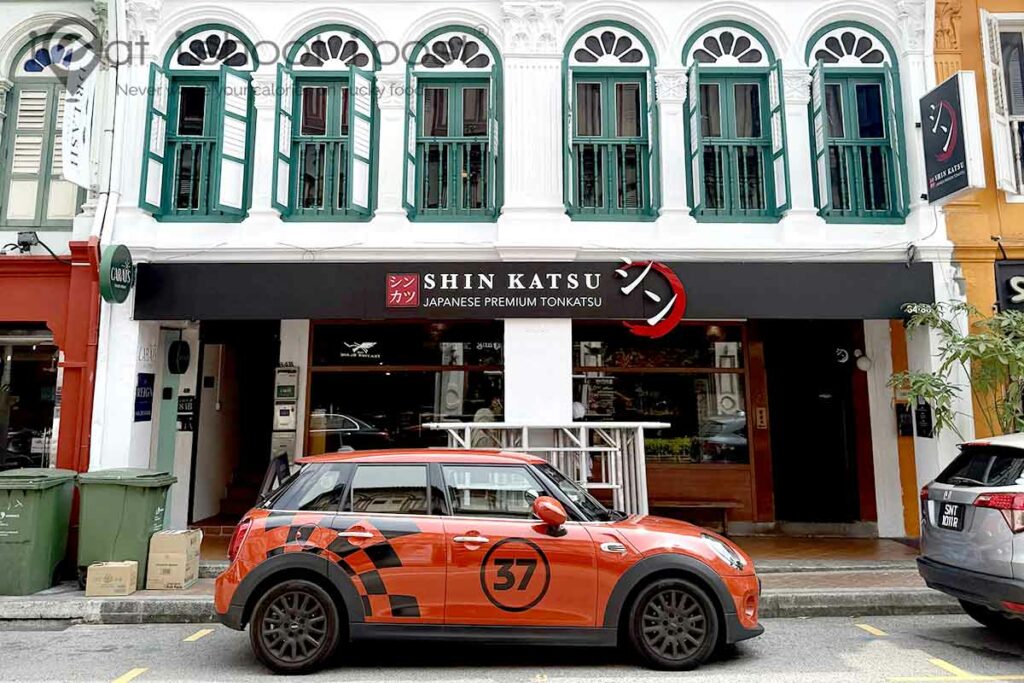
*Post Script
Since our last visit, the chef has started serving the Tonkatsu with a slightly pink centre. If you still prefer your pork cooked well done, please let the staff know when you order.
Disclosure: this was an invited media review.


is the cabbage refillable ?
Yes, of course. Cabbage, rice and soup all refillable as per traditional tonkatsu restaurant.